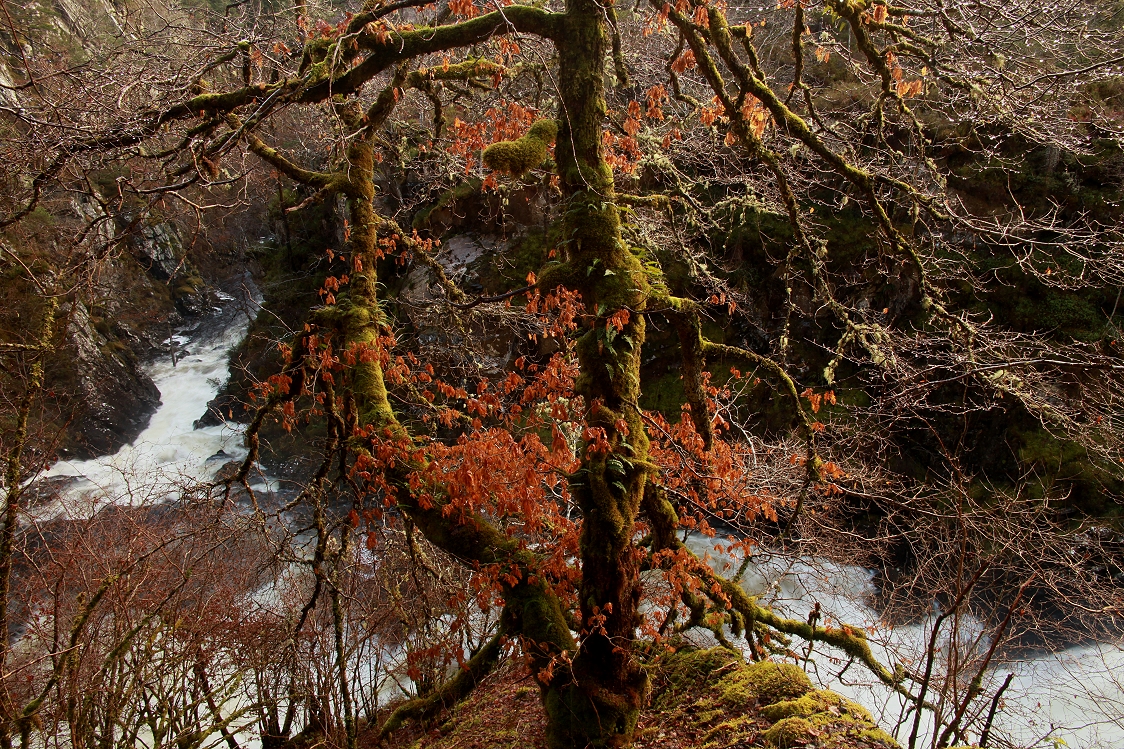
This week-end I decided to go somewhere different to my usual favourite places, so I headed out to Glen Cannich, the next glen to the north of Glen Affric. On the way into the glen the road climbs quite steeply from the village of Cannich, as it heads to the north, and then it drops down again a little and levels out beside the River Cannich, before making a turn to the west into the main part of the glen itself.

Where the road follows the river there’s a small footbridge at one point, which I’d crossed over once many years ago to look at some cascades on the river just there, but I’d never followed the path further downstream where I knew there was a gorge. So today I headed down that way, intrigued to see what I would find. The weather was quite changeable, alternating between heavy showers and cloudless skies, both of which made it difficult for forest photography!
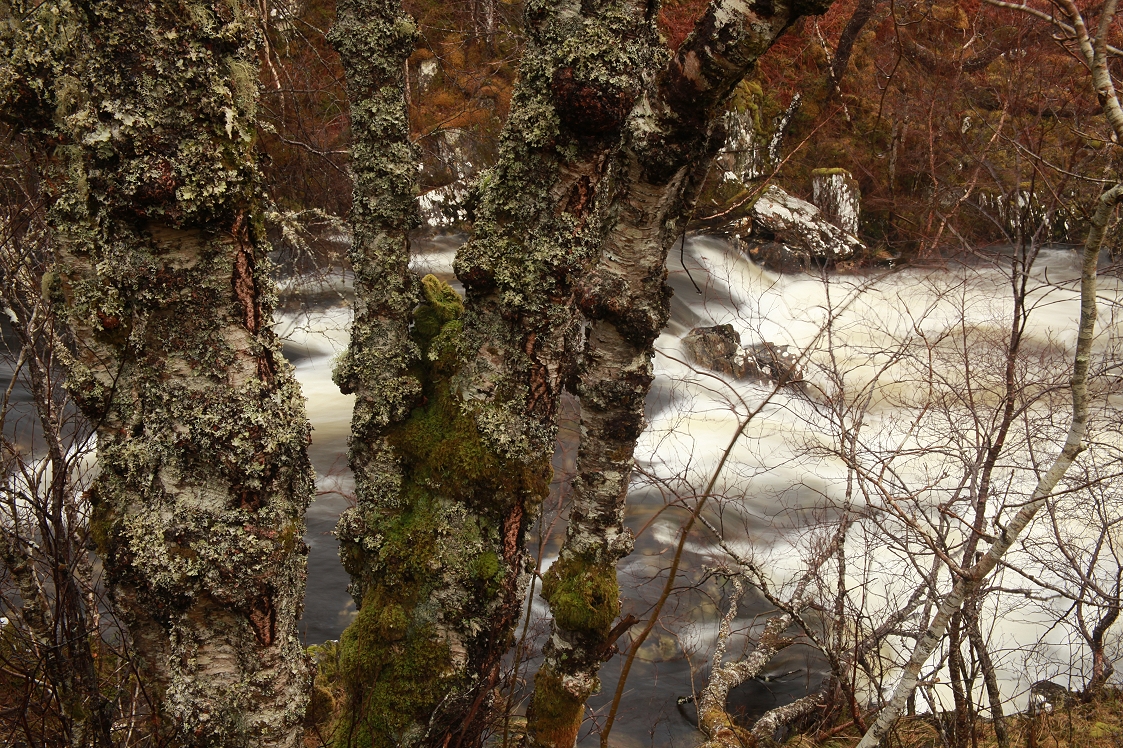
The river itself was quite swollen from overnight rain, and there was a lot of surface water underfoot everywhere. It was another good day for mosses and lichens, which thrive with all the moisture, swelling up from the more shrivelled state they are in after hot or dry weather. Much of the ground, and many of the trees and rocks in this area, are covered with moss, because the narrowness of this section of the glen means there is always a lot of humidity in the air, providing ideal conditions for mosses and lichens to flourish.
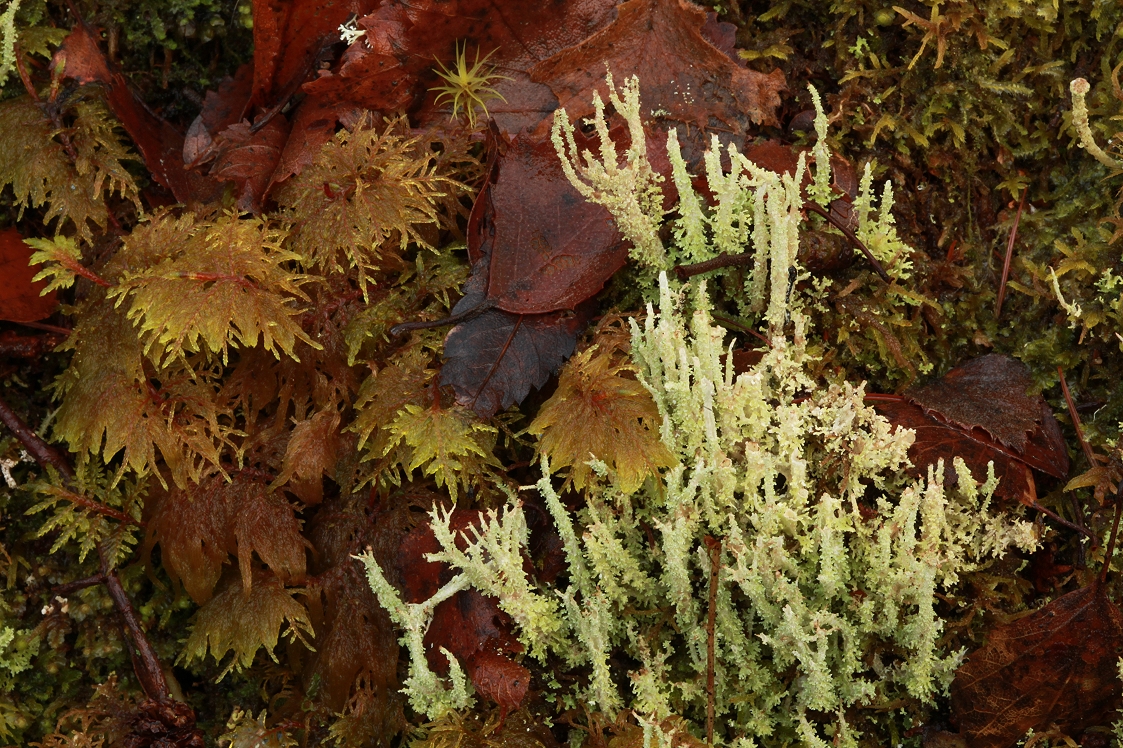
While many people’s immediate impression of mosses is perhaps that they’re just small green plants, which all look the same, there’s actually quite a lot of different colours and shapes amongst many of the common species in the Caledonian Forest. Glittering wood-moss (Hylcomium splendens), for example, is the most abundant moss in many of the pinewoods, and its leaves are a bright yellow-green, with contrasting red stems up their centres.
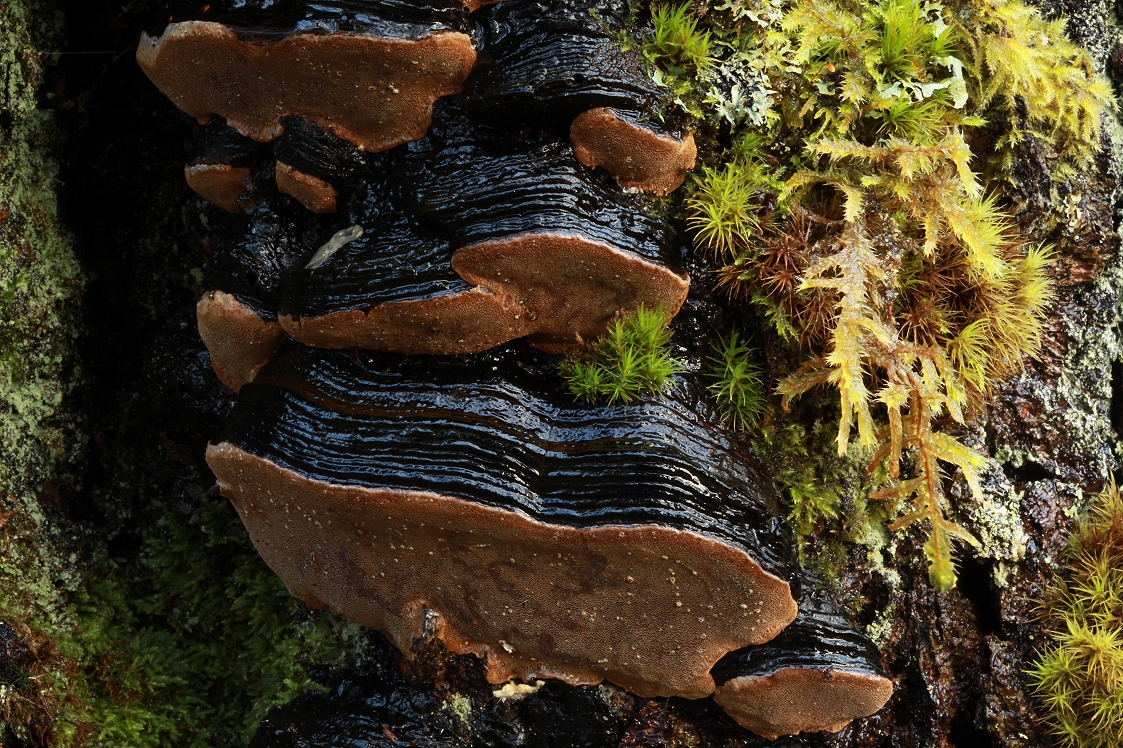
This section of woodland beside the River Cannich has a lot of old dead birches in it, both standing ones (or snags as they are called) and fallen logs on the ground. As a result there are prolific fruiting bodies of the tinder fungus (Fomes fomentarius) there. These tough woody fungi can persist on dead birch wood for many years, and their upper surfaces, which are dull grey on dry days, become black and shiny in the rain.
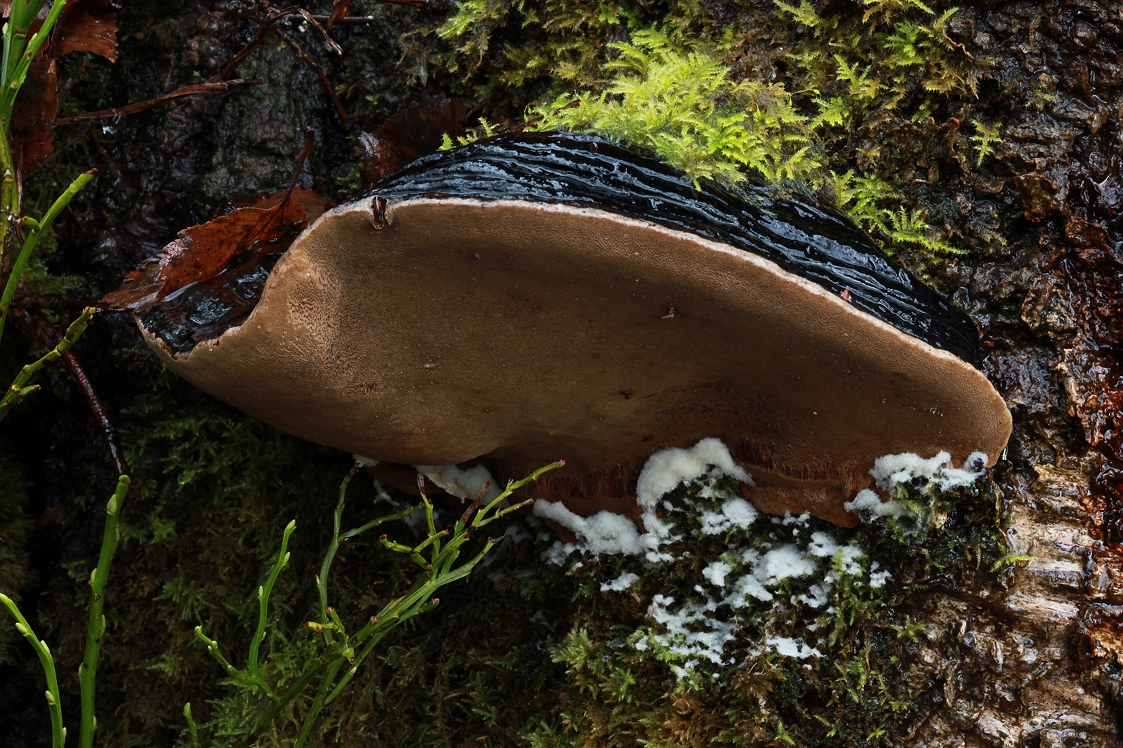
This contrasts with the light brown colour of the underside of the fruiting body. There, a new layer of pores grows each year – this is the fertile part of the fungus, where its spores are released from. One of the tinder fungi had some small patches of a white fungus growing on its pore surface, where that joined the tree itself. I’ve not seen this before, so I took a small sample of the white fungus, and I hope to get it identified.
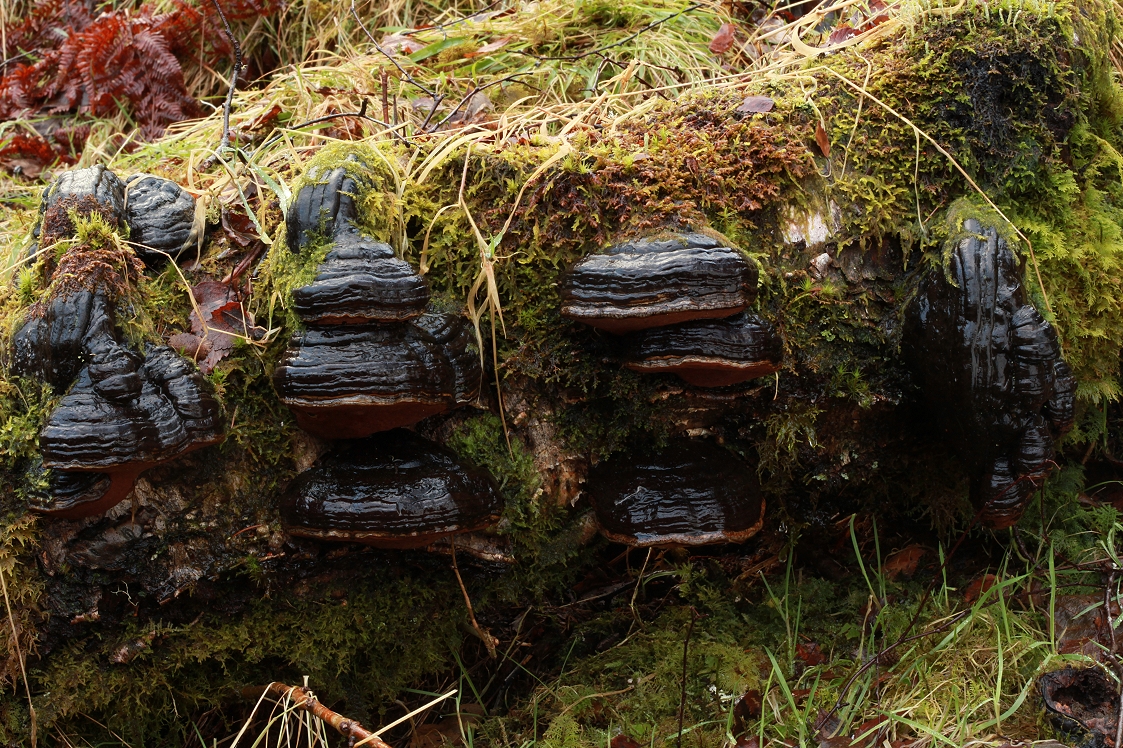
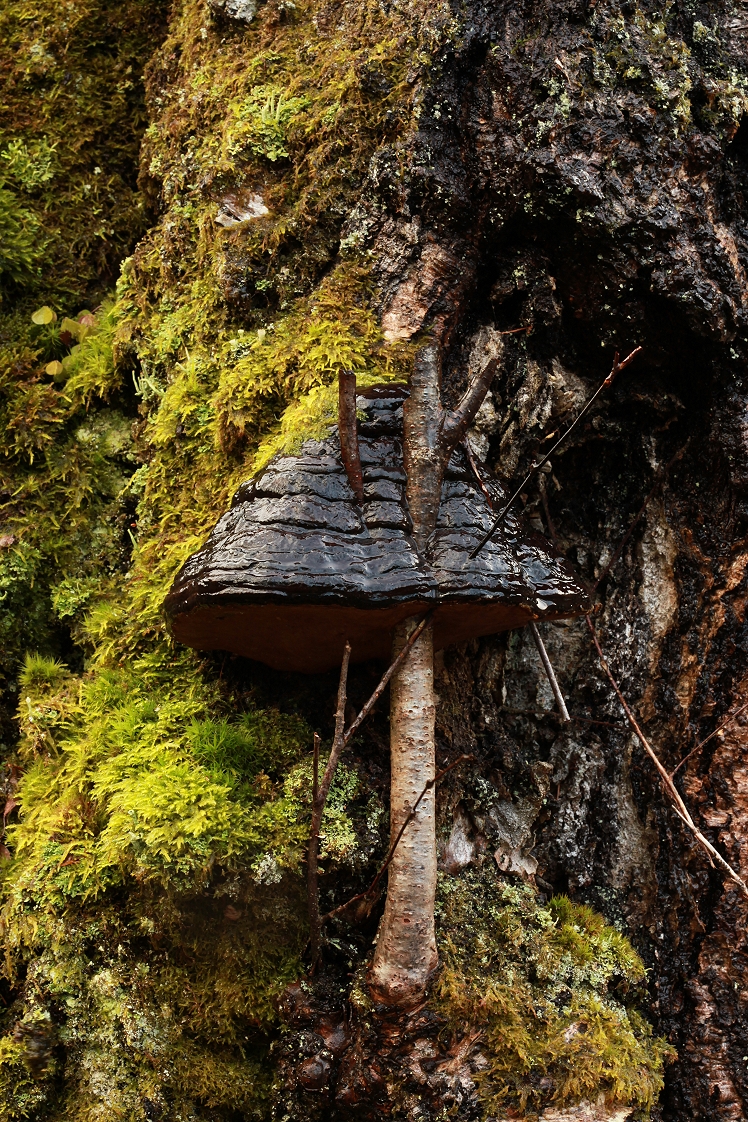
As the photographs here show, tinder fungus can grow in a variety of shapes and forms, either singly or in groups, with individual brackets reaching up to 45 cm. across in size.
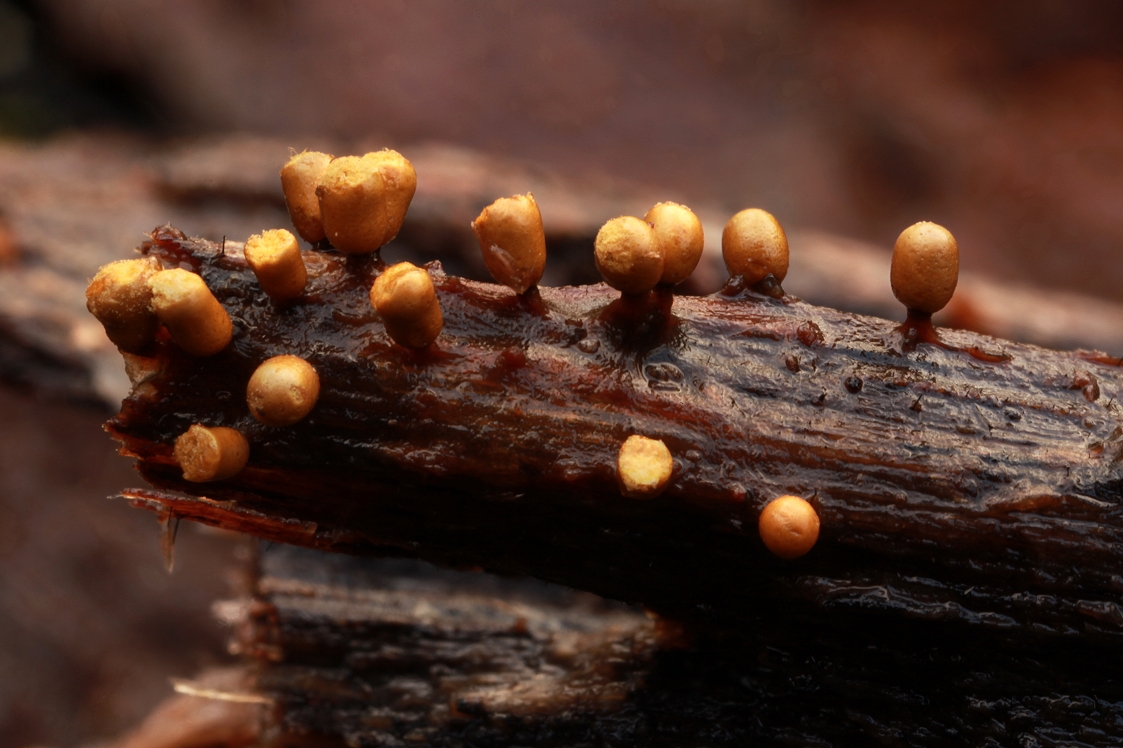
In the same area, looking closely at a birch log, I spotted some slime mould fruiting bodies on a section of the dead wood. They looked like a species (Trichia varia) I had photographed in the autumn, although I’ll need to consult with an expert to get that identification confirmed. However, this provided an opportunity to take another series of photographs for use with the focus stacking software, Helicon Focus, that I wrote about in my last blog. The photograph here is the resulting composite ‘focus stack’ image, with greatly increased depth of field in it.
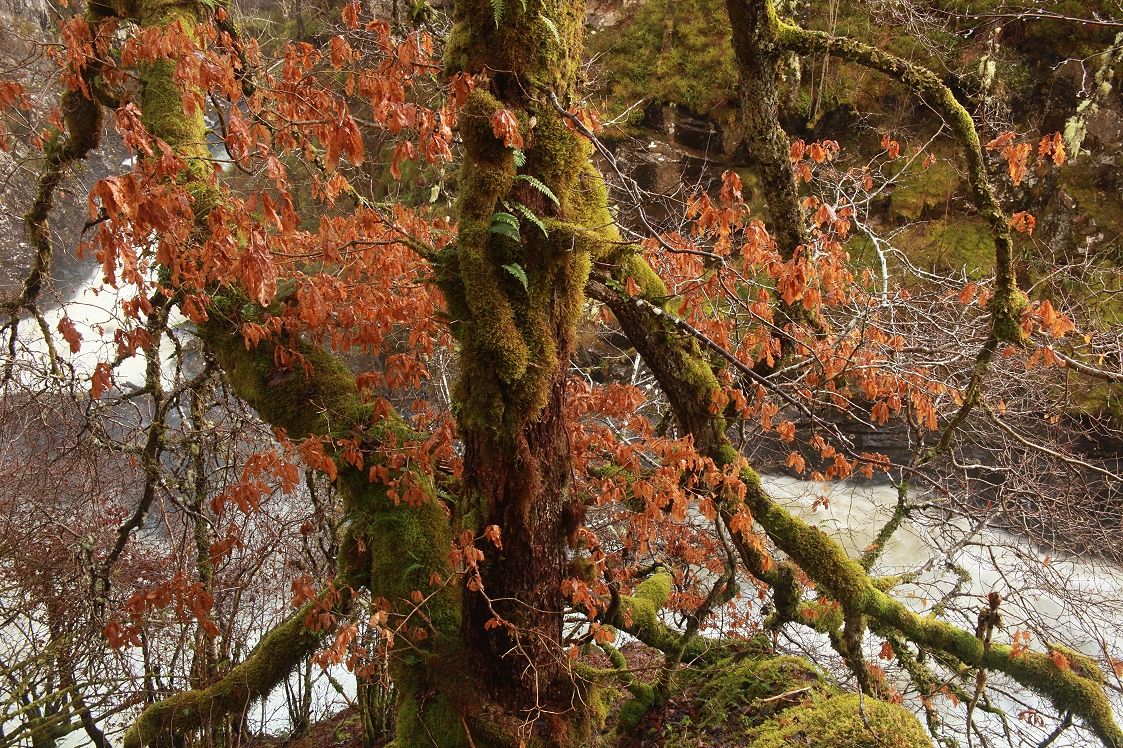
I walked on downstream for a few hundred metres, past an area of flat, relatively slow flowing water to a section where the river narrowed and the banks become steeper on either side. This was a section of the river I’d never visited before, and I spotted a couple of old oak trees (Quercus petraea) growing in a very steep section of the gorge. They were festooned with mosses and lichens such as tree lungwort (Lobaria pulmonaria), illustrating the constant humidity of the site and the temperate rainforest micro-habitat it provides.
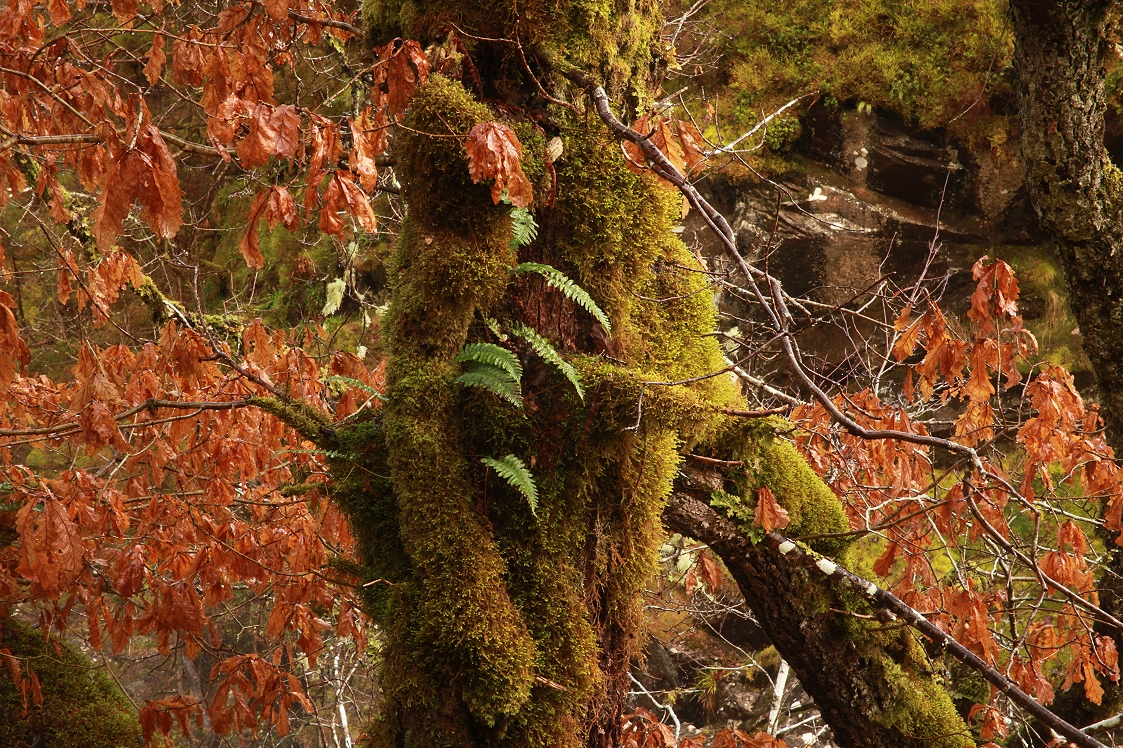
The oaks also had last year’s leaves still hanging on their lower branches. The sheltered location meant that the wind had not blown them off yet, and they brought a welcome bright colour to what was a dull and mostly grey day. The common polypody ferns (Polypodium vulgare) growing on the oaks’ trunks and branches also added some brightness – they frequently grow on oaks in humid sites like this.
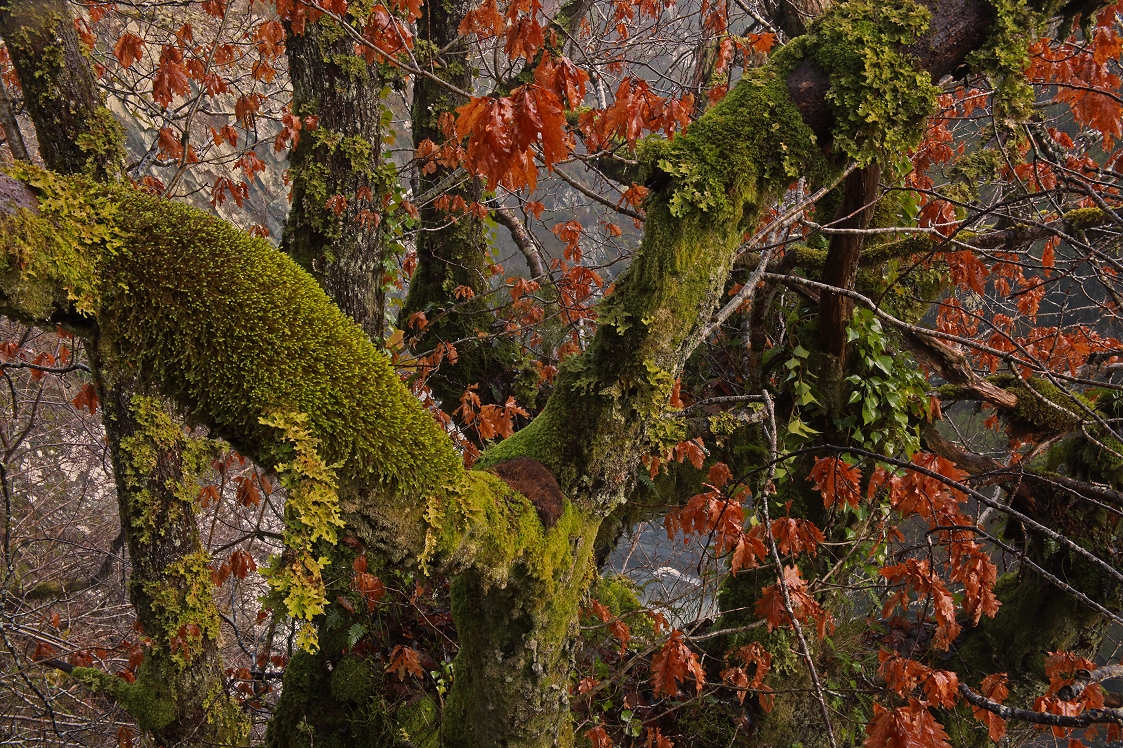
The second oak tree in particular had a lot of tree lungwort growing on it, and there was also ivy (Hedera helix) climbing up one of its trunks. Ivy is one of the few woody temperate climbing plants, somewhat akin to the lianas of the tropical rainforests, and uses the tree for support to gain access to the canopy and the higher light levels that are there. It only occurs in a few places in the Caledonian Forest, generally in sheltered places such as this gorge.
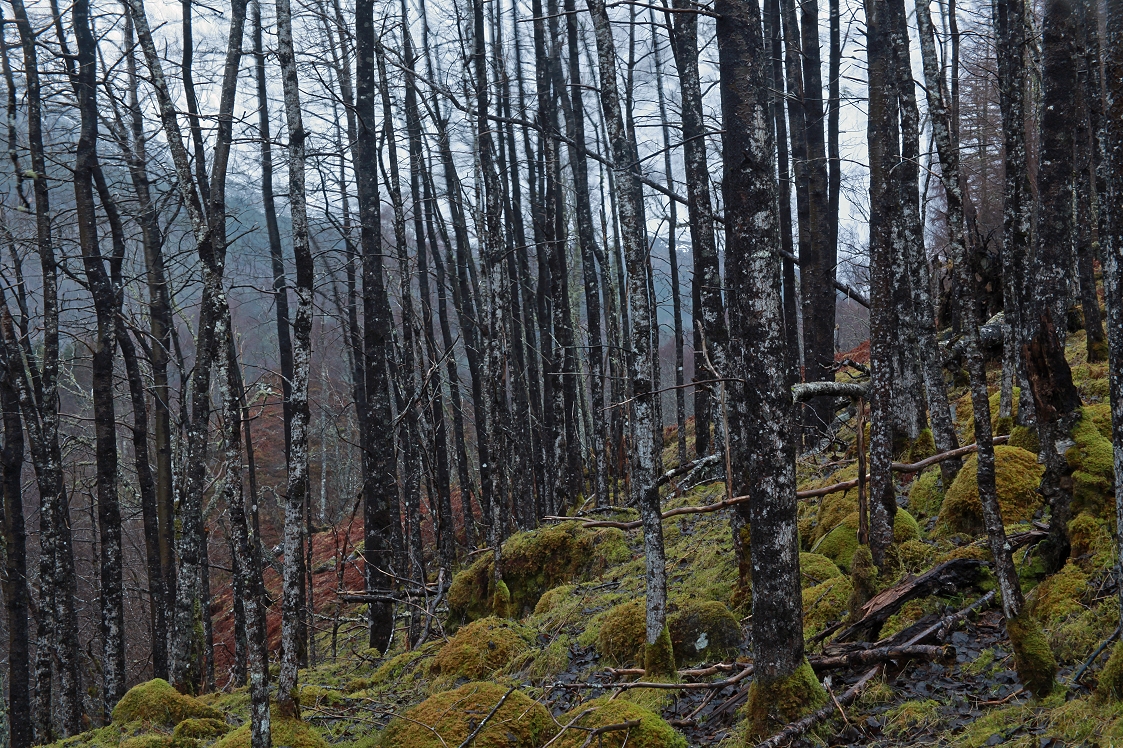
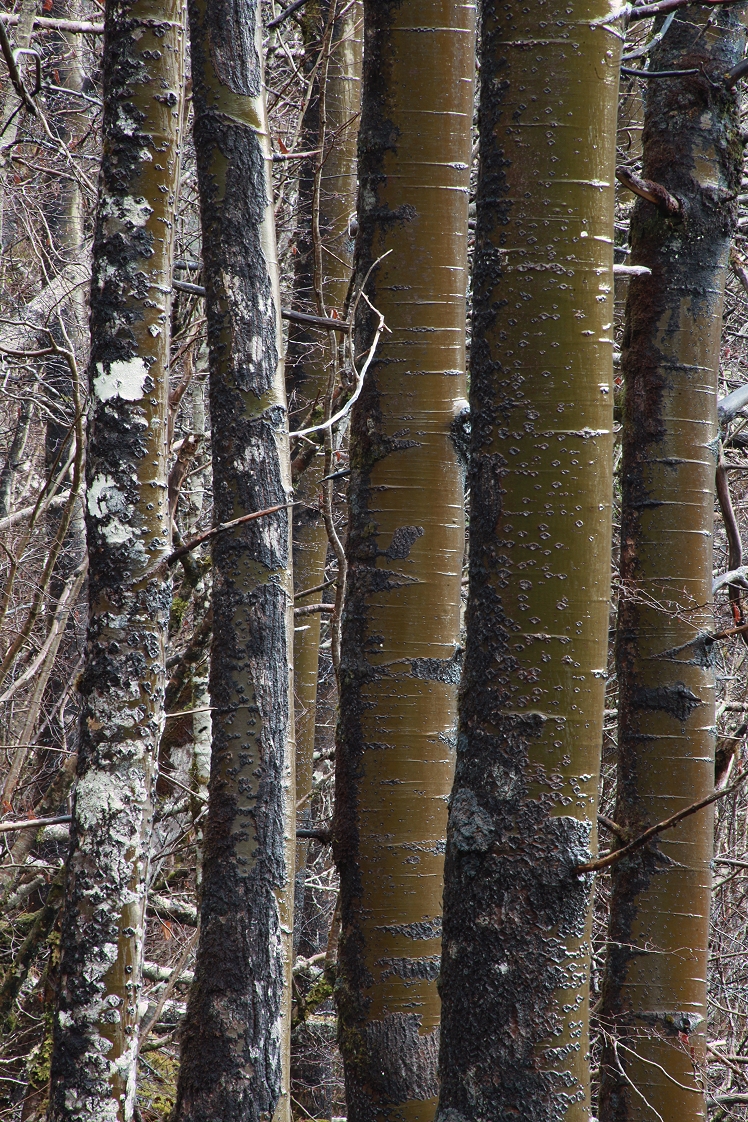
Near these oaks I was astounded to discover a very large stand of aspen trees (Populus tremula) that I hadn’t been aware of before. There were hundreds of straight-trunked large trees growing together, and I suspected this stand hadn’t been seen during the aspen surveys we’ve done over the years in our Target Area for forest restoration – if it had been found I’m sure I would have heard about it!
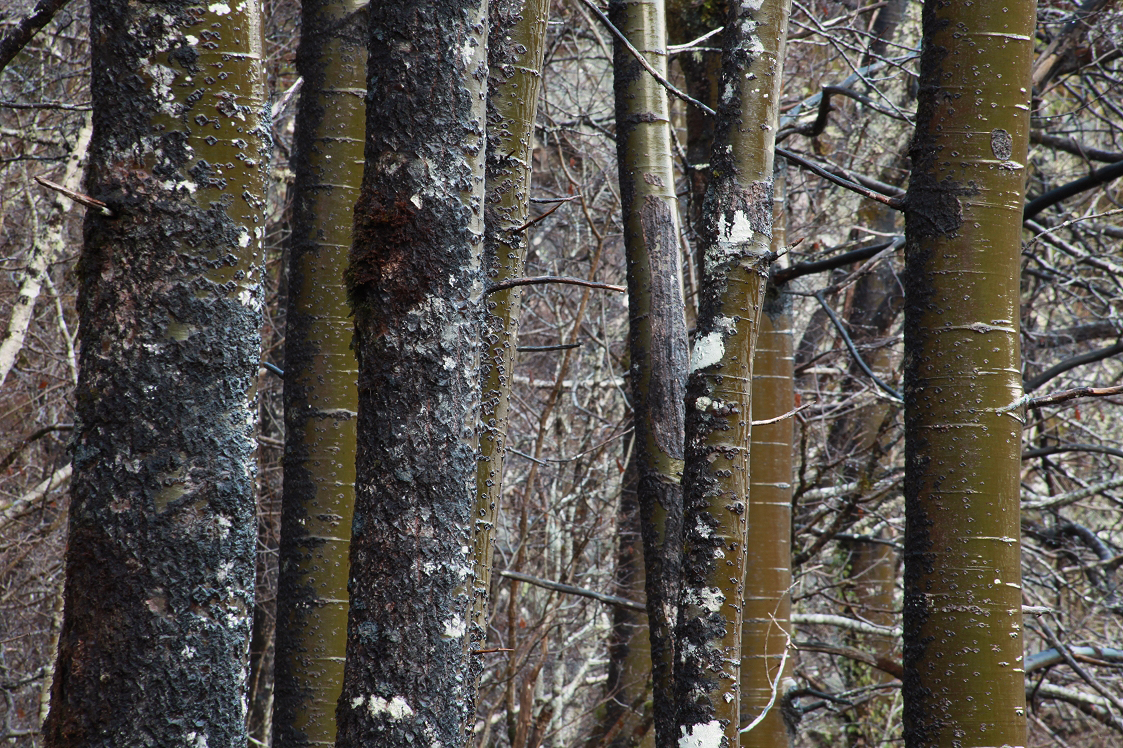
As I explored it, I realised that it’s the largest aspen stand I’ve seen in the areas where we work, and upon checking subsequently on the aspen database in our office I couldn’t see any reference to it, so somehow it had been missed until my trip this week-end! This is very exciting, both because of the fact that aspen supports a range of rare species of insects, mosses and lichens, and also because it potentially provides a good new source of roots for us to propagate aspen from in our nursery.
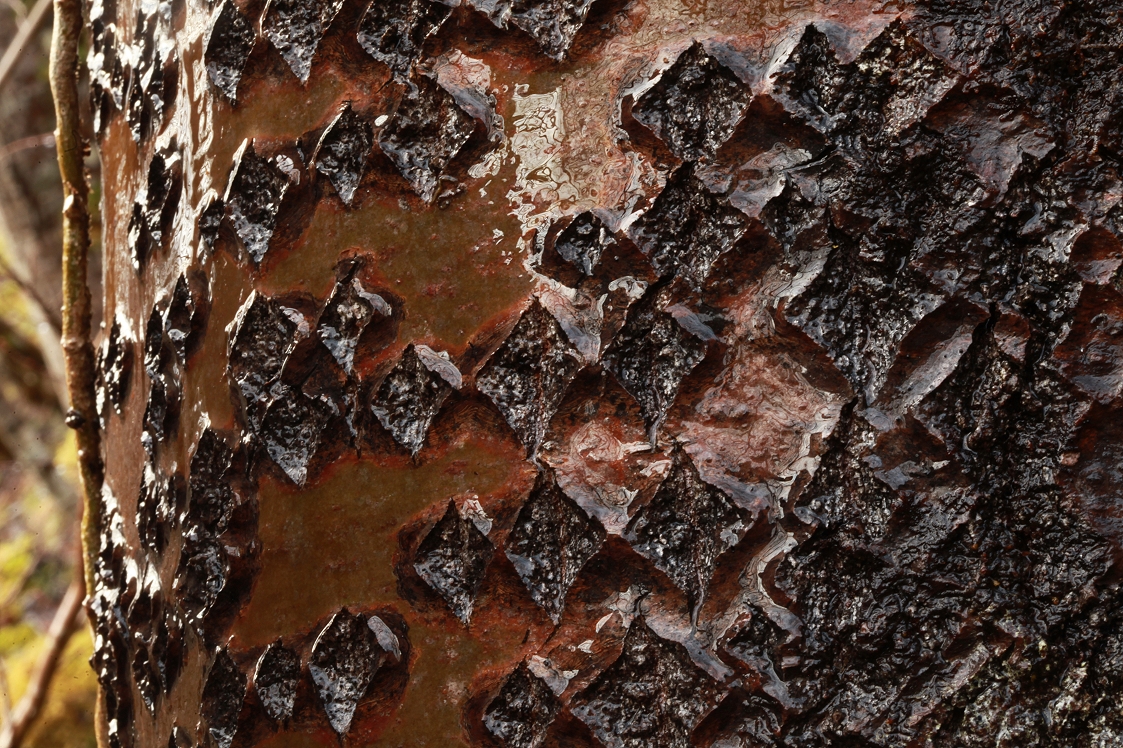
Many of the aspen trunks had a greenish tinge to them, which was intensified by the rain – the colours in the forest become more intense and radiant when everything is wet like it was on this day. Aspen is able to photosynthesise through its trunk using the chlorophyll that gives it this green colour, and sometimes I wonder if the tree has evolved this ability to compensate for the relatively short period that it has leaves each year. It is the last tree to get new leaves each spring, with them often not appearing until late May, and then it is one of the first to lose them in the autumn, at the beginning of October.
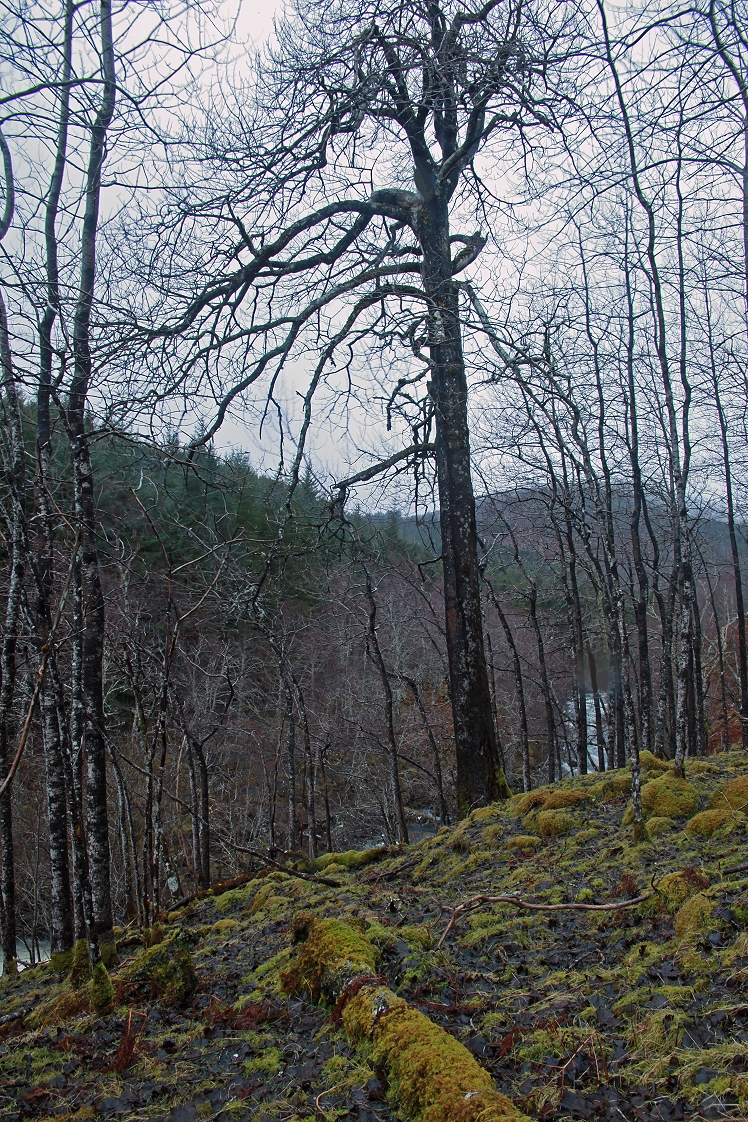
Perhaps it doesn’t need to have leaves for as long as other trees do, because it can harness the sun’s energy in the winter via its trunk, when it is exposed to the light, without any leaves to shade it?
There were several hundred large straight aspens in this stand, I estimated, plus other smaller ones. There was also one massive tree, which I think must have been the source of the others, that would have grown as suckers off its root system. A stand of aspens like this which are all the same organism, connected by their underground roots, are known as a clone, and somehow the term ‘clone mother’ sprang into my mind for the very large tree in the stand! By this time the light was fading so I didn’t have time to survey the entire stand, or measure the size of the trees – we’ll have to organise a separate trip to do a proper survey of the stand, and, if we can get permission from the landowner, collect some roots for propagation.
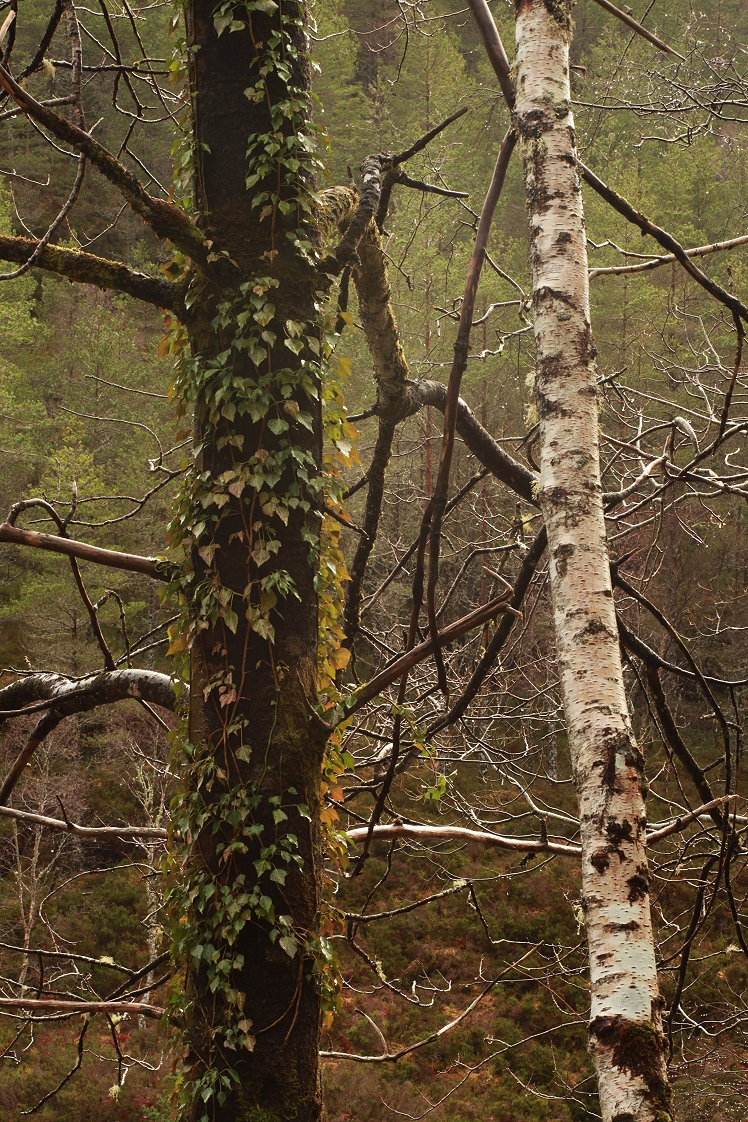
By now it was time head back to my car, but before I left I noticed one aspen with ivy climbing up it – something I hadn’t seen anywhere else before – and I returned home from the day exhilarated and inspired by discovering such a remarkable group of aspen trees.
Thanks for a fascinating account. I have noted the gorge and bridge when passing but finding unbrowsed aspen on that scale just demonstrates what we can miss. No wonder you were excited. Best Wishes Joan
Hi Joan, Thanks for your comment. Yes, it’s remarkable to find such an aspen stand like that, and it makes me wonder what else is out there waiting to be discovered? I’ve just heard from Liz Holden (mycologist) that what I called tinder fungus in that blog is actually a species of Phellinus, and the white fungus growing on it is Hypomyces aurantius, which hasn’t been recorded with Phellinus before, so that’s another discovery from the same day!
I loved the photo of the ivy covered aspen, very unusual . Yes, sounds like an exhilarating day out over at the River Cannich! Thanks for sharing these images, Alan 🙂
Thanks Nicki – I’m glad you’re continuing to enjoy my blogs!
Great blog fantastic pictures thank you : )
Nice write-up and photos Alan. Nice to see aspen in Scotland. I wonder if they are the same species as here in the western U.S. rob :o)
Hi Rob, Thanks for your comment on my post. Aspen in the USA is a closely-related species (Populus tremuloides) to the European aspen (Populus tremula), as their scientific names indicate. They share many characteristics – please see my article, ‘Aspen – Boreal Symbol’ at http://www.treesforlife.org.uk/tfl.aspen_boreal.html .
Thanks Alan. I would love to visit some day and photograph the work Trees for Life is doing. And, see where my family came from many years ago. John Muir is a huge inspirational figure here in the western U.S. Rob 😮
I didn’t know that Aspens photosynthesis through their trunks. Thanks for sharing! I really enjoy your blog and enjoy your beautiful pictures 🙂
Thanks for the feedback, Raven!