
After my experience last week-end, in the gorge of the River Cannich, where I found a large aspen stand we had no previous records of, I decided that this week-end I would visit another gorge I haven’t fully explored before – that of the Abhainn Gleann nam Fiadh burn in Glen Affric. This burn rises on the upper flanks of Carn Eige (which is situated between Glen Cannich and Glen Affric and is the highest peak north of the Great Glen in Scotland) and flows down to discharge into Loch Beinn a’Mheadhoin. On its way, it passes through the Meallan exclosure, which we funded on Forestry Commission Scotland land in 1991 (and where we planted over 28,000 trees in 1992-4) – I know that section quite well. Downstream, however, a section of the burn passes through a steep-sided gorge, which I had never gone into, so that was my destination for the day.
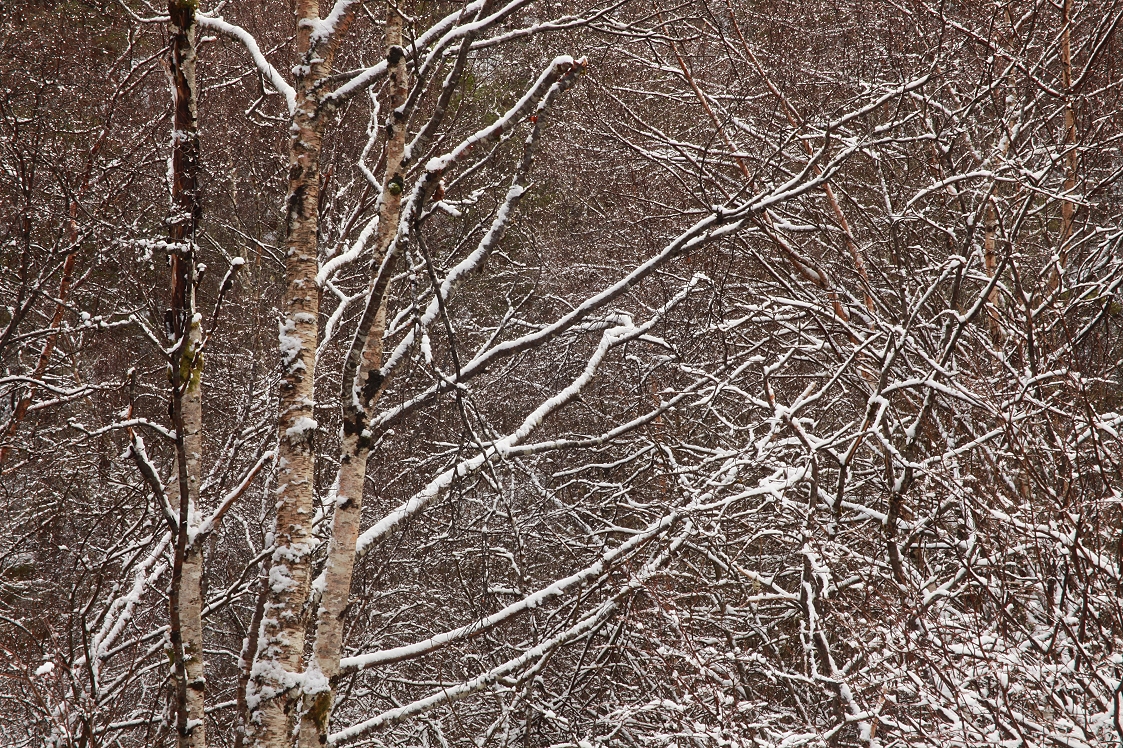
On my way there, I stopped near Dog Falls, further east in the glen. There had been a recent snowfall, and the narrowness of the Affric River gorge there meant that the area was more sheltered from the wind, so I was delighted to see that the snow had remained on the trees. It was the only place in the glen that day where the snow had stayed on the branches, outlining each in a highlight of white, and it was worth spending some time there to appreciate the delicate but ephemeral beauty the snow created.
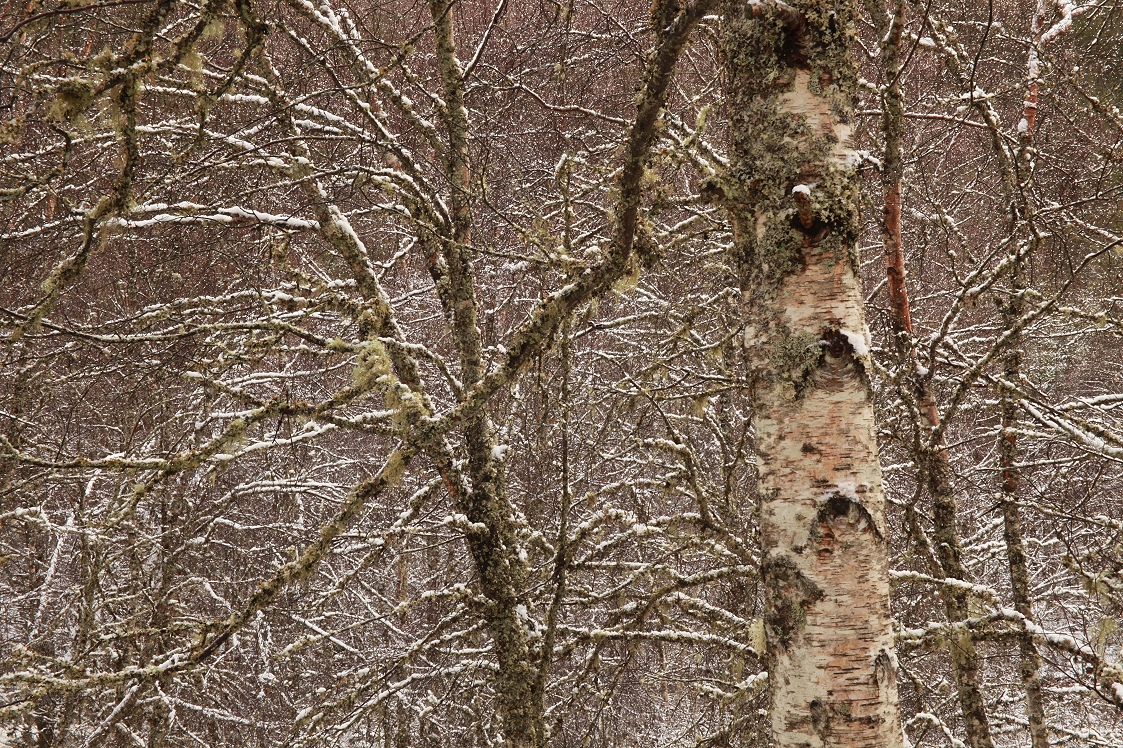
It is mostly birches that are growing beside the road in that part of the glen, and in the absence of snow, their bare branches just look like a complex tangle in the winter. However, the coating of snow on each branch enables them all to stand out from each other, and reveals an intricate pattern of crossing branches that is otherwise not readily noticeable. To my eye, the snow transforms the landscape in winter, and creates a lot of opportunities for photographs at a time when it is otherwise not easy to take inspiring and atmospheric images in the forest.
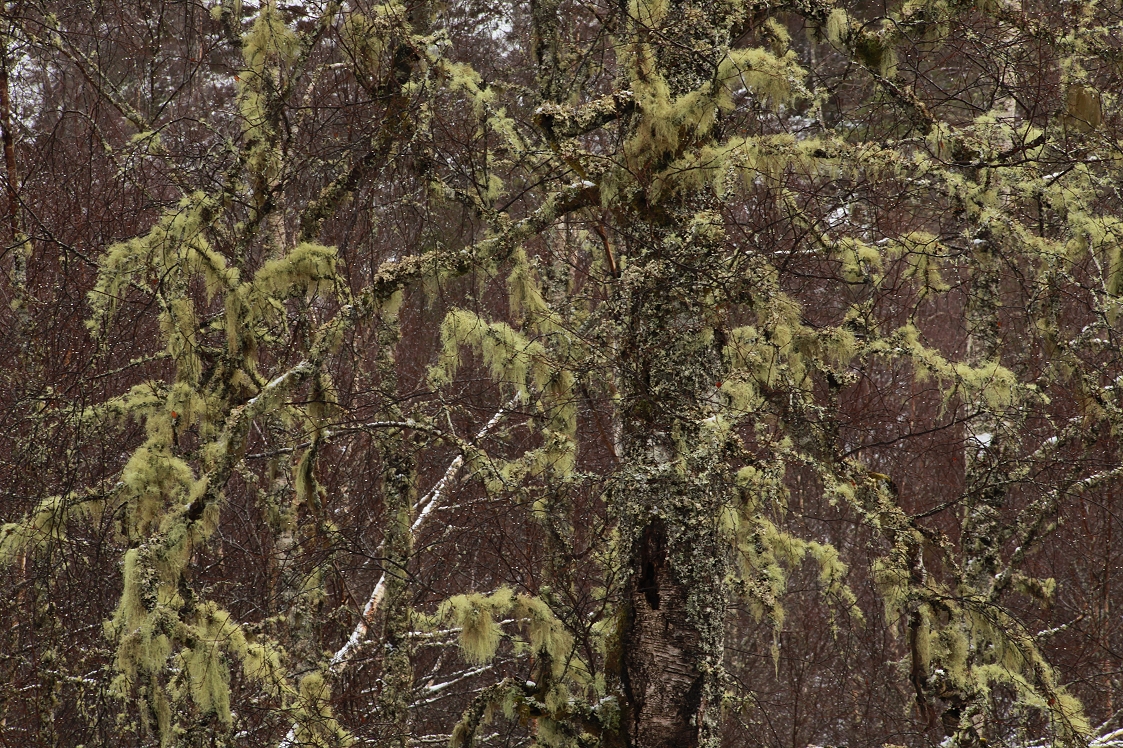
The snow was intermittent and patchy in its distribution, no doubt the result of the relative degree of exposure or sheltered-ness of each place, and in some areas there was virtually no snow visible at all. Because of the relatively high humidity in the gorge around Dog Falls, many of the trees carry a substantial load of epiphytic lichens, which use the tree for support, but don’t take any nutrients from it – they obtain the food they need from the rain, sun and particles of organic matter that fall on them.
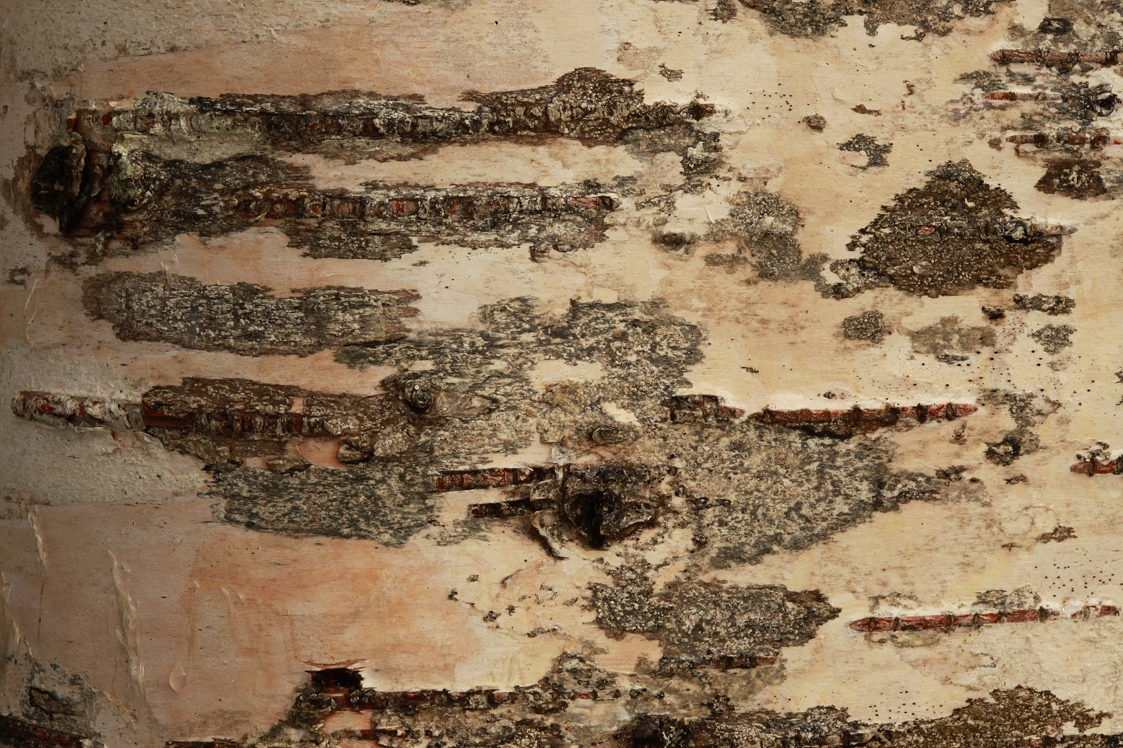
I stopped to look closely at one birch which had a beautiful pattern on its bark. In the summer I would probably not have paid that tree any attention at all, but in the absence of leaves, the bark of the trees and the lichens on their branches draw my interest much more. There is so much to see and appreciate in Nature and in the forest, and on days like this I realise that I walk past most of it a lot of the time. How many other trees have such interesting bark, I wonder, but I’ve never noticed it?
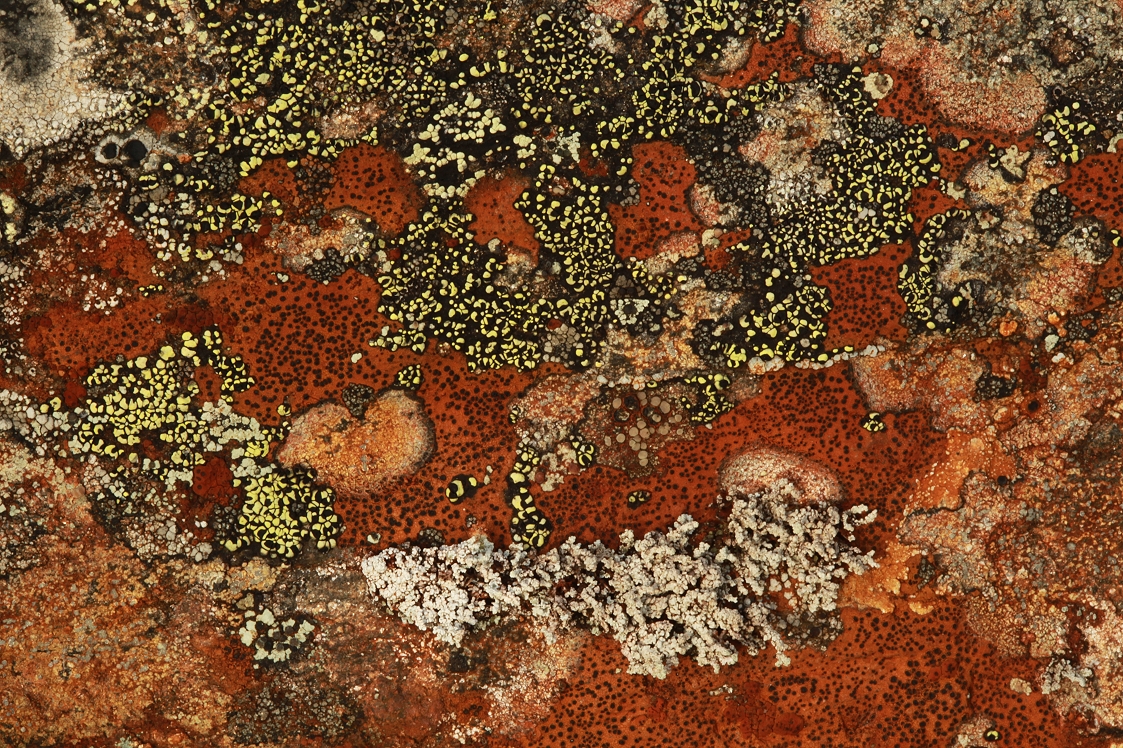
Moving further up the glen, I stopped at a place where the road overlooks Loch Beinn a’Mheadhoin to have my lunch and enjoy the view. Whilst there my eye was drawn to a beautiful mosaic of brightly-coloured lichens growing on a small rock amongst the heather. These are crustose lichens – the type of lichens that grow flat on, and completely flush with, their substrate – the rock in this case. Such beauty again, of colour and form, on such a small object – the rock was no larger than my daypack.
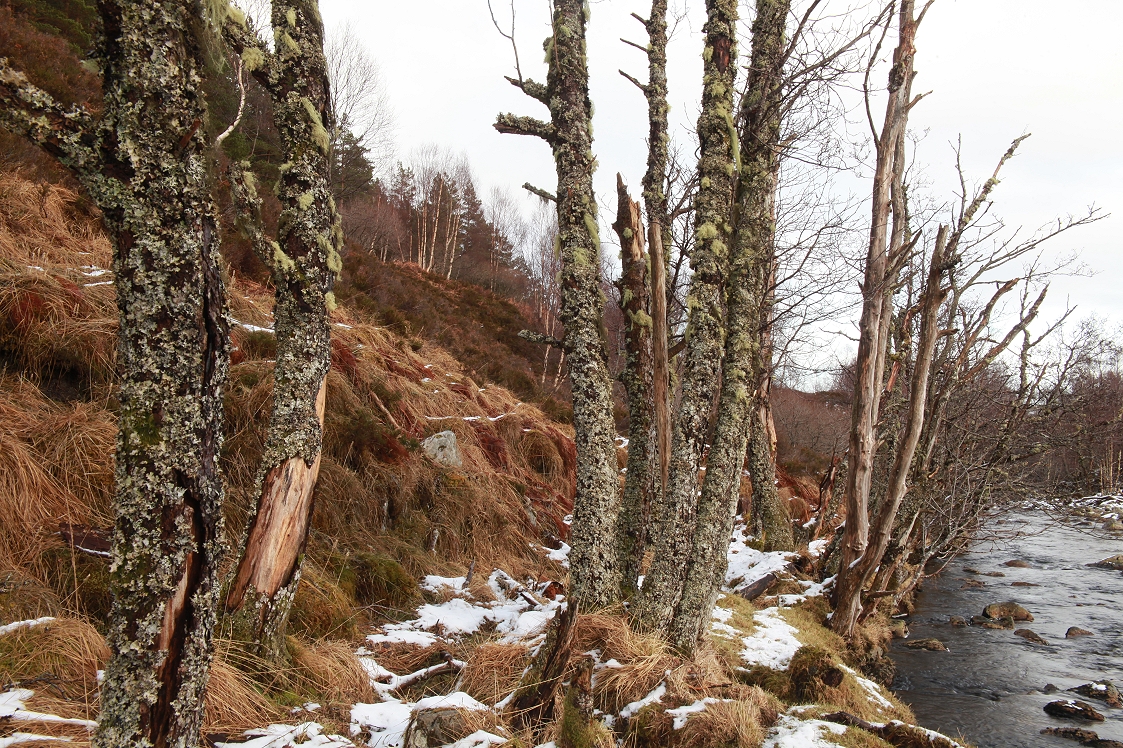
Finishing my lunch, I continued west to where the road crosses the Abhainn Gleann nam Fiadh burn and began walking upstream from the car park by the bridge. I’ve explored the first few hundred metres of the burn above the bridge before, but I have to confess that it’s not one of my favourite places (which probably explains why I hadn’t visited the sections further upstream before).
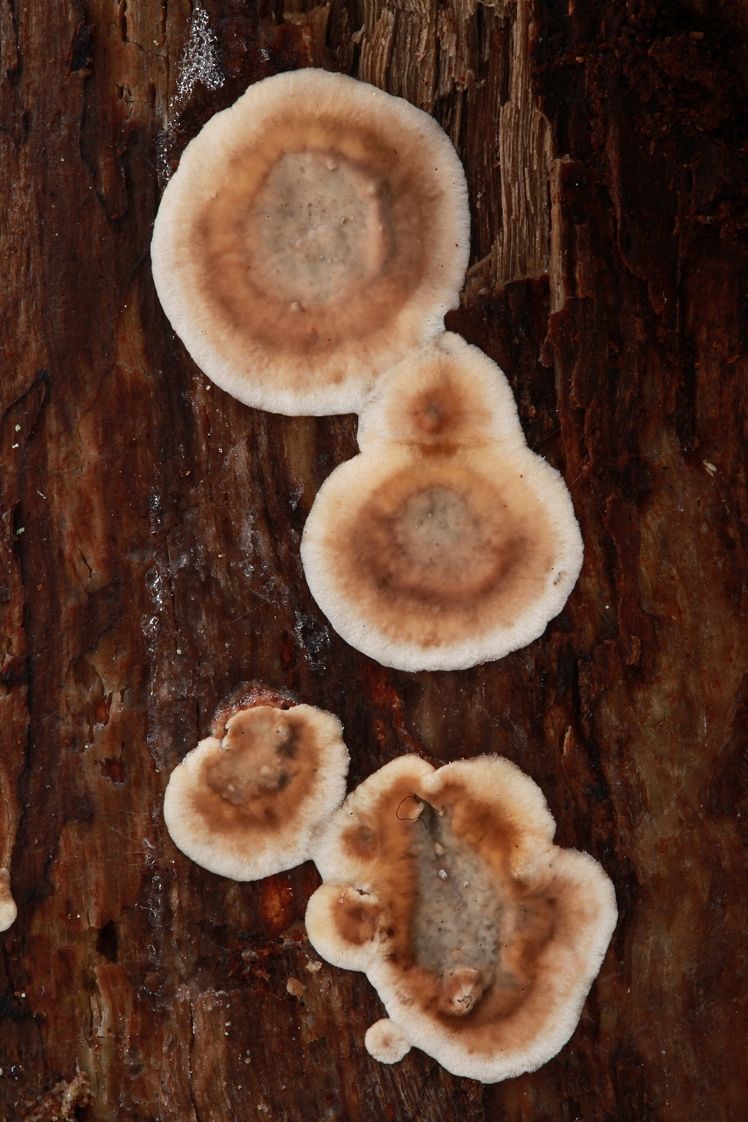
The reason for this is that the lower part of the burn is mostly tree-less, and the trees that are there consist mostly of alders (Alnus glutinosa) which have been killed by the mystery disease that is affecting alders in many parts of the Highlands – a rather depressing sight. However, as is always the case in Nature, one species’ loss – in this case the alder’s – is another species’ gain, and the dead alders were providing the habitat for fungi. In particular, there were clusters of the bleeding broadleaf crust fungus (Stereum rugosum) fruiting on a number of the standing dead trees, or snags, as they are called. This fungus derives its common name from the fact that, when its surface is scratched, it secretes a red liquid, so that it looks like it is bleeding. It is a saprotrophic fungus, helping to break down the cellulose and lignin of the dead wood, and making the nutrients available for other organisms.
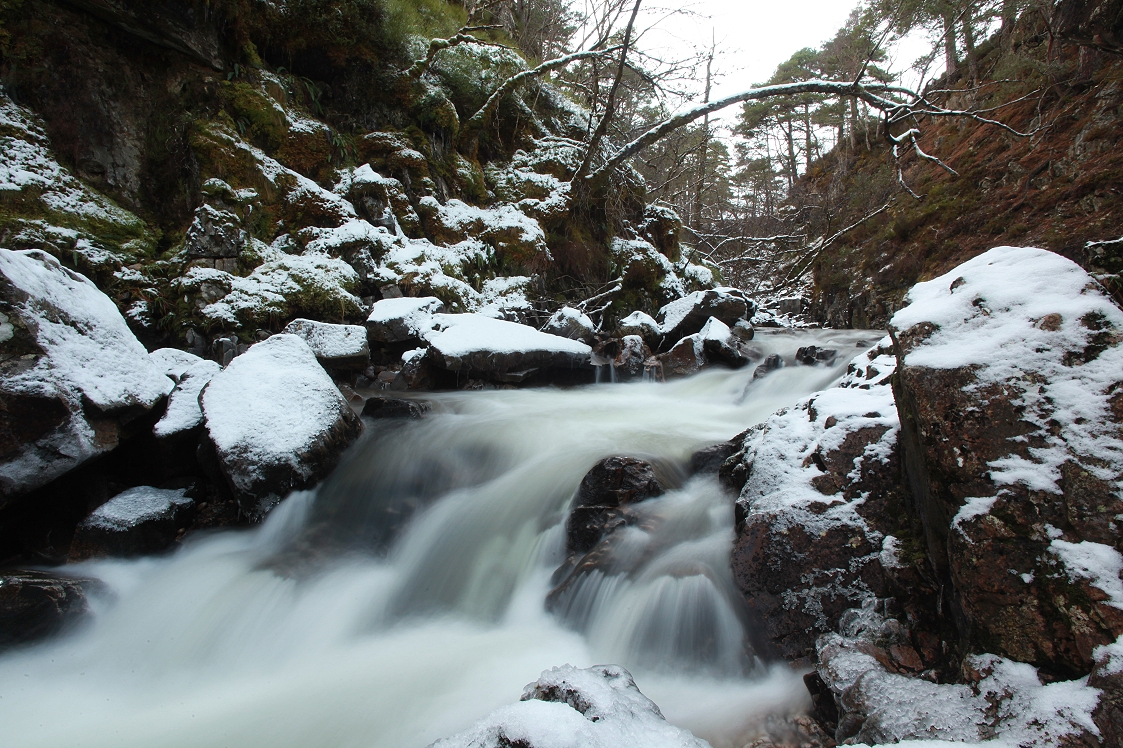
Moving upstream from the dead alders, I entered the gorge proper, where the shady conditions meant that there was a lot of snow and ice on the rocks and ground. The sun never shines into the bottom of the gorge in winter, so the conditions there were much colder than downstream, where the burn flowed through more open and gentle topography. There were plenty of small cascades on the burn, and the flowing white water made an interesting counterpoint to the frozen white of the snow and ice.
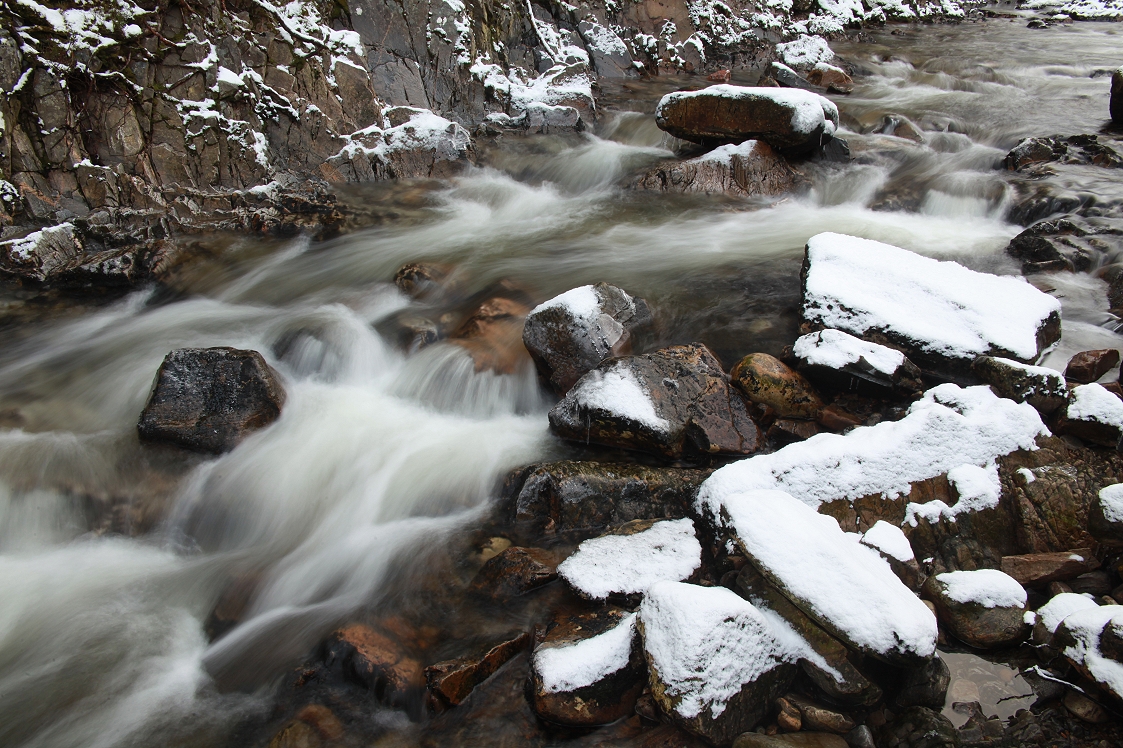
By using long exposures for the photographs, the movement of the flowing water becomes blurred, giving rise to shapes and forms I sometimes think of as ‘angel hair’. To me it is aesthetically very pleasing, to give that sense of movement in a still photograph. There were plenty of opportunities to do this along the burn, as there were numerous small cascades in the gorge.
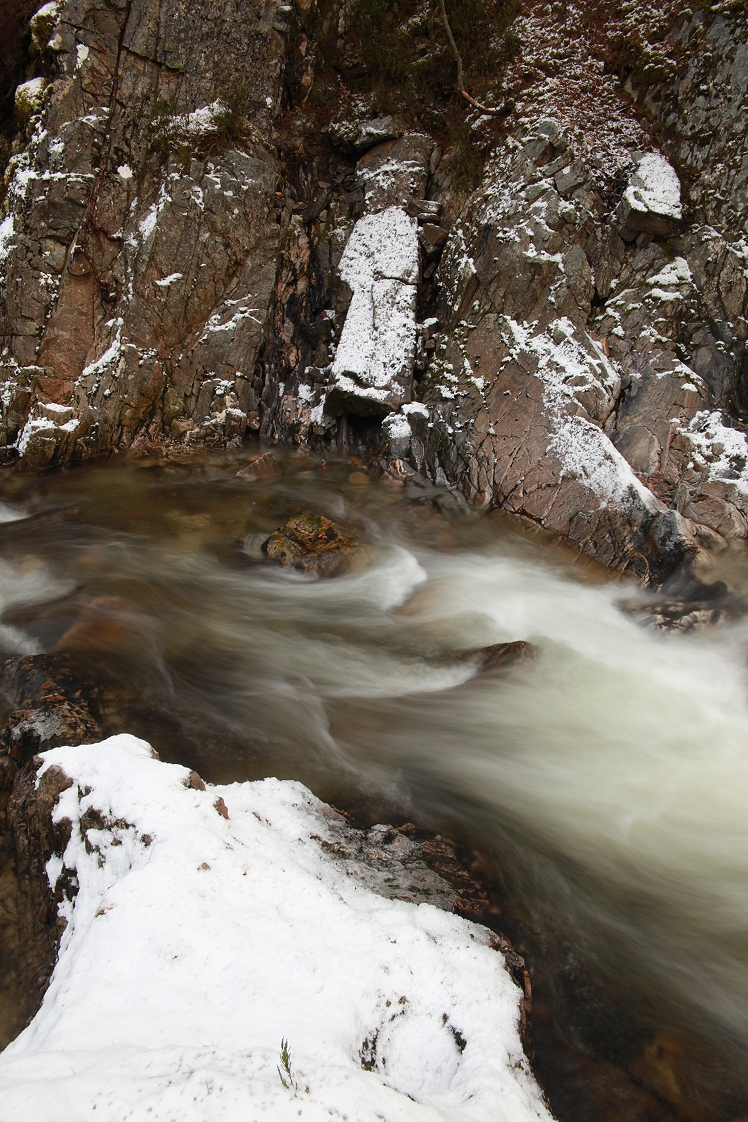
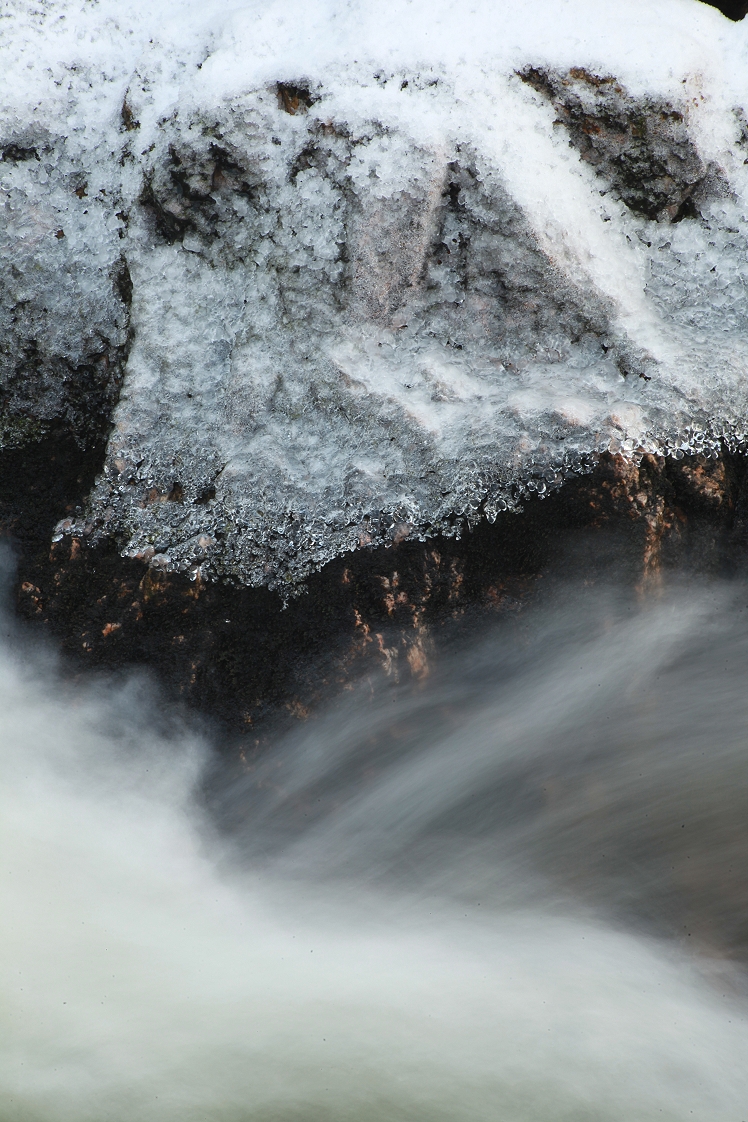
The contrast between the frozen water, in the form of the snow and ice, and the flowing water provides an interesting analogy for many other things in life. Although they appear to be very different, they are in fact two discrete states of the same substance – water. So, too, in our human world, while we think we are different from each other, in reality we are merely different expressions of the same source, I believe.
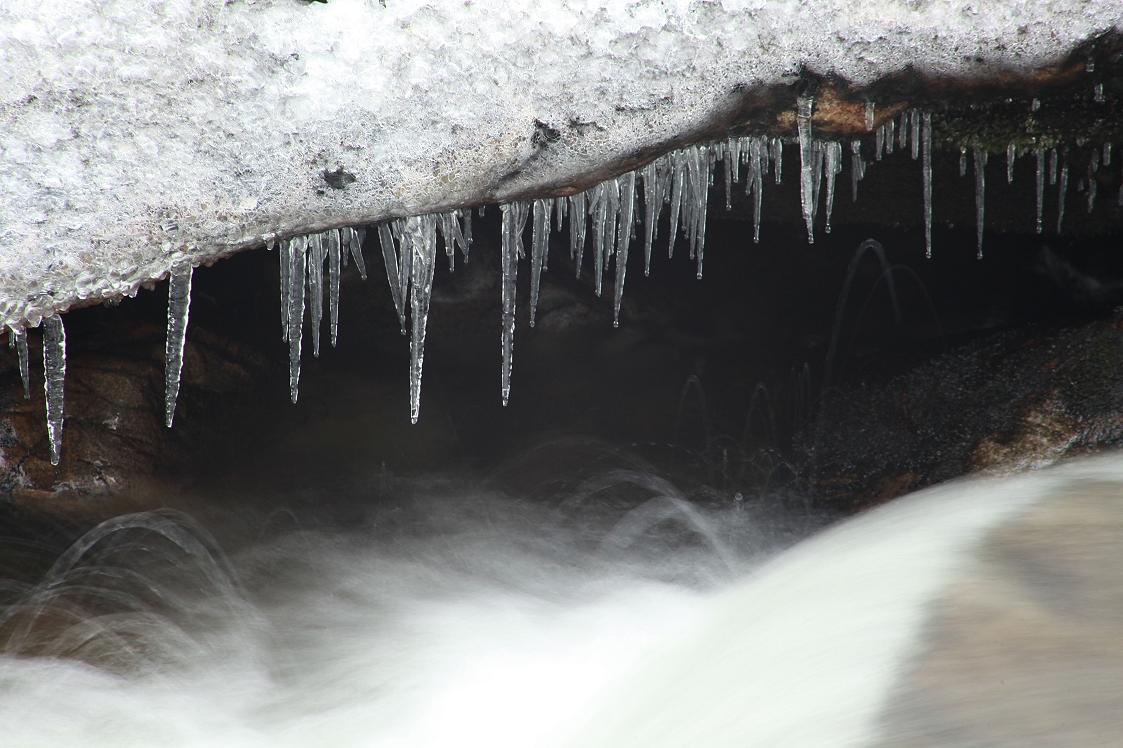
In one place, the snow and ice on an overhanging rock must have thawed a bit and frozen again, forming needle-like icicles hanging down from the rock. They looked like huge crystalline teeth, ready to bite the flowing water itself. Snow, small spheres of ice on the rock, icicles and the flowing burn itself – these are all different manifestations of water, that most remarkable of substances, which is crucial to the existence of all life on Earth.
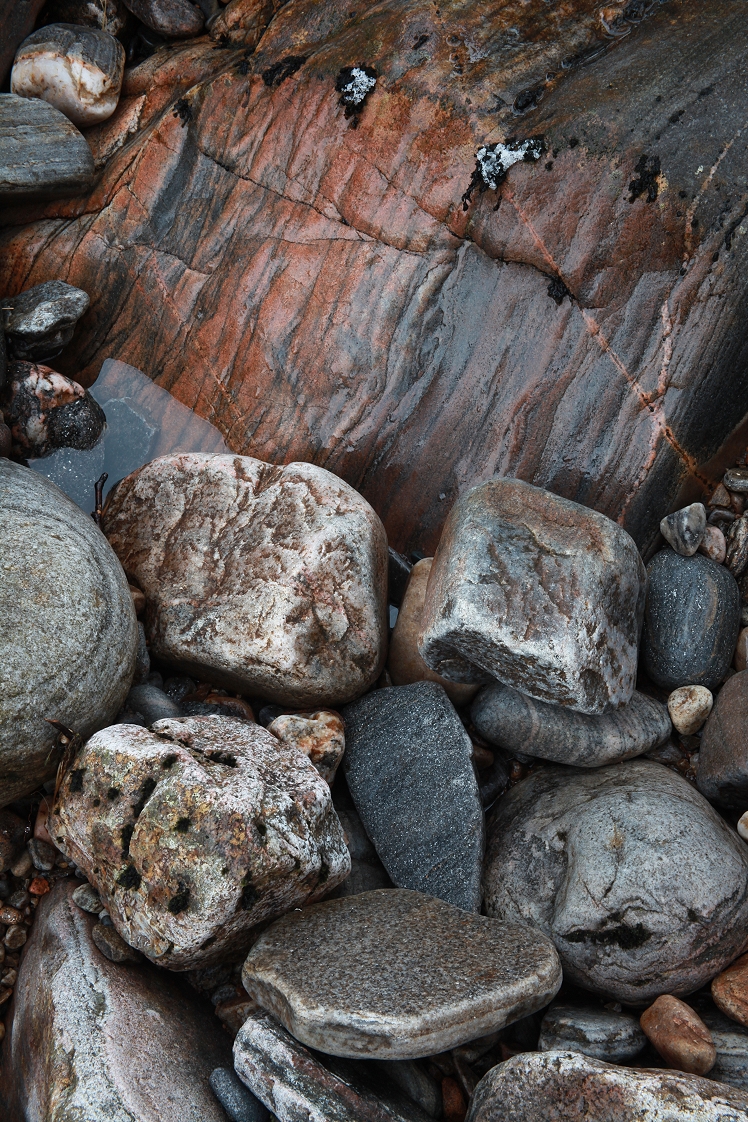
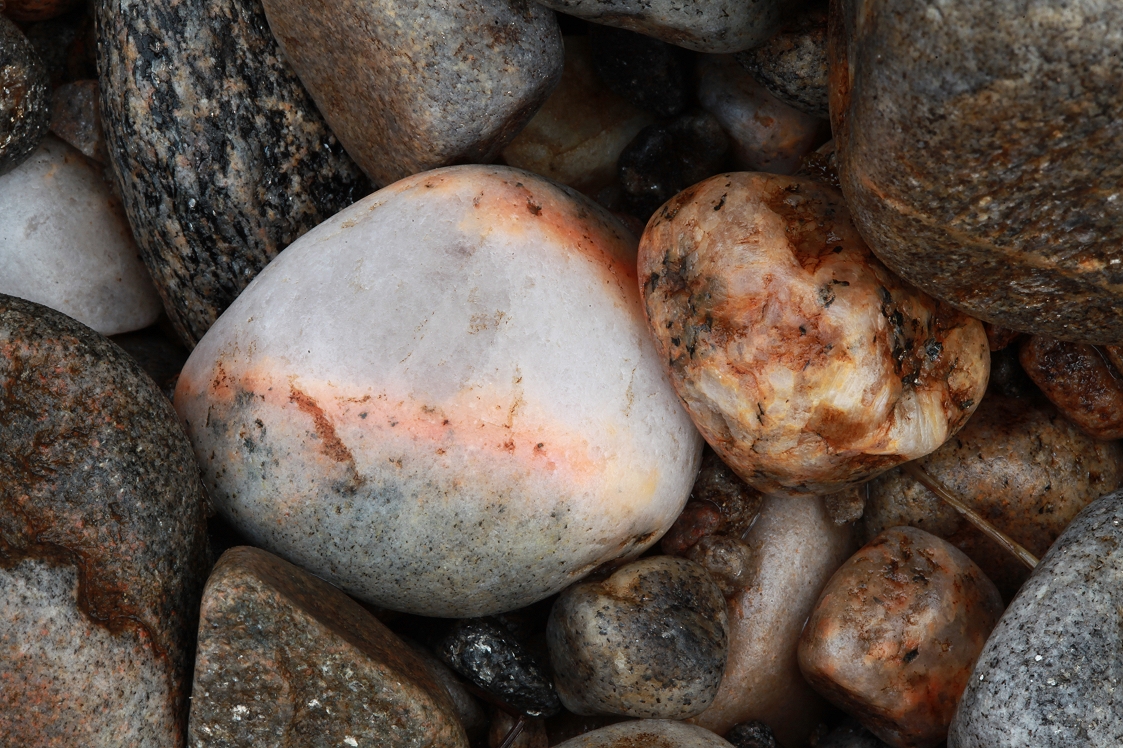
In some places, the snow had either melted or been washed away by the variable flow of water in the burn, and there were some beautiful rounded and colourful rocks visible there.
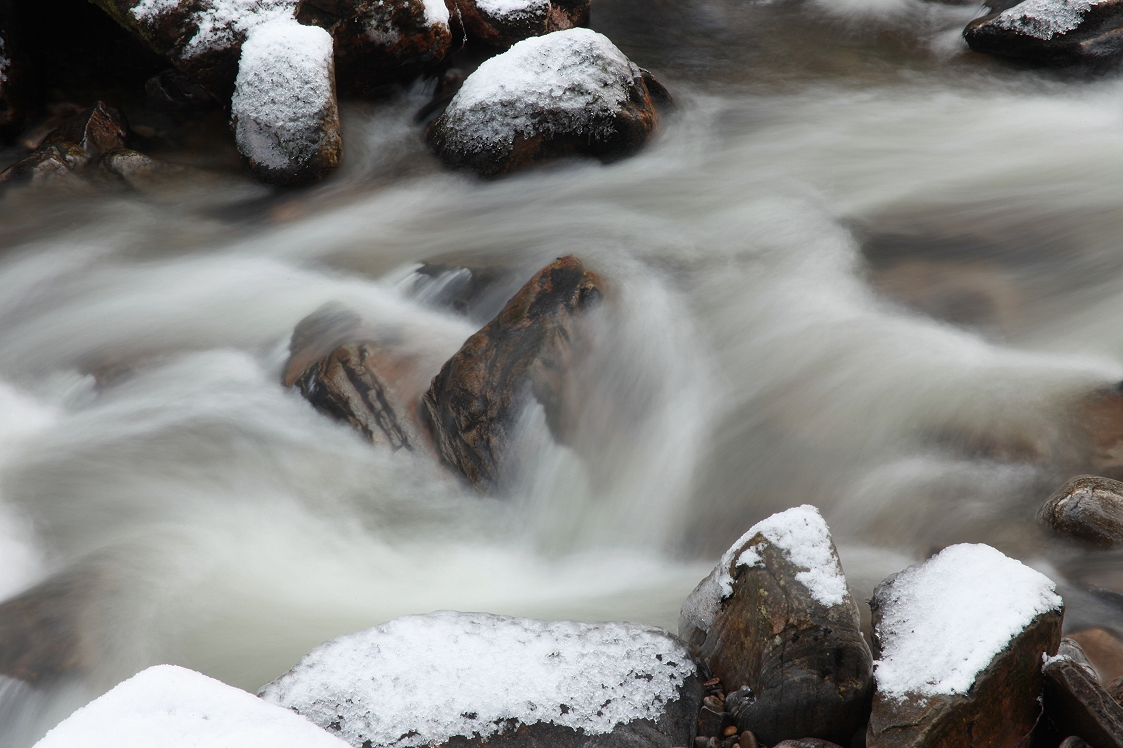
A few solitary rocks in the middle of the burn made for some interesting images, surrounded by the swirling waters of the cascades.
In addition to taking still photographs, my camera also shoots high definition video, although I don’t use that feature very often. However, with all the cascades and flowing water, this seemed like a good day to do so, and the short clip below is the result.
[jwplayer config=”river_lg” file=”http://www.alansblog.org.uk/river_lg.mp4″ html5_file=”http://www.alansblog.org.uk/river_lg.mp4” image=”http://www.alansblog.org.uk/river_lg_preview.jpg”]
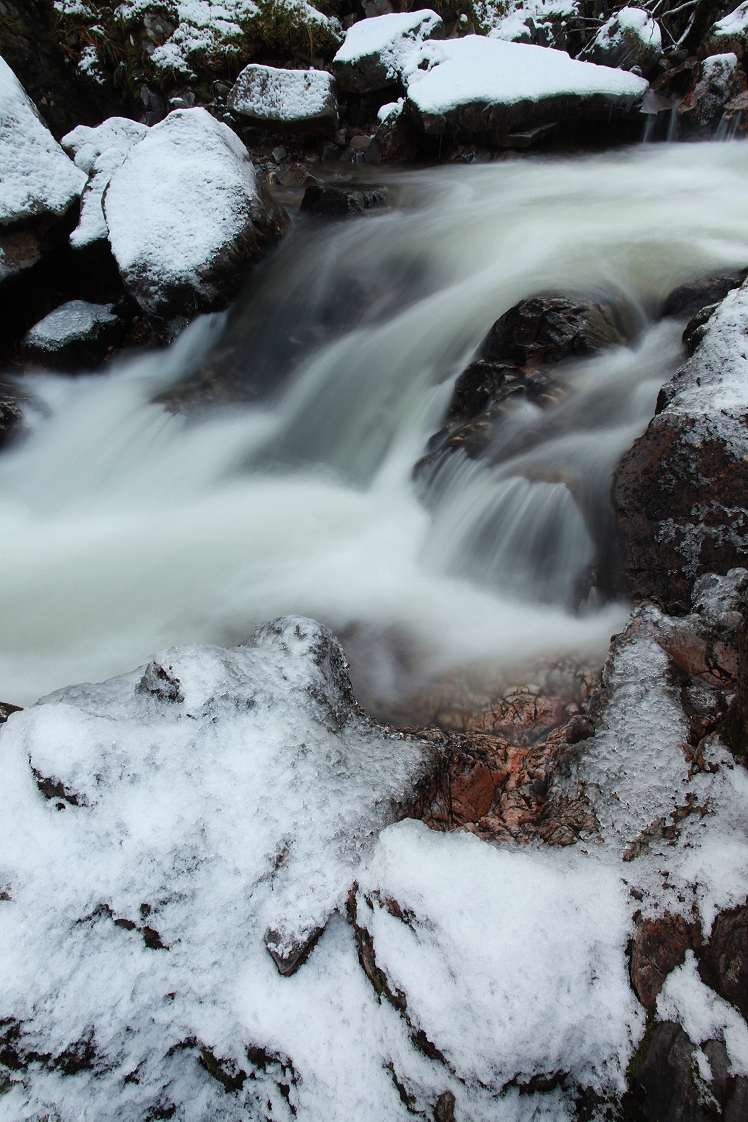
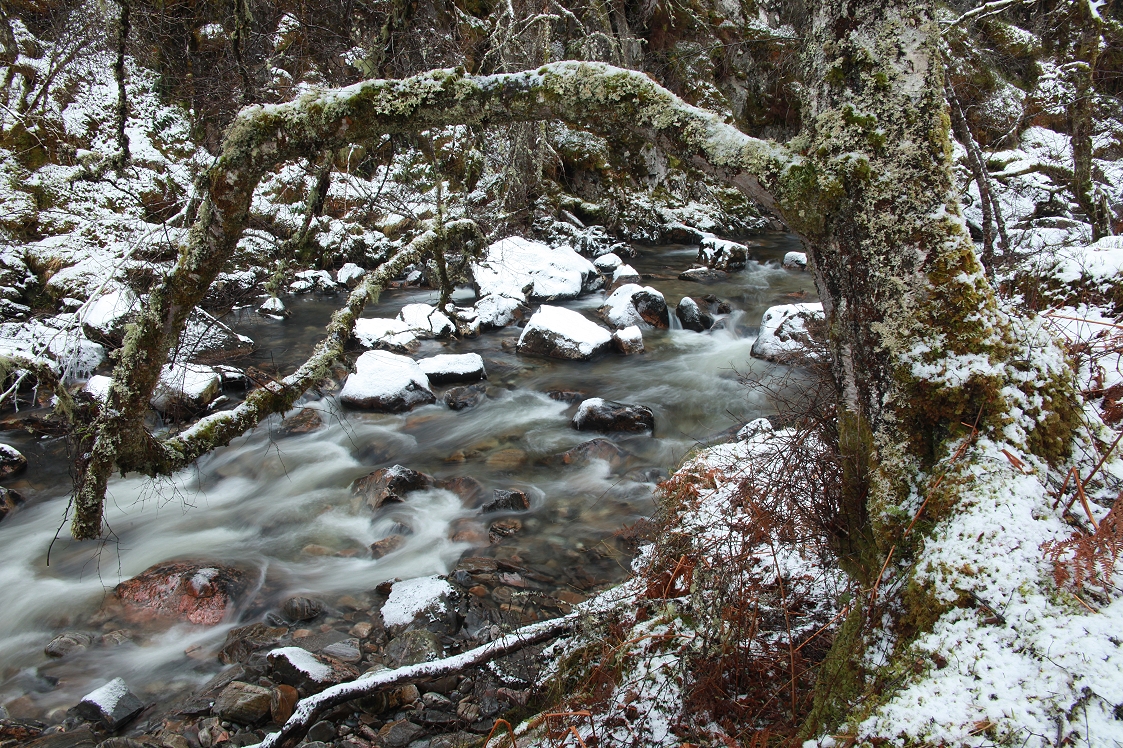
The gorge was becoming deeper as I moved upstream, and there was more snow on the rocks and the ground, because of the greater shelter provided by the topography and the absence of any direct sun.
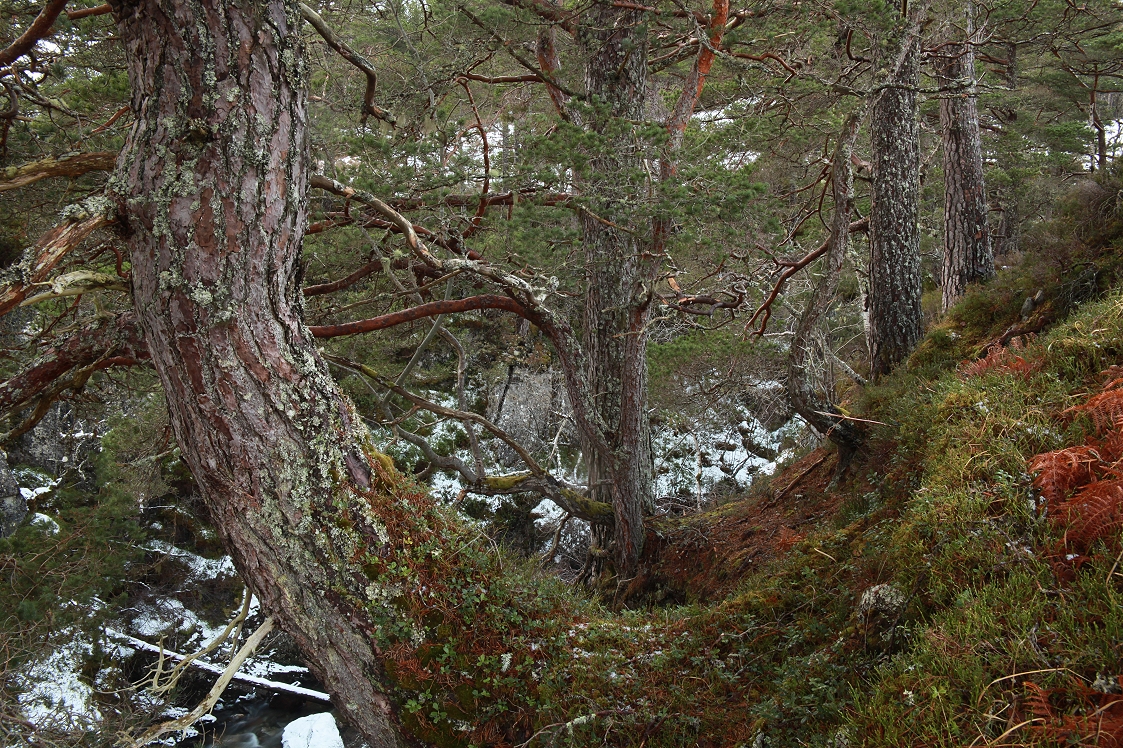
A little further on, the side of the gorge I was on became precipitously steep, so I had to climb up and out, and continue upstream on the relatively flat ground beside the gorge itself. There was virtually no snow there, because of exposure to the sun, but there was a straggle of Scots pines (Pinus sylvestris) clinging on to the rim of the gorge. They had been able to flourish there presumably because the steep slope had prevented red deer (Cervus elaphus) from reaching them, whereas any seedlings that germinated on the flatter ground, away from the edge, must have been eaten.
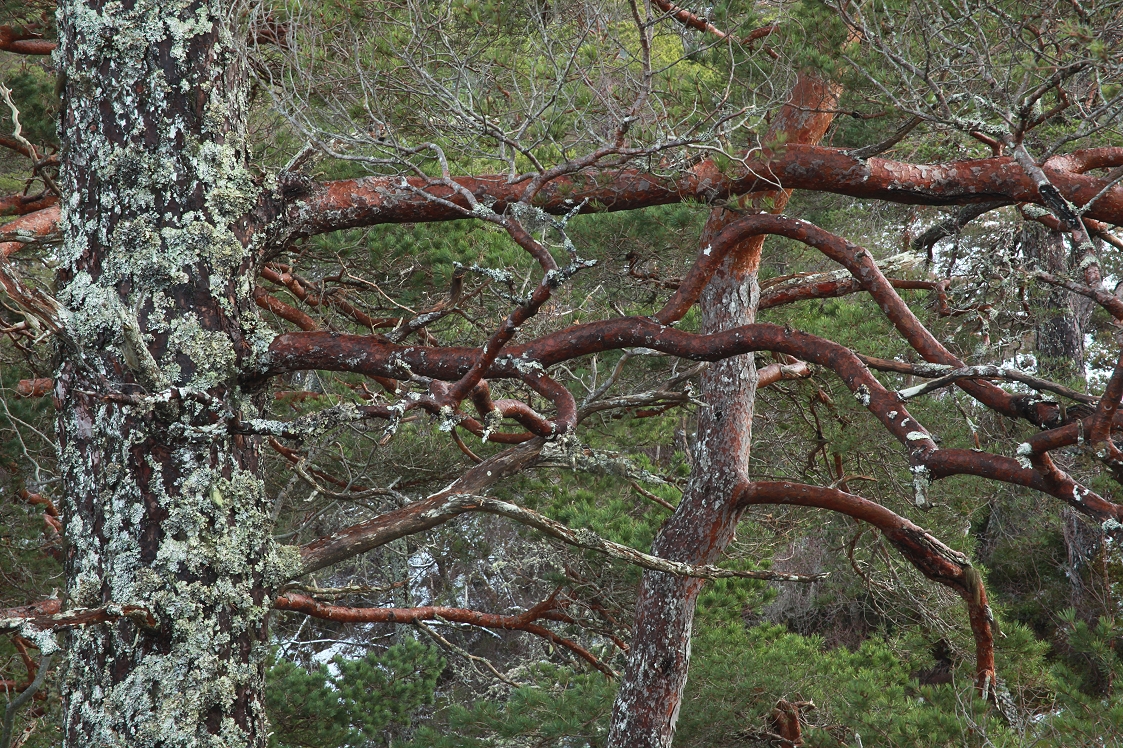
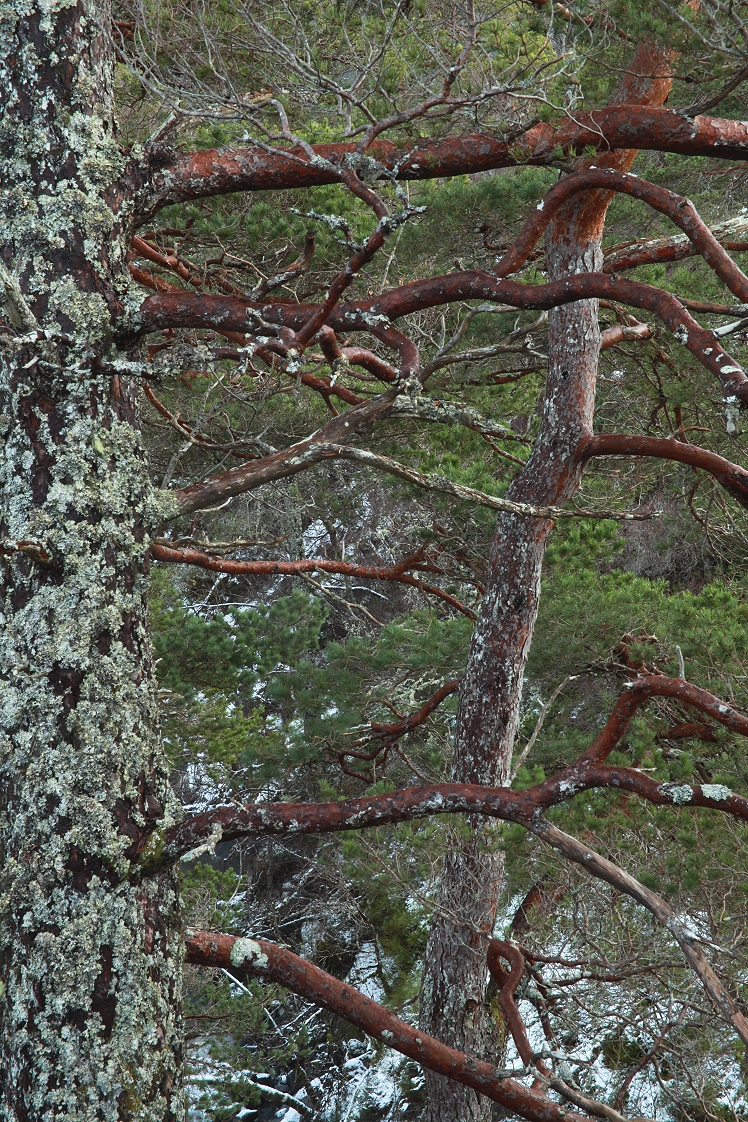
It was much easier going along the rim of the gorge, although the heather was quite tall in places. I could hear a louder sound of water coming from about 100 metres further upstream, so I headed for there in what was now fading light.
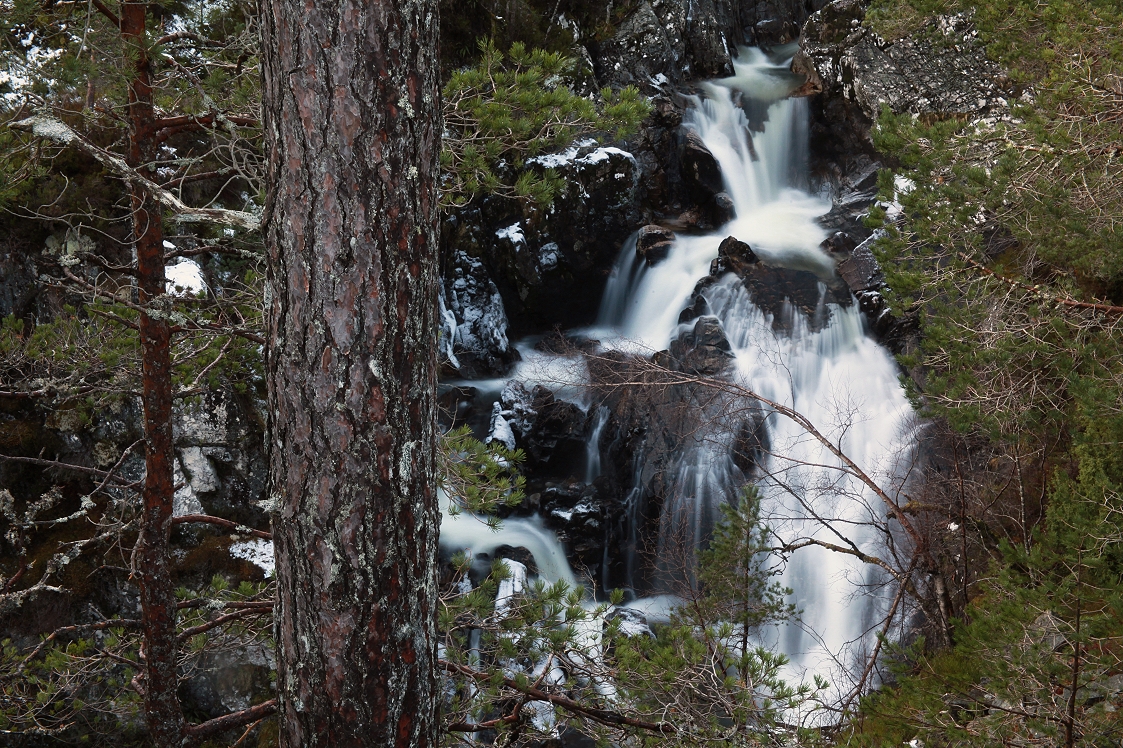
As I drew nearer the source of the sound, I could see there was a large waterfall with several tiered cascades deep in the gorge ahead. It was hard to get a clear view of the whole waterfall, because of the density of pine foliage in the way, and there was certainly no way to get closer to the falls in the gorge itself, as the sides consisted of vertical rock there. The low illumination afforded by the approach of twilight also made it impossible to look around for other view points.
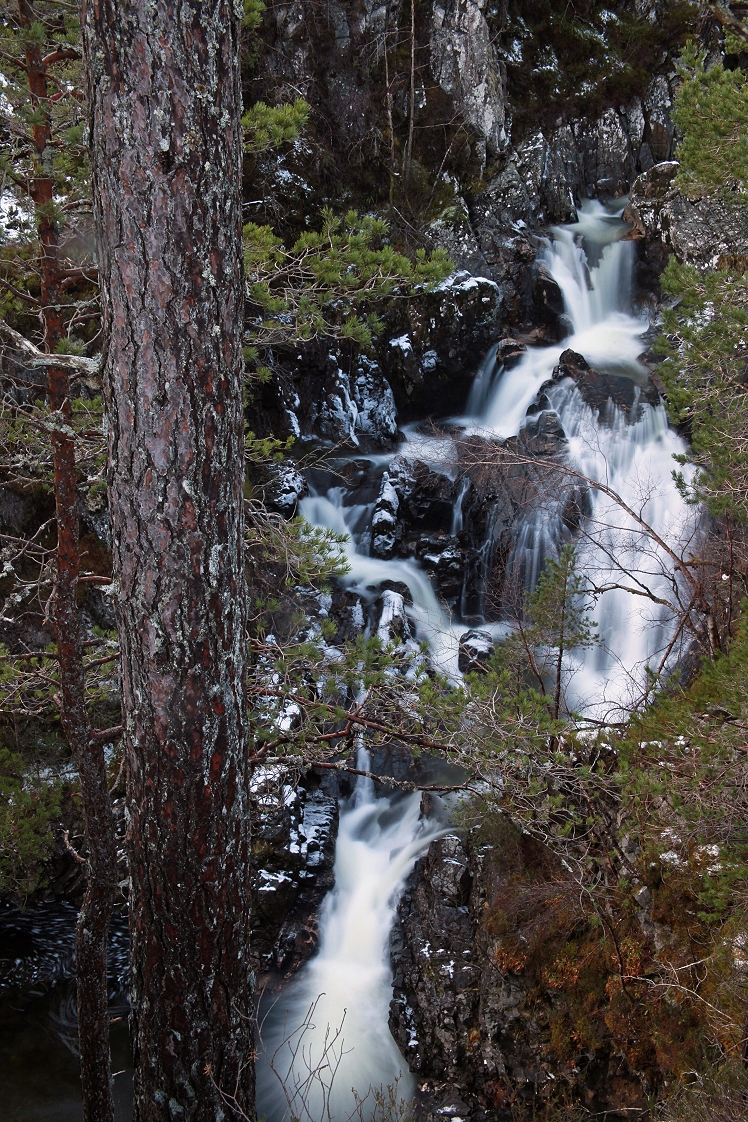
By this time it was literally getting too dark to take photographs – my last few images were all taken at a higher ISO setting on the camera, and with long exposures. It was time to call it a day, and when I got back home and checked the 1:25,000 Ordnance Survey map for the area, I was surprised to discover that these falls weren’t even shown on it! There were some other falls indicated on the map, but about another 200 metres further upstream, in a section of the gorge I still haven’t seen. Those will have to wait for another trip, and they provide a good reason to return to the area again in the near future.
I returned home well satisfied with another day out in the forest, and pleased that I had seen these beautiful waterfalls for the first time.
Have just recently signed up to your blog +finding it very interesting with lovely photographs . Almost like being there without the cold weather! Have shown to friends who also enjoyed. Looking forward to the next one! ps.(I am taking good care of the two wee junipers I got from the Dundreggan work week last October)
Frances
sunny (at the moment!) Edinburgh
Thanks for your feedback, Frances – I’m glad you’re finding my blogs interesting. I’m working on another blog entry just now, and it should be online in the next day or two. Good to know that your two junipers are doing well too! With best wishes, Alan.
Hi Alan; thanks for all your posts, and especially in this latest one for the river video; loving the area but living so far away (in mostly-boring urban, lowland England), it’s a treat to get a sense of ‘being there’, however briefly.
Hi Martin, Thanks for your comment – I hope the blogs will entice you to get up to the forest yourself at some stage, even if it is a long way! With best wishes, Alan
“aesthetically very pleasing”…. as is this blog! The video clip of the cascading water was a lovely touch to add. Thank you, Alan, for the images, the descriptions and the thoughts 🙂
Thanks Nicki, I’m glad you’re continuing to enjoy my blogs! I hope to see you again soon … with best wishes, Alan
Great snaps, will there be some of the planting areas when tree planting starts again?
Wonderful photography! Made me feel (and wish) I was there. An interesting read. I feel I have been on a hike without even putting my boots on! Thank you so much. Andrew
Another great post Alan. Nice to see the natural history of Scotland. Found your location on Google Earth. I wonder if most of the land out where you are hiking is the equivalent of our National Forests here in the U.S. or private lands? Good job. Rob 😮
Hi Rob, Thanks for your ongoing appreciation of my blogs! This gorge in Glen Affric is on land managed by Forestry Commission Scotland, our equivalent of your Forest Service. It’s been designated a National Nature Reserve, which although it doesn’t have the kudos of National Park status (we only have two National Parks in Scotland), is a more purely nature conservation-based designation. Much of our larger Project Area where we work is privately owned though. Alan
Thanks Alan. Interesting. Rob :o)