
On my previous visit to Dundreggan there had been a lot of beautiful hoar frost on the vegetation. The last few days had been similarly very cold, with sub-zero temperatures, but it had got warmer over night, with quite a lot of rain falling, so I was expecting a wet day rather than a frosty one this time. Arriving in Glen Moriston, there was low mist drifting across the hillsides on the south of the valley, giving a very atmospheric appearance to the landscape.
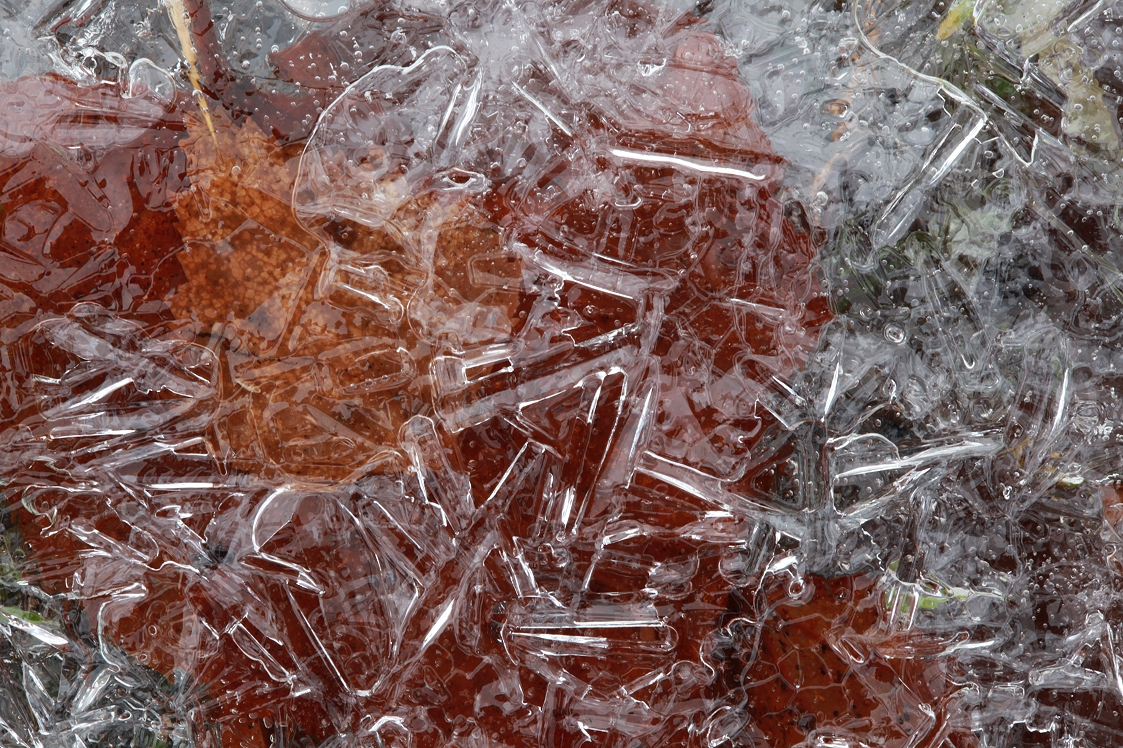
The road into the visitor car park at Dundreggan was rather treacherous, with a film of water sitting on top of black ice, so I had to drive cautiously. When I began walking, my eye was caught straight away by some ice formations on several puddles and small pools nearby. The ice must have melted slightly and re-frozen, because it was full of cracks and jumbled pieces, which created interesting geometric patterns and shapes on each pool.
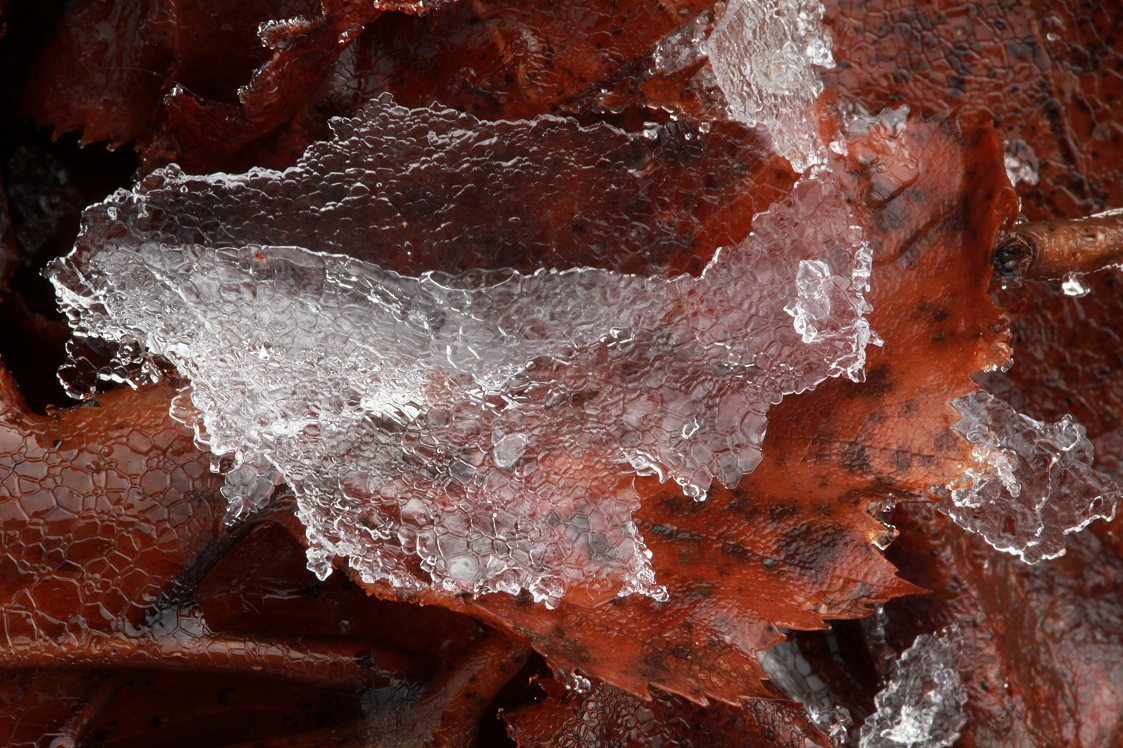
There had obviously been a lot more ice a day or two previously, but because of the warmer weather overnight there were only a few places with any left –typically in sheltered dips or hollows. Some groups of leaves had either granules of ice clustered together on them, or, in some cases, a delicate film of ice which mimicked and highlighted the shapes of the leaves themselves.

A few drops of rain began falling, and I could literally see the ice melting in front of my eyes – I was the only person who was going to see these ephemeral frozen works of Nature’s art there this day. In situations like this I feel very privileged as a photographer in being able to take a photograph of such transient beauty, and possibly being the only person ever to actually see the subject. It gives me great joy and satisfaction to share such images with others – to pass on some of the wonder that I experience in the world.
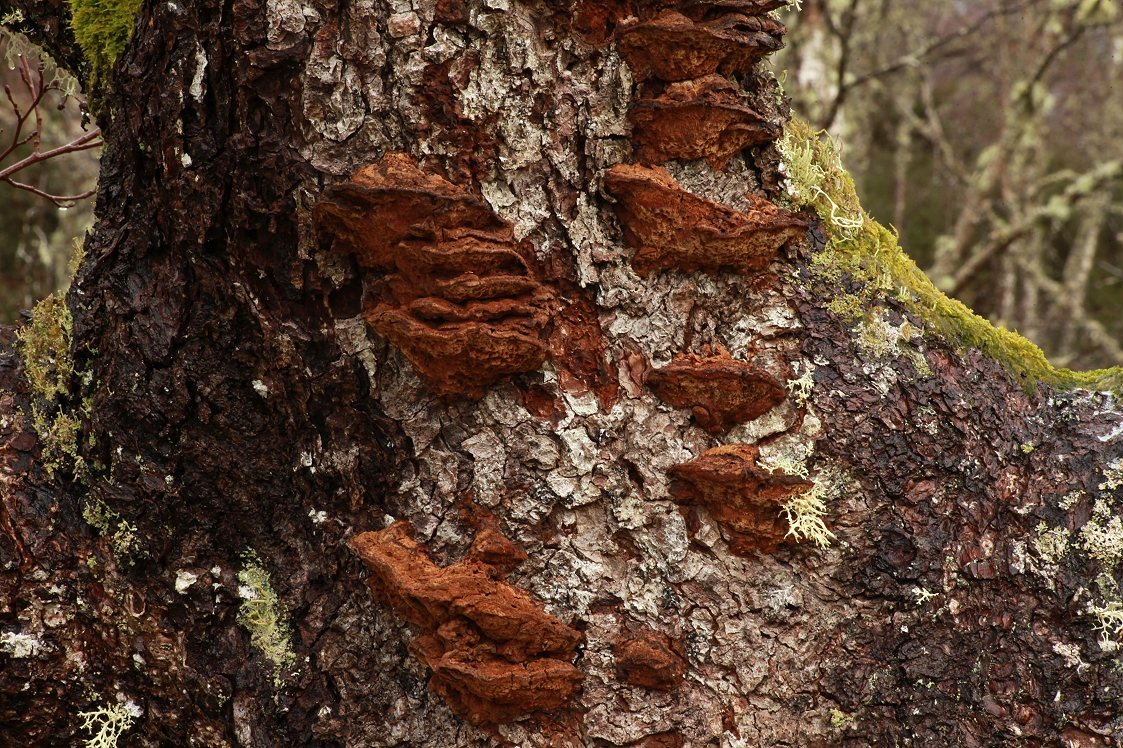
Leaving the frozen pools behind, I walked towards the cascades on the Allt a Choire Bhuidhe burn, thinking there might be some ice left there still, as the falls are quite shaded by the surrounding trees and juniper bushes. On my way I passed a dead alder tree (Alnus glutinosa) that had a couple of different species of fungi fruiting on its trunk. One of these consisted of a group of bracket fungi which were past their best condition, so I wasn’t able to identify them myself. However, I collected a sample to send off to an expert, and I hope she subsequently confirmed they are the alder bracket fungus (Inonotus radiatus).

On another part of the standing dead alder, or snag, was a species I’ve seen a lot of recently, particularly on the alders that have died from the mysterious disease that is killing them throughout many parts of the Highlands. The fungus in question is the bleeding broadleaf crust fungus (Stereum rugosum), which grows on a variety of dead broadleaved trees, especially alder and hazel (Corylus avellana) in the area where we work.
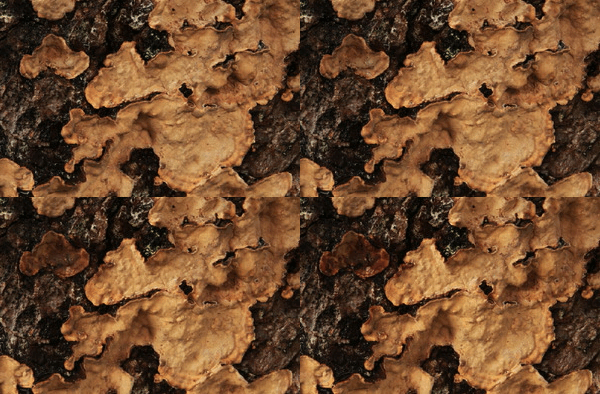
I wrote in my previous blog about how this species obtains its common name from the fact that when the surface of the fungus is scratched, it secretes a red liquid which looks a little like blood. So, this time I decided to take a couple of photographs to illustrate this phenomenon, and the images here show the result. The ‘bleeding’ is very conspicuous in the small patch of the fungus in the upper left of the photograph, where I’d scratched it just moments before.
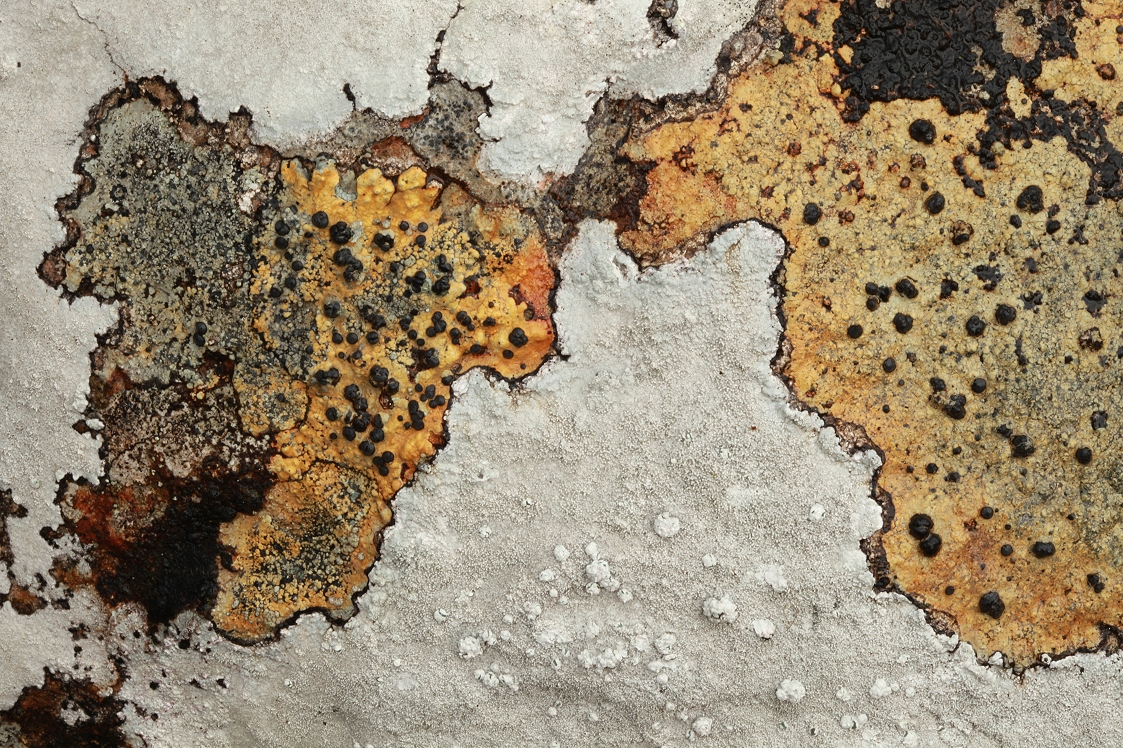
Nearby, there were some groups of small rocks that were covered in beautiful patterns of brightly-coloured lichens and I spent a few minutes appreciating and photographing them. These are crustose lichens, that grow flush with their substrate (ie the rock in this case). Typically they grow very slowly, and some species secrete an acid that dissolves the outer mineral layer of the rock so that the lichen can utilise it as nutrients. In time, when the lichen dies, these nutrients become available for other plants in the ecosystem, so lichens like this play a small but nonetheless significant role in improving the fertility of the soils where they grow.

Reaching the cascades themselves, I thought initially that there was no ice left, as I didn’t see any at first glance. However, as I clambered up the side of the burn, I was delighted to find one small shady area, hidden behind a large juniper bush (where the sun didn’t reach), that had a beautiful natural ice sculpture still surviving. The ice had obviously been more extensive in previous days, but what had once been icicles had been eroded into fantastic, jagged shapes, which contrasted with the smooth flow of the falling water beside them.


The ice was catching the light very nicely, making some of the shapes appear to glow as though illuminated from within, and I was struck again by the huge variety of forms that water can take, especially when it is frozen like this. The ice and water combination also provided a good opportunity to shoot some more video footage on my camera:
[jwplayer config=”ice_water” file=”http://www.alansblog.org.uk/ice_water.mp4″ html5_file=”http://www.alansblog.org.uk/ice_water.mp4” image=”http://www.alansblog.org.uk/ice_water_preview.jpg”]
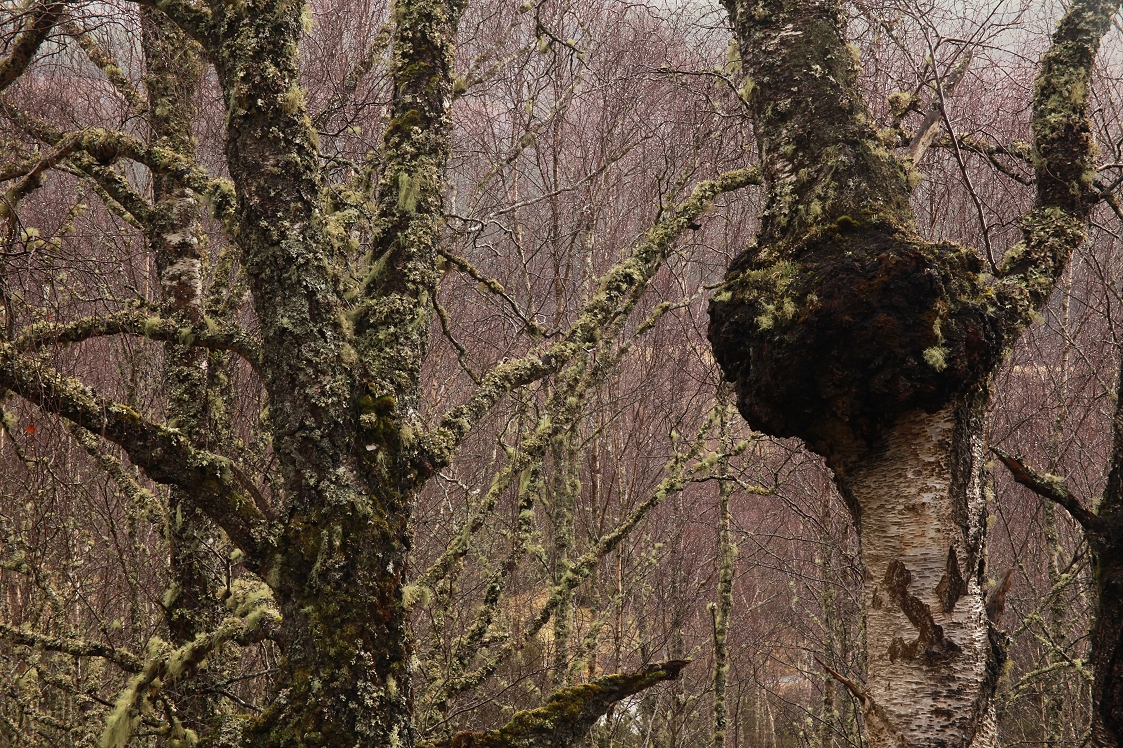
Moving away from the burn, I wandered through the birchwood, as the rain began to fall more steadily and heavily. I was drawn to a group of character-filled old birches growing in a small hollow, that were surrounded by numerous small boulders, all covered in moss. The moisture from the rain made the green colour of the moss particularly rich and vibrant, and it really stood out on what was otherwise quite a dull and almost monochrome landscape.
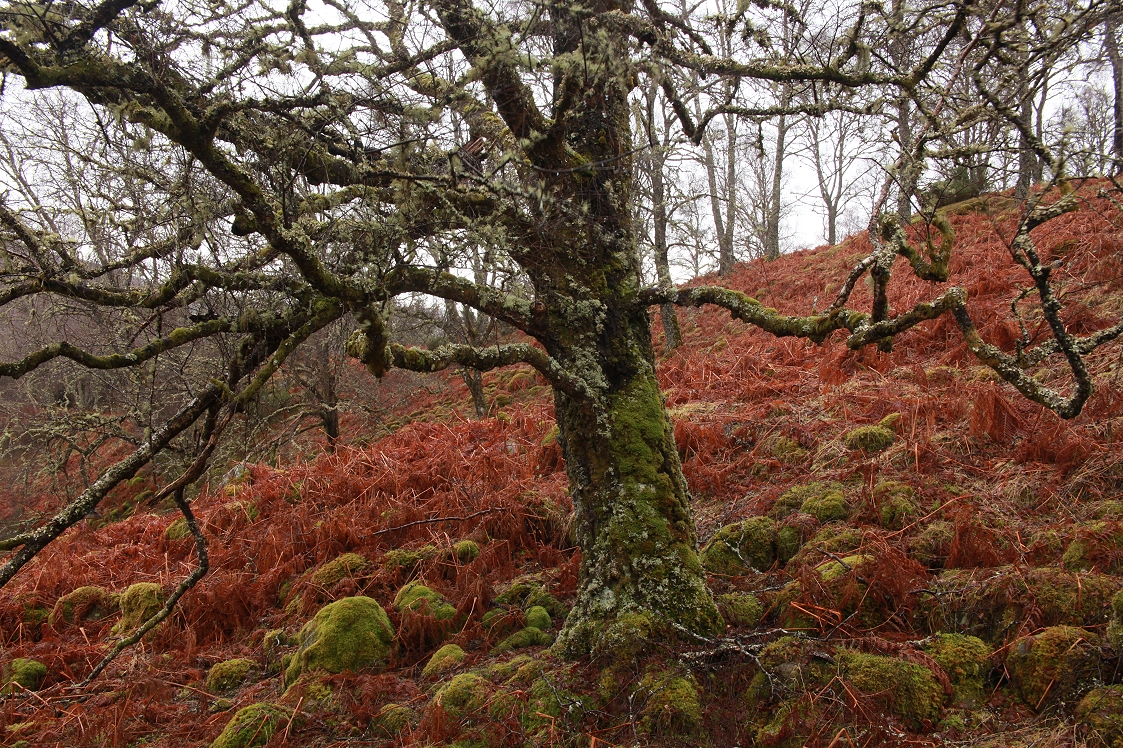
In the summer the hollow where these birches are growing is filled with dense bracken (Pteridium aquilinum) which grows taller than me. The bracken fronds make it very difficult to see the ground underfoot, which is quite irregular with all the rocks, and the moss makes it very slippery, so the area is effectively impassable in the summer. As a result I’d never had a close look at these trees, so this day provided a good opportunity to do so, as all last year’s dead bracken fronds were flat on the ground, and didn’t present any obstacle to movement.
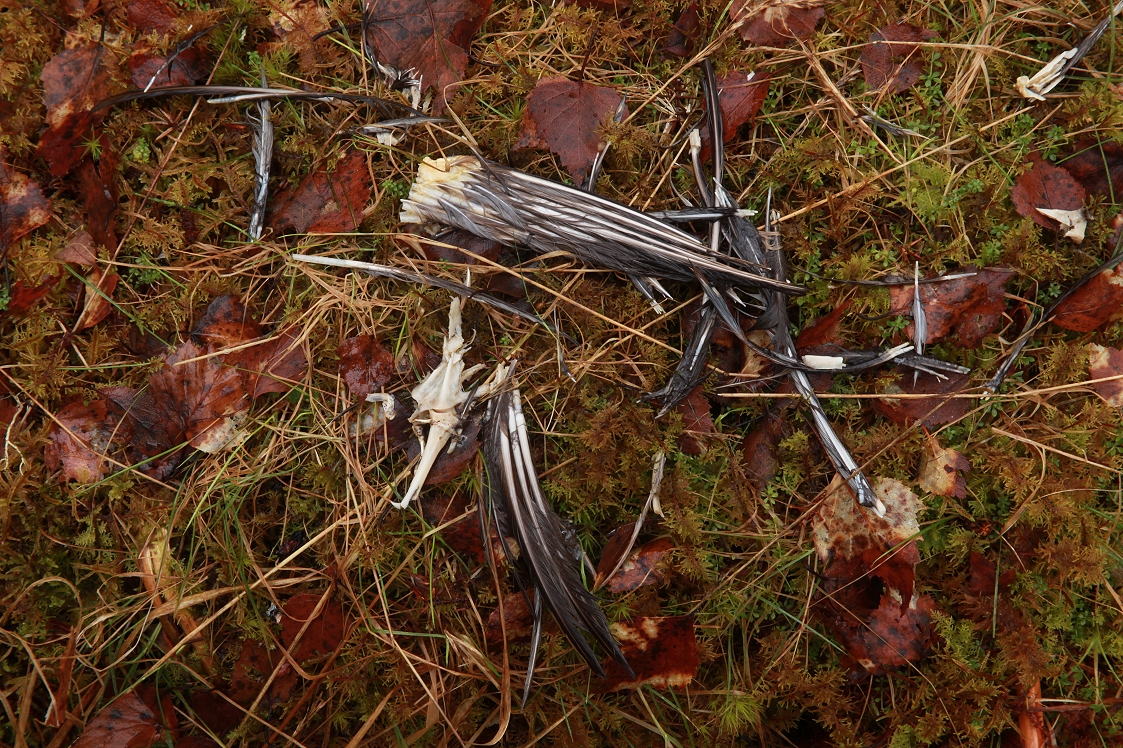
Near one of the trees I found the remains of a bird lying on the ground. It bore all the hallmarks of the work of a raptor, or bird of prey, but I’m not knowledgeable enough about them to know which one it was that would have made the kill. It could have been a buzzard’s handiwork, as that is the most common raptor in the area, and I often hear them overhead – a pair also nested in one of the large Scots pines (Pinus sylvestris) on the estate, about 300 metres to the west, 3 years ago.
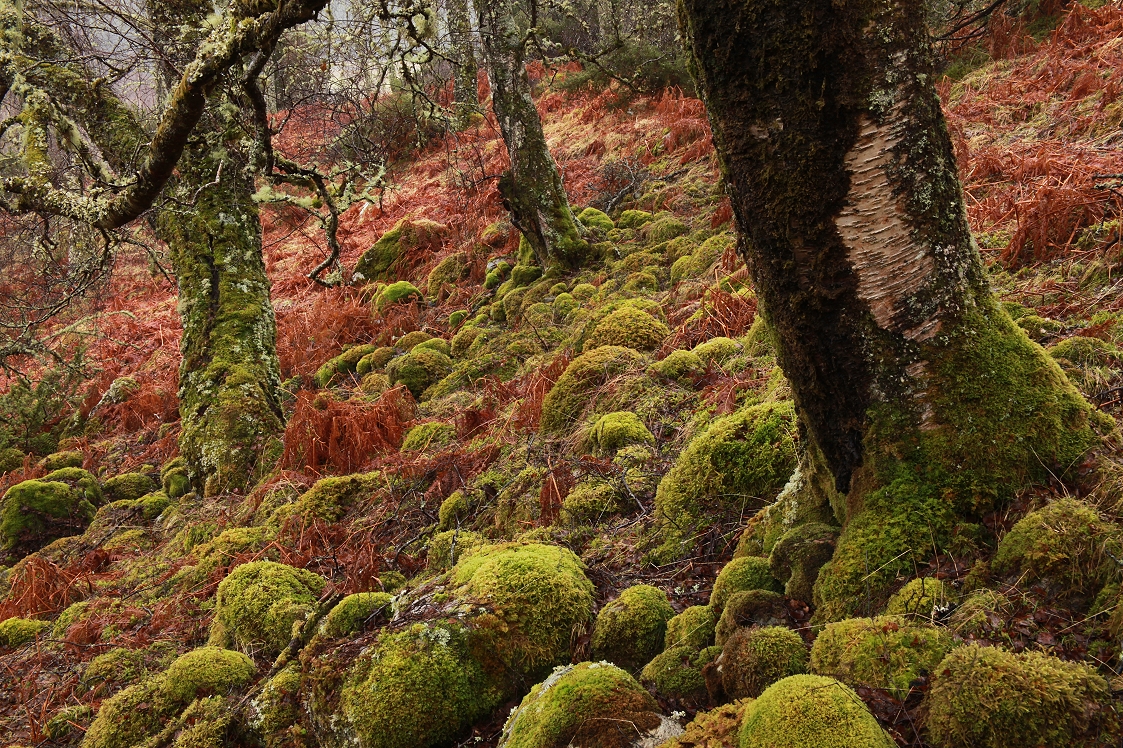
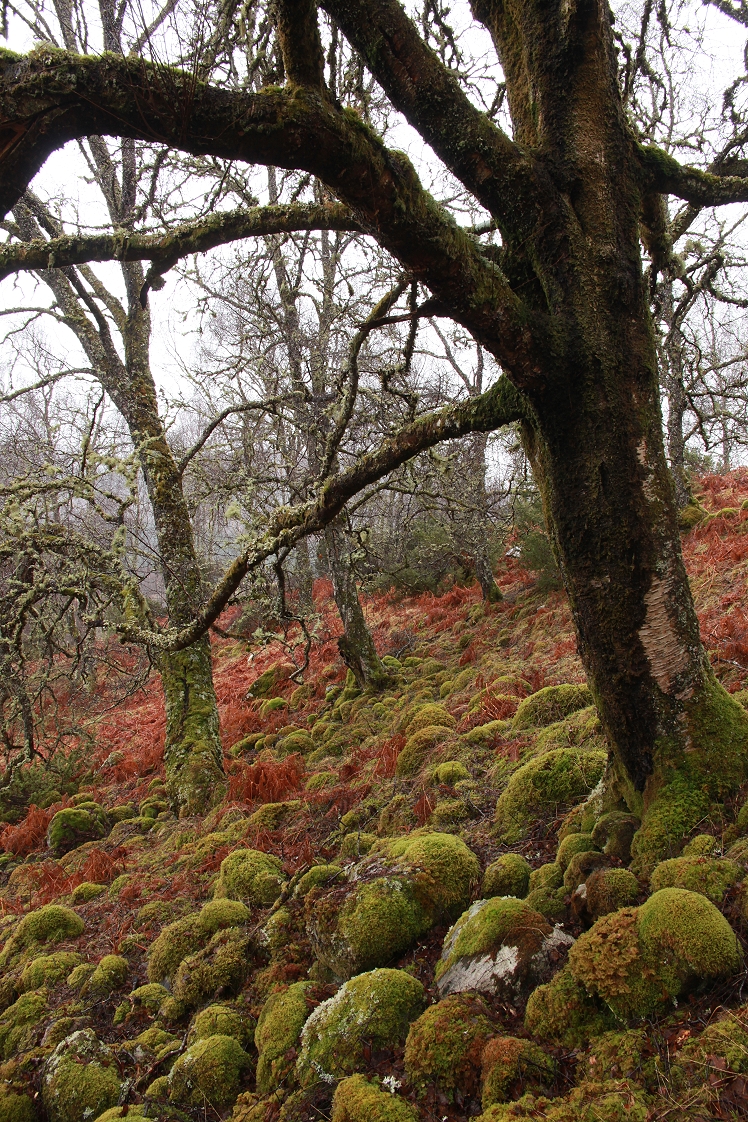
I love these mossy glades and groves in the forest, and they are always very evocative for me of places like Mirkwood and Fangorn Forest in Tolkien’s Lord of the Rings trilogy.
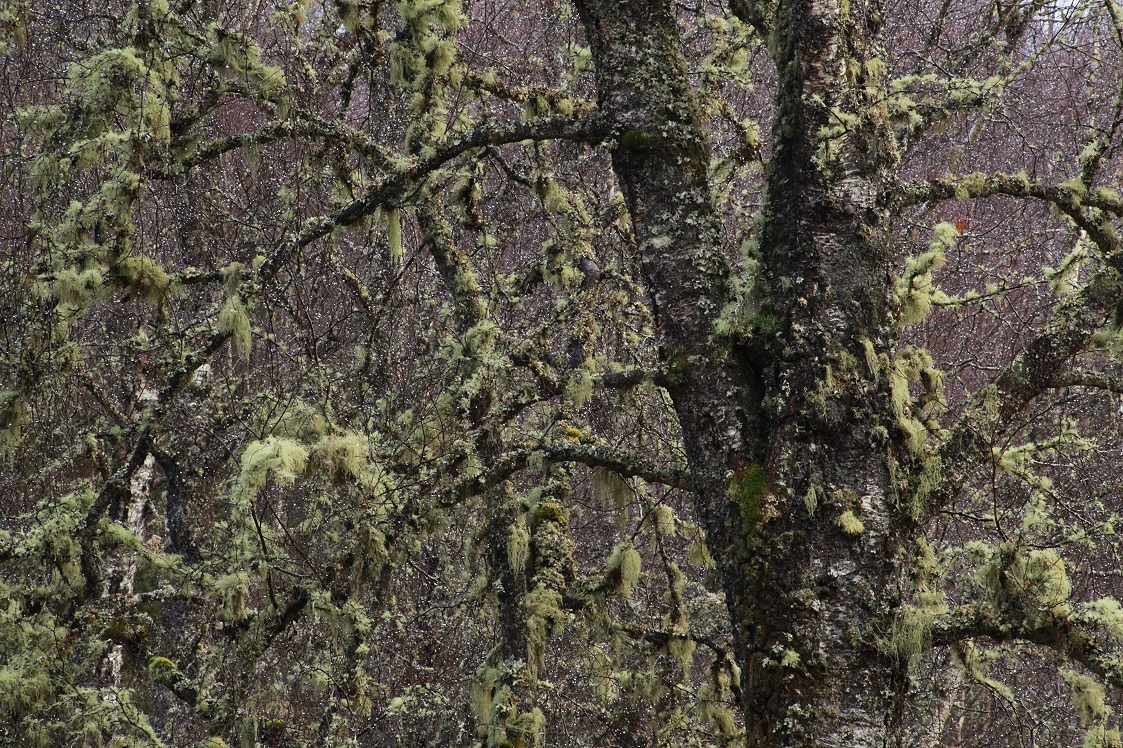
By this time it was quite wet, with constant rain, and I was struggling to keep my camera equipment dry. Despite having an umbrella over the camera and tripod, raindrops still managed to get on to the lens, so I was continuously having to dry it off and delete the images which had raindrops visible in them. By contrast, the abundant lichens on the branches of the trees were relishing the rain – they look at their best when it is wet like this.
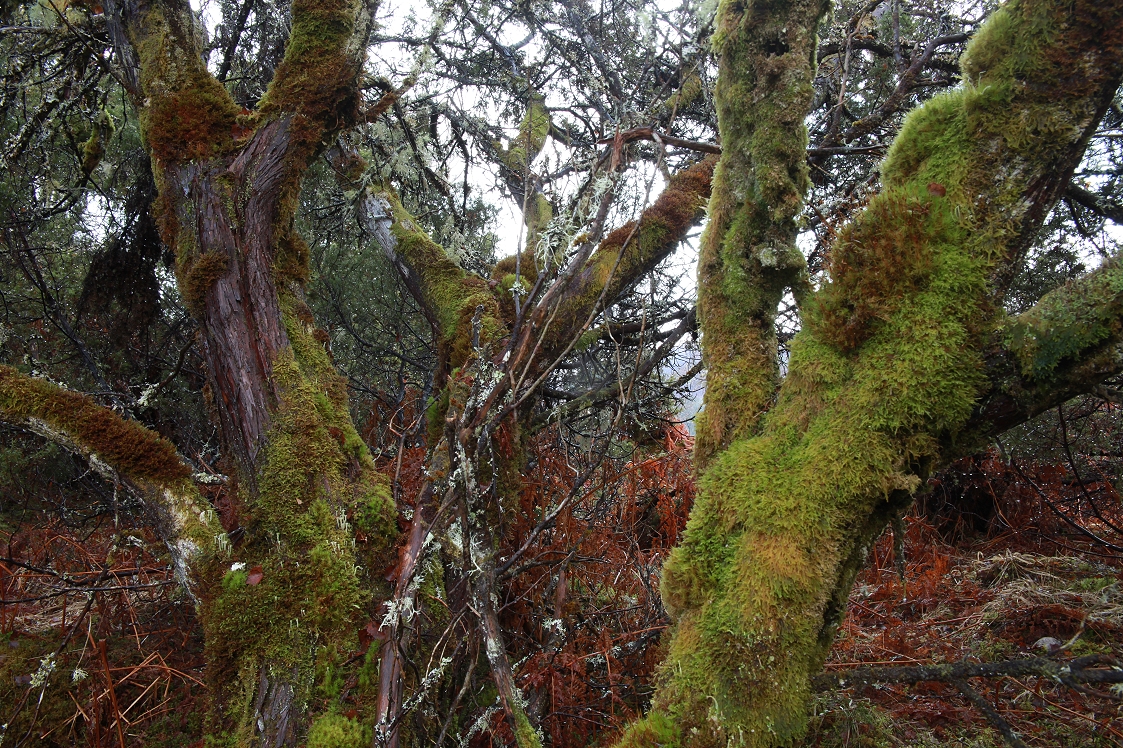
It was almost time to finish up for the day and head for home, but as I began to walk back to the car park, my attention was drawn by some mature junipers (Juniperus communis) that were festooned with moss. The dense growth of needles on junipers provides a sheltered and shady area underneath the foliage, and in the case of the large junipers at Dundreggan, this often forms a miniature temperate rainforest micro-habitat, which is permanently damp, and where the trunks are heavily-laden with mosses.
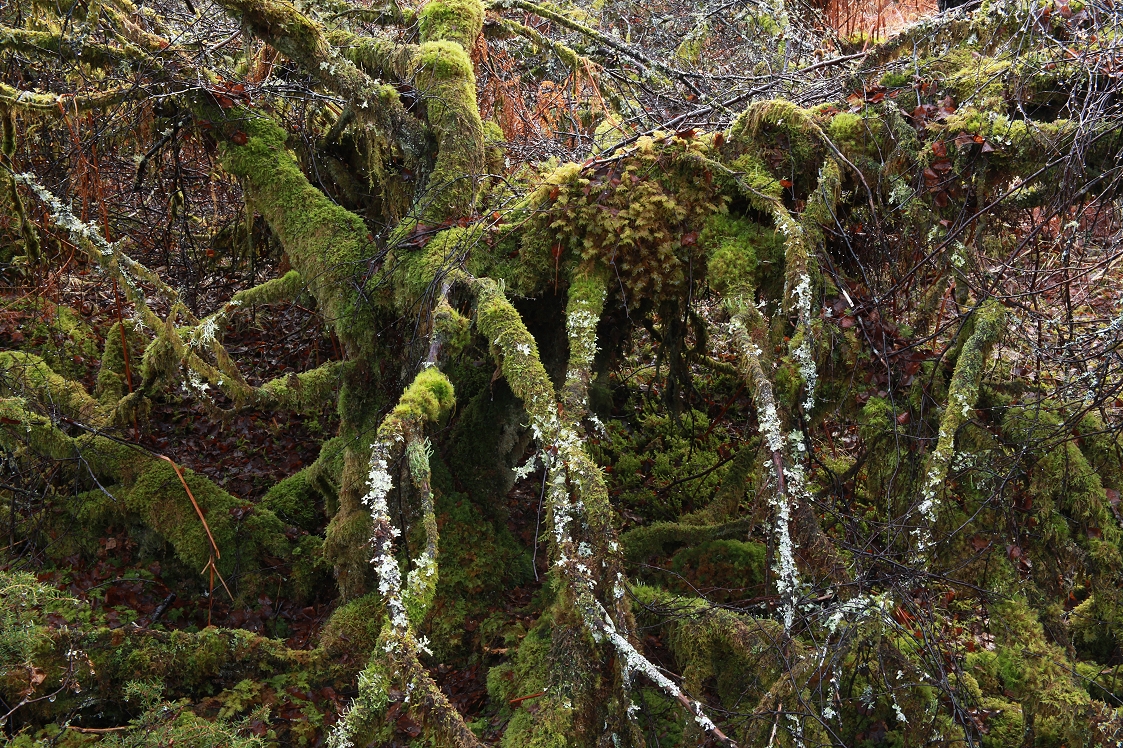

These old junipers often have multiple separate stems or trunks growing out from a central point, and in many cases those have collapsed outwards. This is most likely due to heavy snow loads in winter.

The dense needles of the junipers catch and hold the snow, and as that accumulates, it weighs the branches down, eventually causing some of them to break. The resulting tangles of branches and stems then become engulfed in moss, as the photos here show. In some of the largest junipers on Dundreggan, these mossy areas form beautiful miniature green grottoes, hidden from view from outside the bushes themselves. I’d had a glance into one of those this day, but there are many other such grottoes in the birch-juniper woodland – exploring those will have to wait for other times …
Lovely thank you for sharing : )
Always enjoy reading your posts and seeing your pictures and now videos! I find it fascinating the different tiny microclimates you show and talk about. Thank you:-)
Thanks Raven. A few people have been appreciating the videos, so I’ll keep adding those – there will be some more in the blog I’m writing just now, which should be online in the next day or so. Alan
Again, very nice Alan. I wonder if Trees for Life gathers seed from old trees to grow seedlings for replanting, to preserve their genes? Bracken fern is also pretty common (and, an invasive native plant) here in the Pacific Northwest. Rob :o)
Hi Rob, Thanks for your comment. Yes, we do indeed collect seeds from trees for re-planting, usually from as close as possible to where the trees will be planted, so that we’re mimicking how the forest would spread again naturally.
I very much enjoy reading your accounts of day trips and your wonderful photos. It revives memories of many trips I have done in the Highlands. I am looking forward to visiting you again at Glen Affric and Dundreggan from 12 to 26 May this year. Here in NZ I spend a lot of time wandering in the forests, referred to as native bush. And I am involved in running a native forest restoration project on the coast north of Wellington. It would be very interesting for me to learn how you deal with all the problems of organisation. I also have a few photos which might interest you.
Hi Ken, Thanks for you comment. I spent a couple of months in New Zealand about 15 years ago and visited many of your best forest areas, from the kauris up north to the temperate rainforests of Fiordland National Park. They’re beautiful and much more diverse than our forests, but I was dismayed to see how much of the country had been made to look like Scotland – tree-less and with imported red deer! It was good to see that there’s forest restoration work underway there as well though, and if we get a chance to meet when you’re here in May we can have a discussion about that.