
The weather had been getting colder for a few days, and with snow forecast for the week-end, I headed out to Dundreggan, hoping to catch my first experience of a white world this winter. Saturday had been very windy so I’d opted to go out on Sunday, and there was intermittent snow falling en route, and I could see that the high ground was white, so I was optimistic there would be some fresh snow when I arrived at Dundreggan.
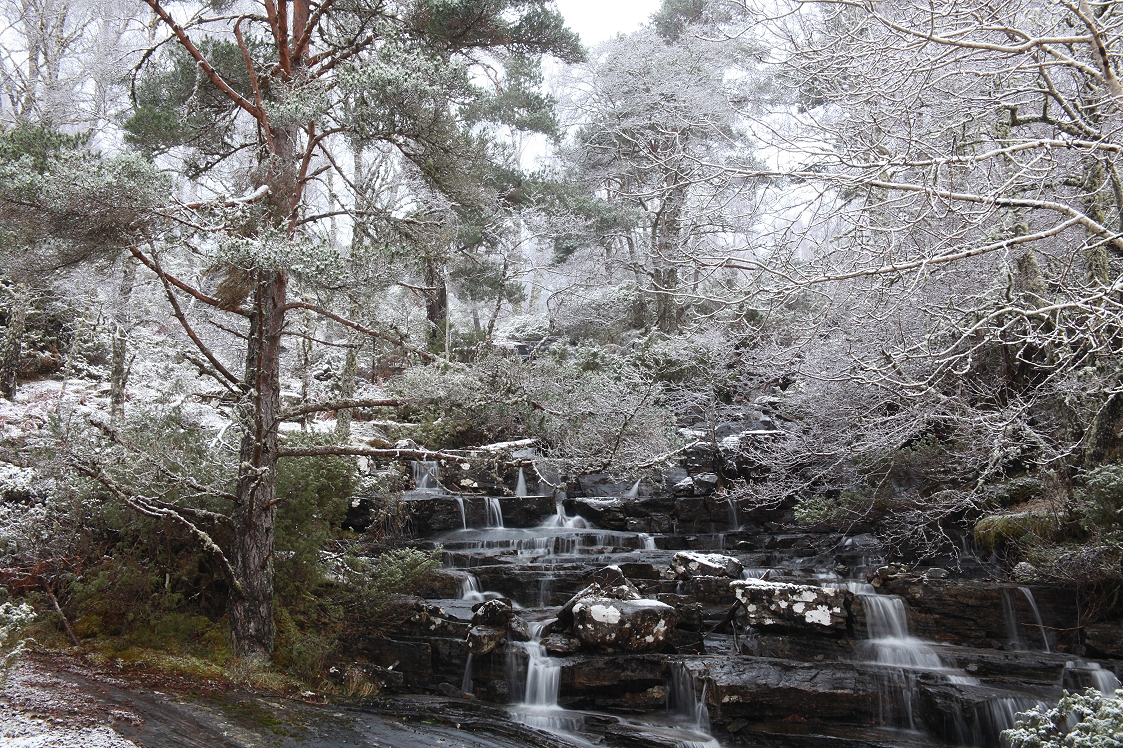
Most of the way down the Great Glen was clear of snow, but turning into Glen Moriston, and away from the climate-moderating effect of the mass of water in Loch Ness, the temperature dropped a couple of degrees and there was a thin covering of snow on the ground. Within a few minutes of reaching Dundreggan, more snow began to fall as a weather front moved in from the west, along the glen.
The snow fell quite heavily for a while as the actual front itself passed by, providing blizzard-like conditions for a few minutes, and then it slackened off to a more gentle drifting of smaller flakes, which brought a wonderful atmosphere to the the silent forest. In the absence of any wind, every branch and twig became coated with a layer of snow, highlighting the shape and growth form of each tree.
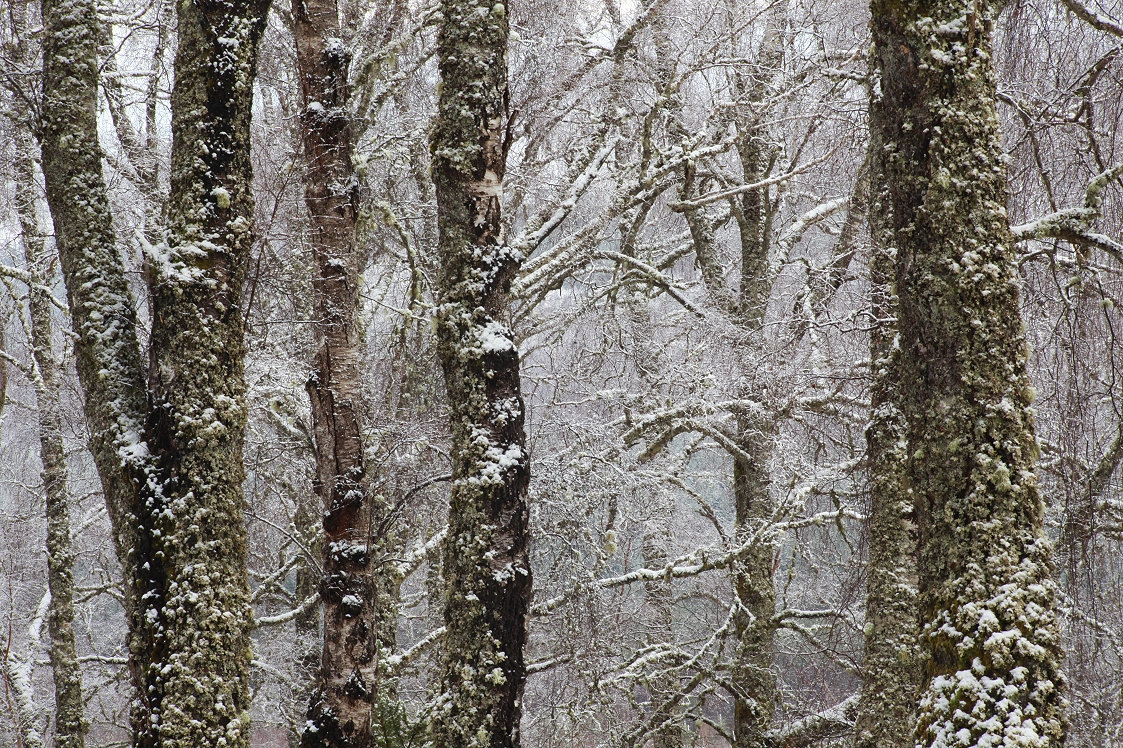
Although there still wasn’t a lot of snow on the ground – 2 inches (5 cm.) or so at most – the whole landscape looked very white because the snow was staying on the trees. At times like this, I find that the fresh snow gives added depth to the forest as I look at it, with the outlines of the trees standing out more from the background in a way that makes for interesting photographs.
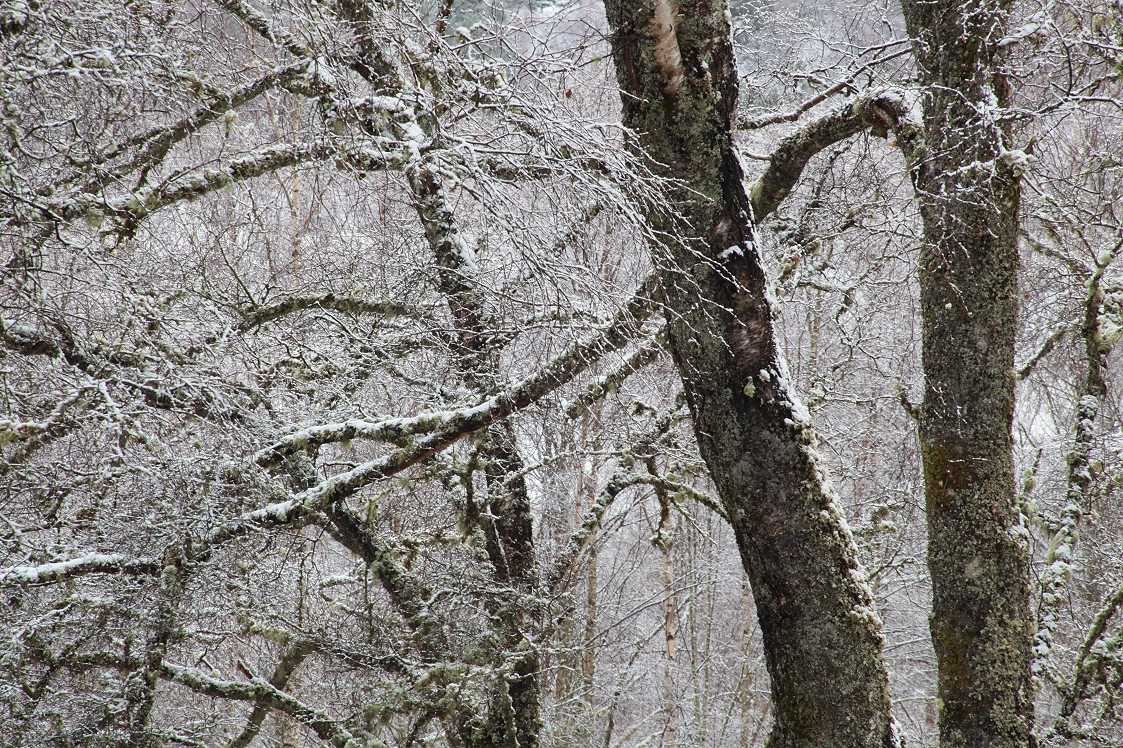
By contrast, in snow-free conditions a view like this one here would just be a jumble of trunks and branches, but the snow brings greater contrast and definition to the scene. It adds a delicate tracery to every branch and twig, and each snowfall creates an ephemeral work of art in the landscape, that lasts until the wind or warmer weather strips the branches bare again. For me, being out in the forest during or just after a fresh snowfall is one of my favourite times …
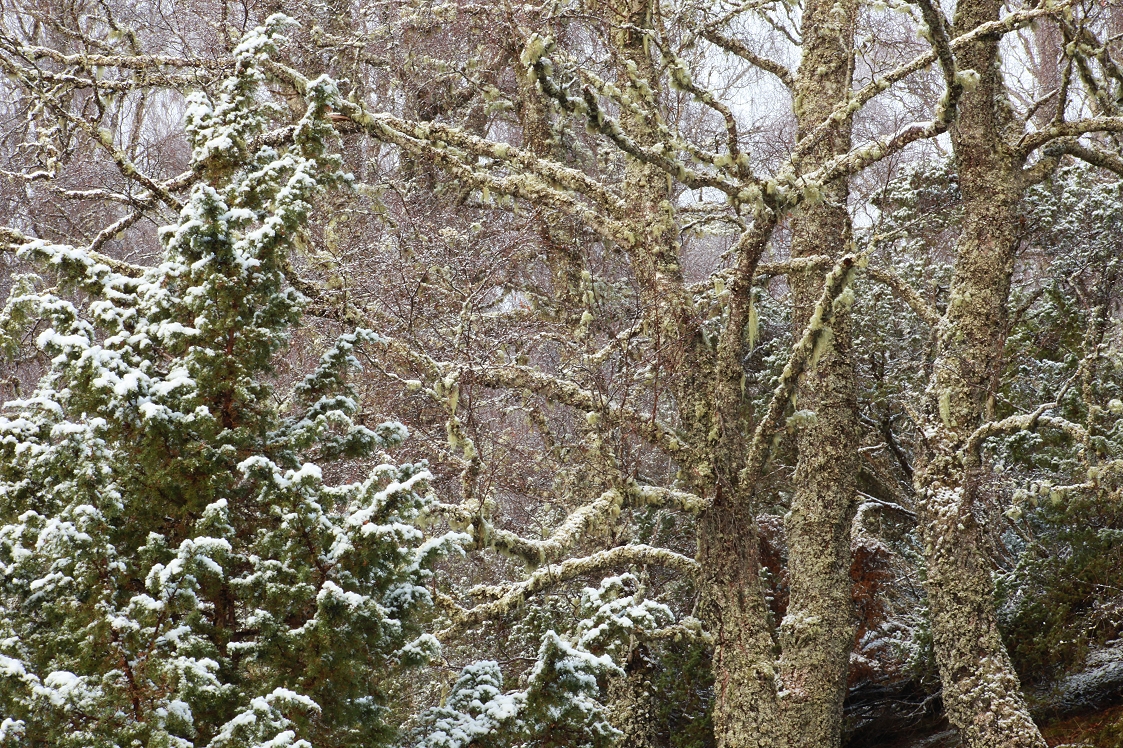
As I walked around in the forest, I relished the sound of the snow crunching under my boots. It’s a very distinctive sound that for me is both deeply connecting with the elements, and highly evocative of winter. It’s a very satisfying aural experience when the compression of the snow underfoot is the only sound in the forest …
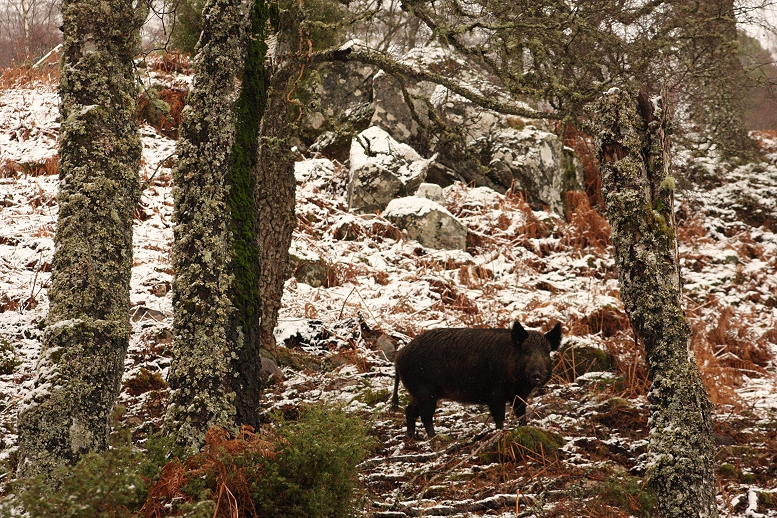
Walking on a bit further, I came to the enclosure where we have the wild boar, to help reduce the prevalence of bracken and create disturbed soil that is ideal for the germination of tree seedlings. We have 7 boar altogether and the 12.5 hectare (30 acre) enclosure has been divided into two halves, to concentrate the boars’ effect. We’ve recently moved the boar into the second half of the enclosure, as after two years in the first part, it looks like they’ve done enough to make a significant difference in reducing the bracken.
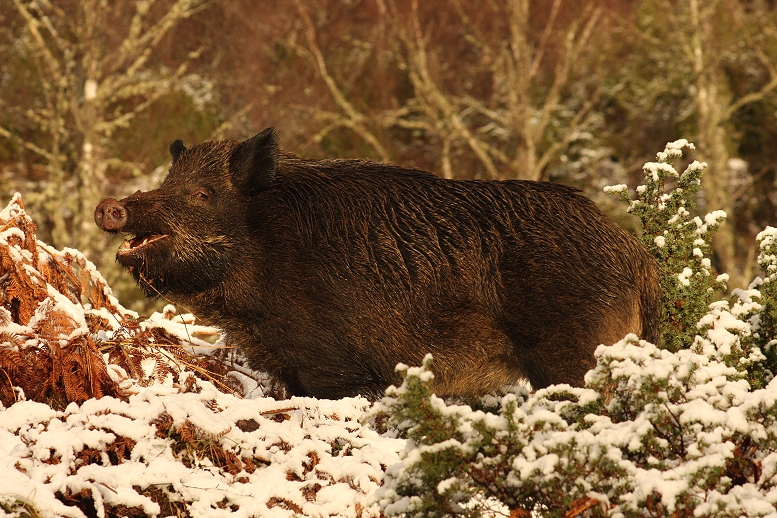
If we’d have left them there any longer, they would probably have damaged the young tree seedlings that have germinated naturally in the disturbed soil conditions that they create. By moving them into the second half, those tree seedlings should grow successfully now, especially as the bracken won’t shade them out.

As I was looking at the boar, I noticed some lichens on one of the trees just outside the enclosure fence. These were partially covered in snow, and that made for some interesting images, with the snow again helping to isolate the podetia, or stalks, in the case of a Cladonia species, from the background of the tree trunk.
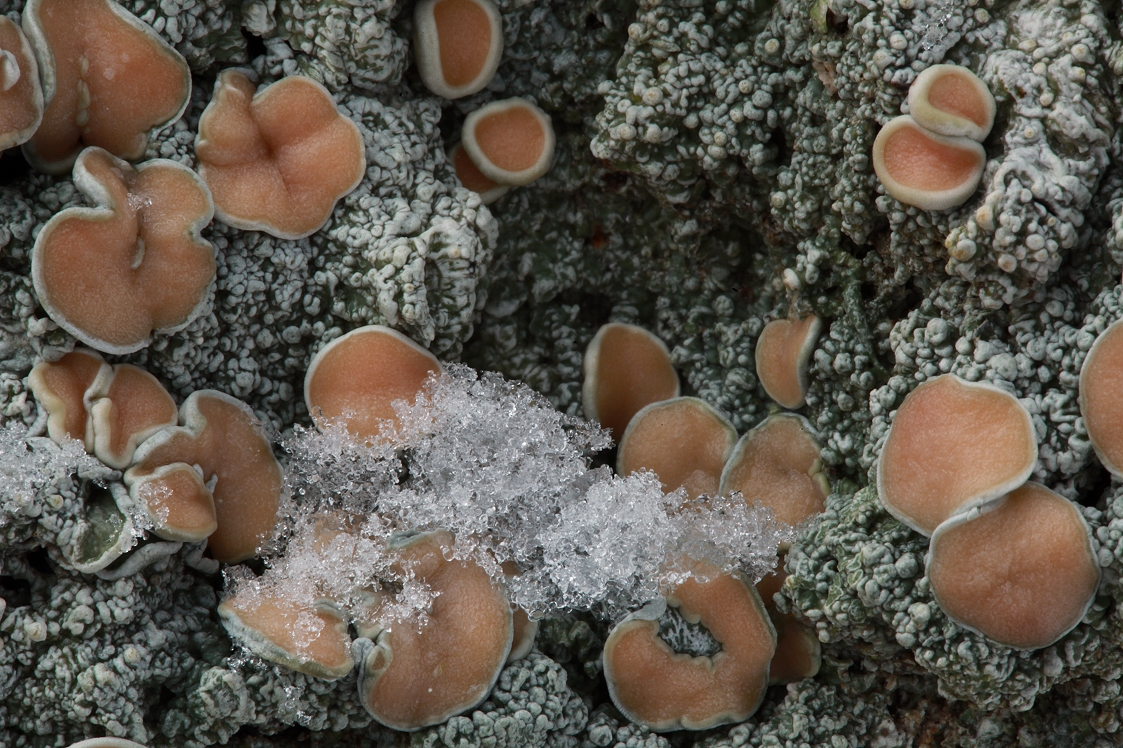
On another nearby tree there was an attractive patch of cudbear lichen (Ochrolechia tartarea), with its distinctive brown disc-shaped apothecia clustered together. These discs are the part of the lichen that release the spores of the fungal partner in the lichen symbiosis. This species is one of the easiest to identify in the Caledonian Forest, and is quite common on the trunks of old birch trees. The main body, or thallus, of the lichen is creamy-white in colour and has a knobbly texture when viewed close up.
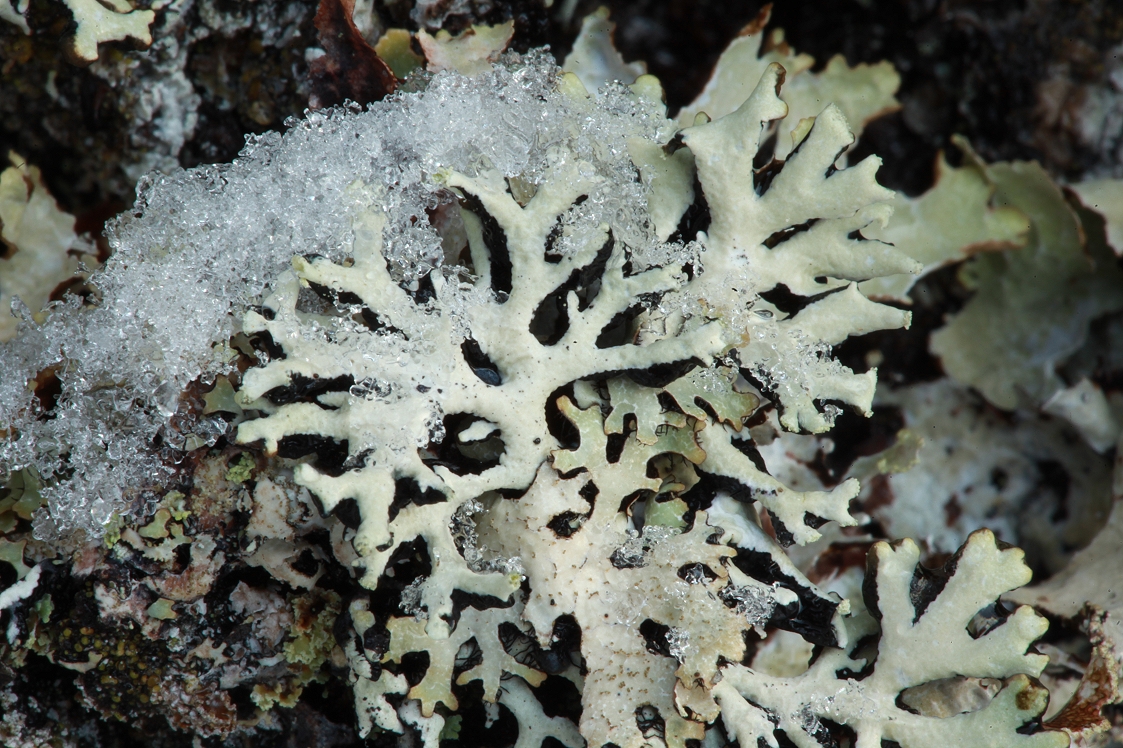
Elsewhere on the same tree, there was a patch of another very common lichen species (Hypogymnia physodes) similarly bedecked with a clump of snow, which showed its crystalline nature when viewed close up. This lichen frequently occurs on tree trunks, both on Scots pines and broadleaved trees such as birch. It’s another species that is fairly easy to identify, with its distinctive growth pattern and colouration, with the pale green-tinged creamish colour highlighted by the black border from the underside of the thallus (as the main body of the lichen is known).
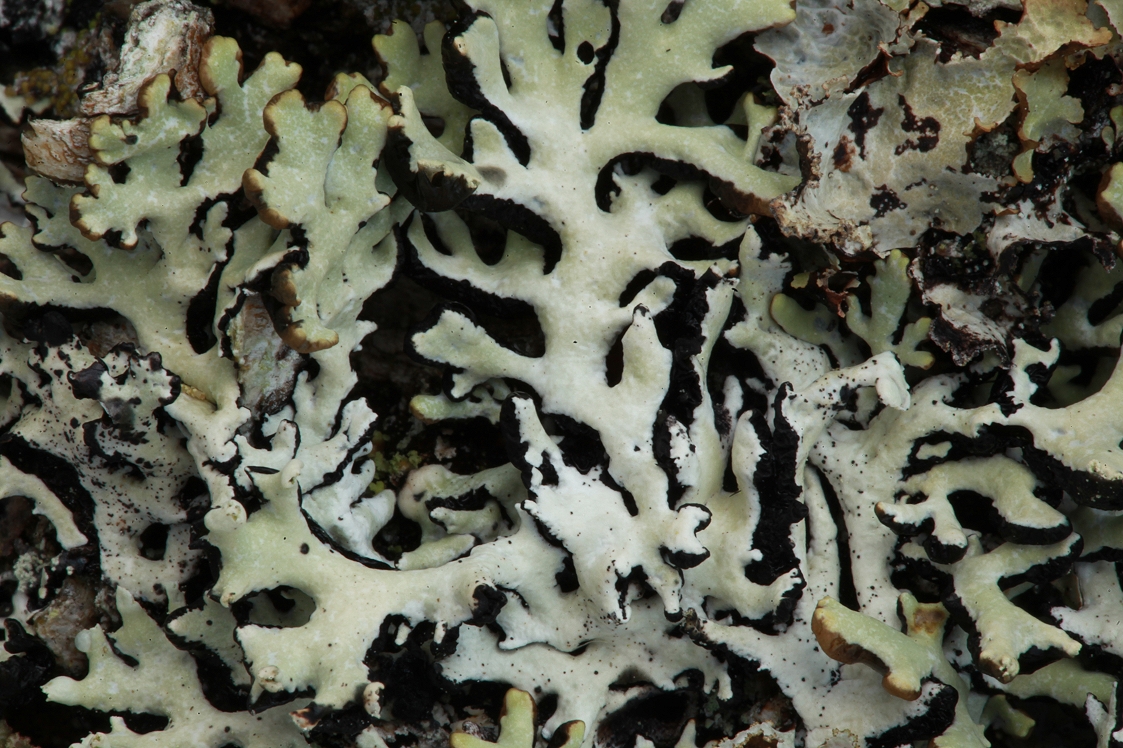
Lichens like these remind me a little of some types of seaweed that grow on the rocks in tidal areas near where I live. Their pattern of growth and overall shape are similar, and this could be an example of convergent evolution – completely different organisms ending up resembling each other because of the evolutionary advantages from growing in that way.
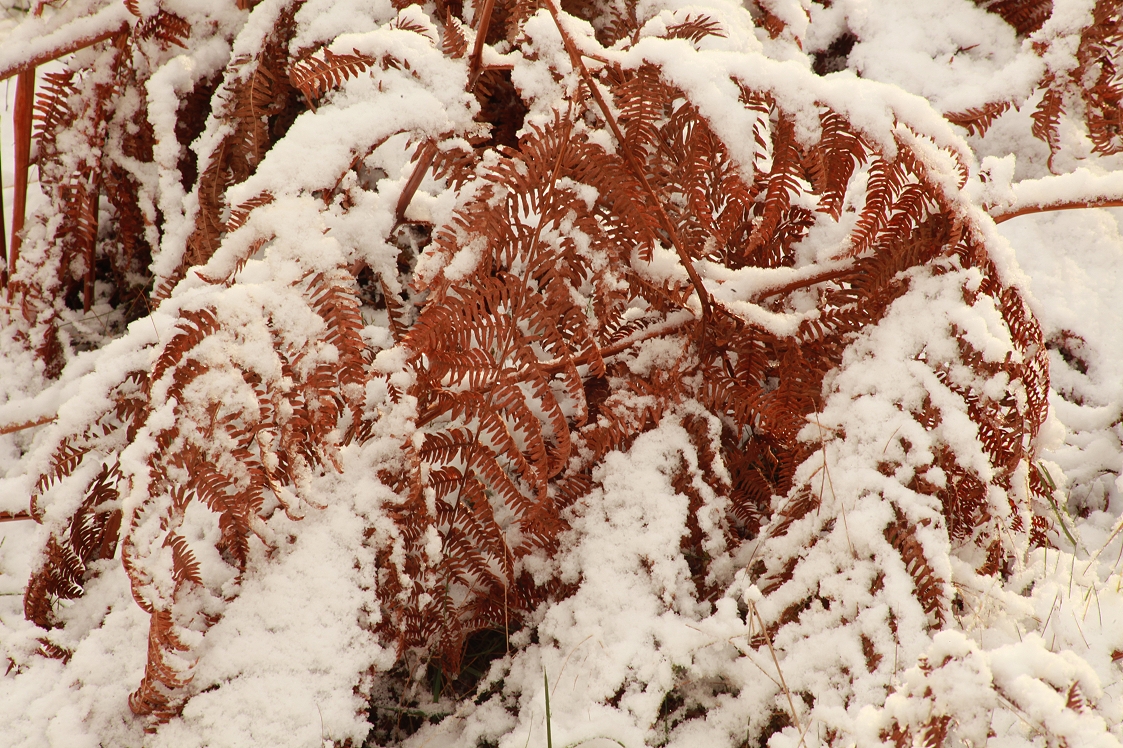
That last patch of lichen was fortunate in not having any snow on it, due to the position it was growing on the tree trunk, facing away from the direction where the weather was coming from. On the ground nearby, where there was a gap in the tree canopy above, the snow was deeper on the ground, and was partially covering some bracken plants (Pteridium aquilinum).
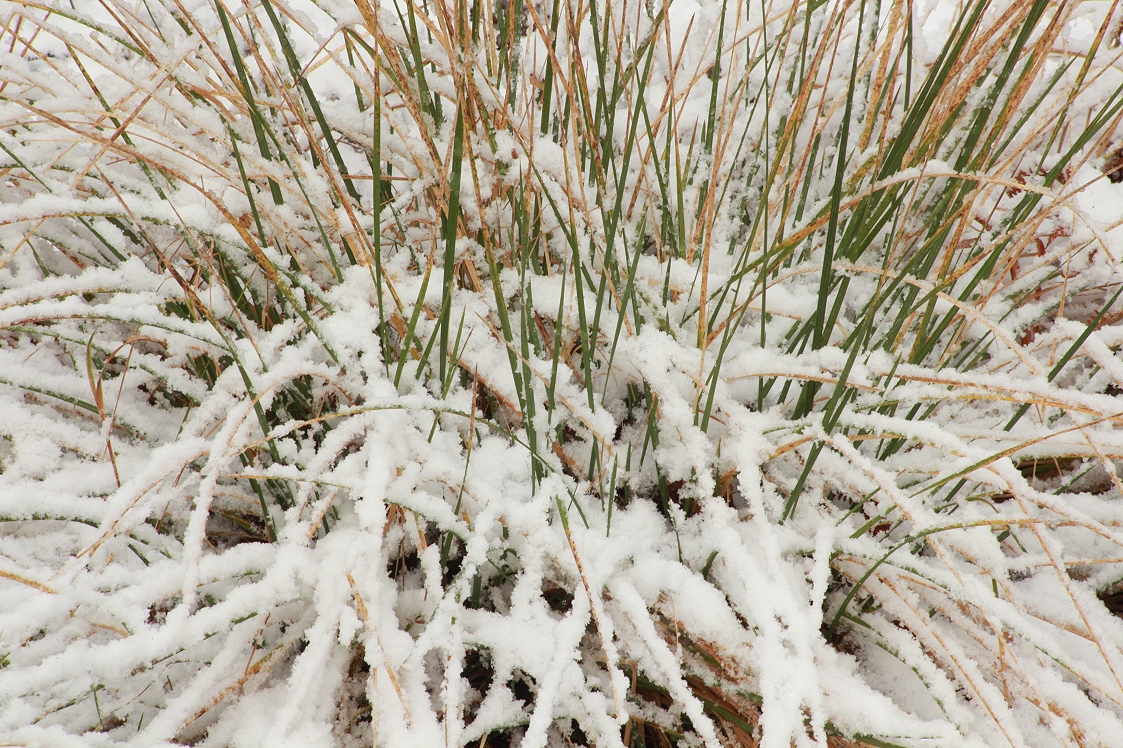
There were also some rushes (Juncus sp.) amongst the bracken, and the growth pattern of their leaves was accentuated and highlighted by the snow. It was nice to see the green stems sticking up through the snow, and the contrast between that green and the white of the snow was very pleasing to my eye – it’s relatively unusual to see a bright green colour like that in amongst the snow on the ground.
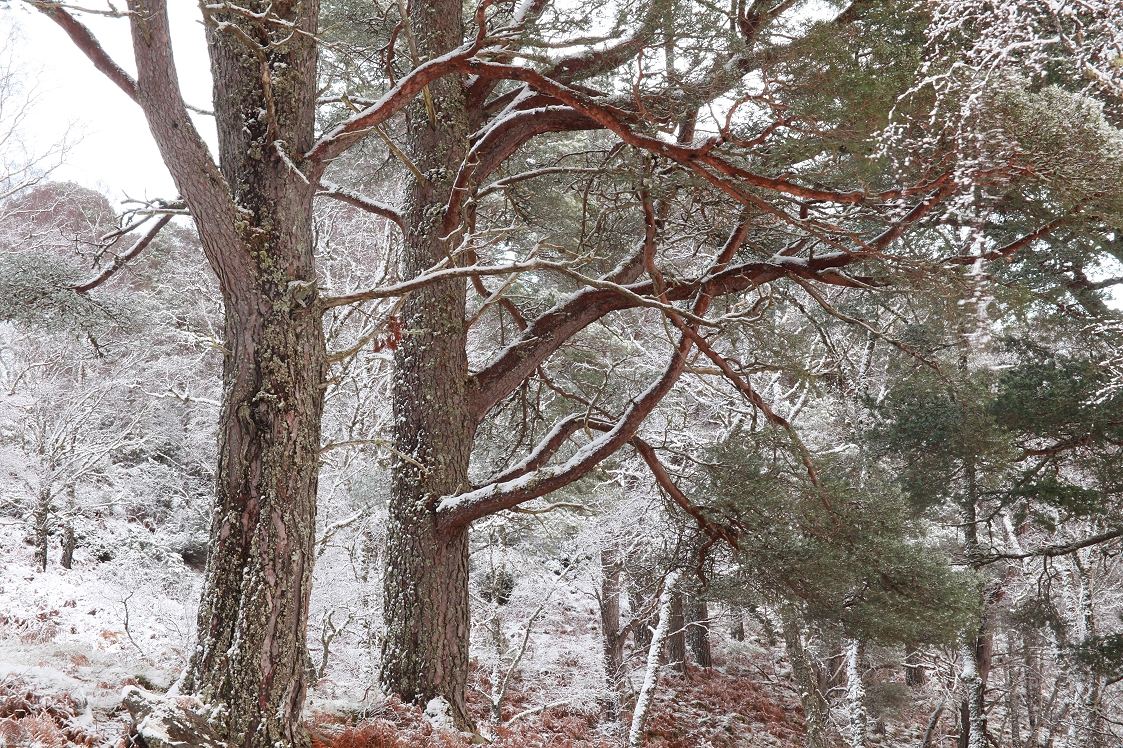
My wandering through the woodland finally led me to an area where there are a few old Scots pines (Pinus sylvestris) in amongst the birches, and this was a fitting place to finish for the day. Each of those pines has a unique and individual shape, and there’s a powerful presence about them altogether. The snow helped to highlight and emphasise the orange-red colour of the young bark on the branches, and that brought some welcome warmth to the otherwise relatively monochrome landscape.
Please could you let me know if you are going to produce a 2013 diary. Also when will the 2013 calendar be ready?
John
I’m already sorely missing the diary, which has been a feature of my life since 2003, but this blog is helping to compensate. I’m really enjoying the insight into fungi and lichens – I begin to see how reindeer could actually subsist on them. I hope you are getting some of the same same creative satisfaction from it that making the diary must have offered – the photography is great. Thanks
Hi Diana, thanks for the appreciation of my blogs – I’m glad you’re finding them useful. I’ve just added another new entry this evening. With regard to the diary, we are seriously considering producing it again for 2013, in part because of all the feedback we’ve had from people like you who are missing it so much!