
The last week has been one of wild weather in the north of Scotland. The beautiful snow from last week-end stayed for a few days, but then a tremendous storm hit the country, bringing heavy rain and very high winds, so most of the snow disappeared, at least at low elevations. On Saturday morning, there was fresh snow again, so I headed out to Glen Affric, to make the most of the winter landscapes, before the weather changed again.
On the way, there were scattered areas of snow, while in other places, especially alongside Loch Ness, there was virtually no snow at all, so I wasn’t sure what I would find when I arrived. As it turned out, there was snow in Affric, but it was mostly left over from the previous week-end’s fall, and it looked like only a little had fallen overnight.
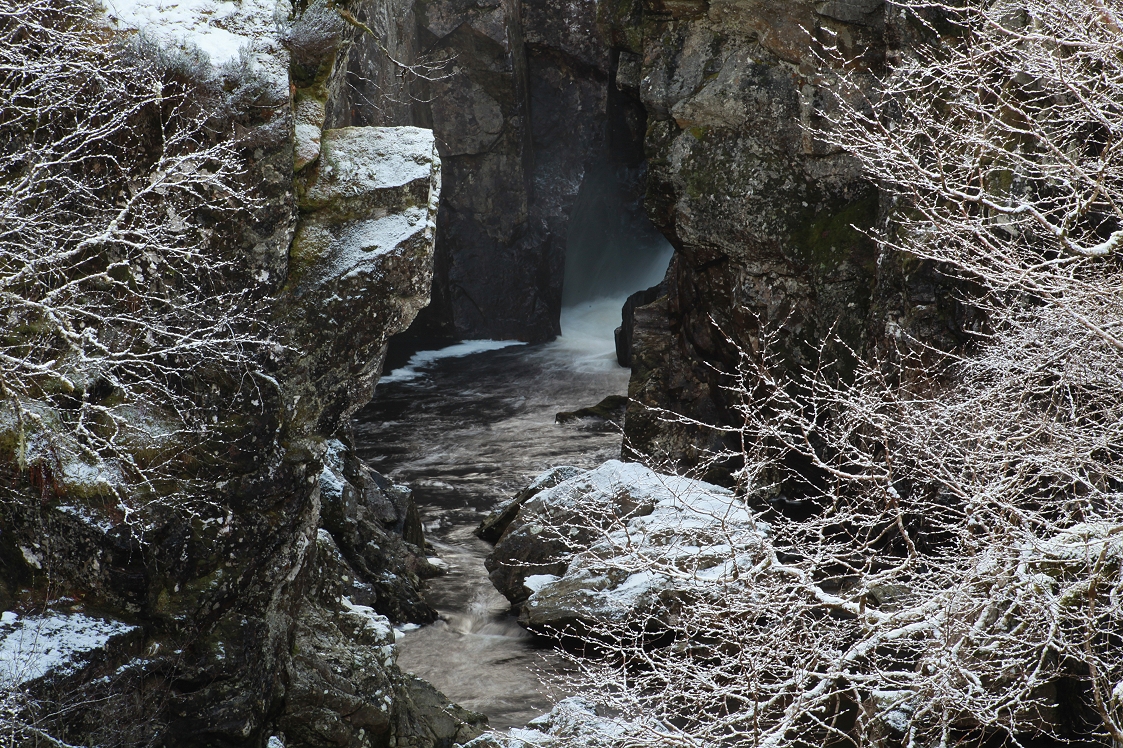
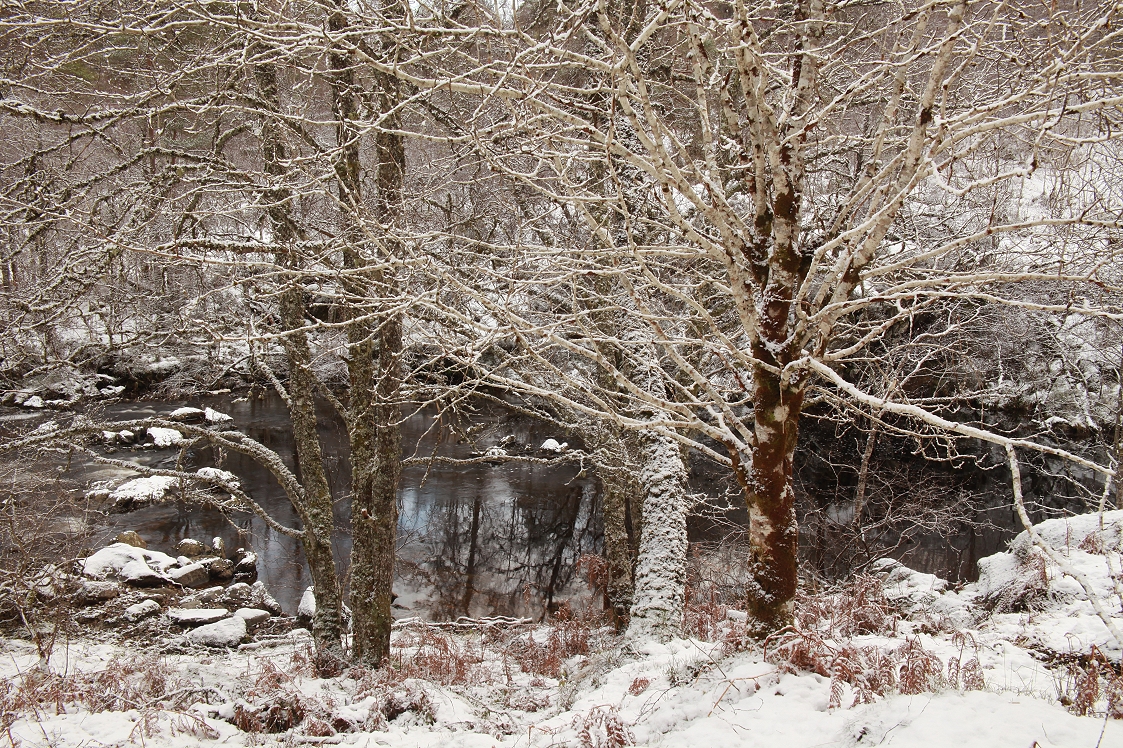
The old snow was off all the trees, which makes the landscape much less photogenic, so I headed for the gorge of the Affric River, near Dog Falls. That area is sheltered, both from the low mid-winter sun, and from the wind, and it was the only place in the glen that still had snow on the branches of the trees. I stopped to look at the view towards the falls themselves, as I had photographed that scene in autumn , and it was beautiful again today.
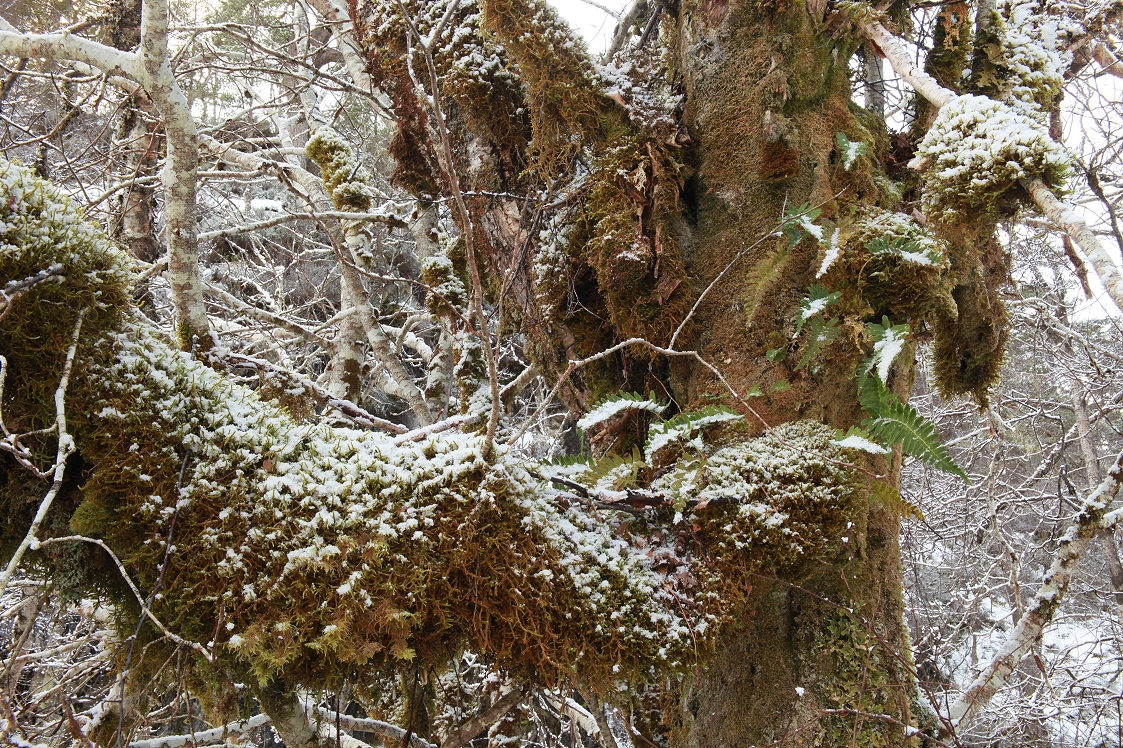
At the spot where I took that photographs there’s a veteran rowan tree (Sorbus aucuparia), one of the largest I know of in the glen, which is laden with mosses and ferns, because of the constant humidity in the air from the spray of the waterfall in the narrow confines of the gorge. It’s a classic epiphyte-covered tree in a temperate rainforest, which flourishes in the micro-habitat which this section of the gorge provides.
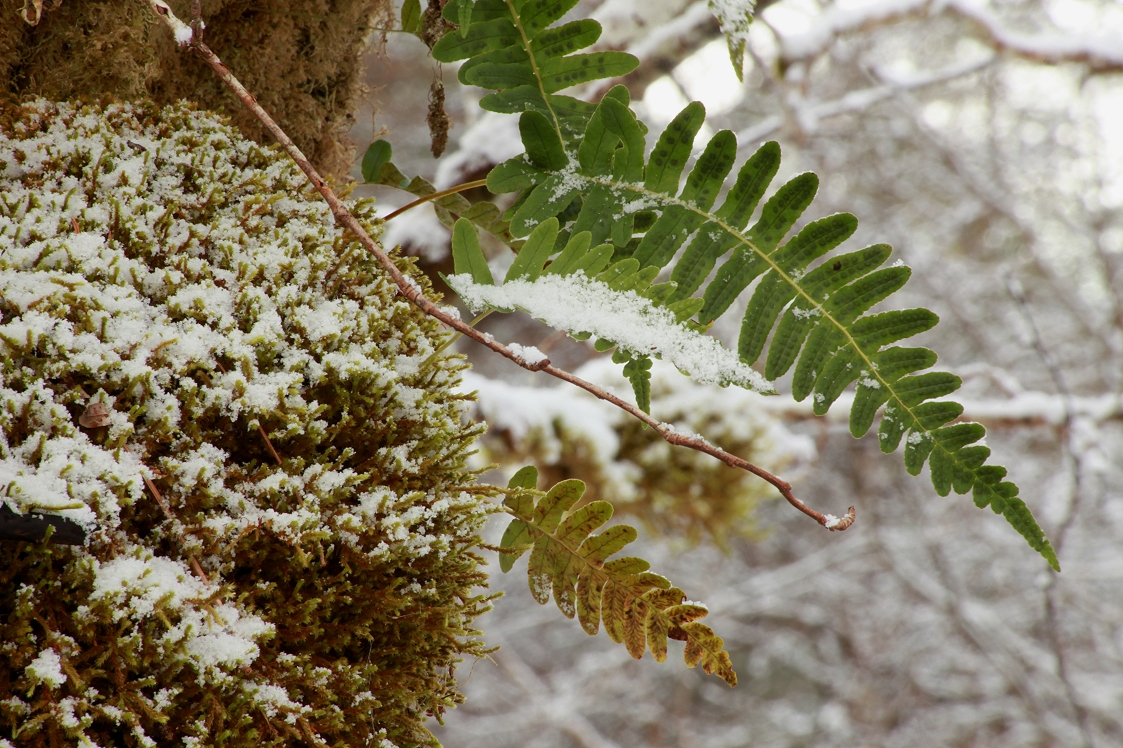
Much of the moss, which is mostly pendulous wing-moss (Antitrichia curtipendula), was covered by the snow, but vivid patches of bright green were provided by the fronds of common polypody fern (Polypodium vulgare), an evergreen fern which often grows as an epiphyte on trees in wet habitats like this. As an epiphyte, it uses the tree for support and to grow on, but it doesn’t take any nutrients from the tree – if it did, it would be a parasite not an epiphyte.

Because of the angle at which this fern was growing, it was very easy to see the sori – round brown structures, which cluster together in two parallel rows on the underside of each lobe on every frond. These are where the fern’s spores, that it uses to reproduce, are released from, and they are particularly prominent on this species. The wind-still quality of the day made it possible to get some close up photographs – normally the fronds would be blowing around in the wind, making sharp images impossible to achieve.
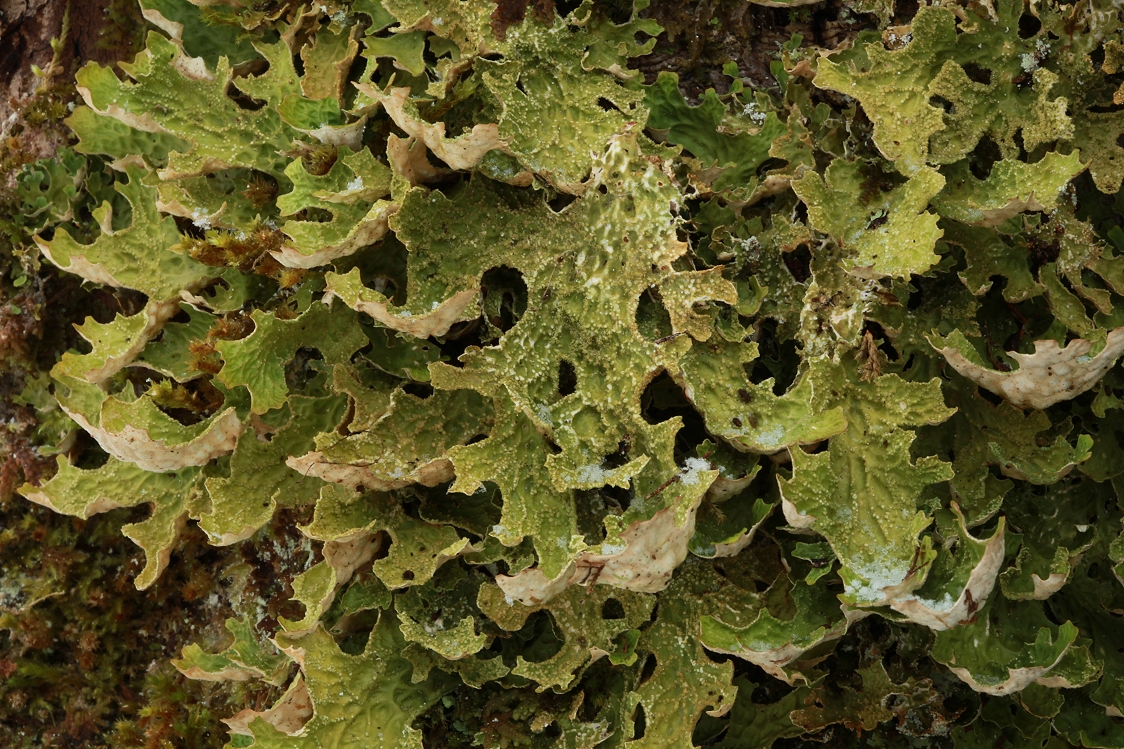
Amongst the moss on the trunk of the rowan there were several large patches of tree lungwort (Lobaria pulmonaria), a leafy foliose lichen that occurs in areas with high humidity for most of the year. Whereas most lichens consist of a symbiotic partnership between a fungus and an alga, tree lungwort is formed by a three-way partnership, as it includes a cyanobacterium (Nostoc sp.), in addition to its fungal and algal partners.
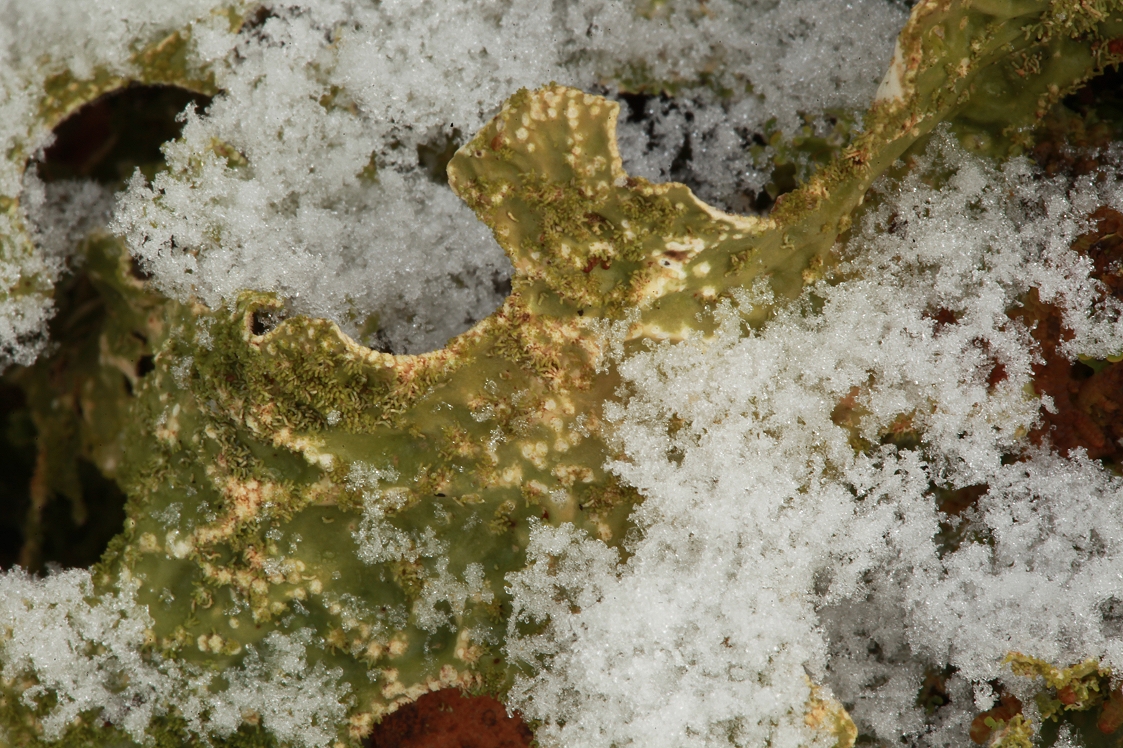
In the Pacific Northwest of North America, tree lungwort is considered to be an indicator species of temperate rainforest ecosystems, and its presence in abundance in this section of the Affric River gorge is another indicator of the temperate rainforest micro-climate there.
It is also one of the lichen species whose range in the UK has declined since the industrial revolution, with that loss attributed in part to the increase of pollutants in the atmosphere – as an epiphyte, tree lungwort derives most of its nutrients from the air, rain and particles deposited on it by the wind, making it highly susceptible to pollution.
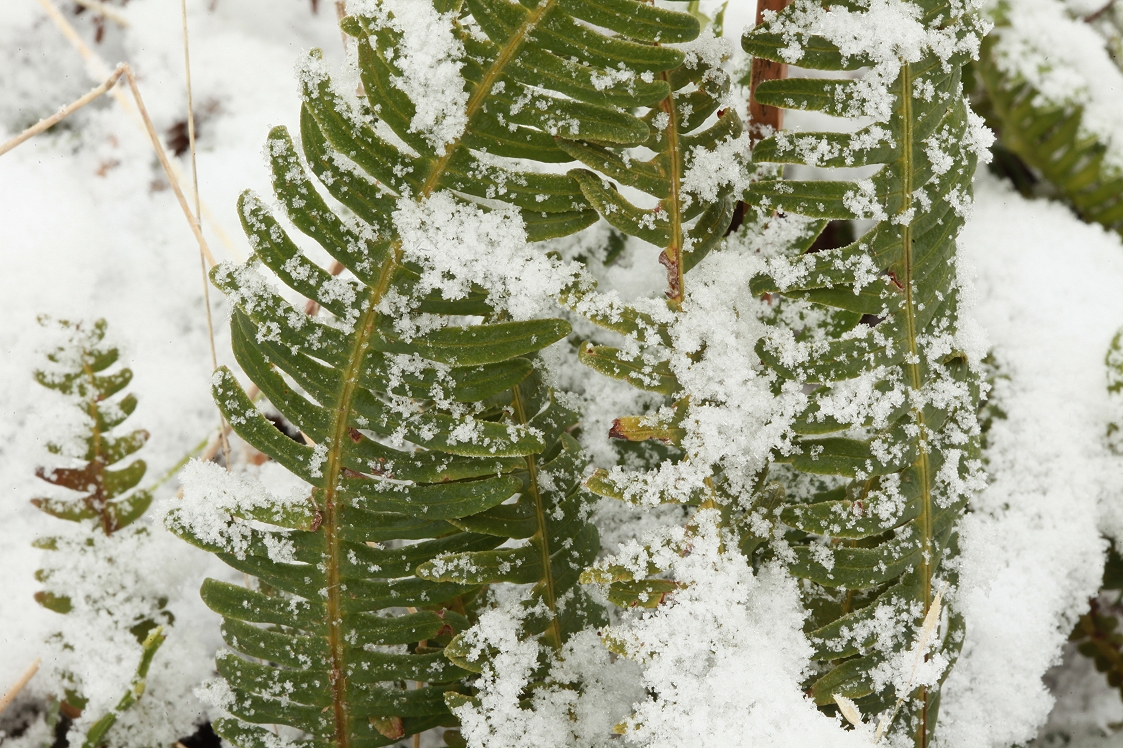
Moving on from the rowan tree, some other spots of bright green amongst the snow also drew my attention. In this case they were on the ground, and it was the fronds of hard fern (Blechnum spicant) that were visible amongst the white of the snow. Like the common polypody, hard fern is evergreen, with its fronds persisting all year. These are the sterile fronds – the fertile fronds of hard fern die back each year.
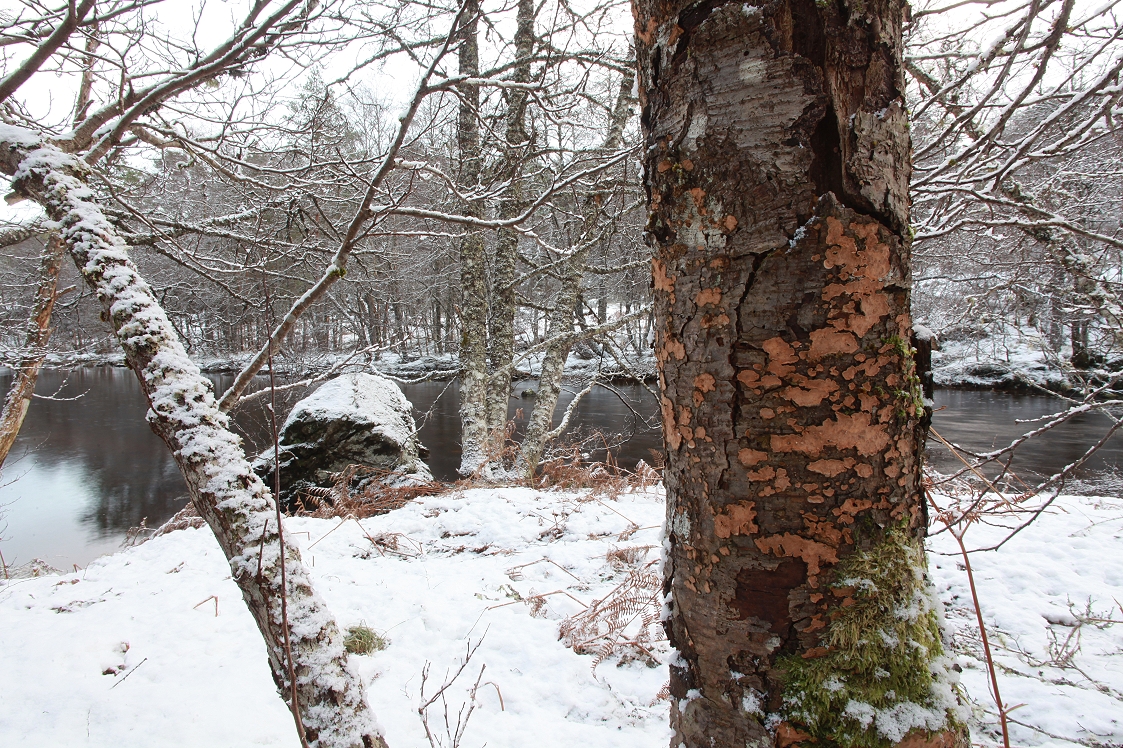
Moving on again, I came into a more open area, downstream from the gorge, where a number of alder trees (Alnus glutinosa) have died. Like many in the Highlands they have succumbed to a dieback disease, the cause of which is still not fully understood. It’s sad to see these dead alders along many of the watercourses, and I wonder what the impact of their loss must be on the ecosystem – species which depend on alder, such as the mite (Eriophyes laevis inangulis) that induces galls on its leaves, must be experiencing a population decline.
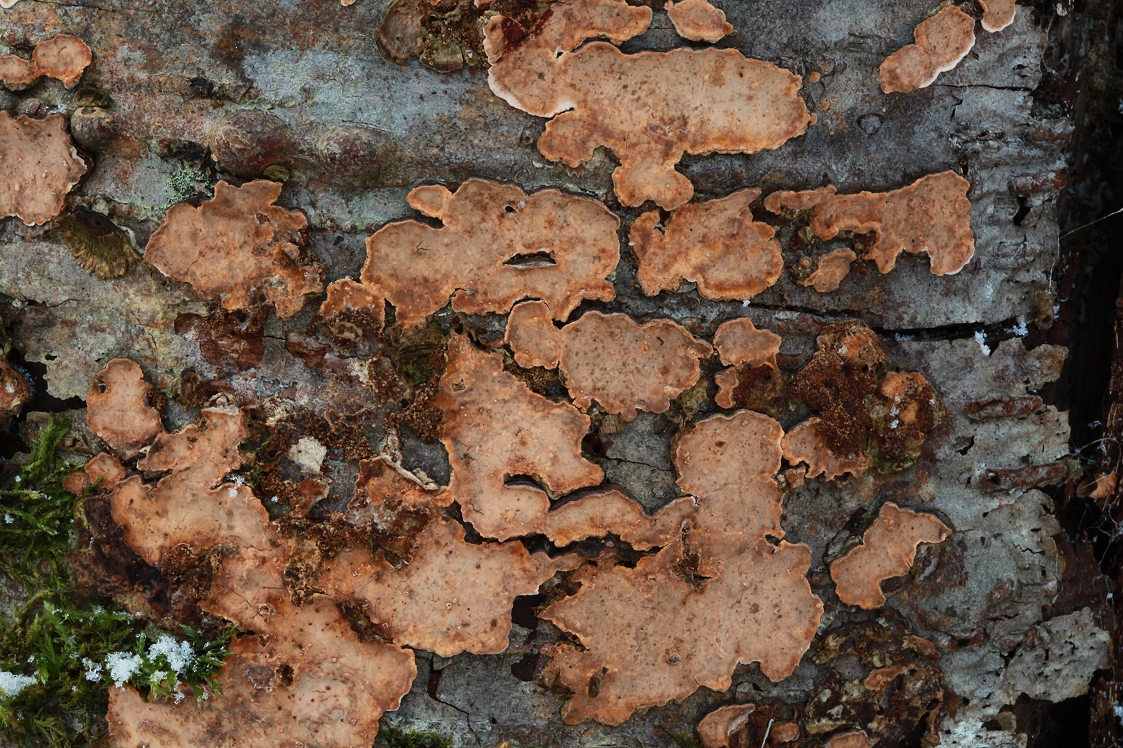
However, in Nature, there are always species that benefit from any change, and in this case some of the dead alders had a brightly-coloured fungus growing on them. This is the bleeding broadleaf crust (Stereum rugosum), and it typically grows on standing dead broadleaved trees, including (in our area) hazel, alder and willows. Its common name is derived from the fact that if its surface is scratched it exudes a dark red liquid.
Fungi like these help to break down the tough cellulose and lignin of the wood, thereby making the nutrients stored in the dead wood available to other organisms in the ecosystem. They are some of the unsung recyclers in the forest, carrying out a vital function, but seldom appreciated for it!
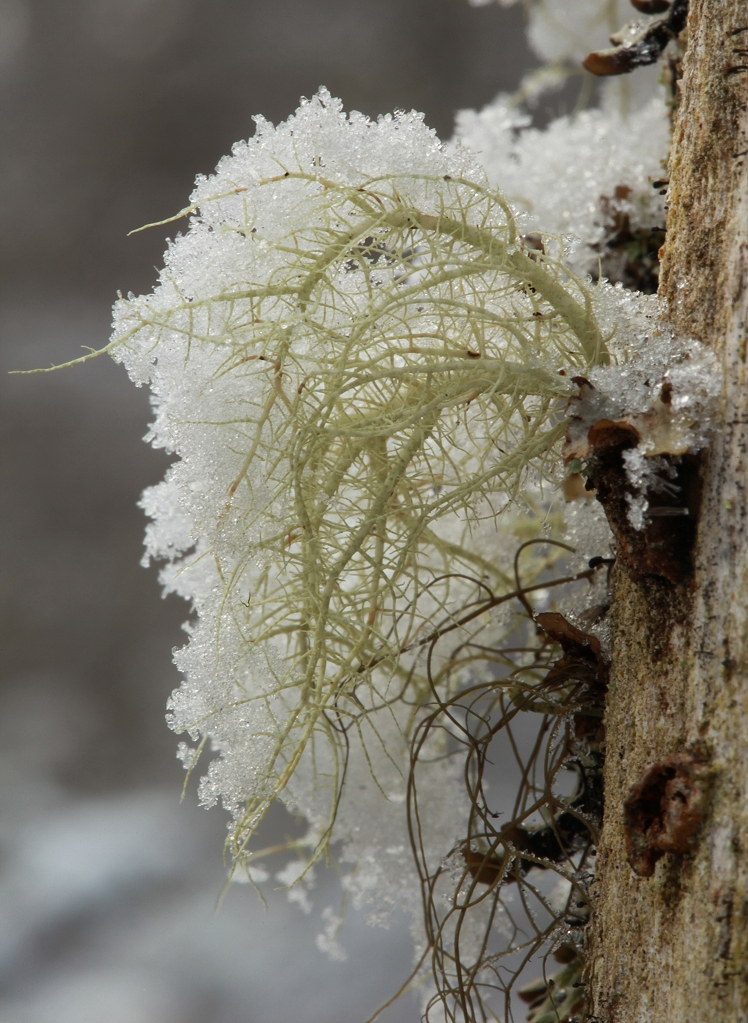
One of the alder snags also had a very nice young clump of beard lichen (Usnea filipendula) growing on it, which was covered in snow. The snow highlighted the form and structure of the lichen by isolating it from the background, making for an interesting and aesthetic photograph – it is normally quite hard to take good photographs of this species.
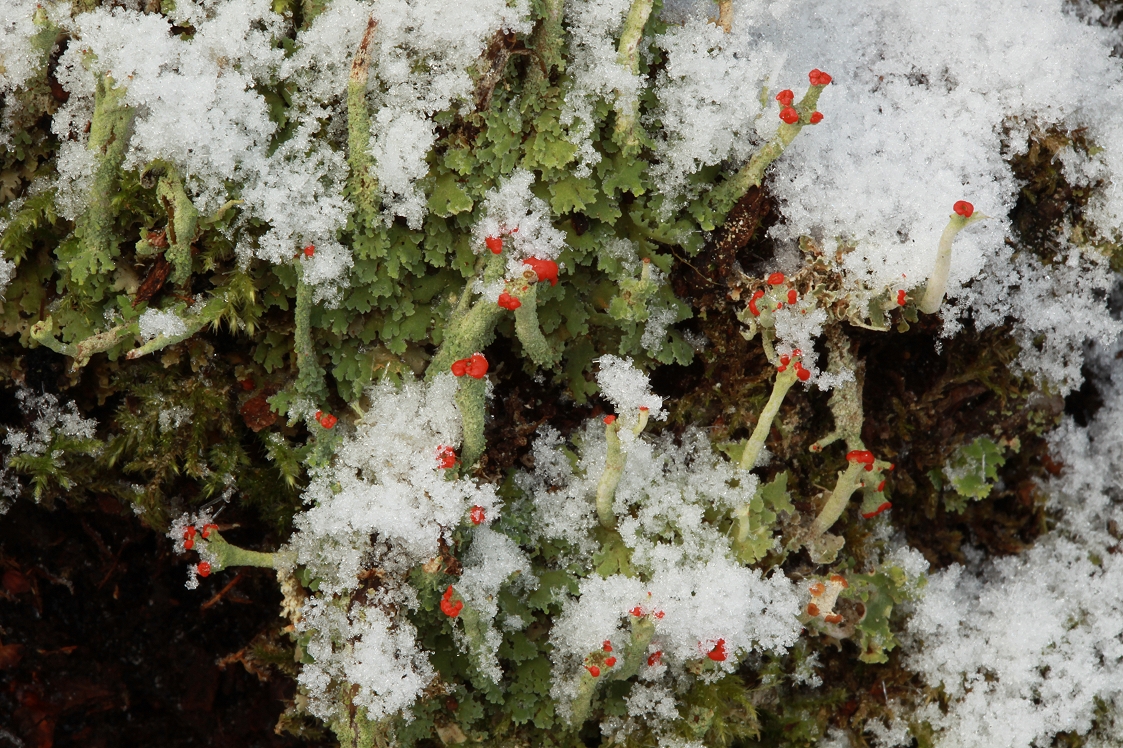
On another part of the same alder snag, there was a clump of lichen (Cladonia sp.), with bright red apothecia (the part that releases the spores from the fungal partner in the lichen symbiosis) on top of the podetia, or stalks, that are characteristic of many species in the genus Cladonia. Somehow, amongst the snow, these tiny splashes of red seemed like a lichen equivalent of red-nosed reindeer, complete with seasonally-appropriate colour!
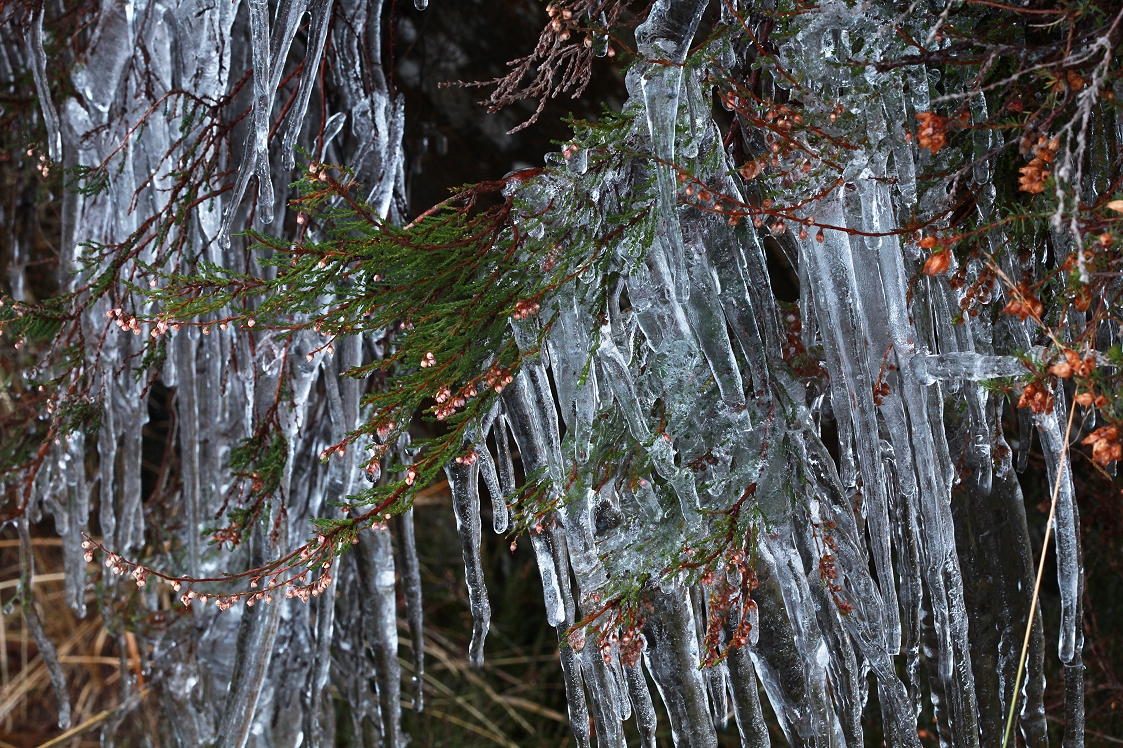
By now the light was fading so I headed back towards my car. When I got to the road though and walked along it a bit, I noticed an area where the seepage of water from the slope above the road had flowed down over some heather plants (Calluna vulgaris). This had created a series of icicles hanging off each of the heather stems, and this made for a fitting finale to another beautiful winter’s day out in the forest.
Hi and thanks for the info, and the web site genuinely looks fabulous. Exactly what word press design are you employing?