
In May 2004, during a visit to the National Trust for Scotland’s (NTS’s) West Affric Estate, which encompasses the headwaters of the Affric River watershed, I had a remarkable and memorable experience. While checking up on some small-scale stock fenced exclosures that our volunteers had erected around some tiny overgrazed eared willow (Salix aurita) seedlings beside the Affric River in 1997, I found several bluebell plants (Hyacinthoides non-scripta) in full bloom in one of them.
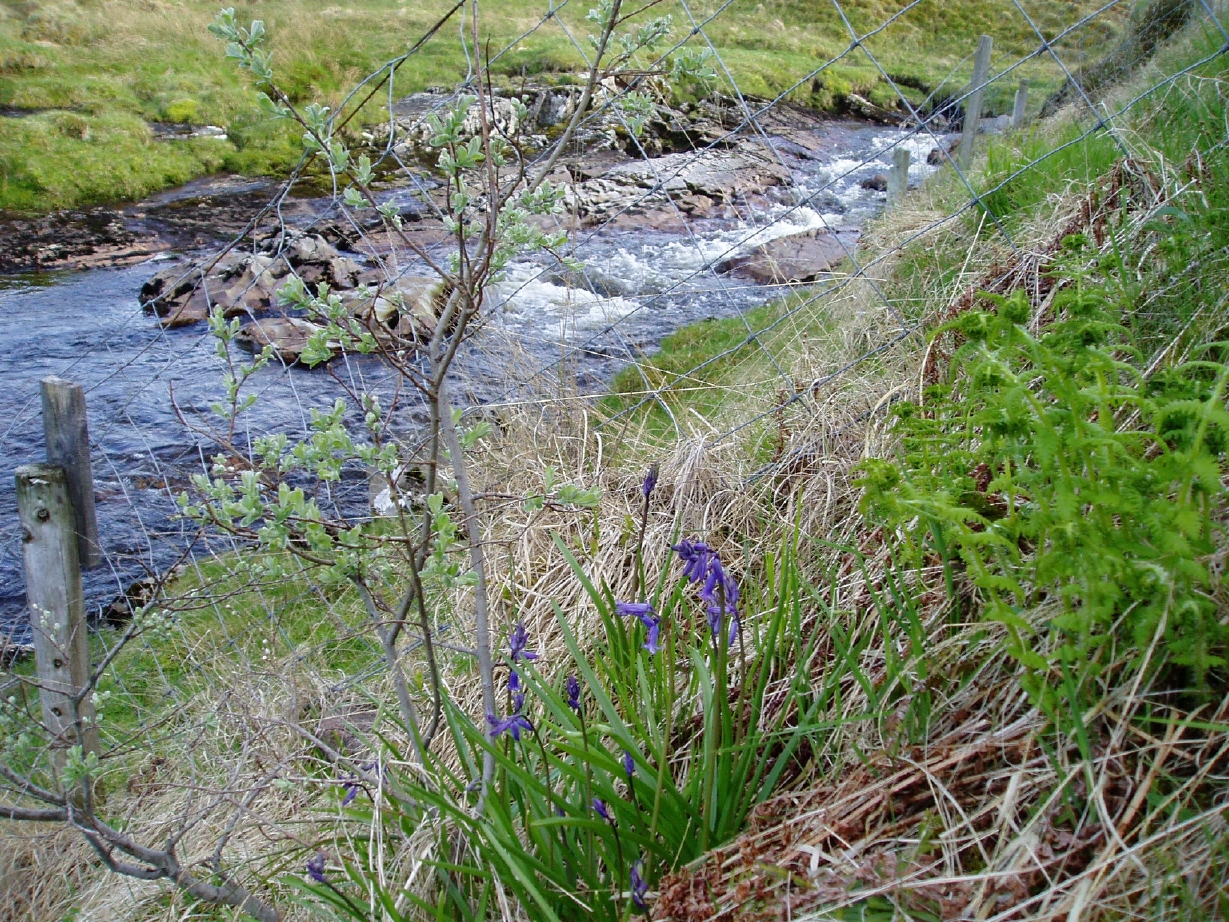
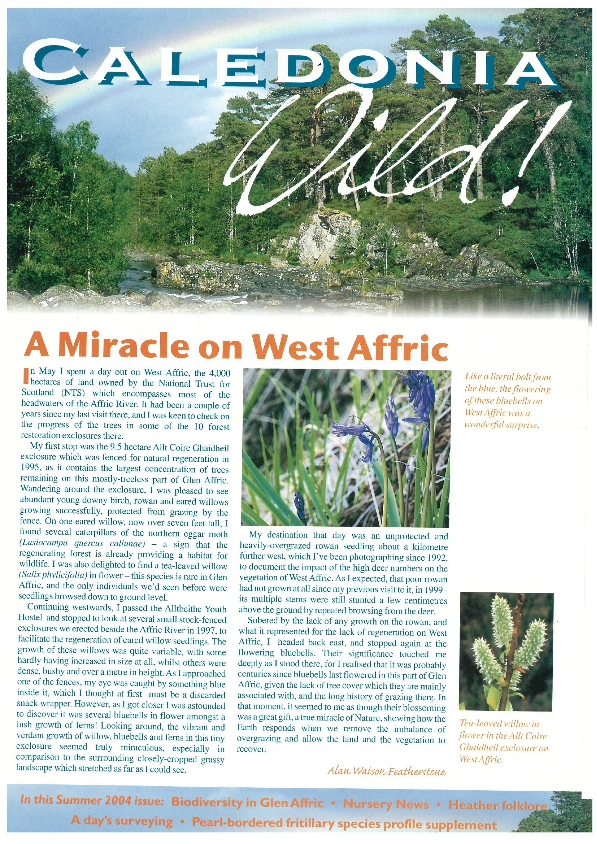
This was an astonishing sight, as West Affric was virtually tree-less when NTS bought it in 1993, and by 2004, there were still no trees, let alone bluebells, growing anywhere near the location of this stock-fenced exclosure, beside the Affric River about 500 metres west of the Allbeithe Youth Hostel. In fact, the nearest bluebells that I was aware of were located just east of Dog Falls, about 23 kilometres to the east of this site! I was so impressed by the discovery of these bluebells on West Affric, that I wrote about it in the front page article of the Summer 2004 edition of our magazine, Caledonia Wild!, titling the story ‘A Miracle on West Affric’.
It did indeed seem miraculous to me that these bluebells flowered there – how did that come about? Were the seeds there in the soil all the time (possibly for hundreds of years) since bluebells were last able to grow and flower there? Or did they just happen to get blown there on the wind from the plants 23 kilometres away to the east, and be deposited in the tiny area protected by the stock fence?
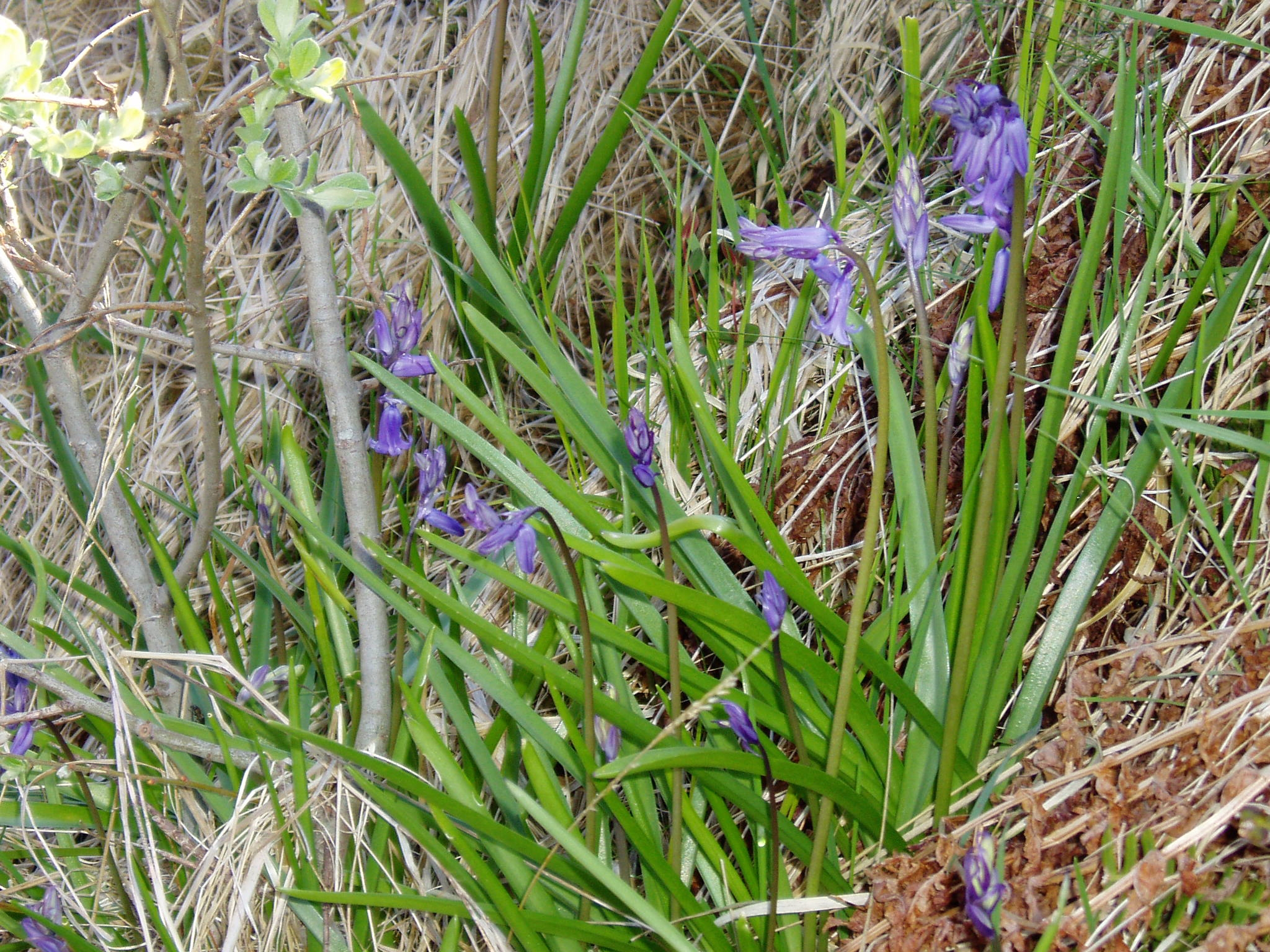
Both scenarios seemed quite unlikely to me, but somehow the seeds got there, germinated and the plants grew and flowered! What was also particularly notable is that the stock fence was erected around the eared willow in 1997, and it was 7 years later, in 2004, that I saw the bluebells in flower. It’s generally considered to take 7 years from when bluebell seeds germinate until they first flower, so that would imply that the seeds were already there when the stock fence was put up around the eared willow seedling in 1997.
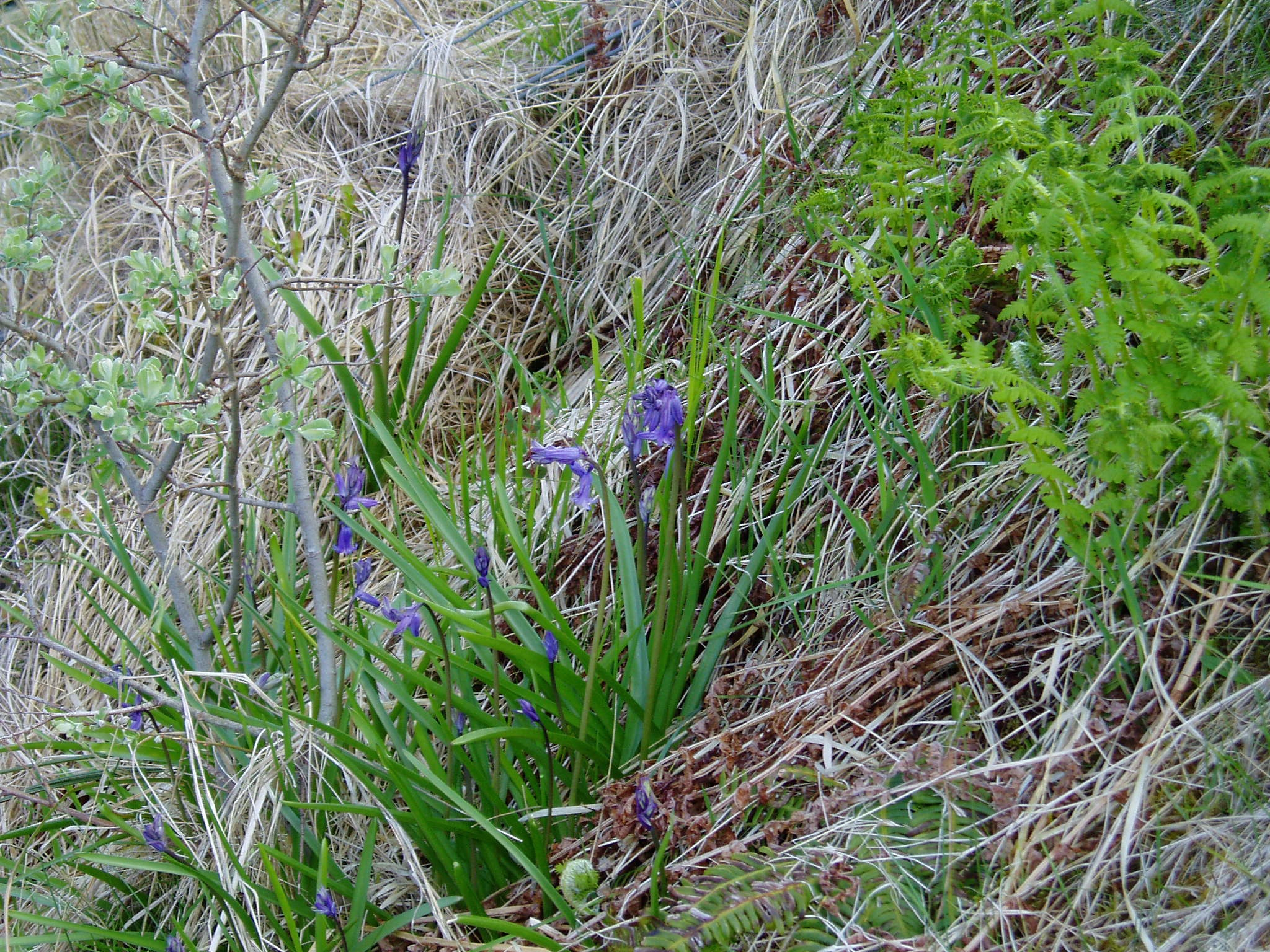
There were several clumps of bluebells inside the stock fence, and I counted something like 20 flower spikes altogether. Other plants were also growing there, protected by the fence from overgrazing by red deer (Cervus elaphus), including a golden-scaled male fern (Dryopteris affinis). This was in stark contrast to the area outside the fence, where there was nothing but grass – the only vegetation that was able to survive the grazing pressure from the deer.
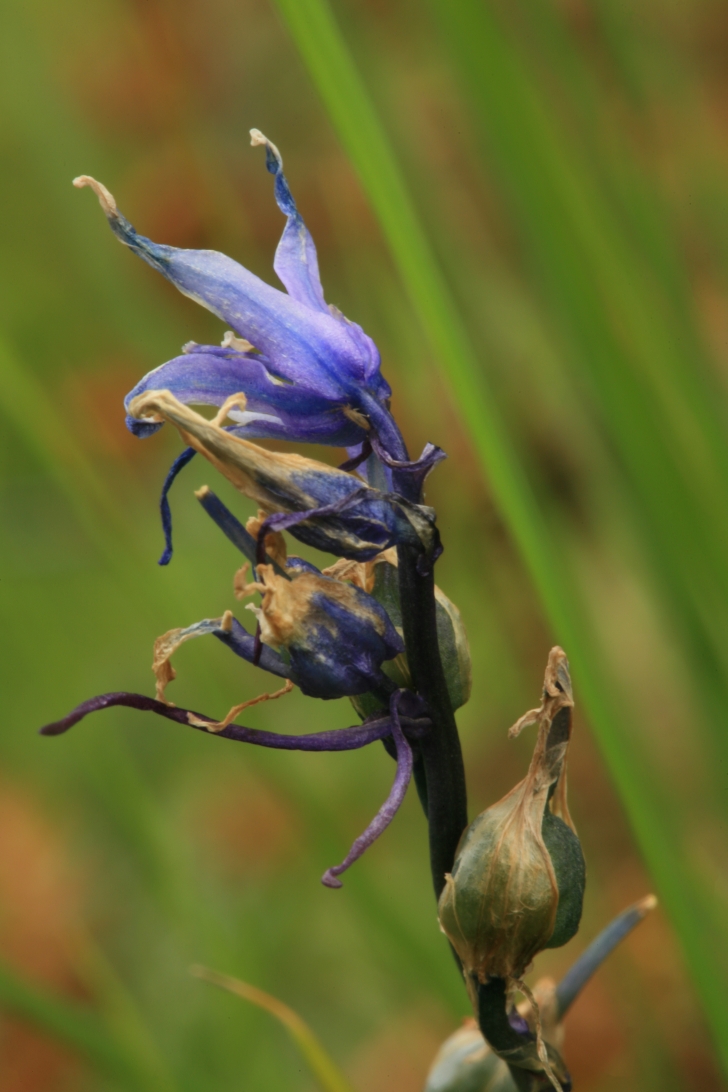
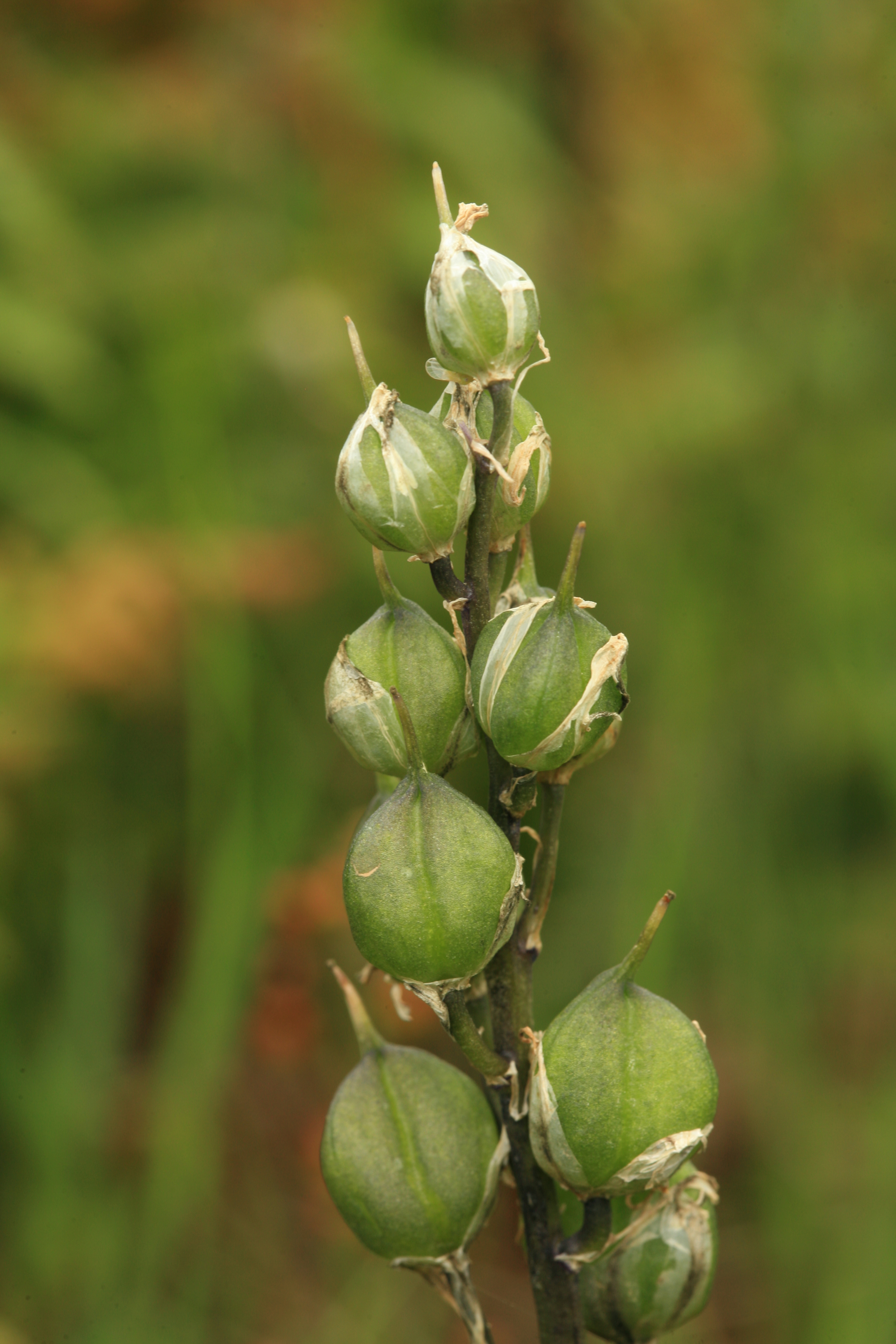
I don’t get out to West Affric that often, and it was just over 4 years later, in July 2008 when I next visited this small stock-fenced exclosure. Because it was slightly later in the growing season, I had missed almost all of the flowering of the bluebells that year, but one or two plants still had some of their last blossoms on them, as well as the ripening seed capsules lower on the flower stems. Although there weren’t many flowers visible, I could tell from the number of flower spikes with seed capsules on them that there were many more bluebell plants than I’d seen in 2004.
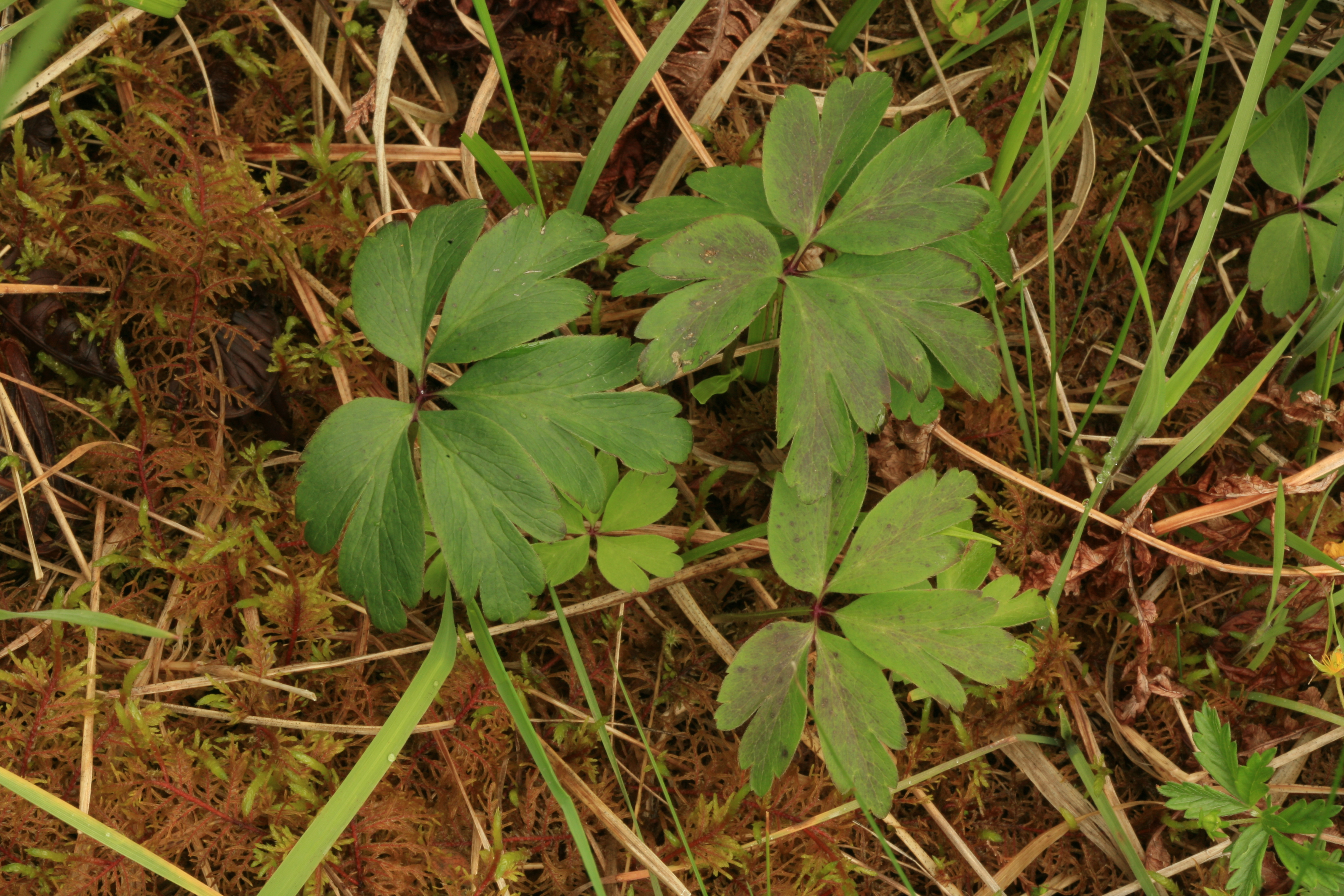
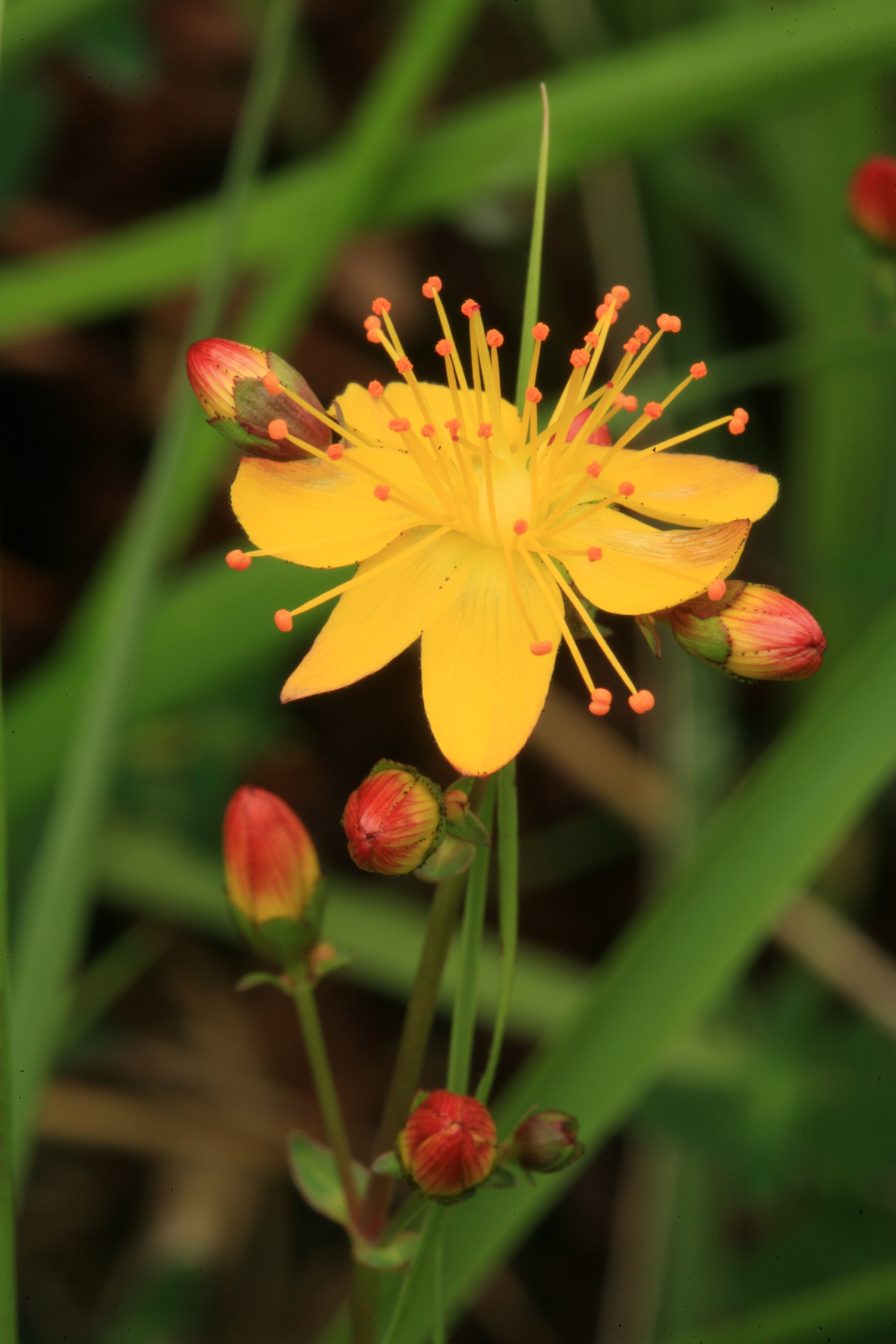
In addition to the bluebell plants, there were other flowering plants growing inside the little sanctuary from deer grazing that the stock-fenced exclosure provided. These included wood anemones (Anemone nemorosa) and slender St. John’s wort (Hypericum pulchrum).

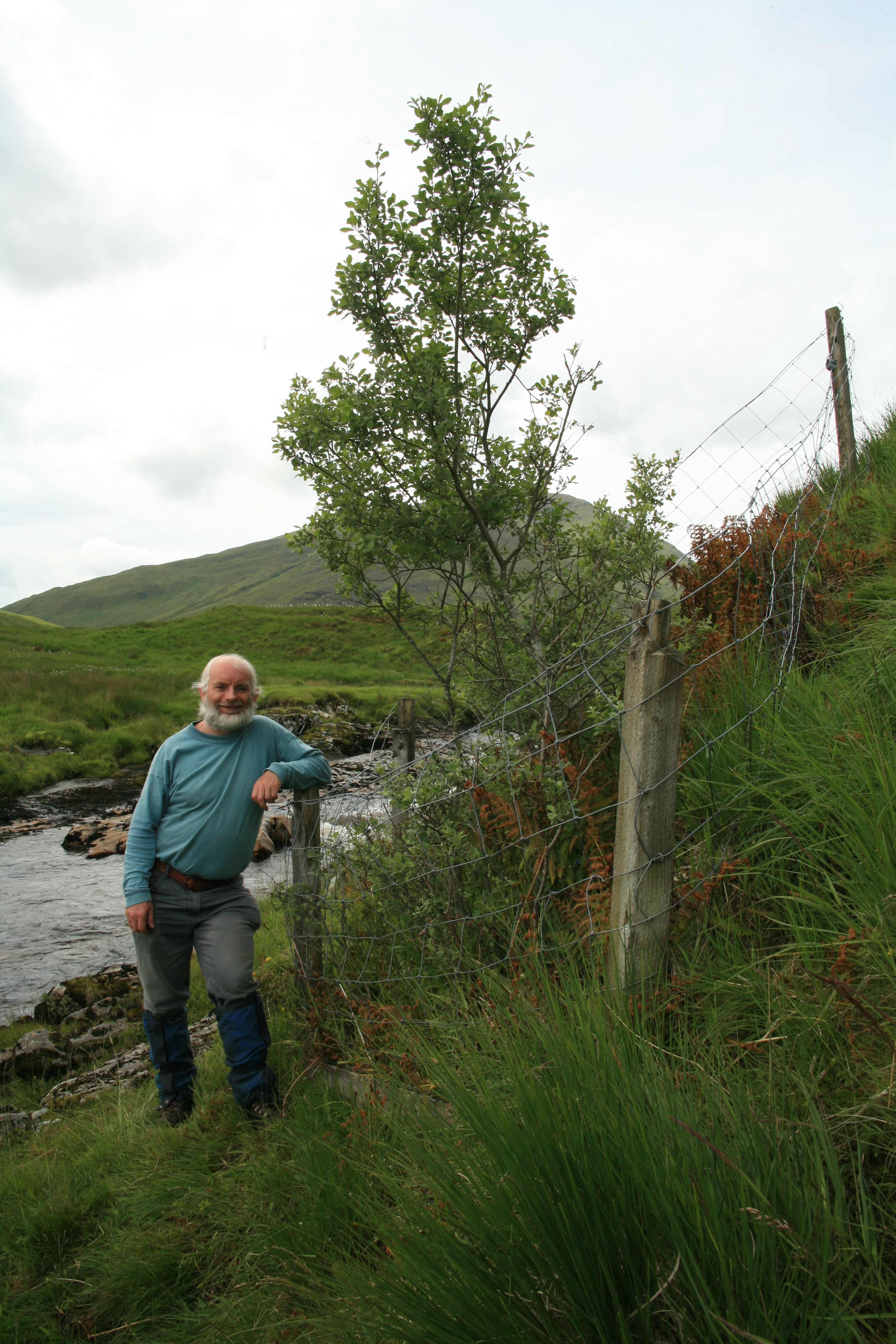
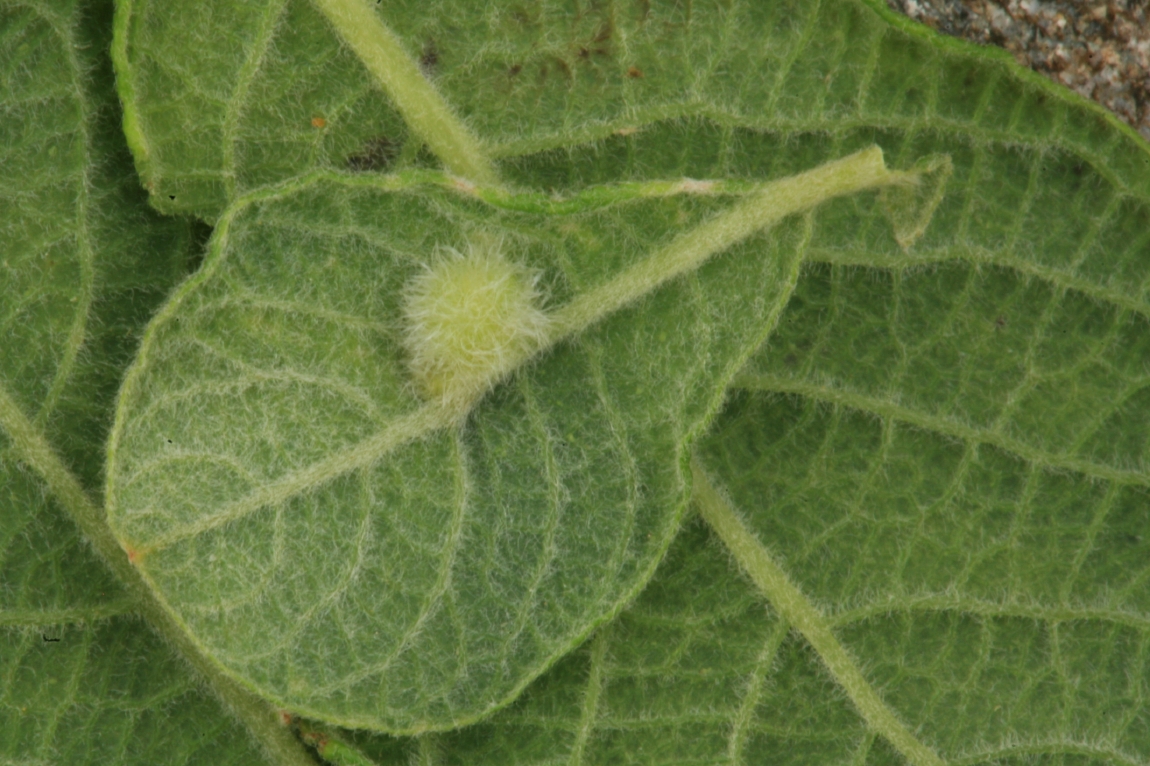
Measuring no more than about 2 metres by 3 metres in size, the exclosure was a veritable oasis of diverse life in the otherwise biologically monotonous grass-dominated landscape. Insects were utilising the growth of the plants there, and I found a gall induced by a sawfly on the underside of one of the willow’s leaves.
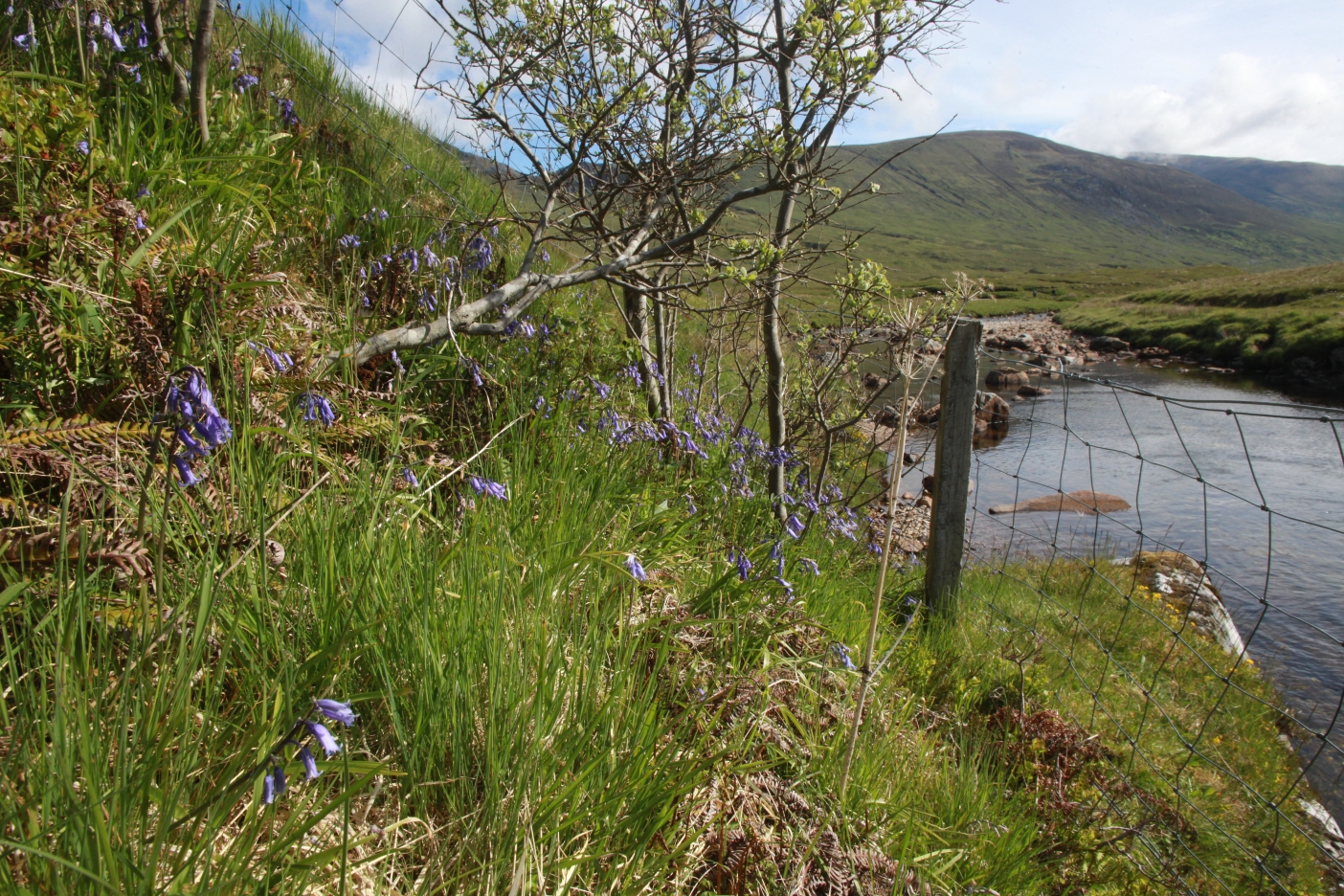
Because I’d missed the main flowering of the bluebells during that visit in 2008, I timed my next visit, in 2012, to make sure that I was there when they would be in bloom. That took place on 7th June 2012, and as it turned out, it was a beautiful sunny day, and the bluebell flowers were just about at their peak then. The eared willow leaves were just opening from their buds, so there was plenty of light reaching the bluebells underneath.
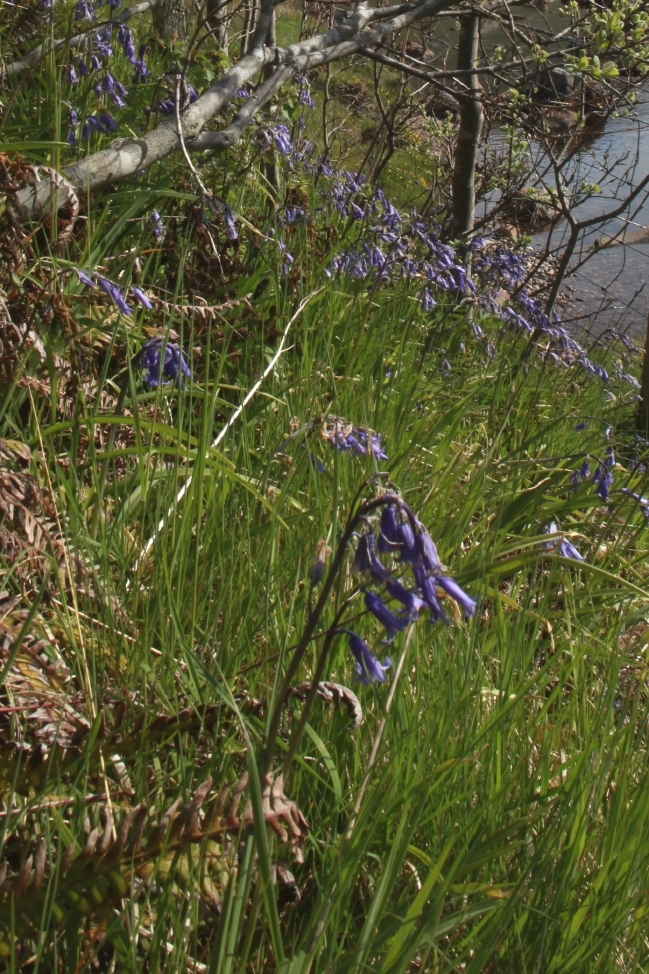
I made an attempt to count the number of different bluebell plants there were that day, and gave up when I reached 100, with quite a lot still uncounted. It was very clear though that the plants had proliferated considerably since I’d first seen them in 2004.
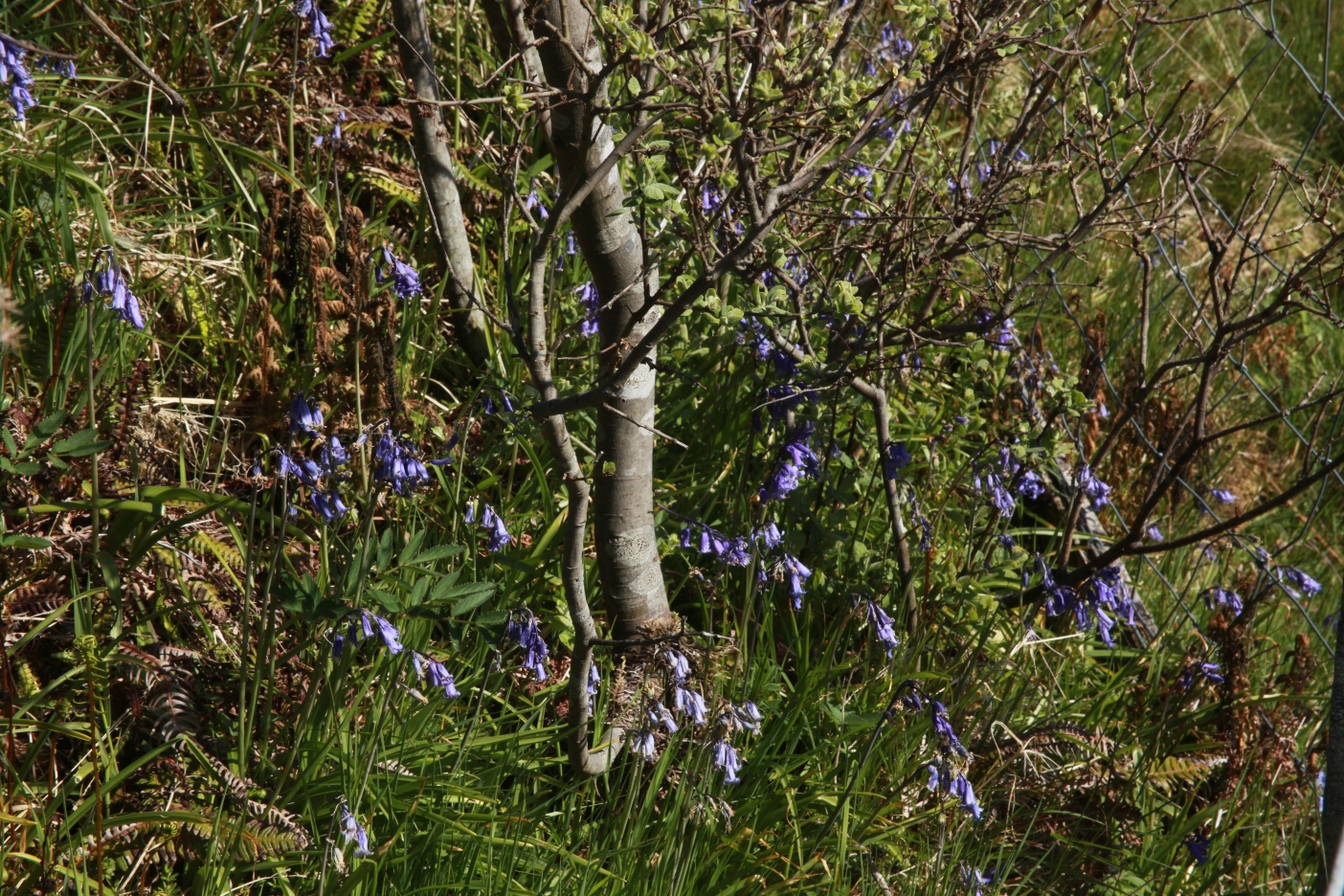
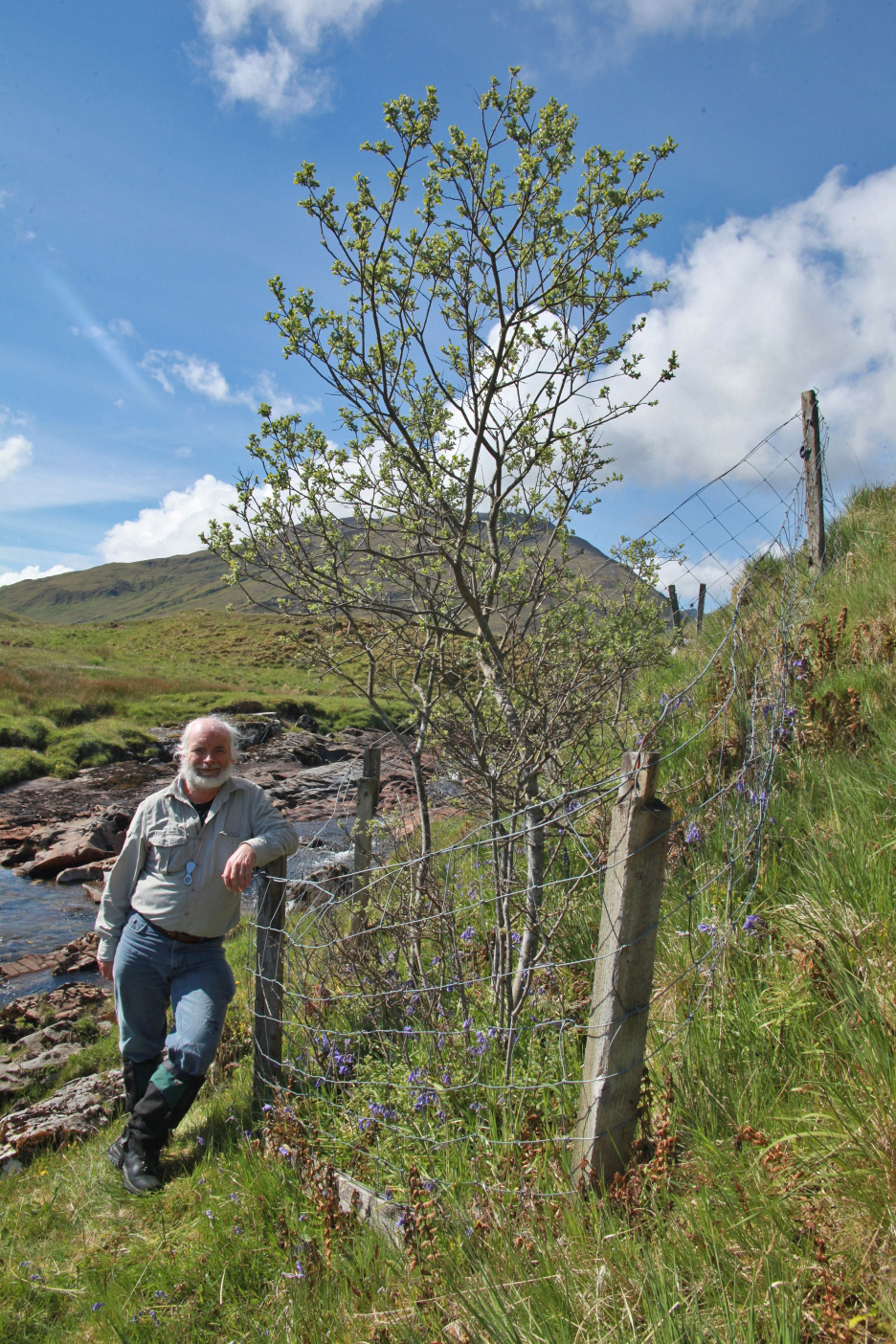
It was very heartening to see how the bluebells had multiplied over the years, and it seemed to me to symbolise the profound transformation that can take place in an area such as West Affric, when the overgrazing by excessive numbers of deer is relieved.
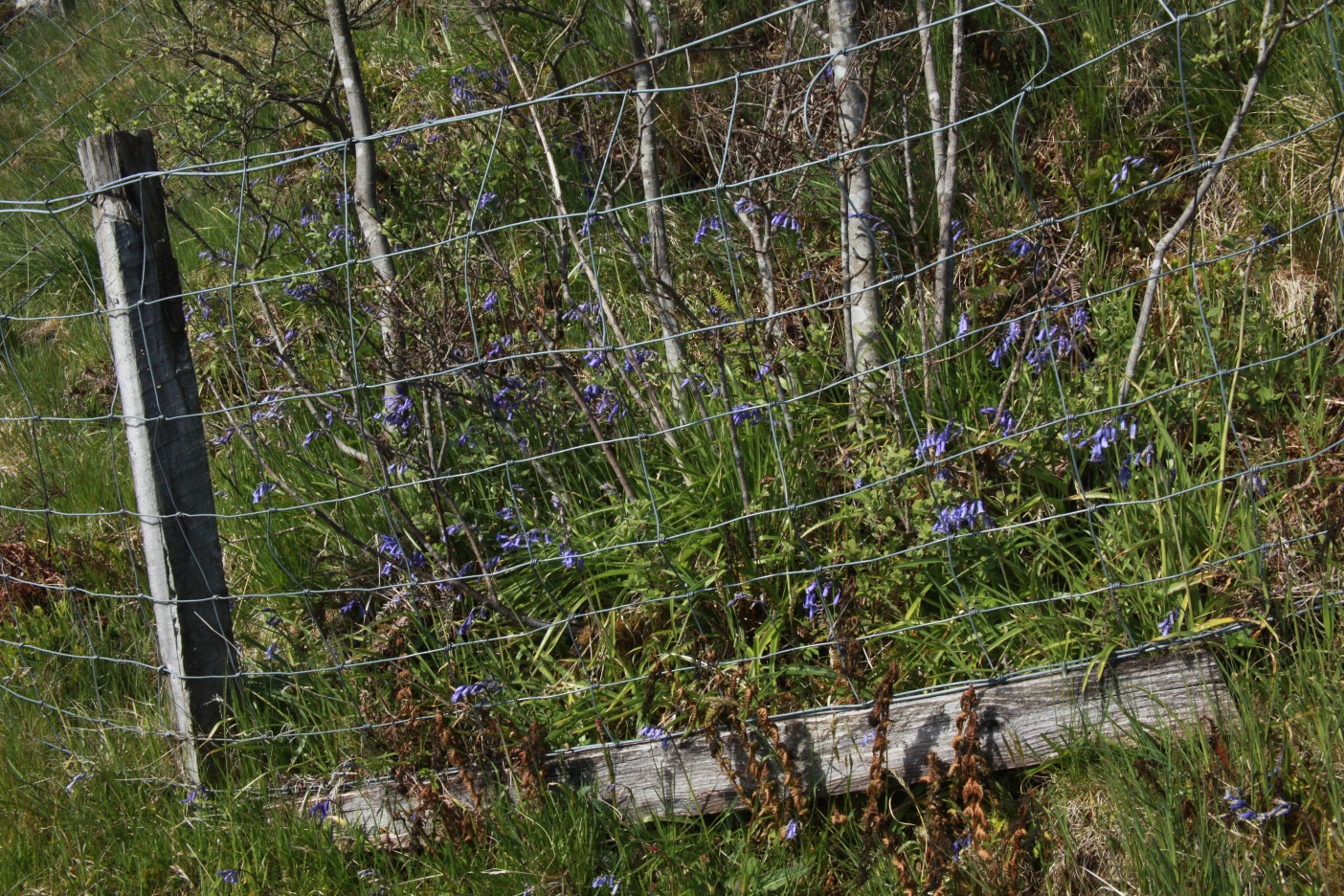
However, in the summer of 2014 I heard some potentially bad news about the area. A colleague, Craig, had been out at West Affric, and he told me that one of the stock-fenced exclosures beside the Affric River had been badly damaged by deer. He didn’t know which one had the bluebells in it, but from his description I suspected the worst. Apparently a stag had used its antlers to break down the netting of the fence and reach the plants inside, destroying the exclosure in the process. Craig felt he had no option but to remove the ruined fencing material with his group of volunteers, to clean up the site, as he didn’t have new posts and mesh to replace the exclosure. This meant leaving the stems of the willow and the plants around it completely vulnerable to the deer.
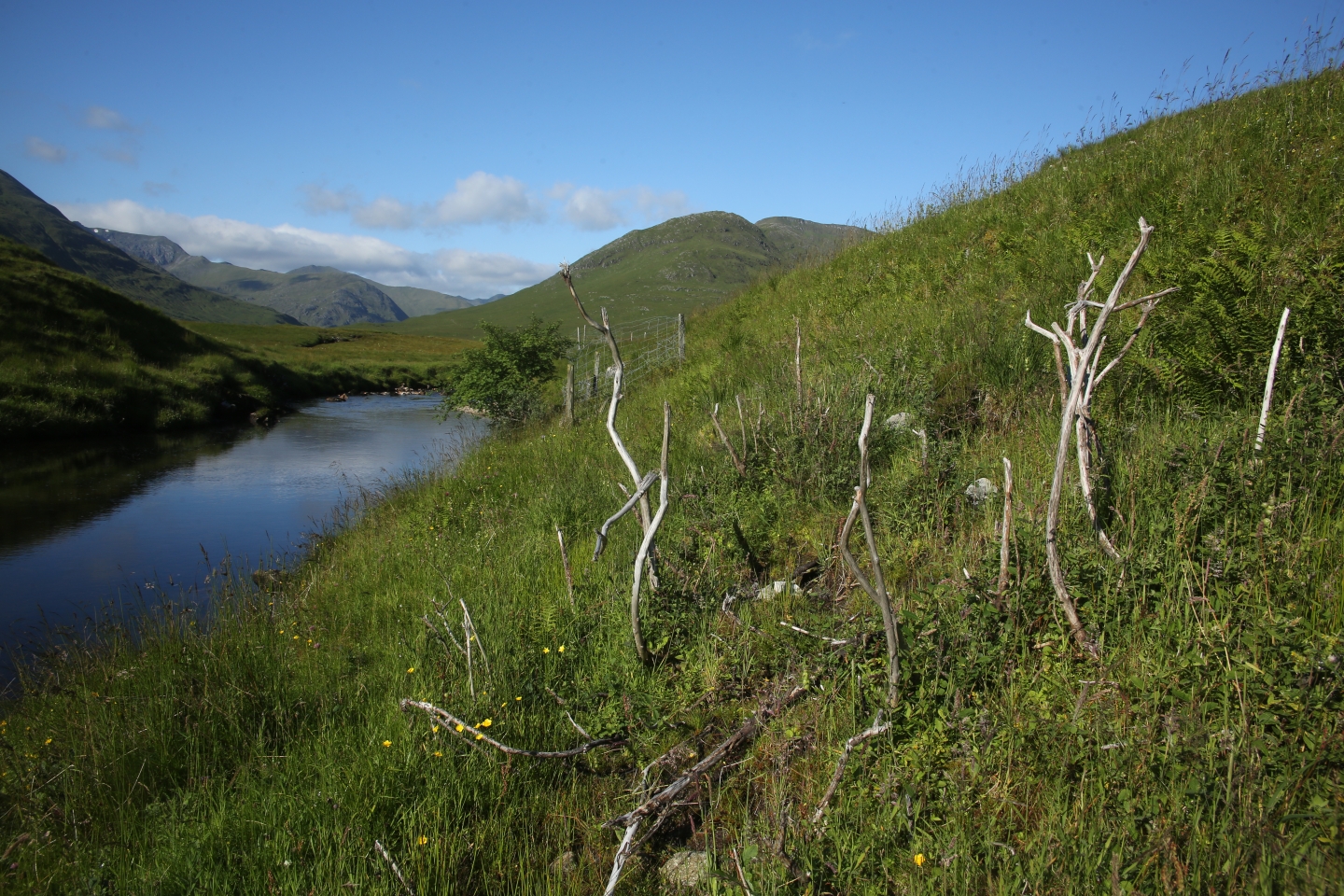
I didn’t have an opportunity to return to the site myself in 2014, but in the middle of August this year I spent 3 days on West Affric with a group of 4 other Trees for Life staff. On the second day our route took us past the exclosure, to the west of the Alltbeithe Youth Hostel, and, setting out ahead of my colleagues, I braced myself for what I would find. Arriving at the location, it was heart-wrenching to see that it was indeed the exclosure which had protected the bluebells that had been destroyed.
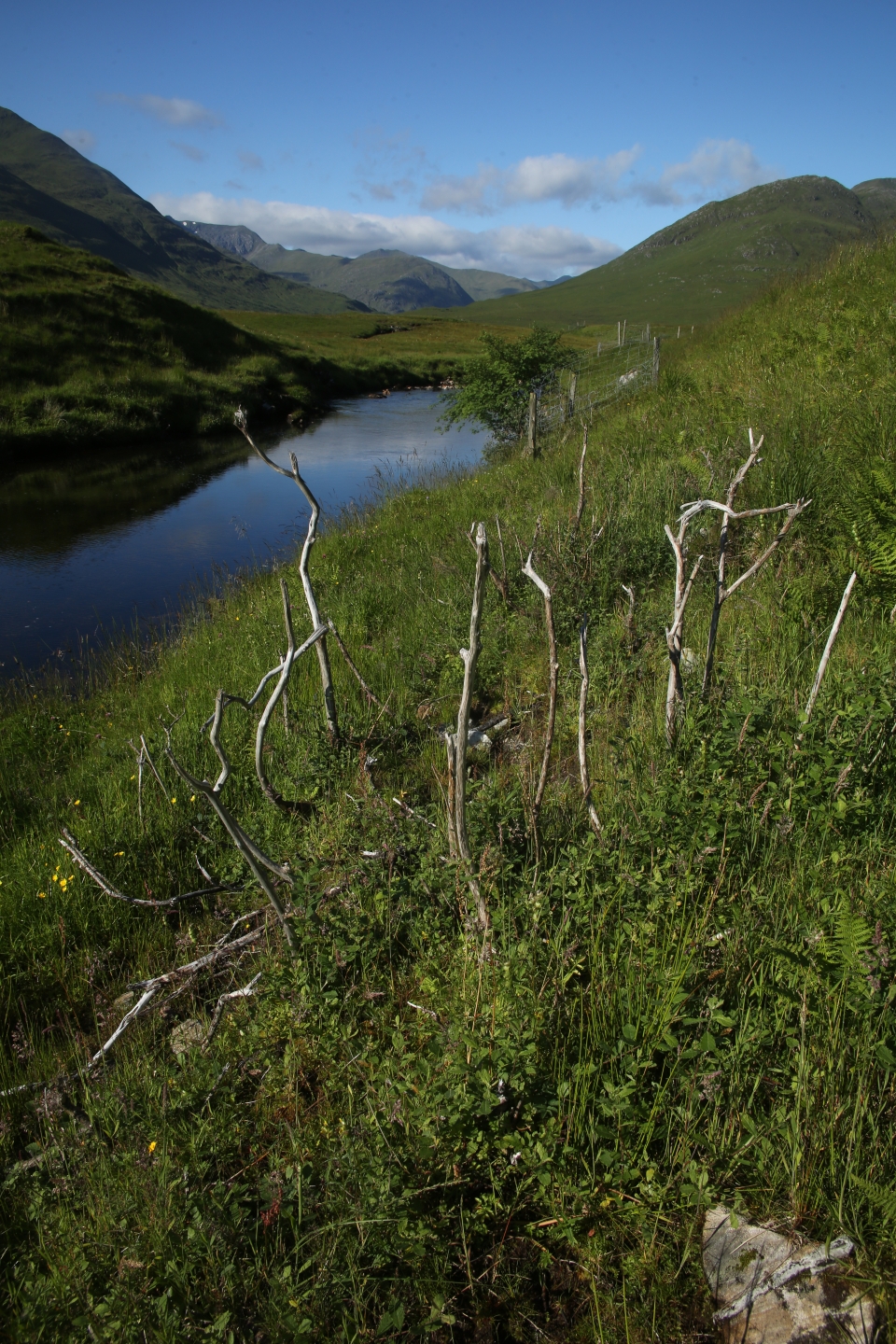
All that was left were bare stems from the eared willow bush, bleached white by the elements, and with a handful of leaves growing at the base of each, where they’d avoided the mouths of the deer. In 2012, the main stem of the eared willow had been more than twice my height, well over 3 metres tall, but now it had been reduced to a sad, broken and lifeless stump of less than a metre. There was no sign of the bluebell plants or the slender St. John’s wort or wood anemones that I’d seen previously, and of course there was no habitat for the insects that had formerly been feeding on, or galling, the willow’s leaves. It was a shocking sight indeed to see how the rich and abundant oasis of 2012 had been degraded into a microcosm of the ruined ecosystem that prevails elsewhere on much of West Affric and many other parts of the Highlands.
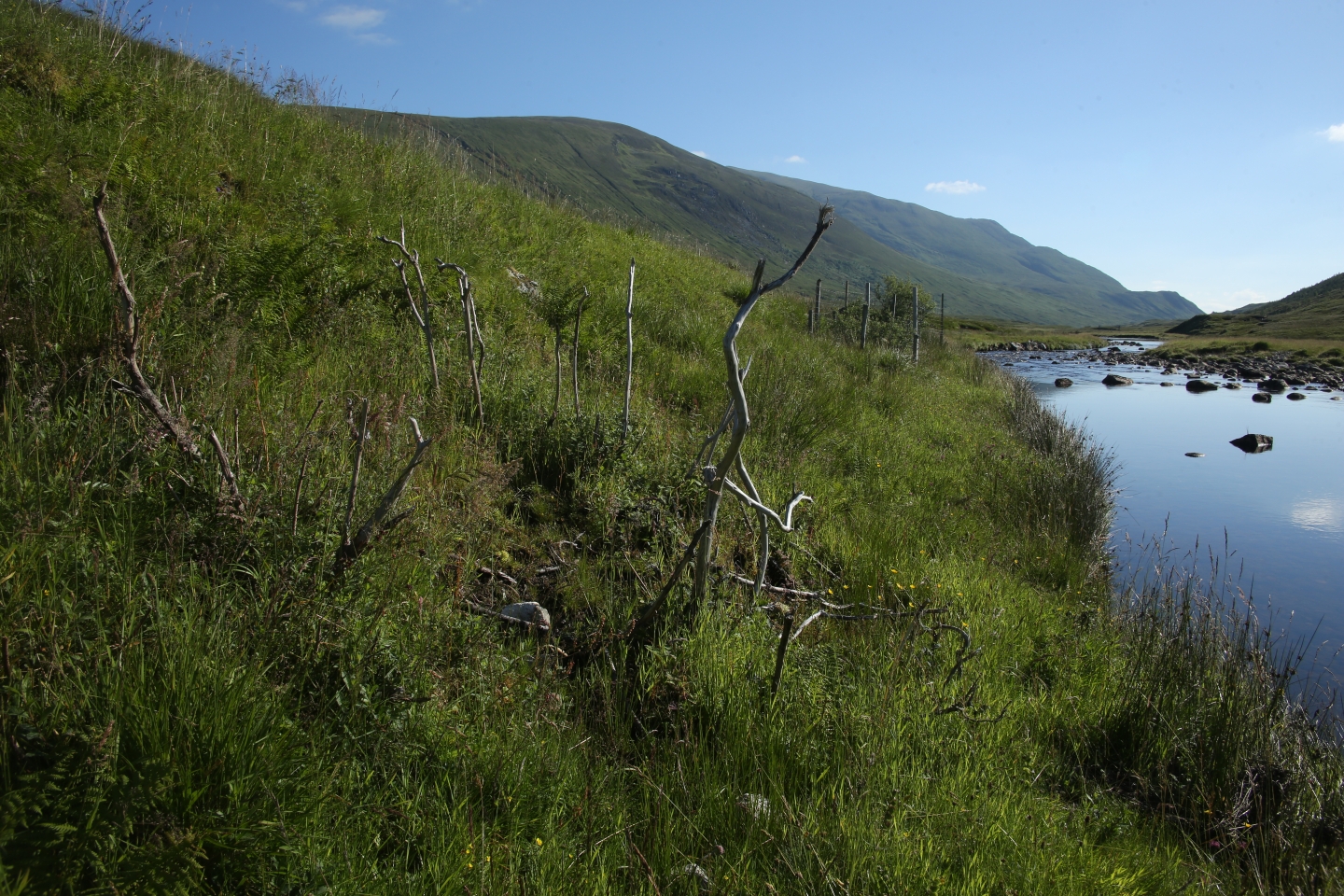
When my colleagues arrived a few minutes later, we commiserated on the tremendous loss that had taken place as a result of the failure of the fence to keep the deer out. However, we also agreed that if we can get a new stock-fenced exclosure erected on the site, the willow will sprout again from the foliage struggling to survive at the base of the dead stems. It’s likely that some of the bluebell bulbs will have survived as well, and, with renewed protection, will flower again, possibly as soon as next year.
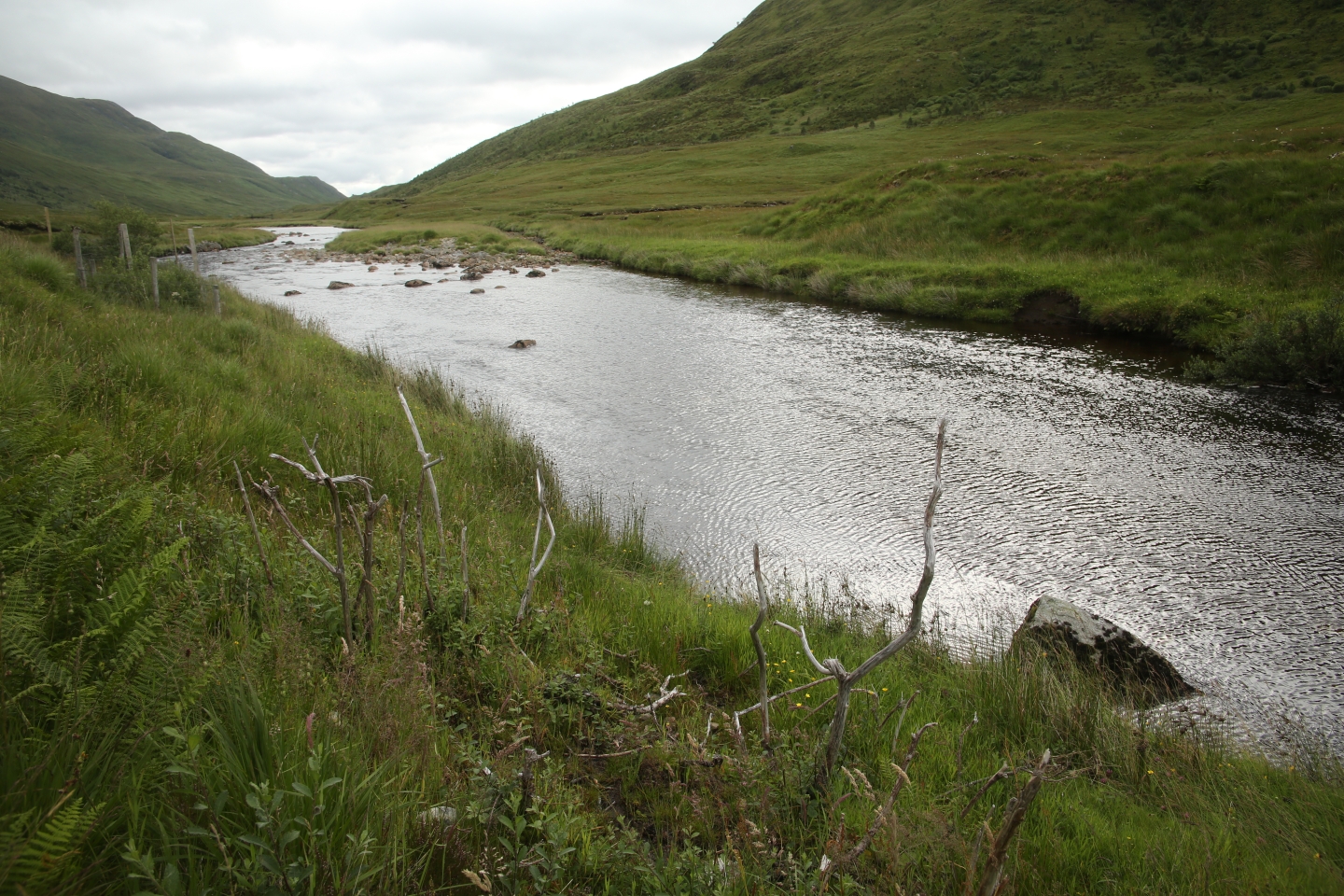
If not, then there will certainly be seeds from them in the ground, which will germinate and grow, but in that case it will likely be another 7 years until those new bluebell plants flower there. So, all is not lost, and we hope to re-fence area before too long, once we’ve got agreement from NTS to do that, and have transported the necessary materials on to the site. I have to keep reminding myself that Nature is resilient, and that, given a chance, new life will spring up there again, once the grazing pressure is relieved.
It was a sobering start to the day, and as the 5 of us walked further west, it transpired that the fate of that willow patch was a harbinger for what we’d see on another part of the West Affric Estate …. (to be continued in the next blog).
Hi Alan
Have just come back from 2 weeks focalising in Glen Affric and found 2 bluebell patches that you may be unaware of. There is a large patch a few kilometers to the west of Benavean Dam, and a very small patch at the head of Loch Affric.
Hi Matt,
Thanks for providing that information. I’m pretty sure I know of the patch to the west of the Beinn a’Mheadhoin dam, but I don’t know the one at the head of Loch Affric – I’ll have to look out for it. Bluebells do seem to be spreading everywhere – I see more and more of them each year. Perhaps this is a result of global warming?
With best wishes,
Alan
I read this blog with great sadness, but this is an ever present worry: that after all the work, the years, that fence will give way and the deer undo all the years of work. But, as you write Alan, nature is resilient, those trees, plants will regenerate, in time.
Re the Bluebells, at An Cladach the Bluebells suddenly appeared one year and the Wood Sorrel under the sheeting placed around the saplings. And when the Estate sprayed the bracken to kill it, there were Bluebells everywhere! What looked like Barley filled one of the old walled enclosure outside the fencing; the late tenant of the 19th C did distil whisky there!
Reading your blog makes me even more determined to make sure our fence doesn’t get destroyed.
I’m happy to see undeveloped places still exist. Seems everywhere I turn, development is creeping in……at least in this part of Ontario, Canada. Love your articles, they are written well, the photos are wonderful. Can tell you are passionate about the naturalness of The Highlands. There are some nice places around here that look a lot like The Highlands of Scotland, even a sweet place called Dunedin…..
This is a great post as are the comments. Conversations like this are so important.
Dear Alan,
it’s interesting to read of your history with this little exclosure and its developing micro habitat that was sadly lost. I was out working with Craig and the extremely dedicated group of TFL volunteers in April 2014, trying to make the other fences nearby more deer-proof and planting birch in the fertile river bank. I did feel sorry for the poor stag that had its antlers caught in the fence – I wonder how many hours it had to wrestle to get itself free? We have brought deer numbers down over the last 2 decades but there’s no doubt that deer numbers still remain higher than we’d like.
We should remember that West Affric is an upland area with the average elevation of the property around 500 m (1,600 feet) and annual rainfall probably exceeding 4 m / 160 inches in the glen floor, not to mention the higher slopes. Peatland is the dominant habitat on the glen floor with soils predominantly nutrient poor and waterlogged over much of the hillsides. There are significant pockets of West Affric with richer soils, such as the narrow strip bordering the river where the bluebells grew and other larger areas of hillside, some of which the National Trust for Scotland, together with Trees for Life, has fenced off to allow trees to regenerate in.
These richer areas of soil which are suitable for trees (and bluebells) are distributed only patchily across the property though. Woodland once established will improve the quality of the soil, so we could expect the poor growing conditions of some areas to be improved with time. However, we can’t expect woodland to ever be the dominant vegetation cover in West Affric, no matter how many deer we shoot. At best we can expect a mosaic of birch dominated woodland through a predominantly open landscape – climate and soil are just as important as grazing in determining where trees, and bluebells, grow. And it’s to these richer pockets of soil and vegetation that deer will always be drawn to first. We could shoot 90% of the deer on West Affric and those remaining would still head straight to graze on any bluebell patches growing at the riverside, or rowan trees sprouting up amongst peatland. (You can argue that the presence of wolves would be enough to keep the deer on their toes.)
Research (conducted by the University of Stirling on the woodland history specific to West Affric) suggests that the decline in woodland cover as we move westwards down the glen today reflects a natural ecotone in place well before people settled here permanently – a reflection of the generally more challenging growing conditions to be found the further west in the glen you go. Despite this, I do still feel that increasing the amount of woodland cover in West Affric is a very worthwhile goal. I’ve put a hell of a lot of effort into achieving this with other National Trust for Scotland staff and volunteers over the years, and enjoy seeing the changes we, and TFL, have initiated. This is a very challenging environment, for trees and for the people who work there. We know that our deer numbers need to come down, and have already begun an increased cull this year.
Kind regards,
Rule
Thanks for this Alan, a most interesting and sobering experience.
I do hope you will be able to share these findings with NTS who own the land, and hopefully be able to use this experience to discuss their forward plan for deer control. Do let us know the outcome of your discussions with NTS if at all possible,
Well done,
Vi
Just want to continue to tell you how valuable these blogs and documentation are, Alan, not just for those scientifically interested in what you’re doing but also for those who love the Highlands and want to understand their ecology as much as possible. Cheers!