
Over the years I’ve visited many of the old native pinewoods that are remnants of the original Caledonian Forest, which formerly covered much of the Highlands. However, I’d never been to the most westerly of those pinewood areas, at Shieldaig in Wester Ross, so at the beginning of August I decided to rectify this omission. Earlier in the summer, when I’d been visiting the nearby Ben Damph Estate, I’d come as far as the village of Shieldaig, but hadn’t made it to the pinewood itself then.
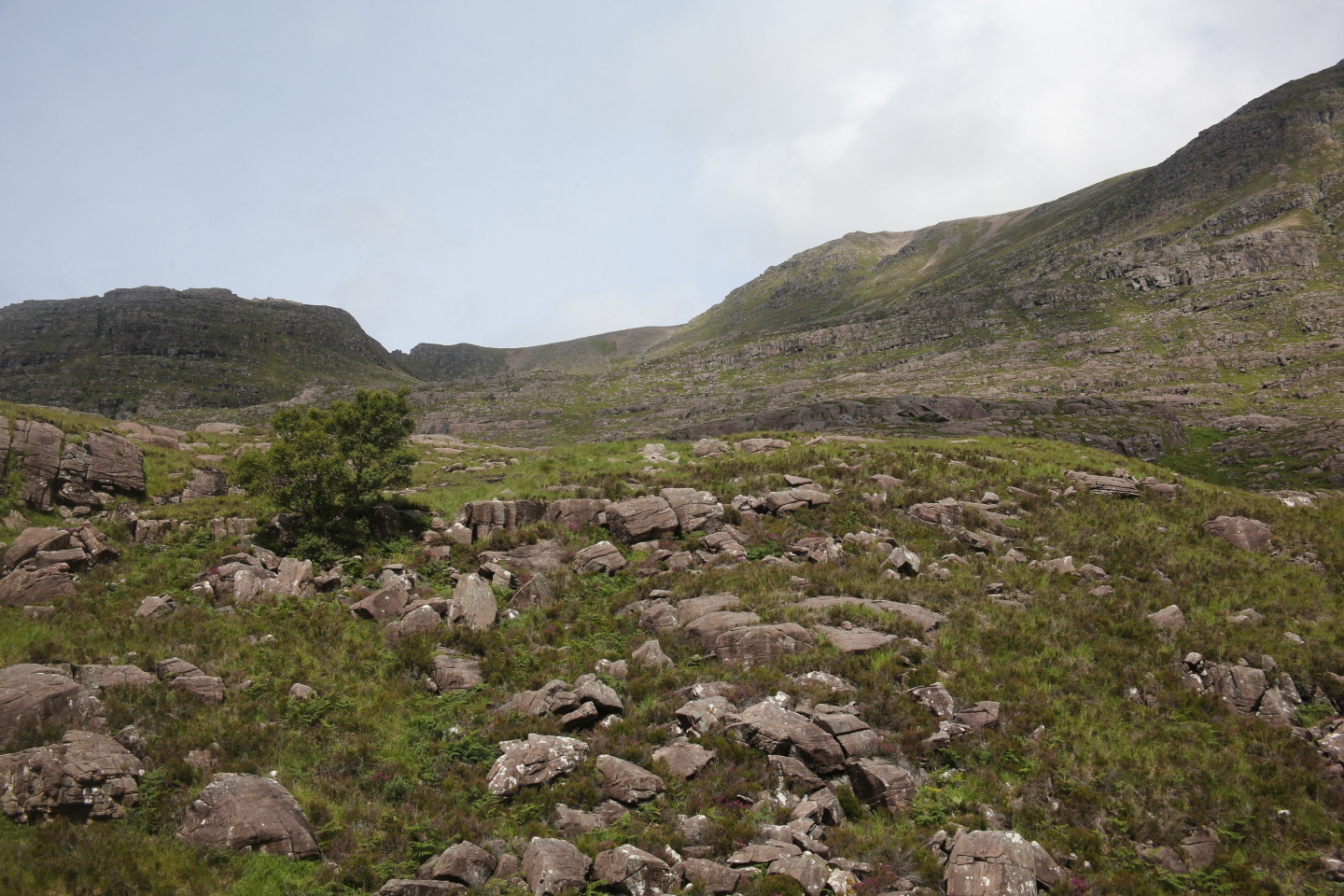
My route to reach Shieldaig this day took me by road from Inverness to Garve and then across to Achnasheen and Kinlochewe, at the east end of Loch Maree. From there I drove west, towards Upper Loch Torridon, passing the Beinn Eighe National Nature Reserve and the National Trust for Scotland’s Torridon Estate on the way. This is one of the most spectacular parts of the Highlands, with dramatic rocky landscapes characterised by what is known as Torridonian sandstone.
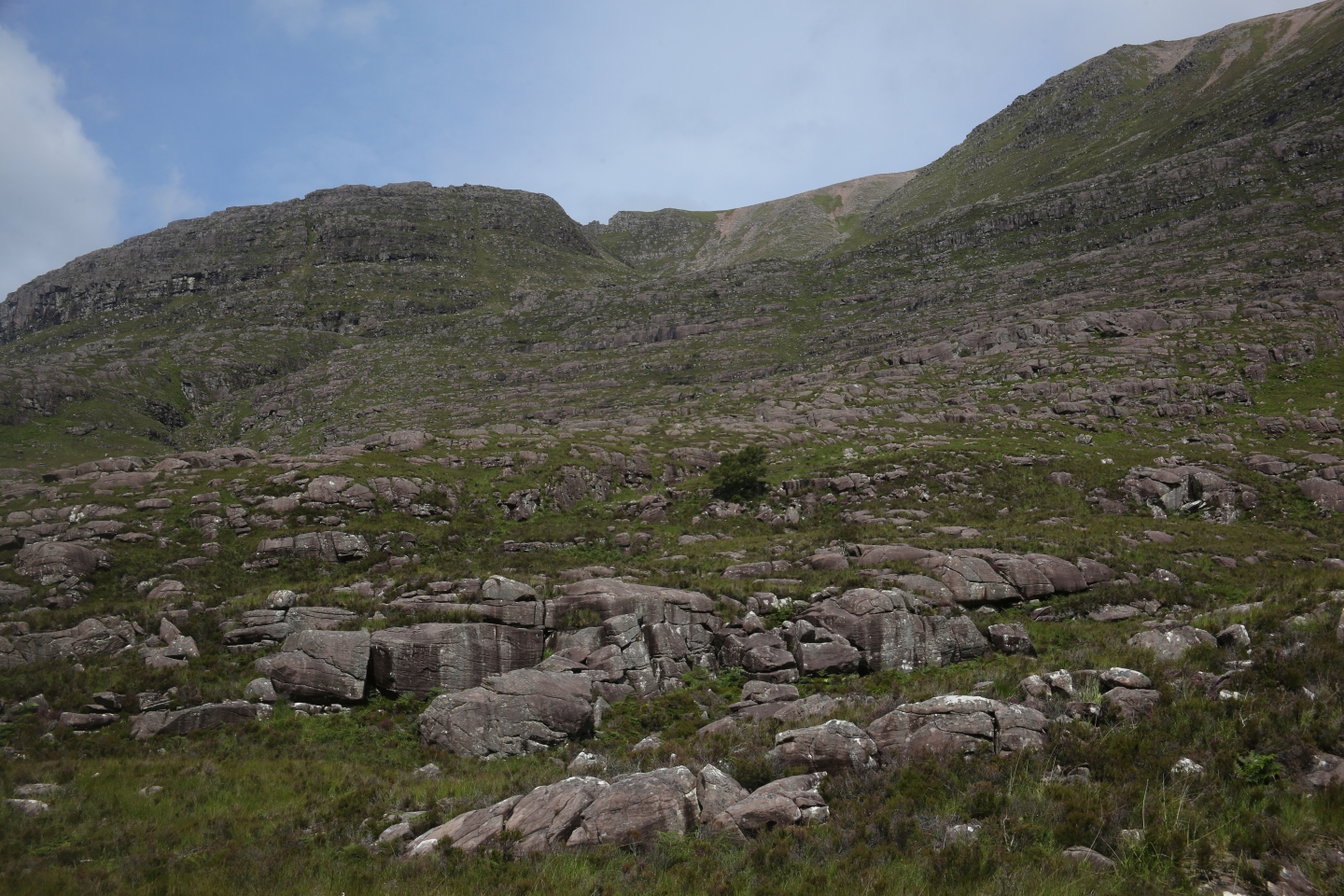
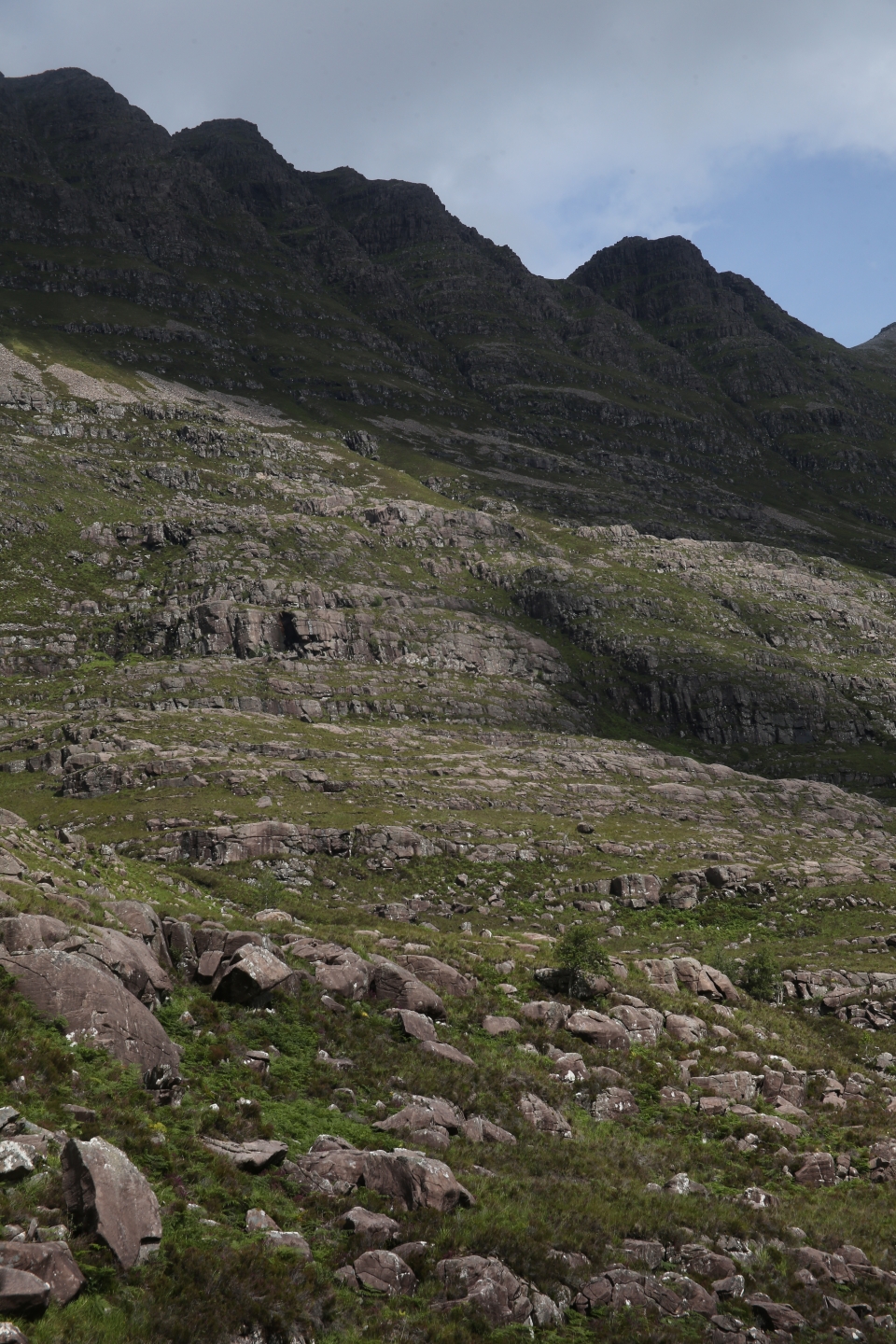
To the north of the River Torridon, the mountain Liathach is particularly notable, forming a formidable wall of sandstone cliffs and terraces along the glen. It rises to 1,054 metres and has seven tops to it, making it a favoured destination for hillwalkers and ‘Munro baggers’ – people who specialise in climbing the Scottish mountains that rise to over 3,000 feet (914 metres). When I’d passed this way before, on my way to Ben Damph, I’d seen a few isolated trees on the lower slopes of the mountain, so this day I stopped while en route to Shieldaig, to take some photographs of them.
The sun was shining intermittently, with occasional clouds bringing transient shadows to the landscape, as I photographed some solitary birches (Betula pubescens) and a lone holly (Ilex aquifolium).
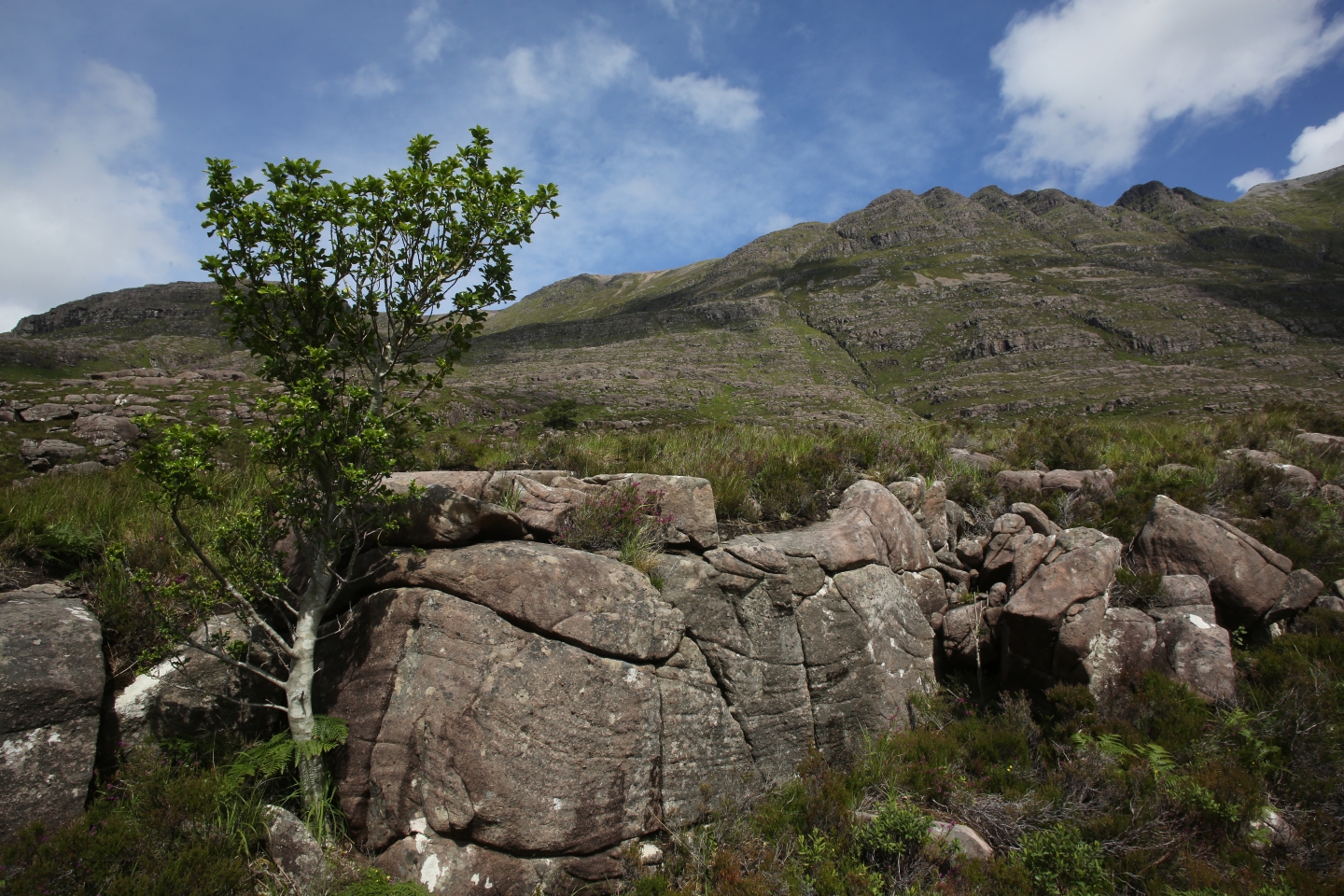

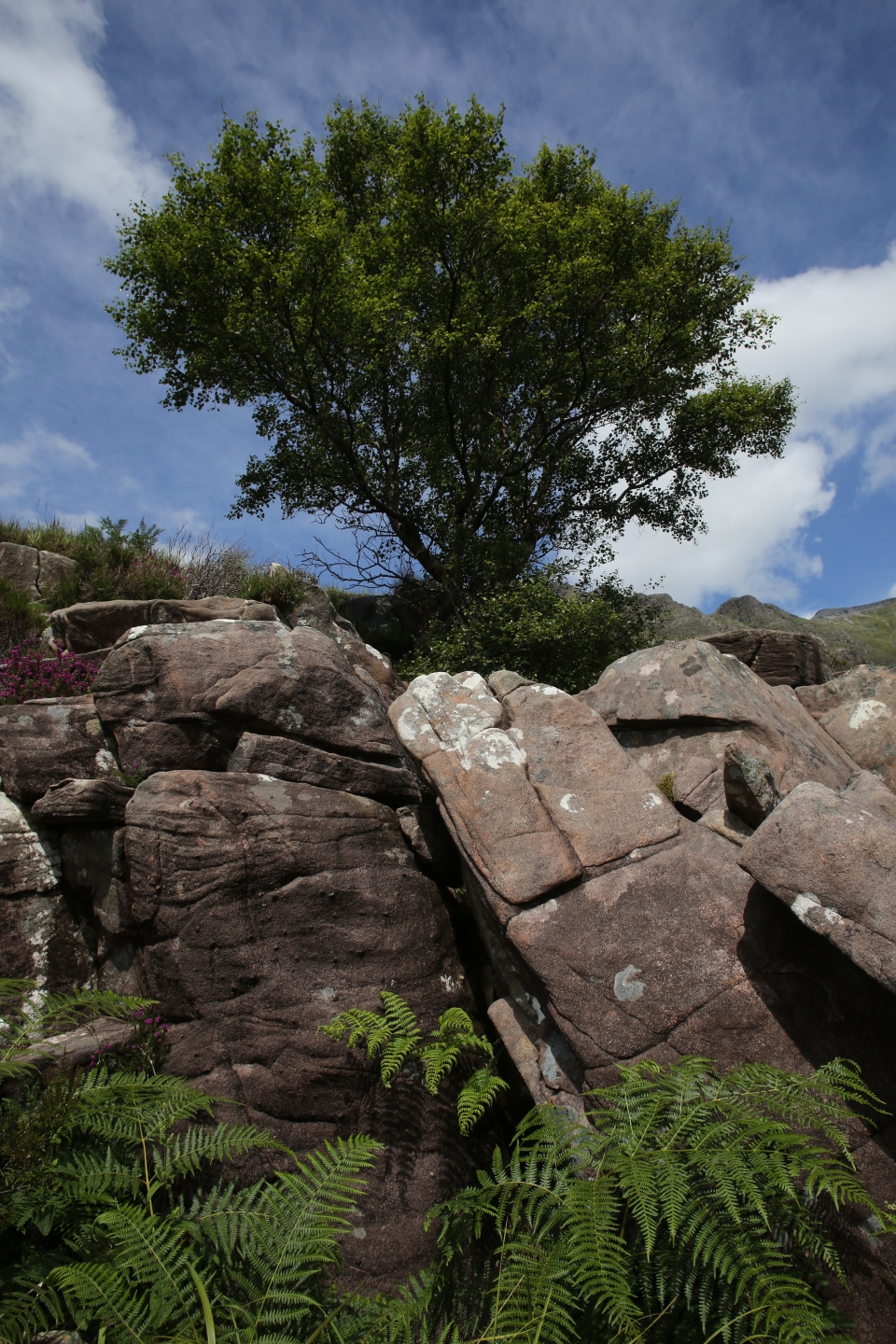
These scattered trees are all growing out of rocky outcrops or in inaccessible sites amongst the boulders, where they are out of reach of red deer (Cervus elaphus). It is the browsing pressure from these large herbivores which is preventing the natural recovery of trees and forest to this landscape. Most of the lower slopes of Liathach, like almost all mountains in the Highlands, should be covered in native woodland, and these solitary trees are sad reminders of the near-total deforestation that has occurred in the area.
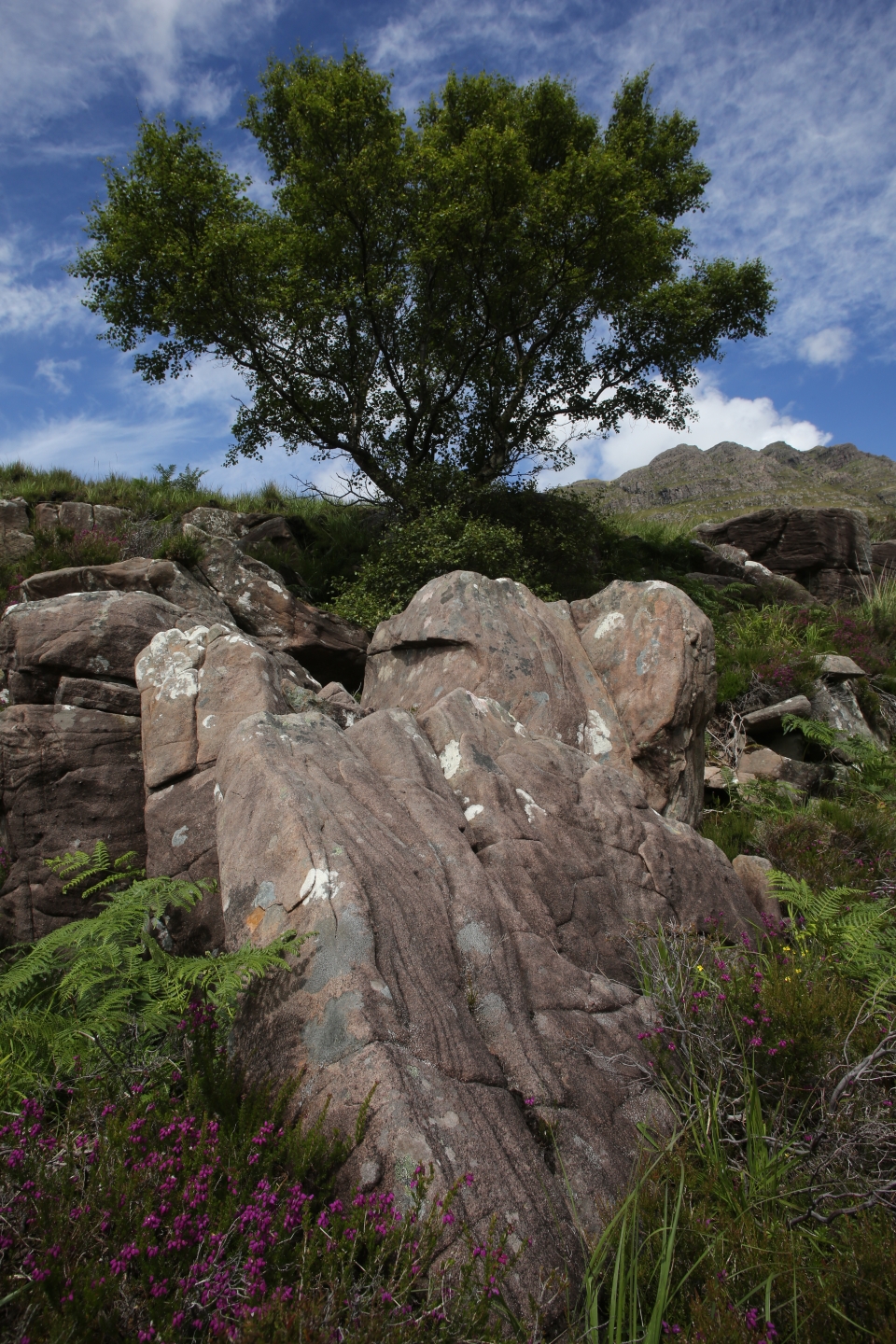
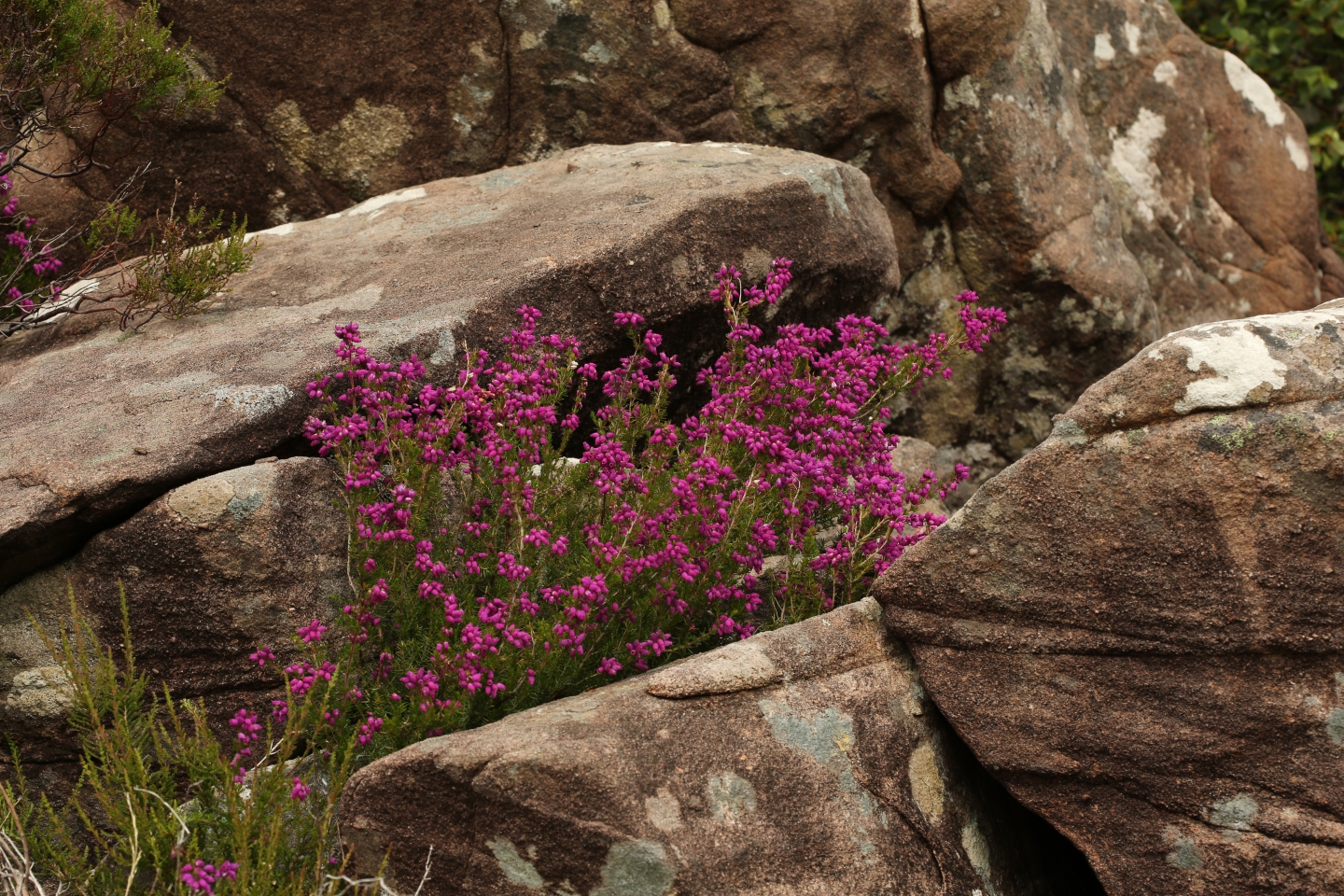
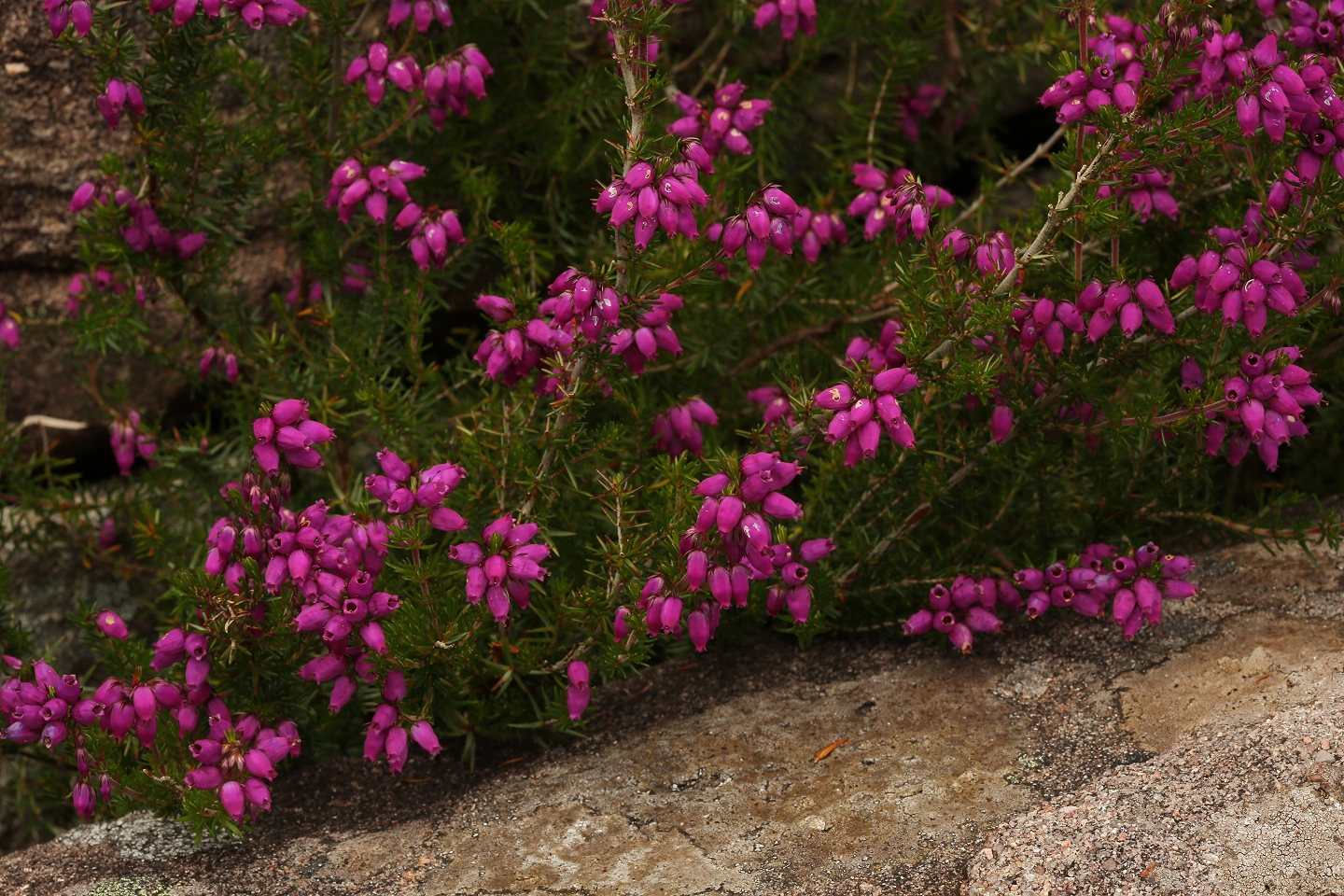
I climbed up to a couple of the trees, the largest of which was a downy birch. It was growing amongst some sandstone boulders, and there were a few patches of bell heather (Erica cinerea) in full bloom nearby.
After enjoying the view for a few minutes I headed back down to my car and drove on past Upper Loch Torridon and the village of Shieldaig to the pinewood remnant itself. While I had lunch by the roadside, the weather changed, with clouds filling the sky and rain beginning to fall.
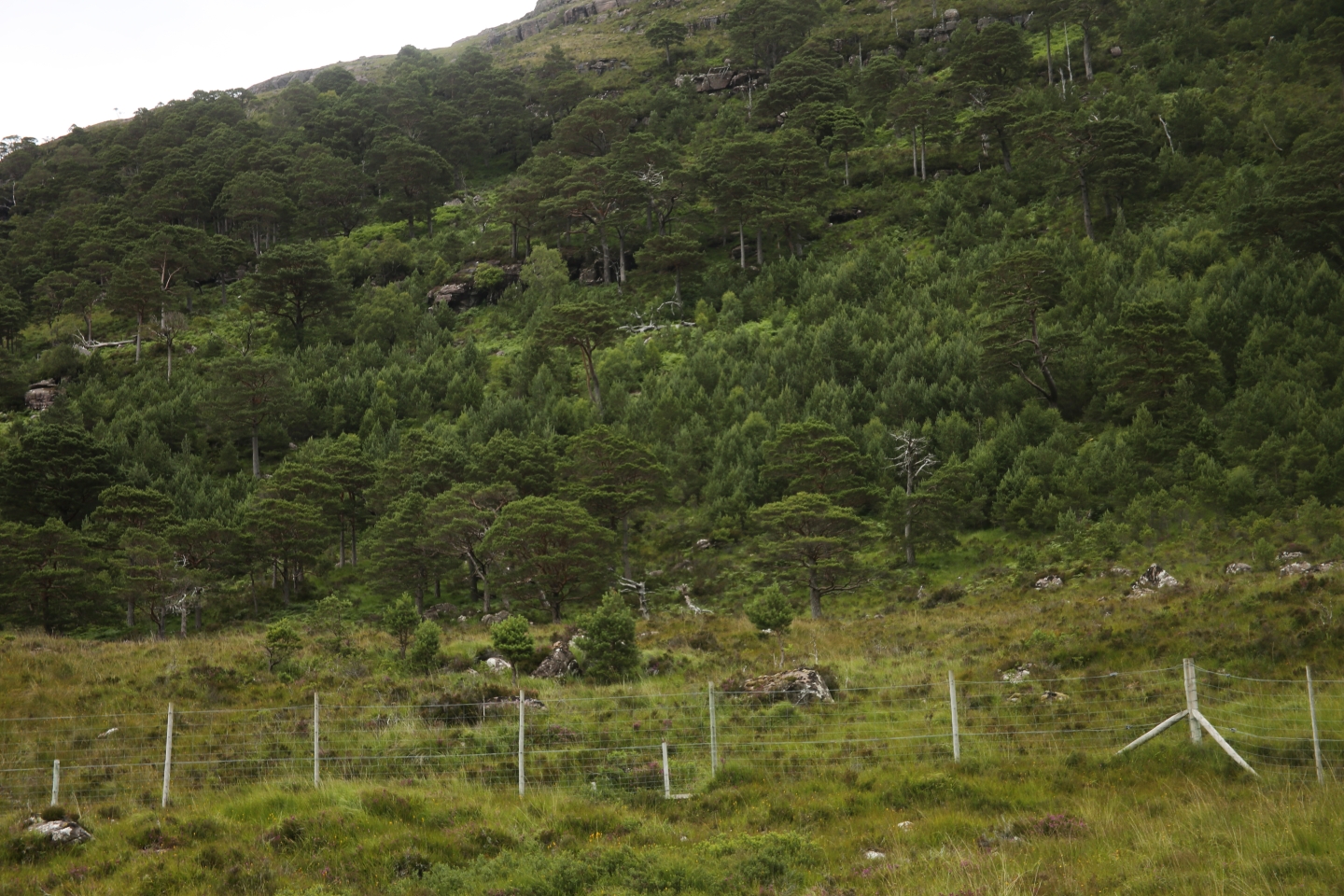
The pinewood is situated on the steep southwest-facing flank of Beinn Shieldaig, to the northeast of the A896 road. At its north end, the pinewood comes down to the shore of the southern part of Loch Shieldaig, which is a sea loch, and at the other, southern end, it borders the freshwater Loch Dughail. I believe I’m correct in saying that, as such, this remnant is the only one of the old Caledonian pinewood areas that adjoins both marine and freshwater bodies.
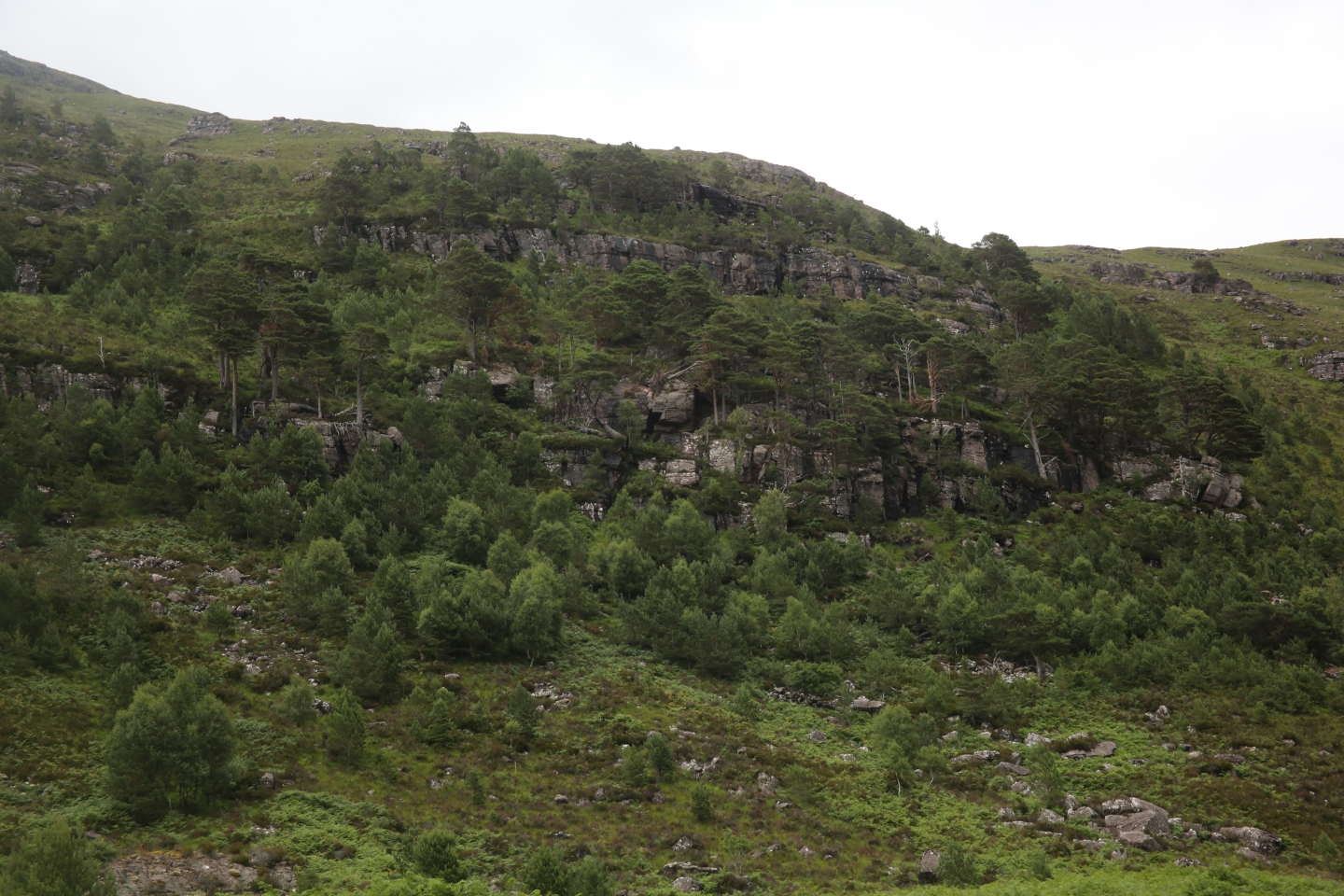
The pinewood was fenced to exclude deer some years ago and there is a healthy growth of new young trees – downy birch as well as Scots pine (Pinus sylvestris) – throughout much of the area. This is in contrast to some of the other old pinewood remnants, where overgrazing still prevents the establishment of a new generation of trees. I drove along the length of the area, to get a sense of the overall pinewood, before stopping at the southern end and crossing the fence to walk around in the forest itself.

As in many of the other pinewoods, the forest thins out at its edges, with just a few scattered trees giving way beyond to the deforested landscapes that still dominate so much of the Highlands.

Inside the woodland itself, I was struck immediately by the fact that the predominant vegetation on the ground was grass. This seemed quite unusual, as most of the pinewoods have a characteristic ground flora that is typified by blaeberry (Vaccinium myrtillus), cowberry (Vaccinium vitis-idaea) and glittering wood-moss (Hylcomium splendens). I wondered if this woodland had a different history to others, which had led to the replacement of the normal understorey with grasses?
The pines seemed quite uniform in their appearance, with their straight, unbranched trunks indicating that they had all grown up together at the same time. This would most likely have been after some previous disturbance event that had left the ground clear and ready for pine seeds to germinate in. Again, I wondered what the history of the area would have been, to have caused this growth of an even-aged woodland, beginning some 200 years or so ago?
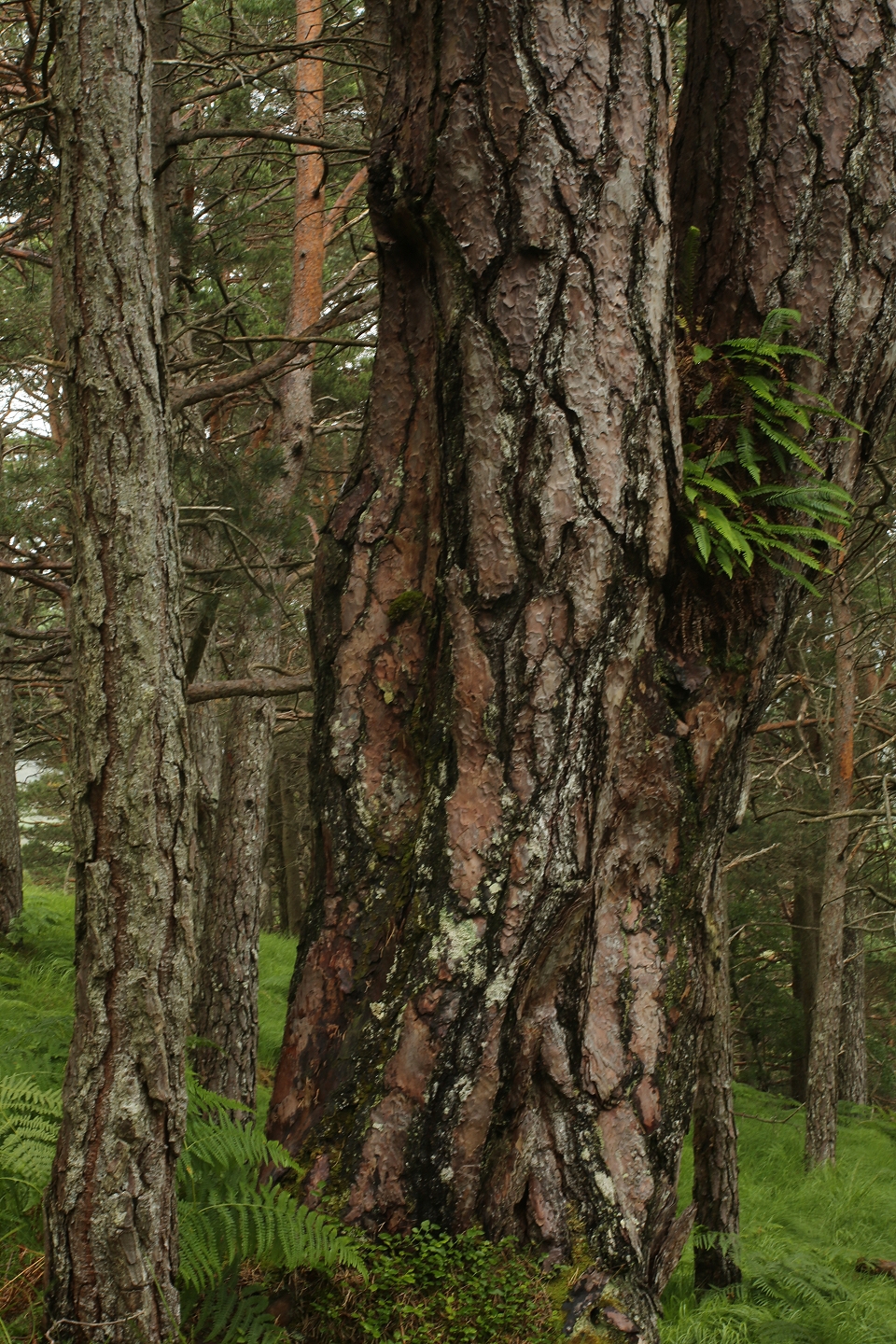
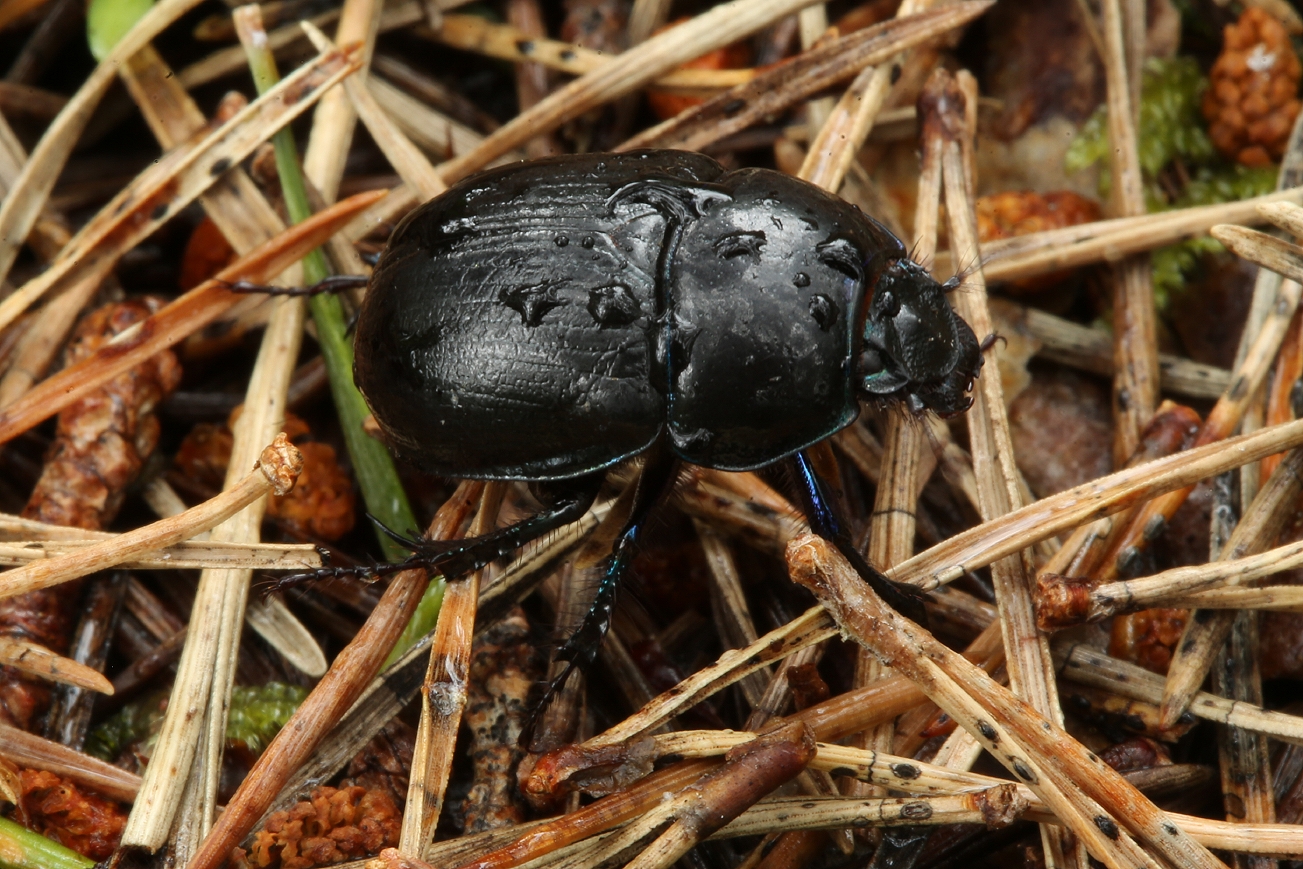
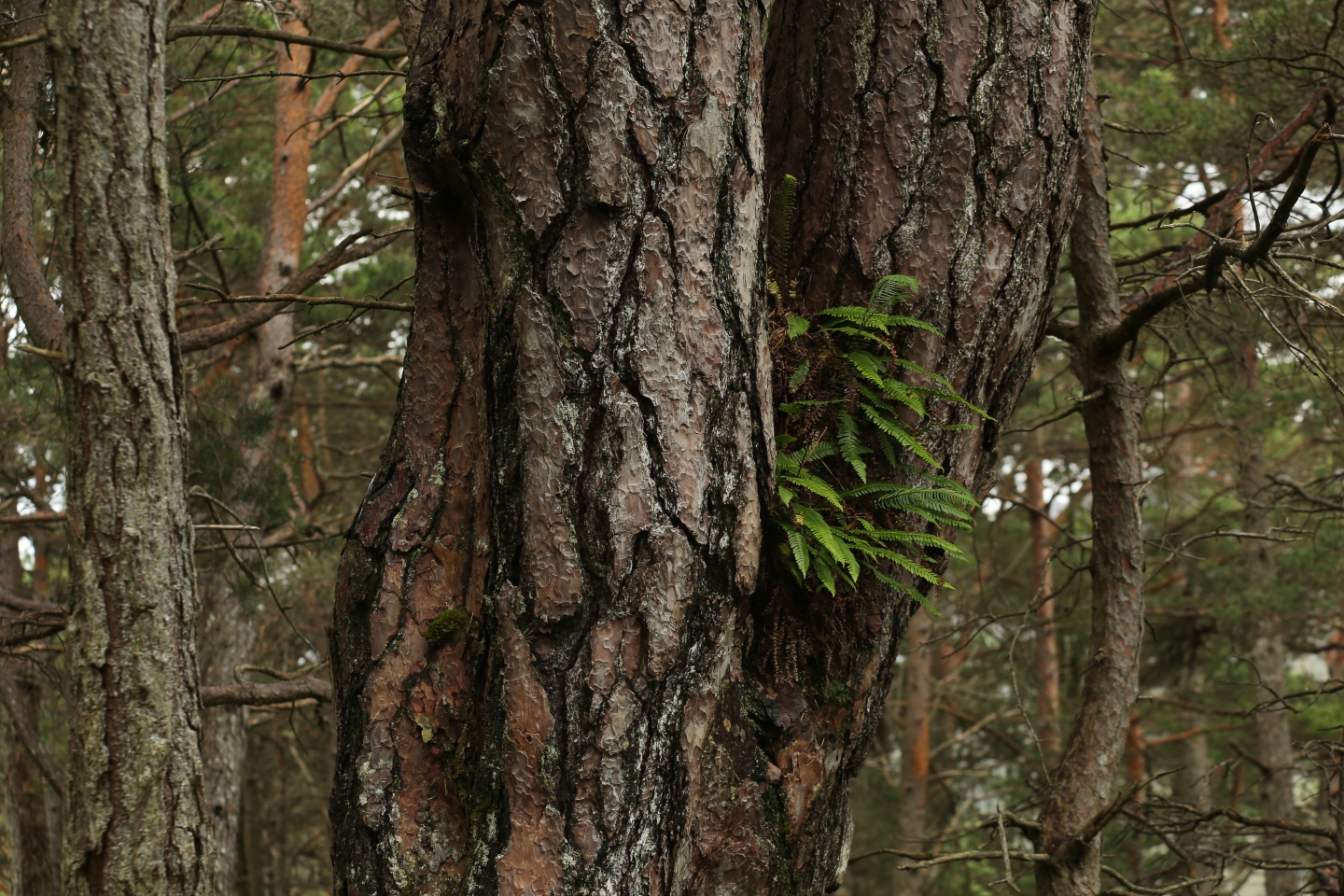
A few features of interest did catch my eye though, including a dor beetle (Geotrupes stercorarius) that was crawling on the ground, and a hard fern (Blechnum spicant) growing as an epiphyte on the forked trunk of a Scots pine.
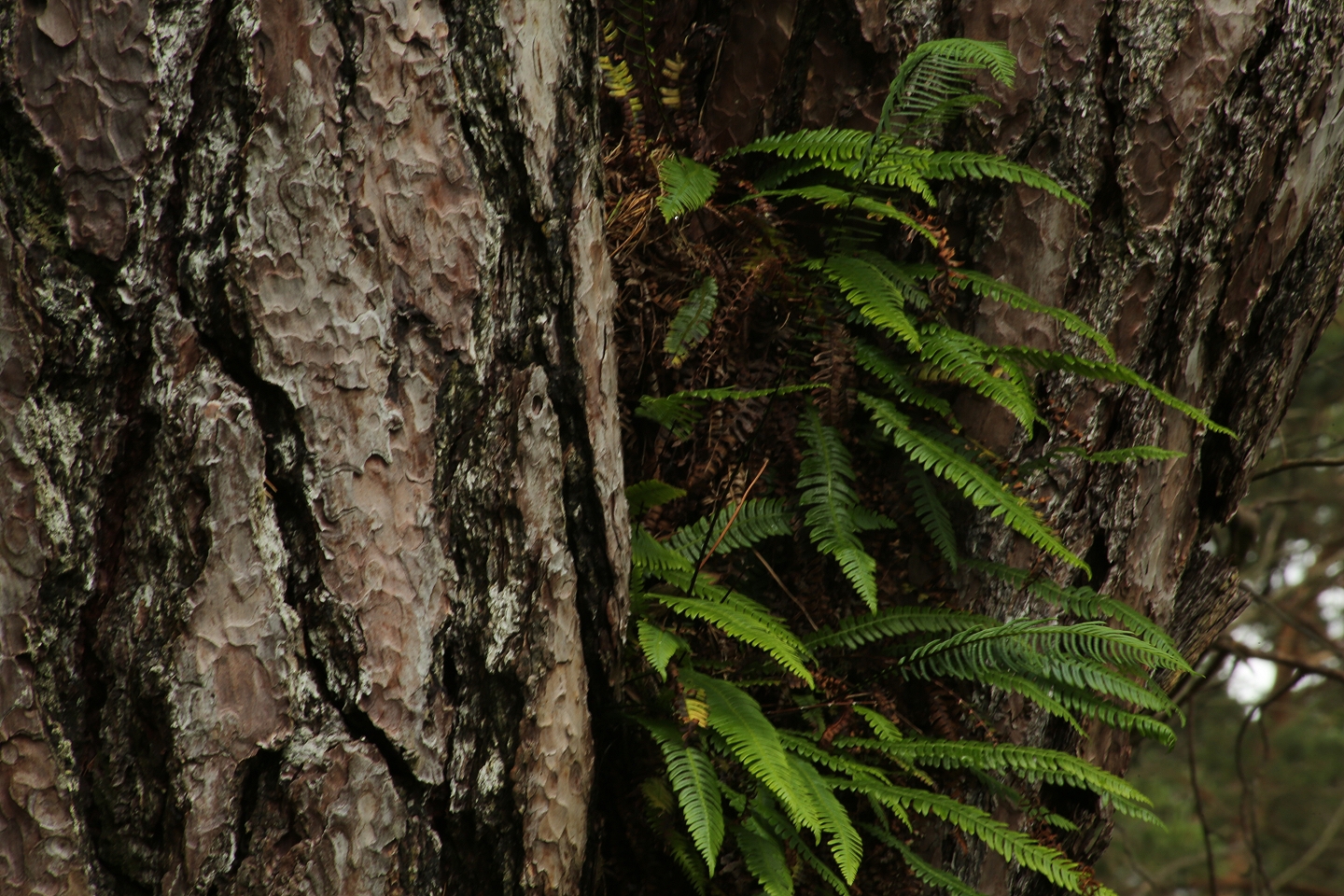
I’d never seen a hard fern growing like this before, and I wondered if its success in this unlikely location was due to the rainfall, which is greater here on the west coast than in the other pinewood remnants situated further east, where the climate is drier? Epiphytic plants (those that grow on another plant or tree, using them for support only, and not harming them in any way) generally only thrive where there is abundant year-round moisture, as their roots have no direct access to the soil and the moisture retained there. They must rely instead on either the water that trickles down the tree trunk when it rains, or on water that falls on the fern’s foliage itself. Young rowan saplings (Sorbus aucuparia) are often seen growing in the forks of large pine trunks like this, but they are better able to withstand the dry conditions that must prevail in the forks for much of the time than ferns, which require a lot of moisture to flourish.

There were some groups of downy birches in amongst the Scots pines, as well as an occasional rowan or eared willow (Salix aurita), but the woodland was generally quite homogenous and dominated by the pines. It was good to see that there was healthy regeneration of young trees in the clearings amongst the old pines, and I gained the impression that this pinewood was generally in better condition than some of the other Caledonian Forest remnants that I’ve visited.

It was hard going, walking through the woodland, because of the steepness of the slope, the uneven nature of the ground underfoot and the wet conditions, which made the rocks, heather stems and tree roots quite slippery. In addition, the exclusion of deer due to the fence meant that the ground vegetation was thick and quite high, making it difficult to see the ground itself and therefore hard to predict the best places to take each step.
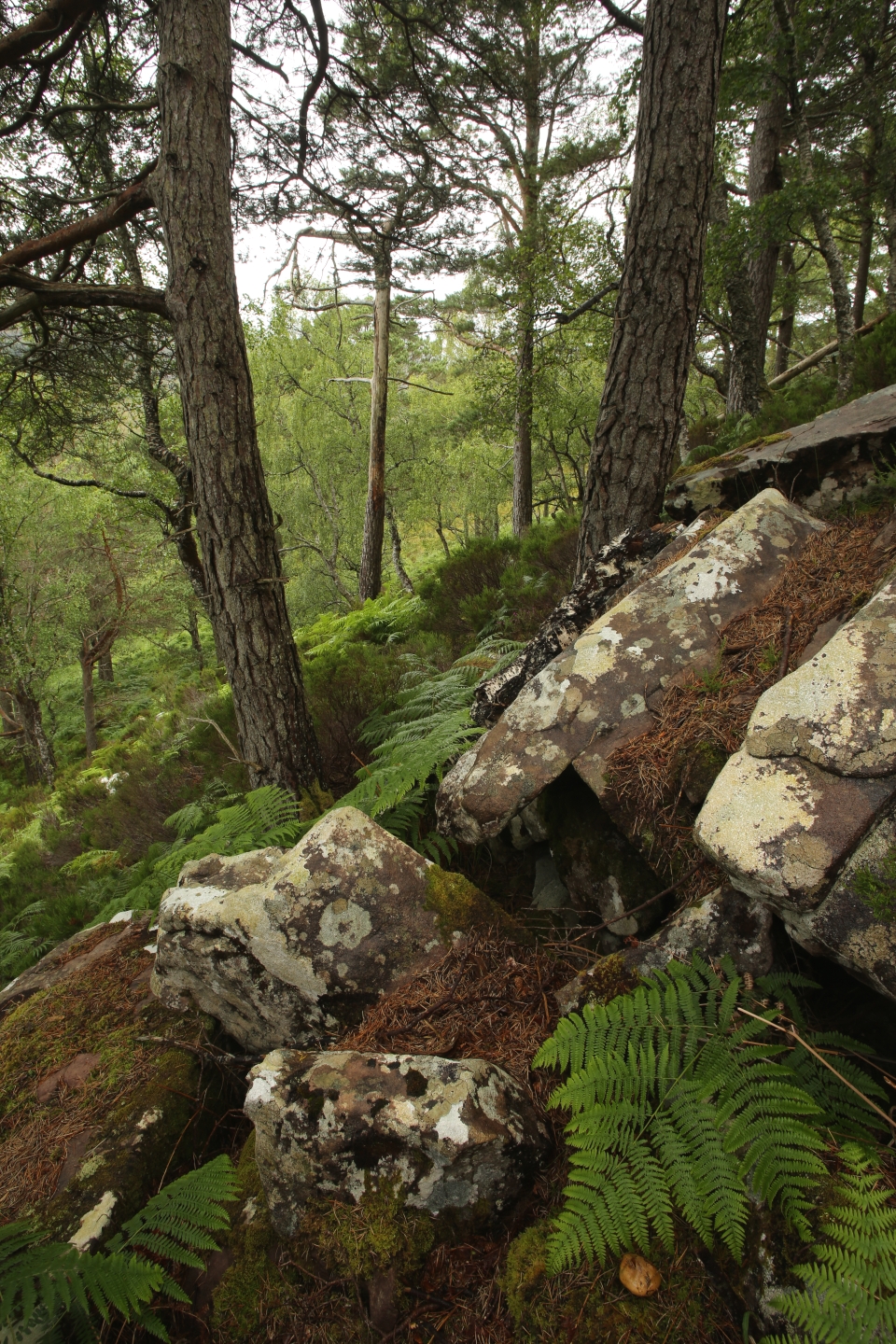
The slow progress that this resulted in allowed me to experience each part of the woodland more thoroughly, but it also limited how much I could explore in the time I had available.


In fact, I only had the opportunity of experiencing a small part of the Shieldaig pinewood that day. I had a long drive to get back home, so I dropped down through the woodland to the road, and walked back along Loch Dughail towards my car. There are a few old pines growing between the road and the loch, and they looked very picturesque, with their branches hanging out over the water. There were also a few patches of chanterelle mushrooms (Cantharellus cibarius) growing amongst them so I harvested a few for my evening meal. I’ll have to return another day to explore the rest of the woodland there, making sure that the next time I don’t spend so long photographing the lone trees on the slopes of Liathach – that had taken up almost half of my time this day!
hi there, i really enjoyed this write up and pictures. Im on loch Torridon at the moment and Aug last year i viewed the pinewood only from the valley floor at the end of Loch Dughaill. There are some very impressive trees near the loch edge which caught my eye – then i saw a sign signalling the presence of Red Squirells. I see your post is from quite a few years ago now, and i noticed as you did – that there is a considerable amount of Re-Generation of Scots Pine on the steep slopes. Your Blog has inspired me to go and take a closer look! Thanks again
Hi Martin,
Thanks for your comments and I’m glad you found this blog useful. I haven’t been back to that woodland since I wrote the blog, so I’m overdue for a return visit myself!
With best wishes,
Alan
Thank you. I have fond memories of Torridon, but then my eyes were focussed on the tops: now I have time and patience for what lies beneath!
Whenever I see a lone pine I feel sad; this is all that remains of what once would have been extensive woodland or at least a more diverse landscape. This is the price of over grazing and of these vast shooting estates.
On a recent visit to the Dodekanissos Islands, which are generally over grazed by goats, I did spot a few isolated fully-formed trees often on bare rocky slopes that the goats hadn’t got to: it was a grand sight. I have started talking to local youngsters about trees, planting seeds of ideas in the hope that something might change? Sadly, in their economic crisis they will tell you, we are ok, we have our fig and olive trees and goats to eat!
If I am lucky enough to re-visit Torridon I will look out for this woodland.
Thanks for sharing these images.
Though I’ve never been quite this close to these woods, my wife and I regularly holiday in the Loch Torridon area and, if we could, would move there tomorrow!
I wasn’t aware these stands of trees were a legacy of the Caledonian Forest, though I should ave made the connection. Please return to the area and give us an update/extended view, with your knowledge it is a pleasure to get a fresh insight to an area I love.
Hi Paul,
Thanks for your comment and I’m glad you’ve enjoyed this blog. I will indeed make a return visit to the woodland, but I’m not sure when that will be!
With best wishes,
Alan
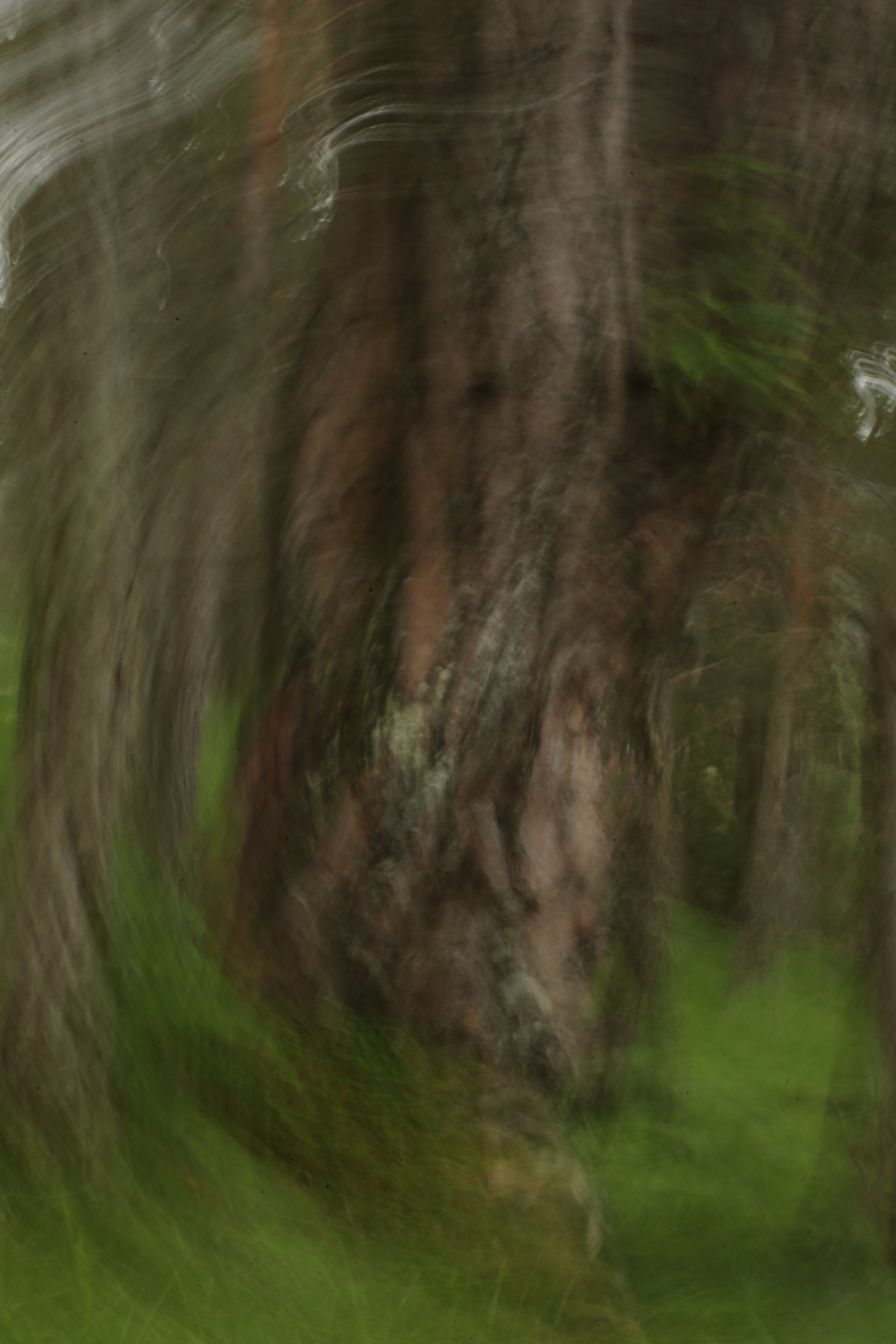
In comparing the “accidental” tree trunk picture to the non-blurred image, is that possibly a fairy at the bottom of blurred image? Whether we believe or not, the form looks like a wee man. Grin. I wonder?????? Maybe this wasn’t an accident.
Hi Pat,
Thanks for your comment, and yes I believe that there aren’t any accidents. As to whether your observation is correct, I’ll leave that to each person to make up their own mind!
With best wishes,
Alan