
In late March, before the clocks went forward by an hour, and when it was still getting dark quite early, I had a relatively short day out in Glen Affric. Because of this, I decided not to go into the glen proper, but rather to spend the time below Badger Falls, where the Affric River descends rapidly on its way to join the upper reaches of the River Glass. I’ve been to Badger Falls many times over the years, most recently on the 2nd of January this year, but I’ve never explored the river below the falls themselves.
Having been visiting Glen Affric since 1979, this is quite remarkable, but is due in large part to the inaccessibility of that section of the river. This day therefore offered an opportunity to fill a gap in my knowledge and explorations of the Affric watershed. It was quite a wild day, as we’d been having bitterly cold weather in the second half of March. A cold easterly wind was blowing up the river into the gorge, and there were snow flurries intermittently throughout the day, with the trees being whipped about wildly by the strong gusts in each of the squalls.
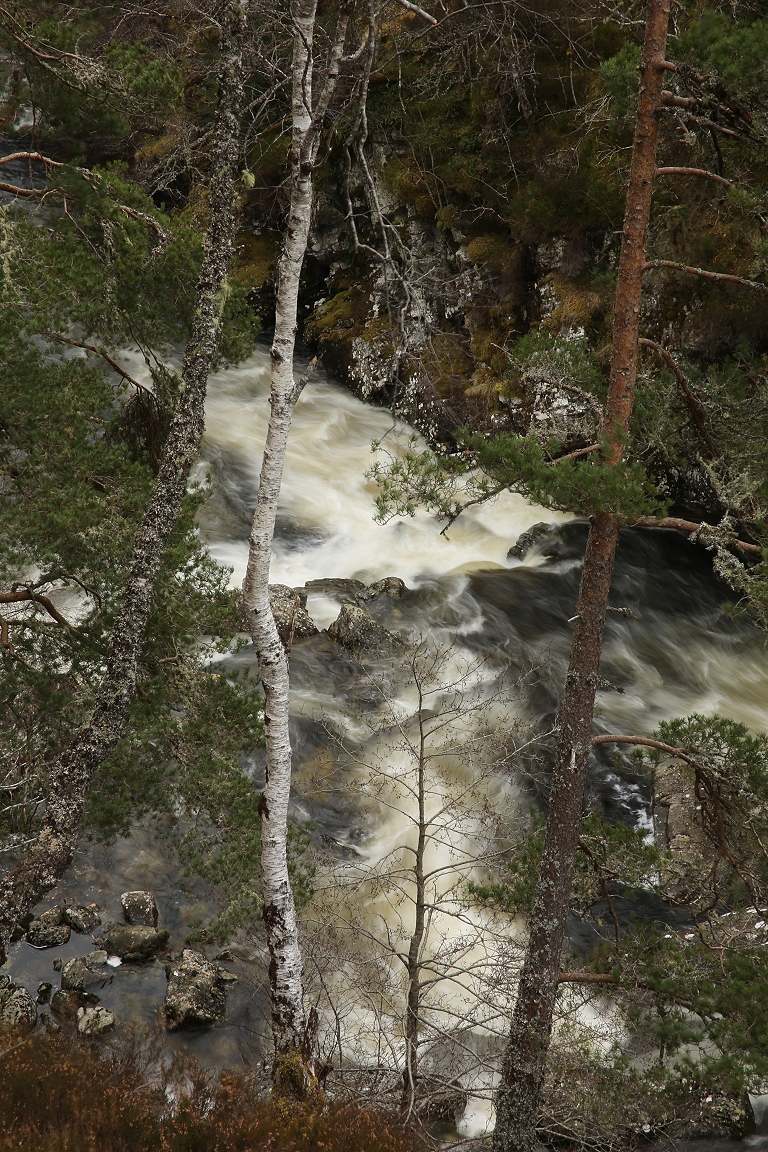
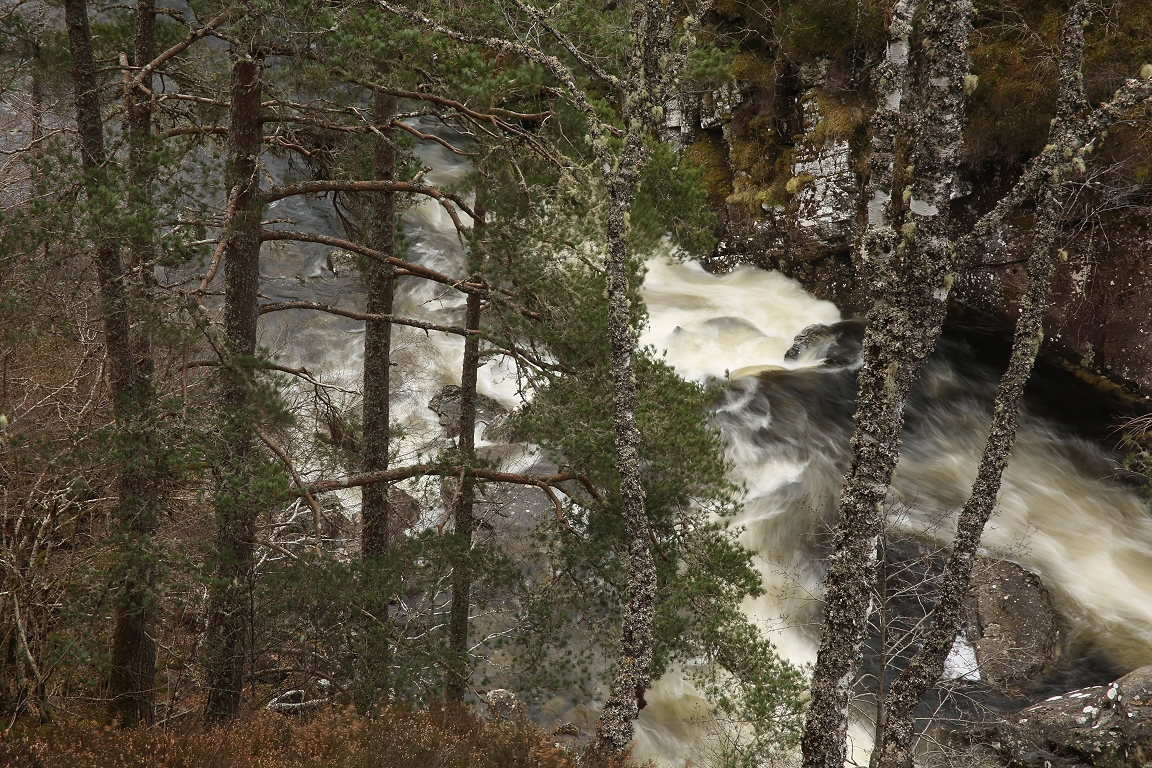
I found a place where I could descend the steep slope into the gorge, near the fence which demarcates where the Forestry Commission Scotland-managed Glen Affric National Nature Reserve begins.
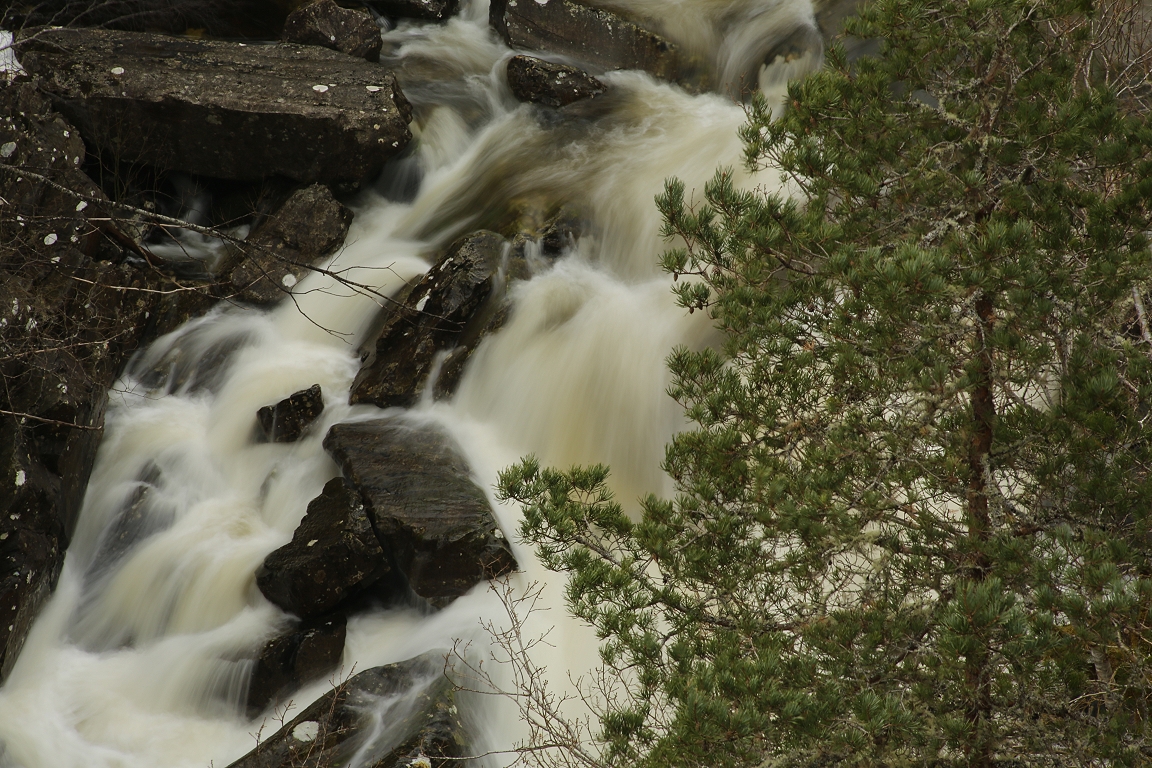
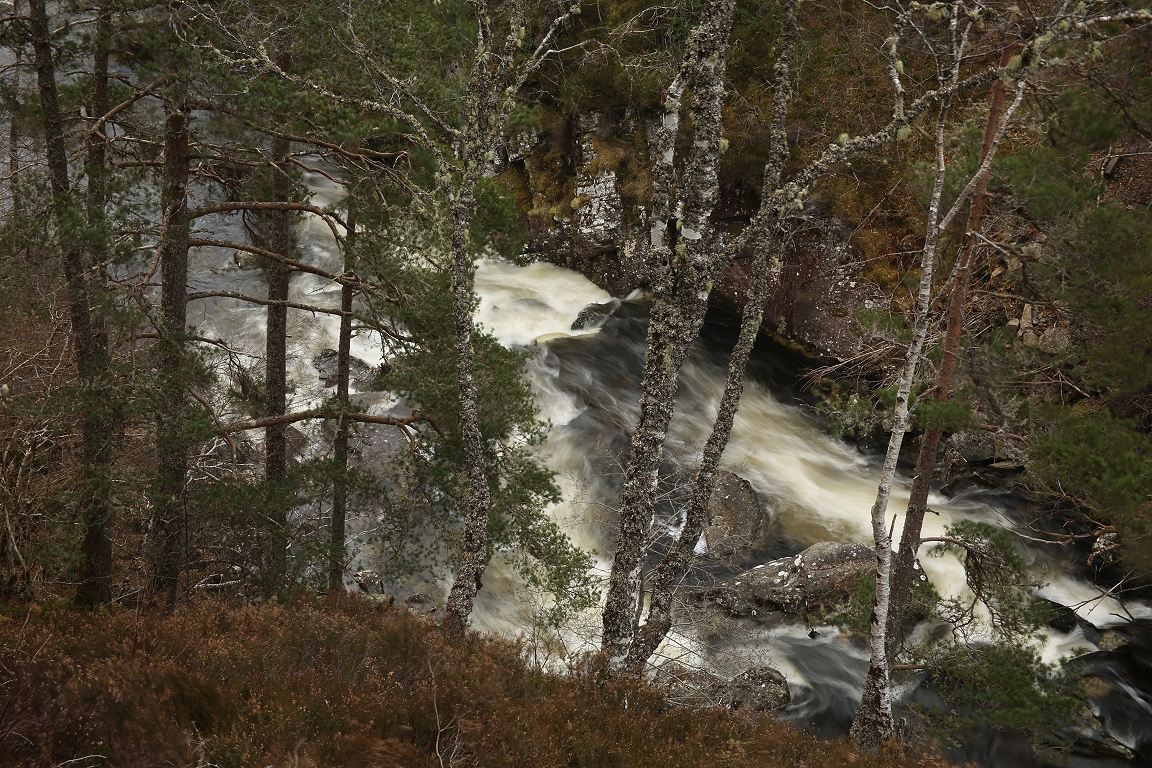
It wasn’t easy going, especially given the weather conditions, and I suspect very few people ever venture into this part of the glen. The sides of the gorge were too precipitous in most places to get down to the river itself, so I had to content myself with the view through the trees to the water tumbling down below. There are quite a lot of Scots pines (Pinus sylvestris), some of them quite young, on top of the steepest slopes, and it was obvious they had been able to grow because red deer (Cervus elaphus) don’t venture there either.
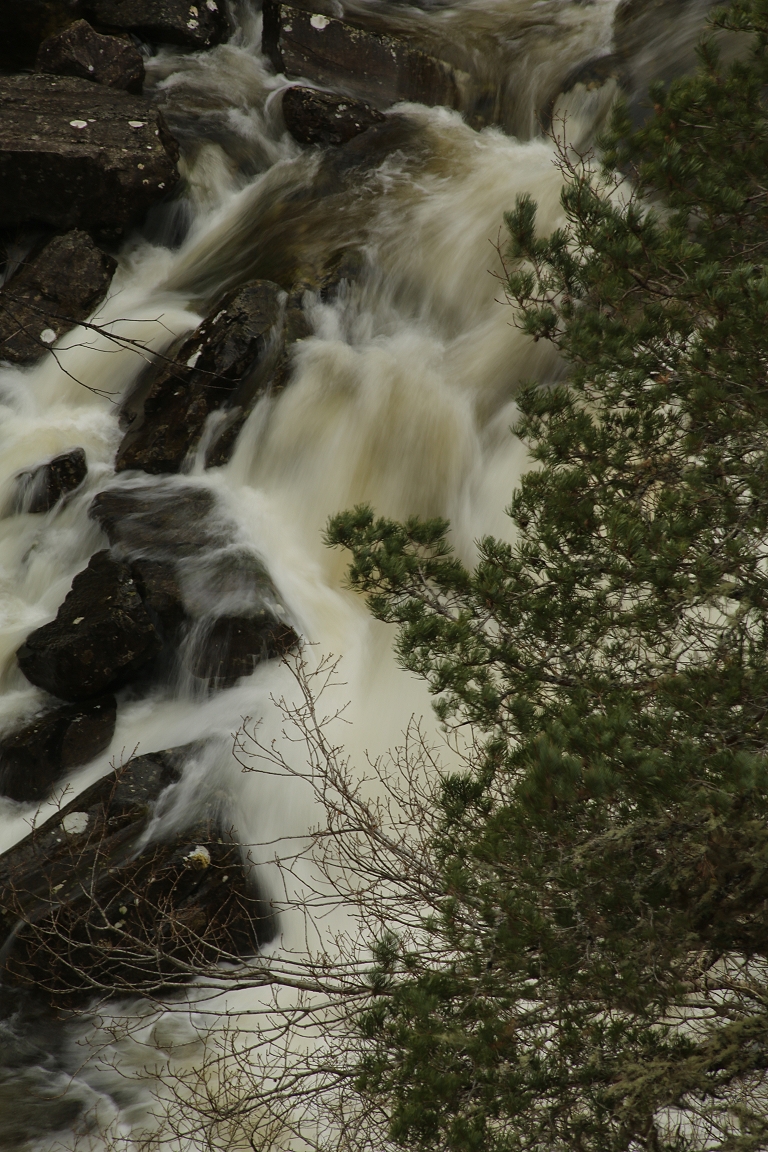
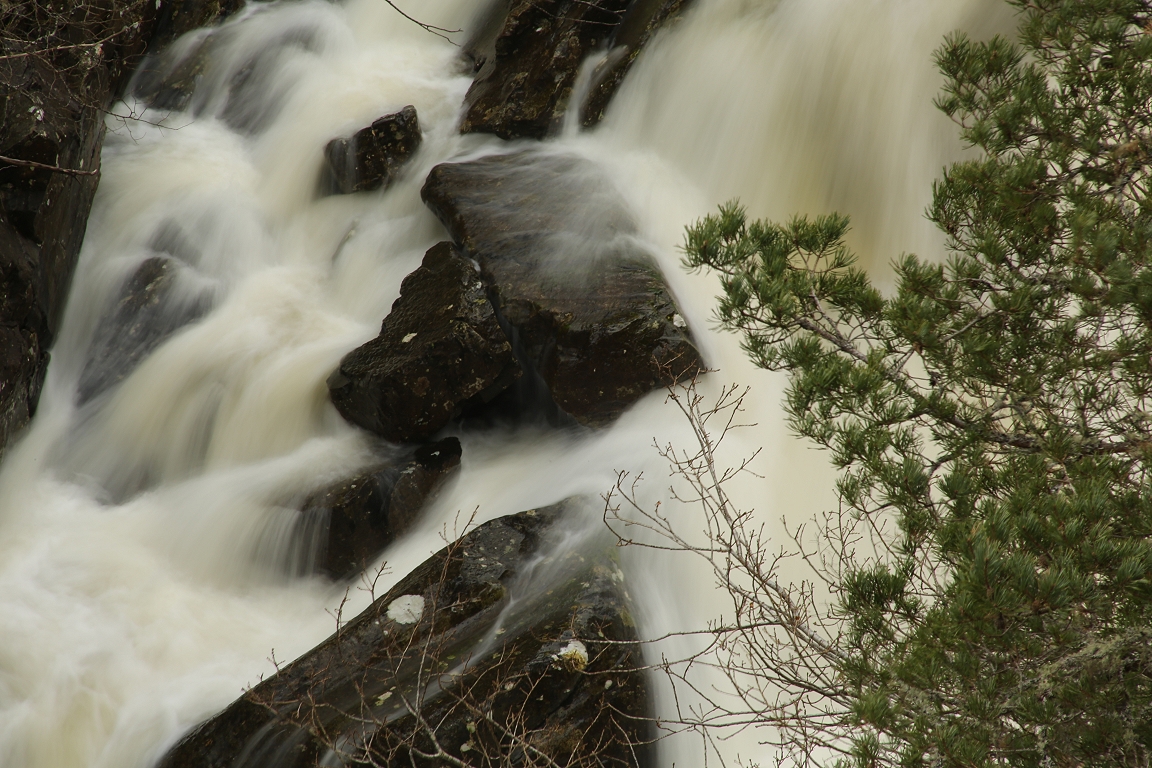
Clambering along the steep slope, still well above the river, I headed downstream as I could see the slope levelled off after a short distance, and it looked like I would be able to descend to the water itself.
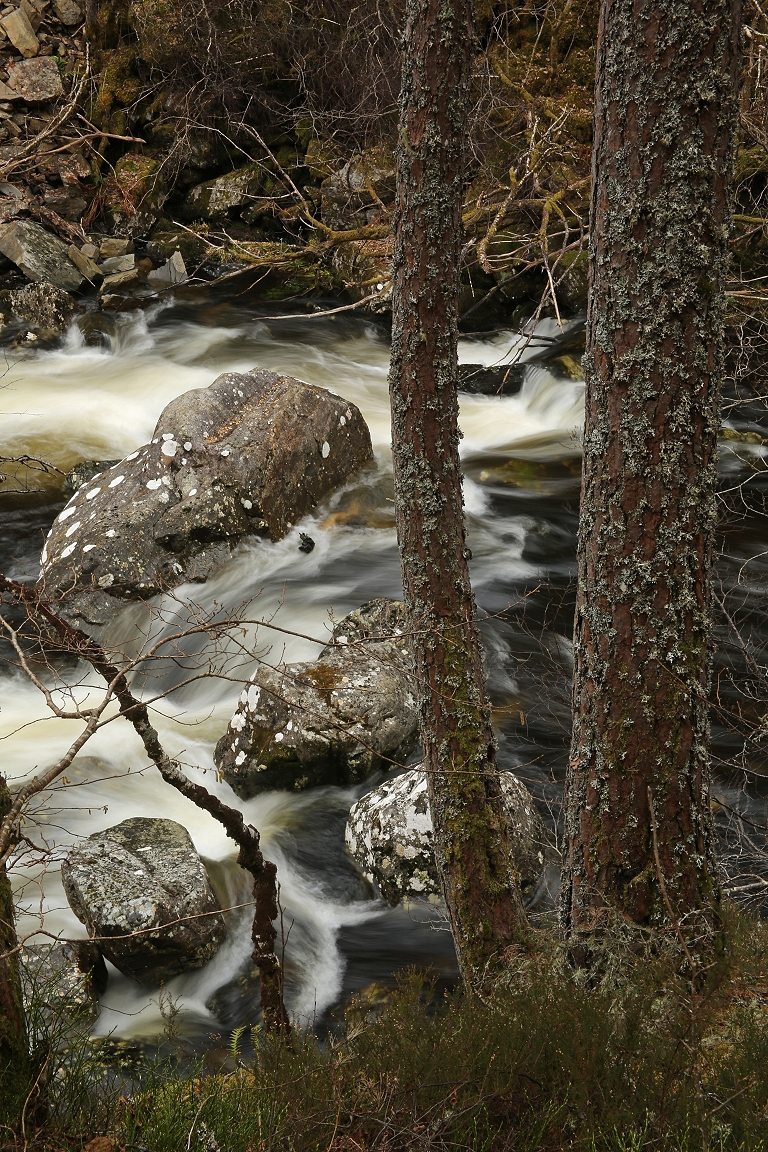
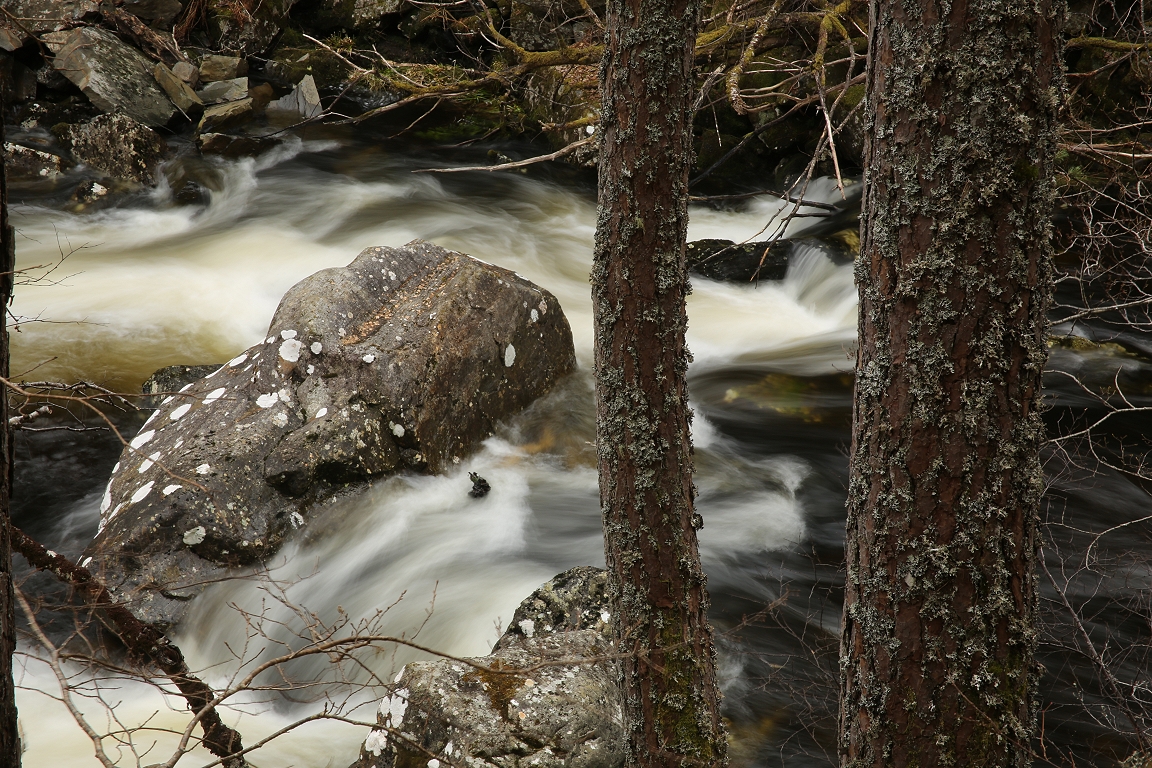
After clambering down slowly and carefully, I was able to reach the level of the river itself, where the drop as it flowed was more gentle, and the sides of the gorge were slightly less steep.

When I reached a more level footing, I stopped for a minute or two to relax from the concentration of the descent, and my eye was caught straightaway by some lichen on the ground.
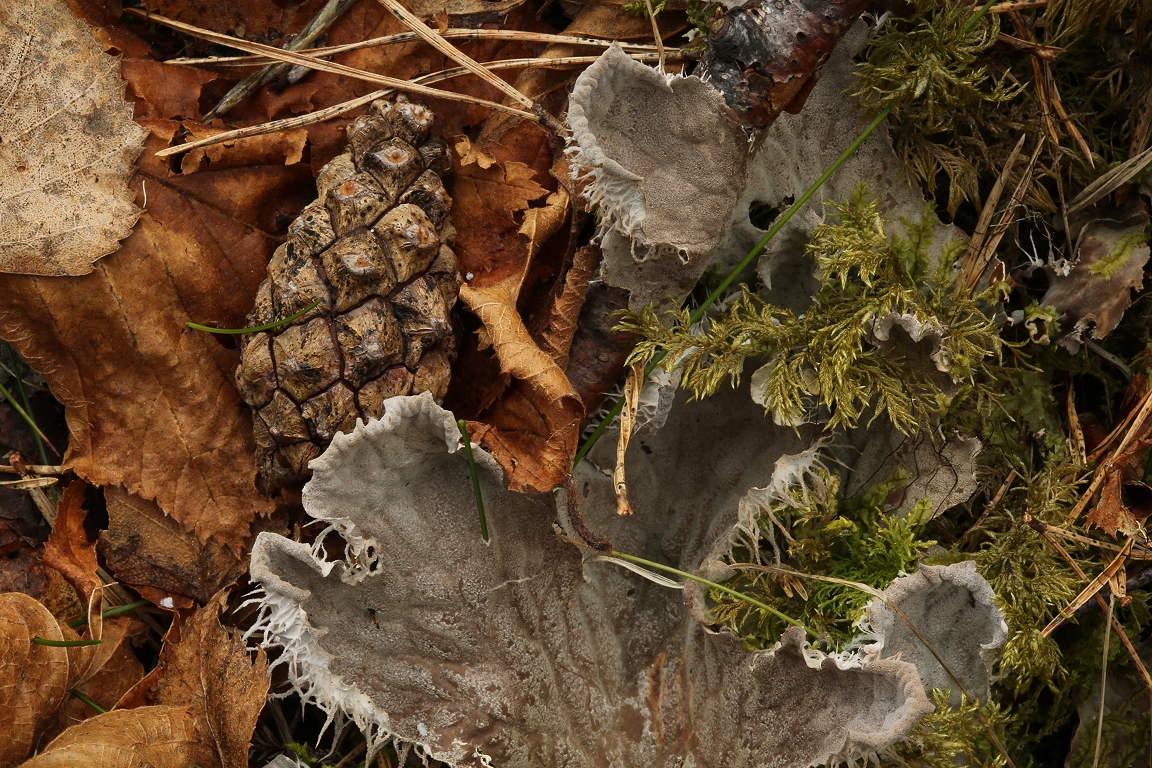
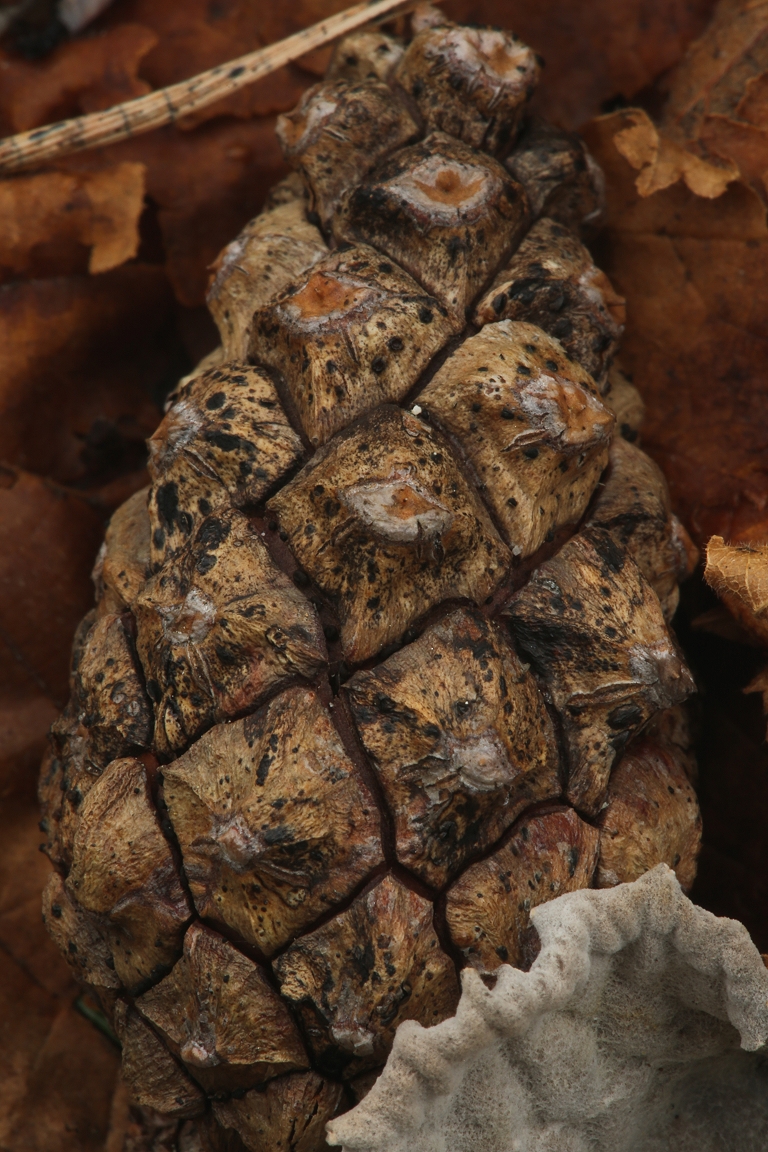
This was one of the commoner dog lichens (Peltigera membranacea), but in the dry conditions it had shrivelled up quite a lot and was very pale in colour. However, its distinctive rhizines – the downward pointing spines on the underside of the thallus – made it easy to identify. In more normal, damp conditions, this lichen is a dull, dark green colour, and there are some photographs of it like that in an older blog that I wrote. The Scots pine cone that had fallen beside the lichen patch provided the subject for a couple of photographs as well, as the structure and pattern of the cone’s scales were very apparent. In between each scale, a winged seed is held, safe from most seed eaters as the cone matures. The Scottish crossbill (Loxia scotica) however is an expert at opening pine cones and feeding on the seeds they contain.
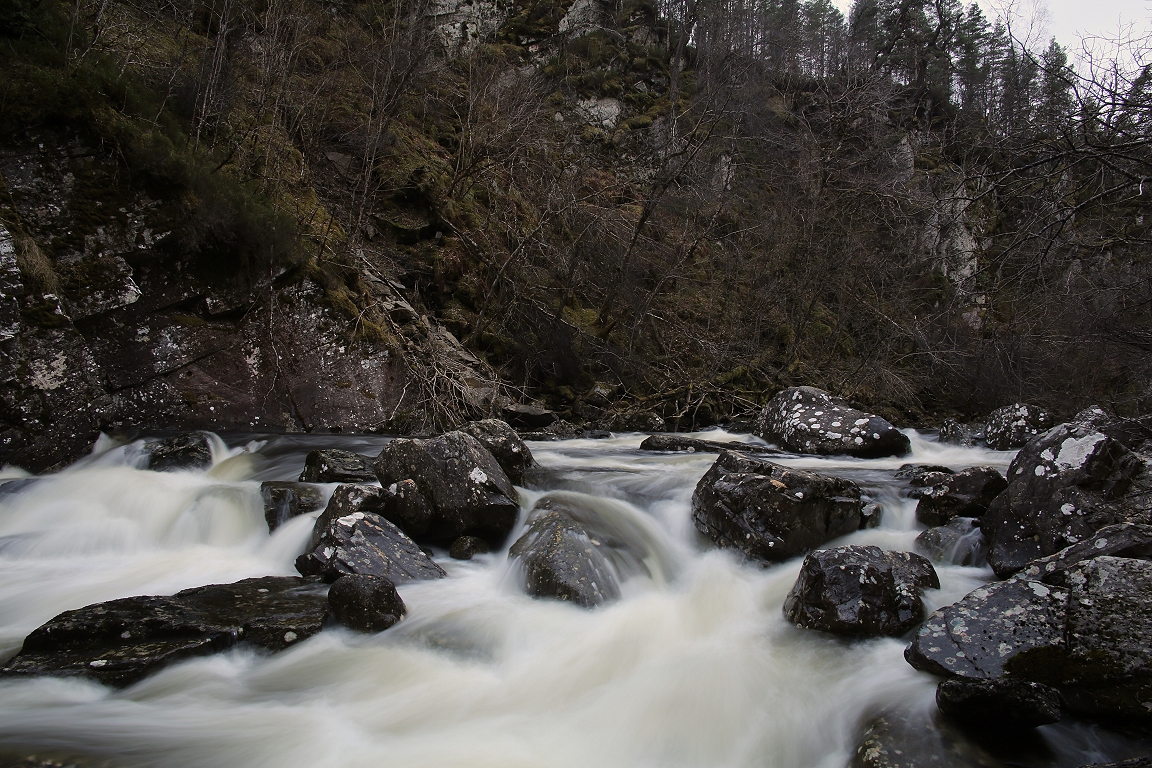
Continuing on to the edge of the river, I couldn’t see very far upstream, because of a bend in the gorge, so Badger Falls itself was out of sight. However, there were some fast flowing sections of the river beside me, where the water tumbled and cascaded over a series of rocks and boulders. There seemed to be a lot of water in the river, despite the dry weather, but this would be due to water discharges from Loch Beinn a ‘ Mheadhoin upstream, which has a hydroelectric dam on it.
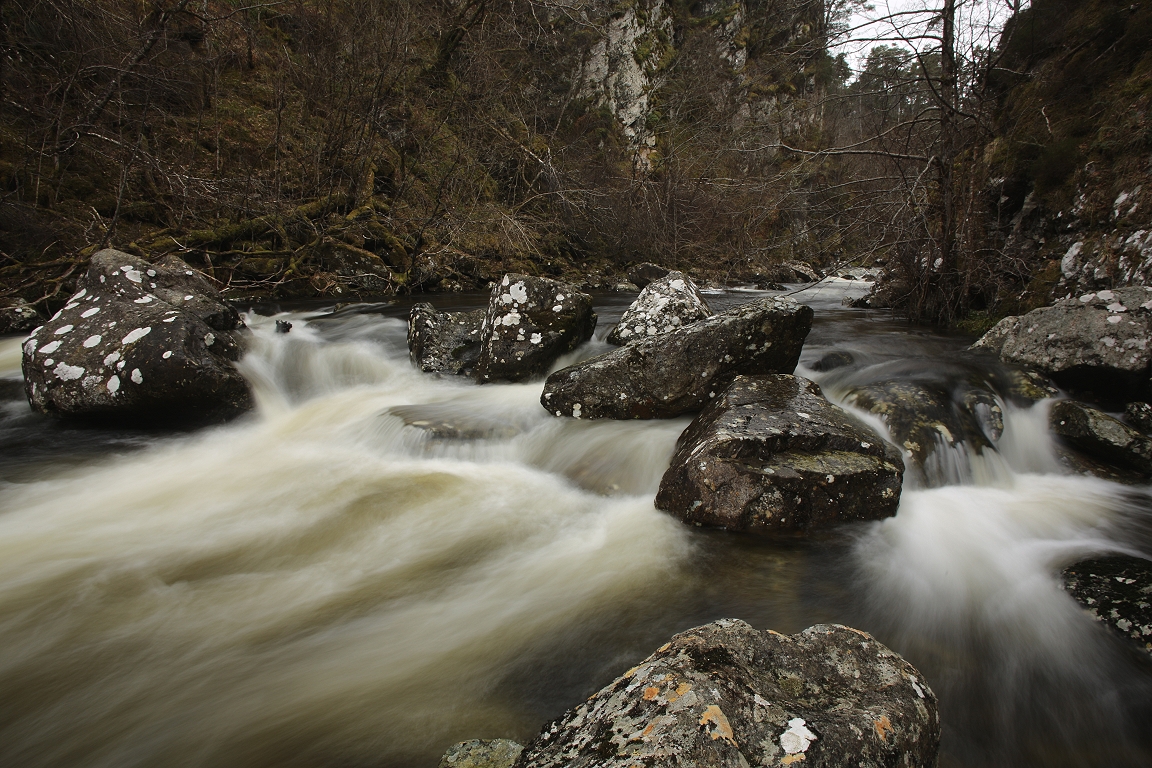
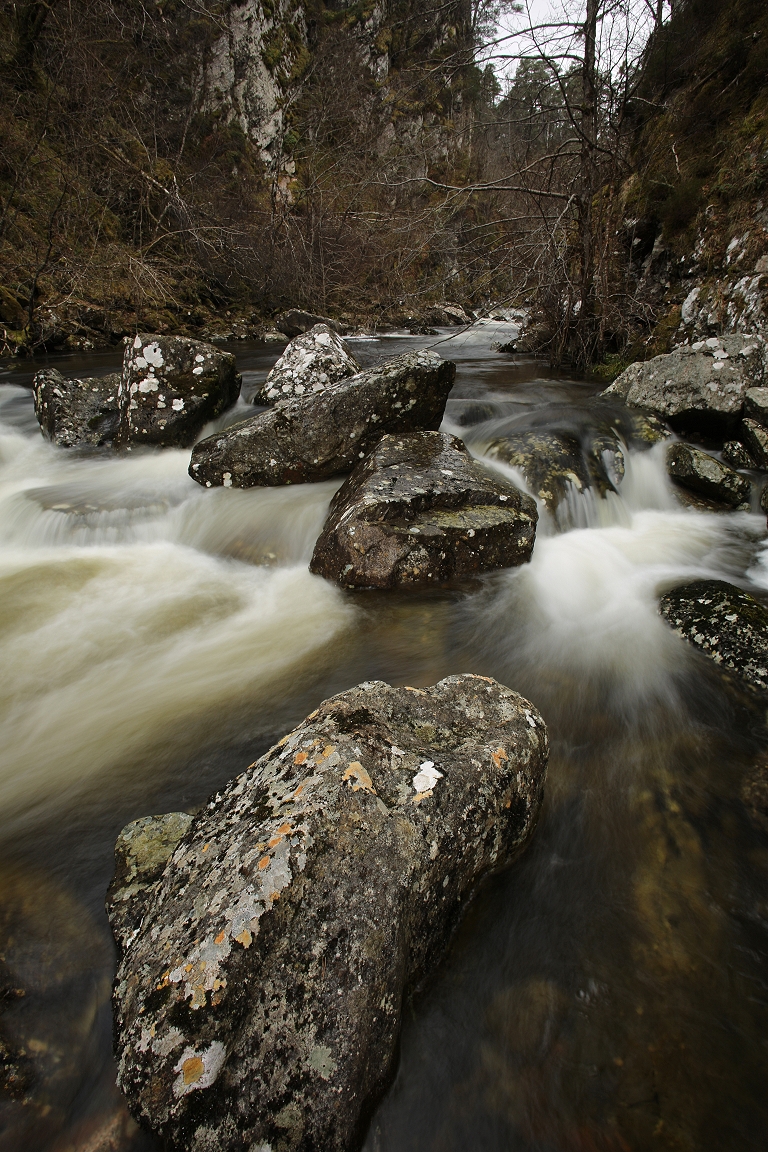
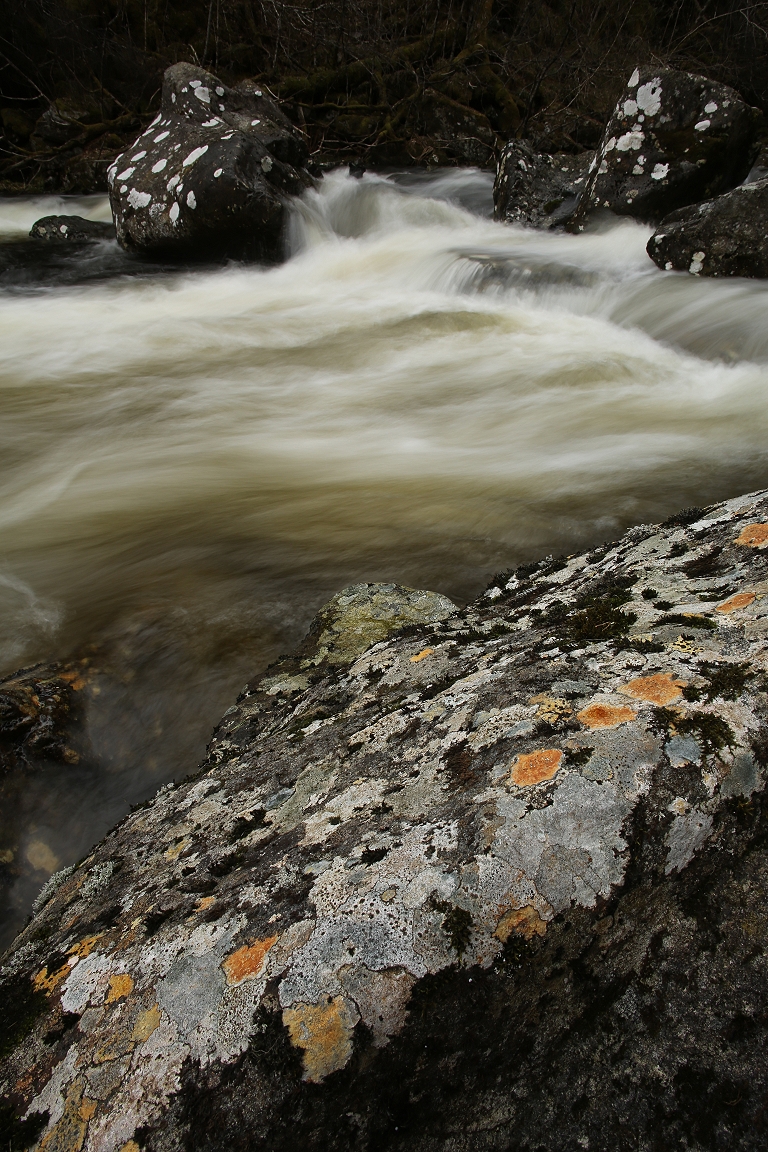
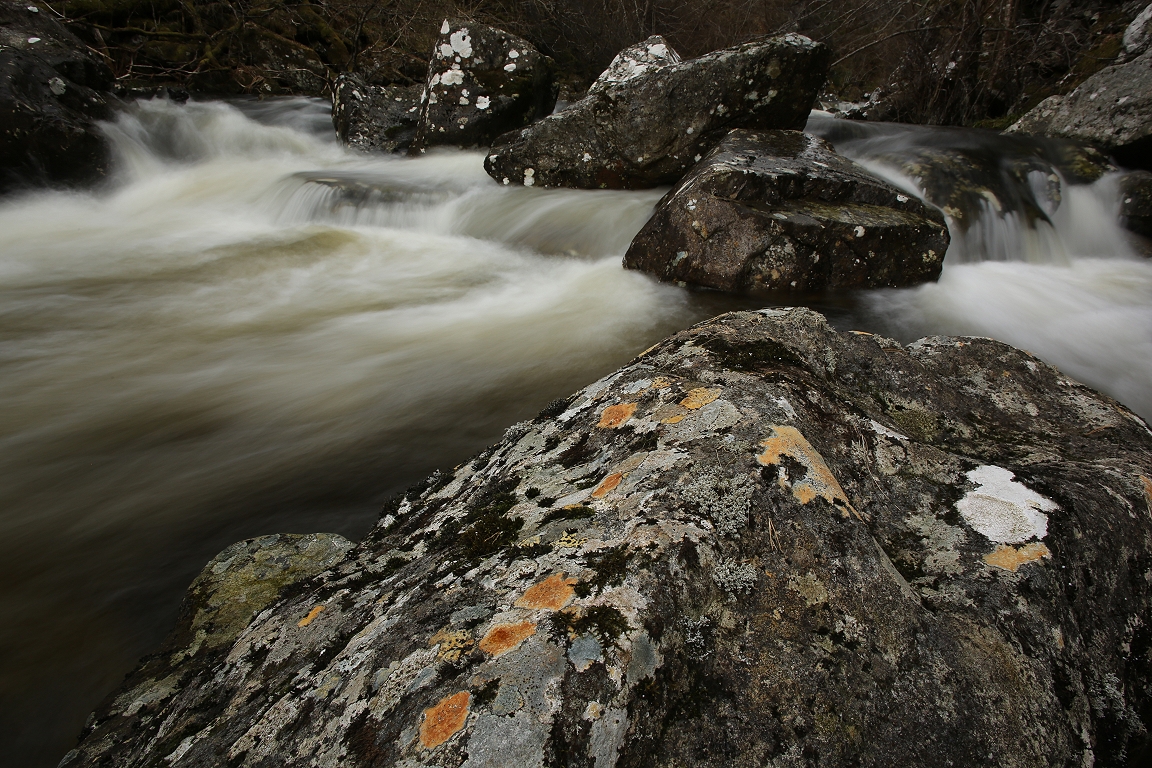
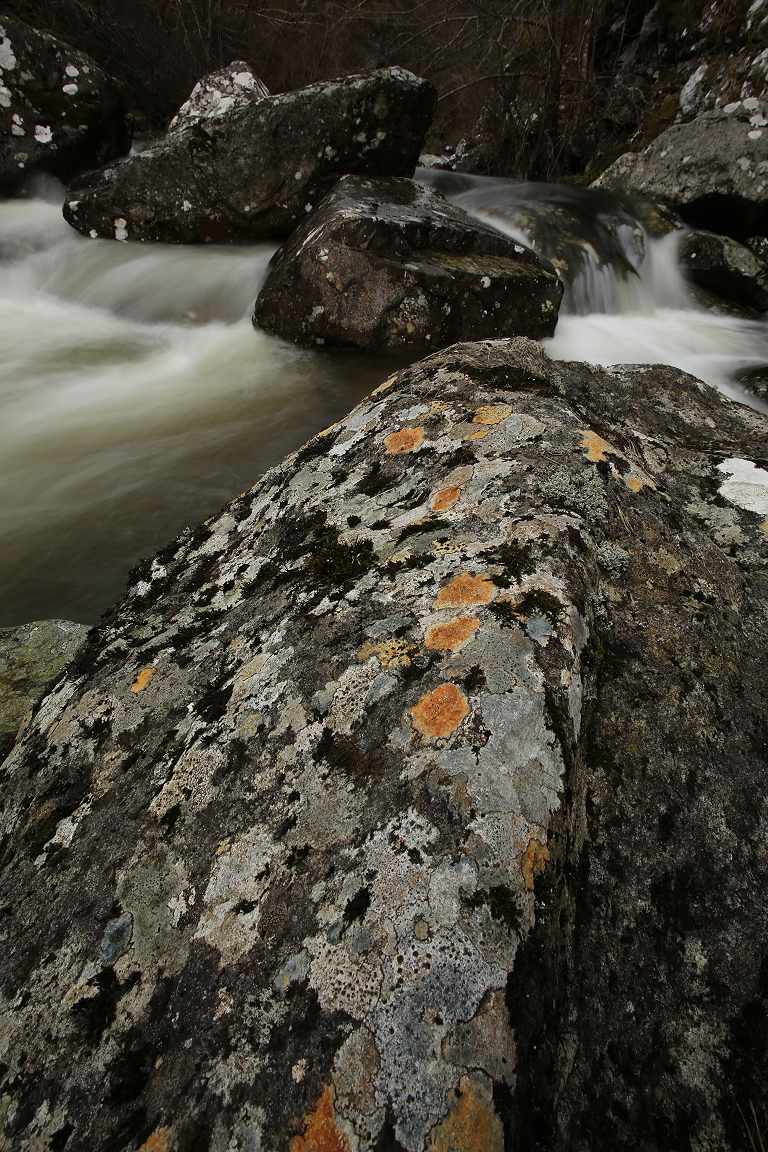
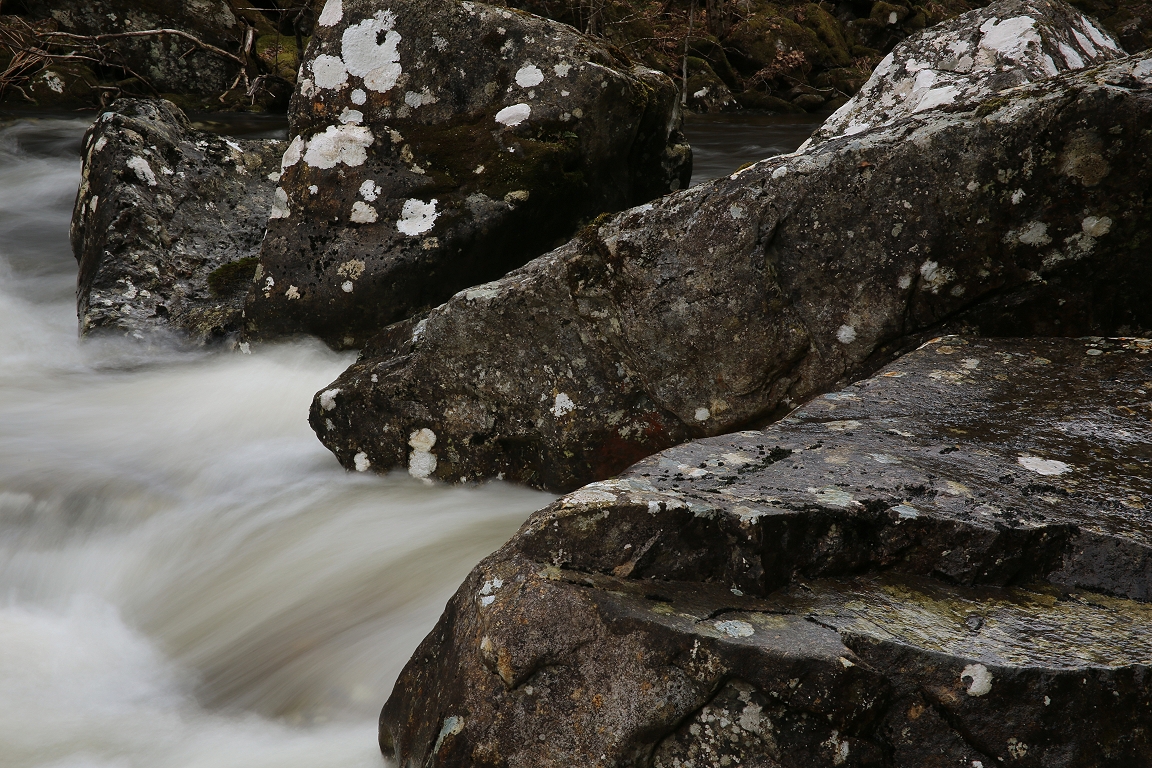
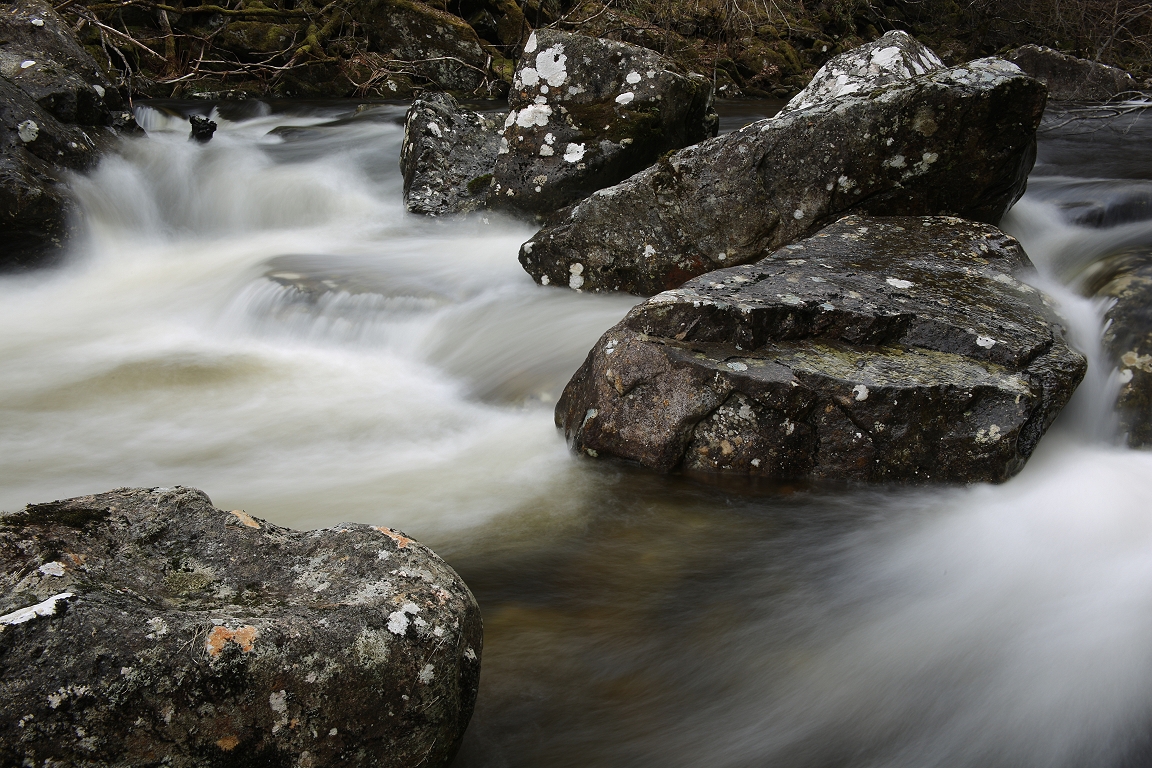
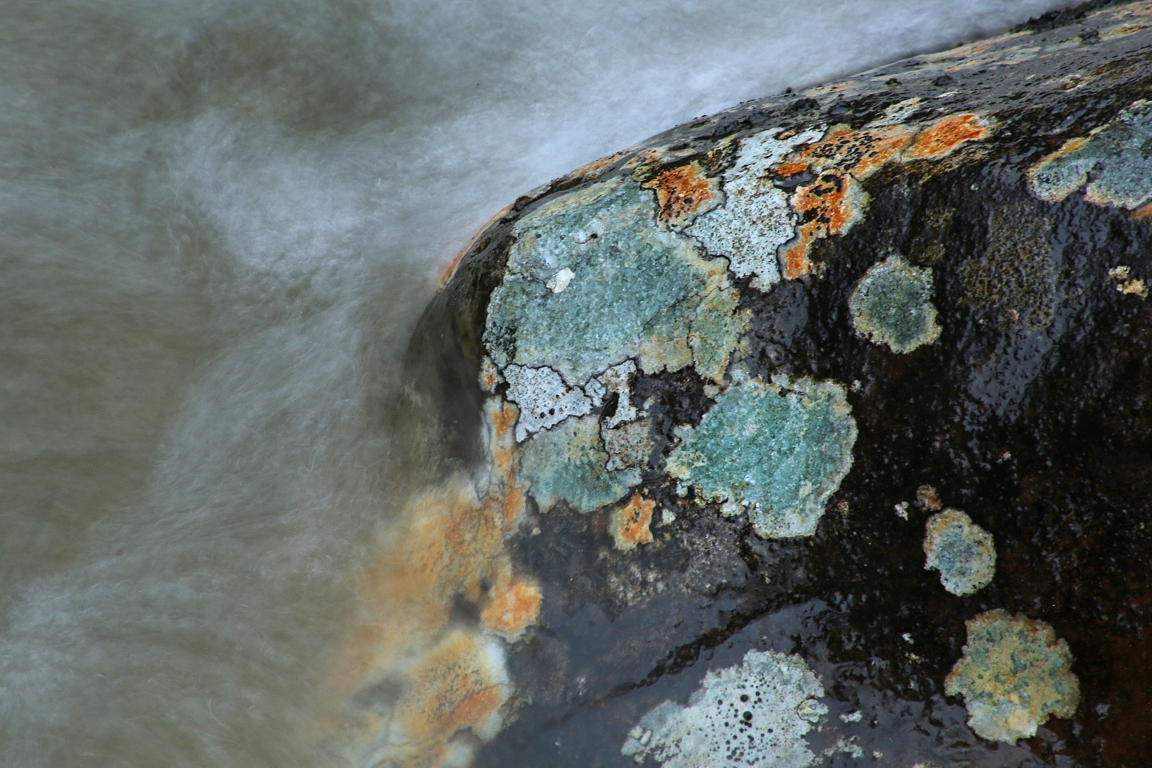
The lichens on the rocks really grabbed my attention – perhaps because they were wet, and their rich and contrasting colours stood out in contrast to the dullness of the dog lichen I’d photographed, which was desiccated, due to the dry conditions away from the water. These are crustose lichens, meaning that they grow flush on their substrate (ie the rock) in a crust-like fashion. They are also very slow in growing, with some species increasing in size at a rate of just 0.1 mm. per year.
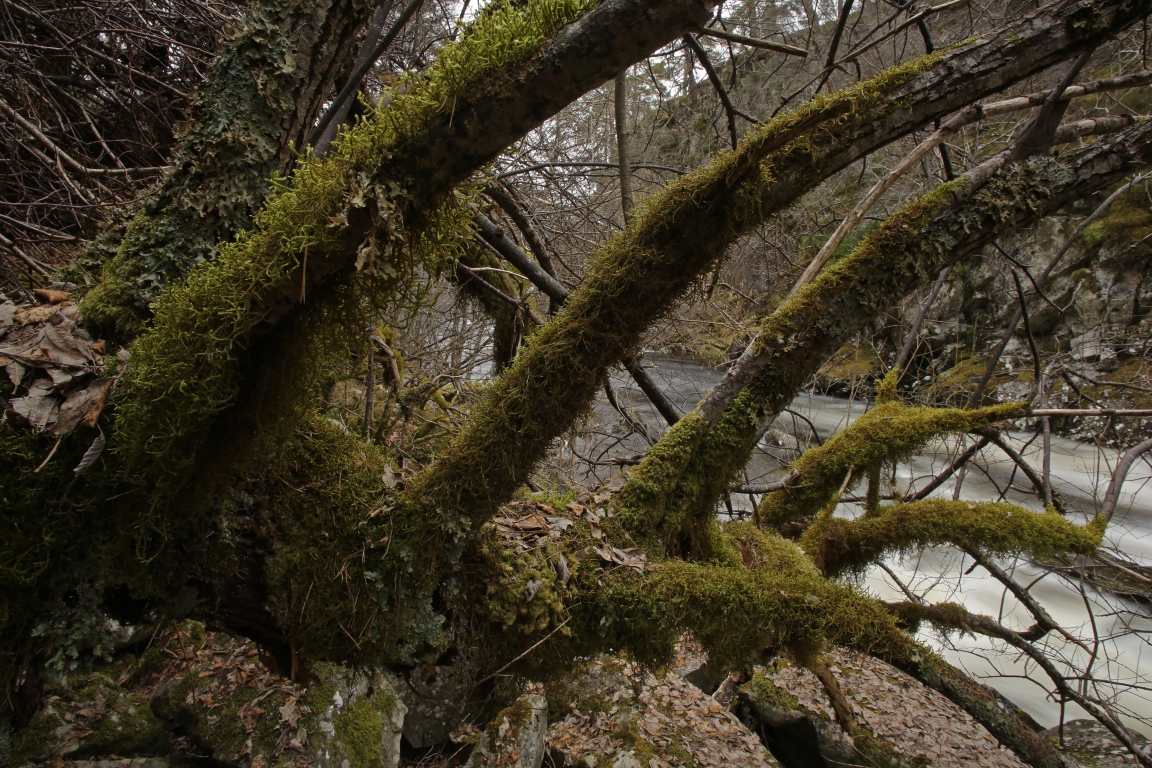
A few metres downstream, there was a remarkable tree that had grown leaning over the ground, after it must have fallen down sometime in the past. It was completely covered in moss, and its branches arched out from its trunk like great green ribs. I wasn’t able to identify the tree, as its bark was covered in moss, and I couldn’t reach any of the branch tips to check what sort of buds it had. However, it definitely looked like it was still alive. I’ll have to return sometime when it has leaves to confirm its identity …
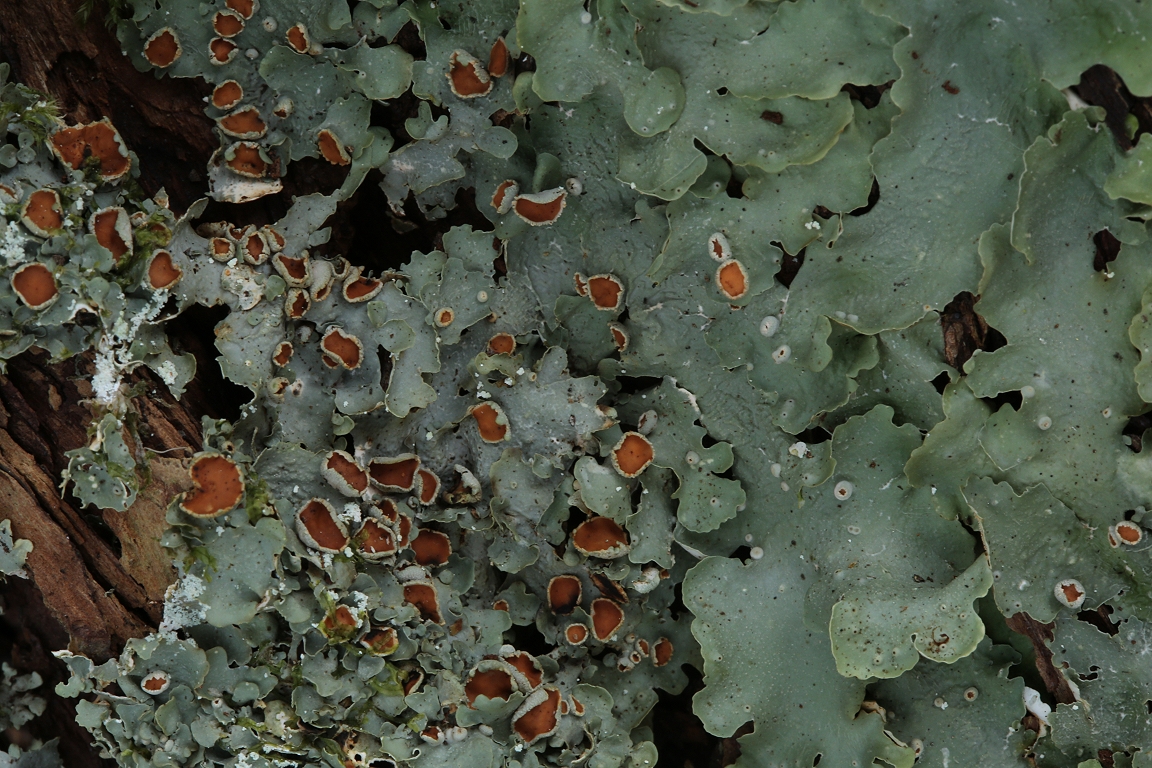
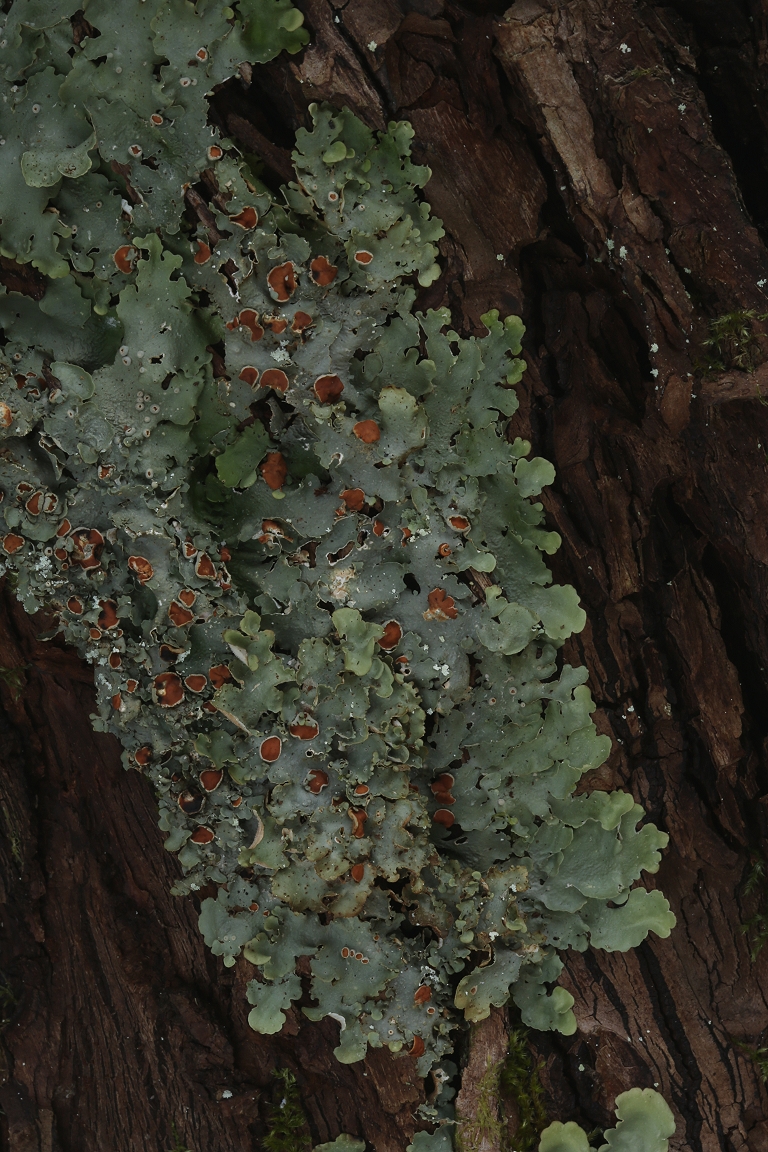
A nearby tree had a large patch of a bluish-green lichen growing on it. Like the dog lichen I’d seen earlier, this was quite desiccated, but I suspect it may be Lobaria virens, a close relative of tree lungwort lichen (Lobaria pulmonaria). I’ll have to consult with an expert to get this identification confirmed or corrected.
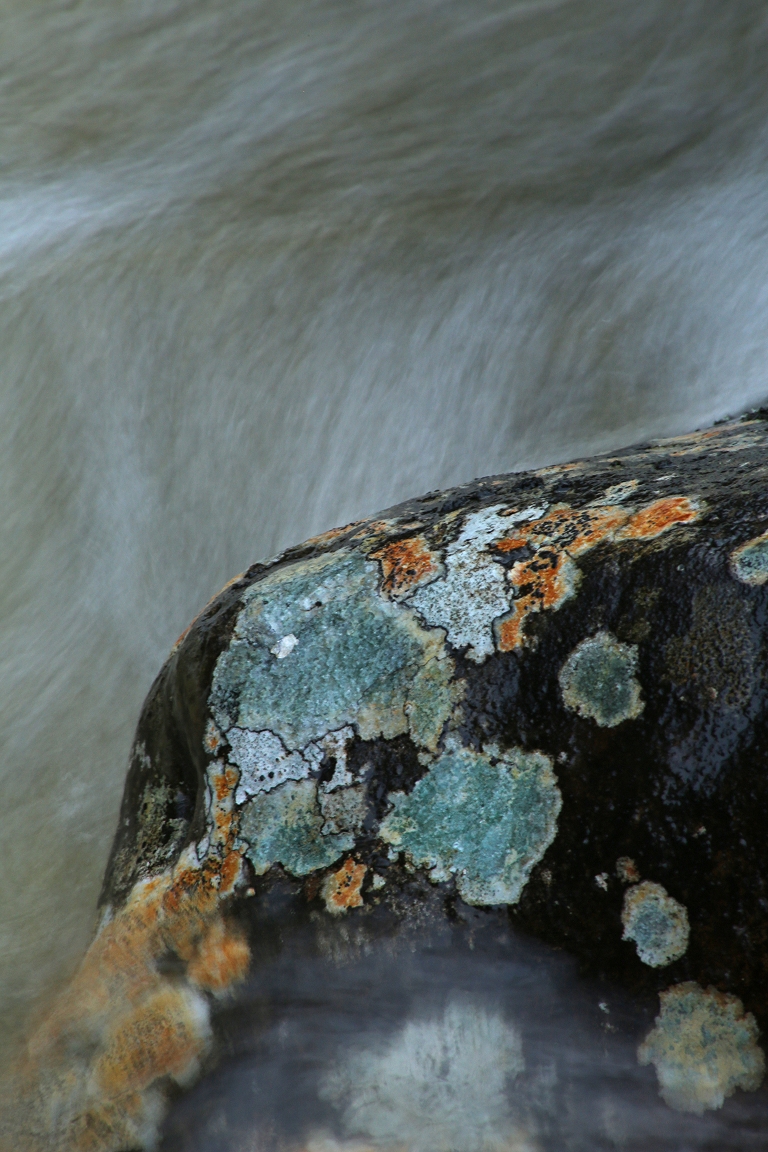
However, it was the lichens on the rocks that kept drawing my attention, and there was one particularly bright and impressive cluster on a rock right beside the flowing water. The water occasionally flowed over the rock itself, keeping the lichens moist and vivid in their coloration.

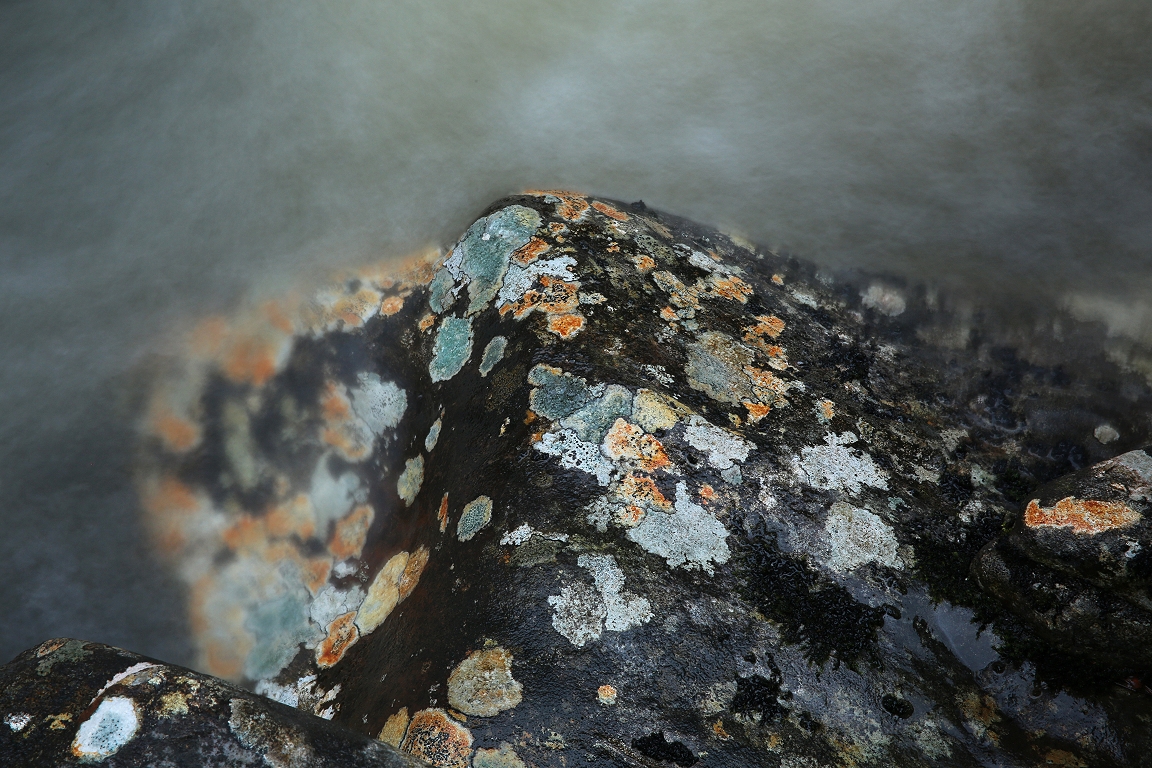
As I watched, the water level fluctuated, due to surges and eddies in the fast-flowing current. This meant that some of the lichens got soaked every few minutes, while others were more consistently submerged. That wouldn’t be a permanent condition, though, as the lichens wouldn’t survive perpetual immersion, and the water level did seem quite high, as I mentioned above. On other days I had no doubt that all of the lichens would be exposed above the water line.
Daylight was beginning to fade by this time, so I wasn’t able to explore the river any further downstream. I’ll be returning before too long to do that, as it looks like there are some more interesting sections there, even though the gorge opens out and the river levels off more. To finish with, here’s a compilation of some video footage from the day, complete with blustery snow showers, which I wasn’t able to document with still photographs.
[jwplayer config=”alan29may” file=”http://www.alansblog.org.uk/alan5apr13b.mov” html5_file=”http://www.alansblog.org.uk/alan5apr13b.mov” image=”http://www.alansblog.org.uk/alan5apr13b-preview.jpg”]
Some of your expeditions sound quite hazardous to me Alan. Please don’t fall into the river 🙂 – the world can’t spare you any sooner than it must and I would really miss your blogs . . .
Hi Diana, Some of my trips are on the adventurous side, but I wouldn’t classify them as hazardous! I’ve been enjoying a little adventure in Nature for over 40 years now, and it’s a breath of fresh air (literally) from most of my daily work (in an office at a computer) – it helps to keep me feeling fully alive, and in touch with the real (natural) world. I appreciate your concern and kind words, and please be assured that I take good care of myself!
With best wishes,
Alan
Hi Alan, Love the footage of the powerful stream. Love the colourful natural design of the lichen on the rocks. What a wonderful painting it would make.
Sorry not to have been in touch much lately only I went to Wrightington Hosp and had a complete new shoulder. A bit painful but wonderful engineering and its done the job .
Now the snow has gone it makes planting trees a bit easier .
Midge.x
Hi Midge, I’m sorry to hear about your surgery, but hope the pain will ease soon, and you’ll be back to full health and strength. Thanks as ever for your comments on my blogs!
With best wishes,
Alan