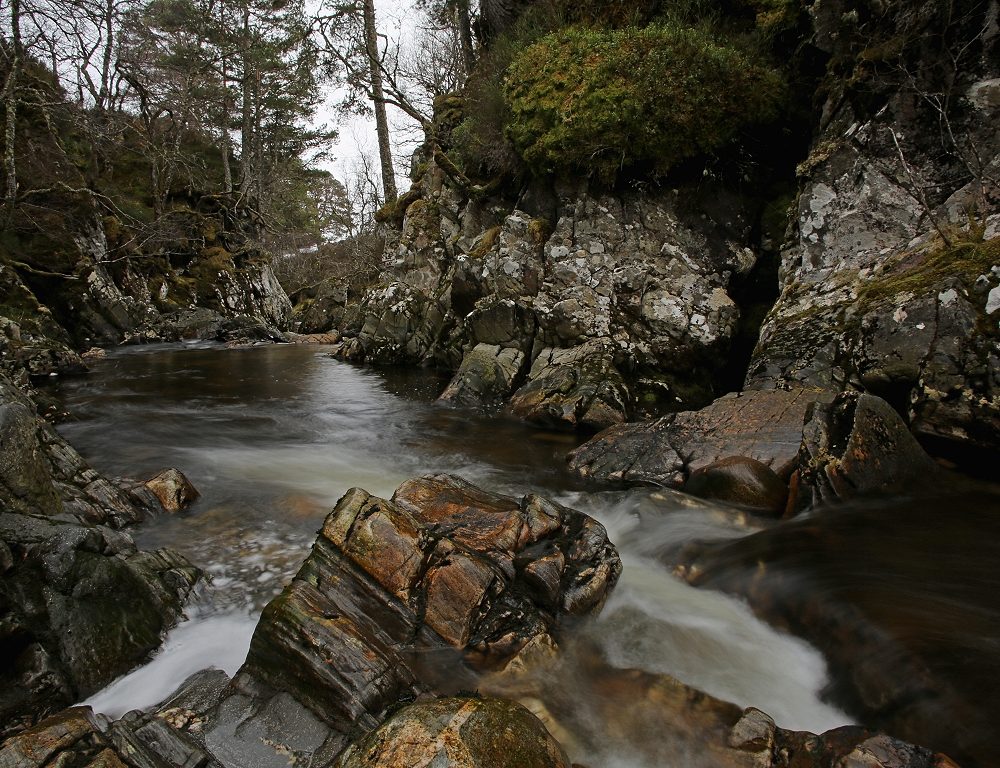
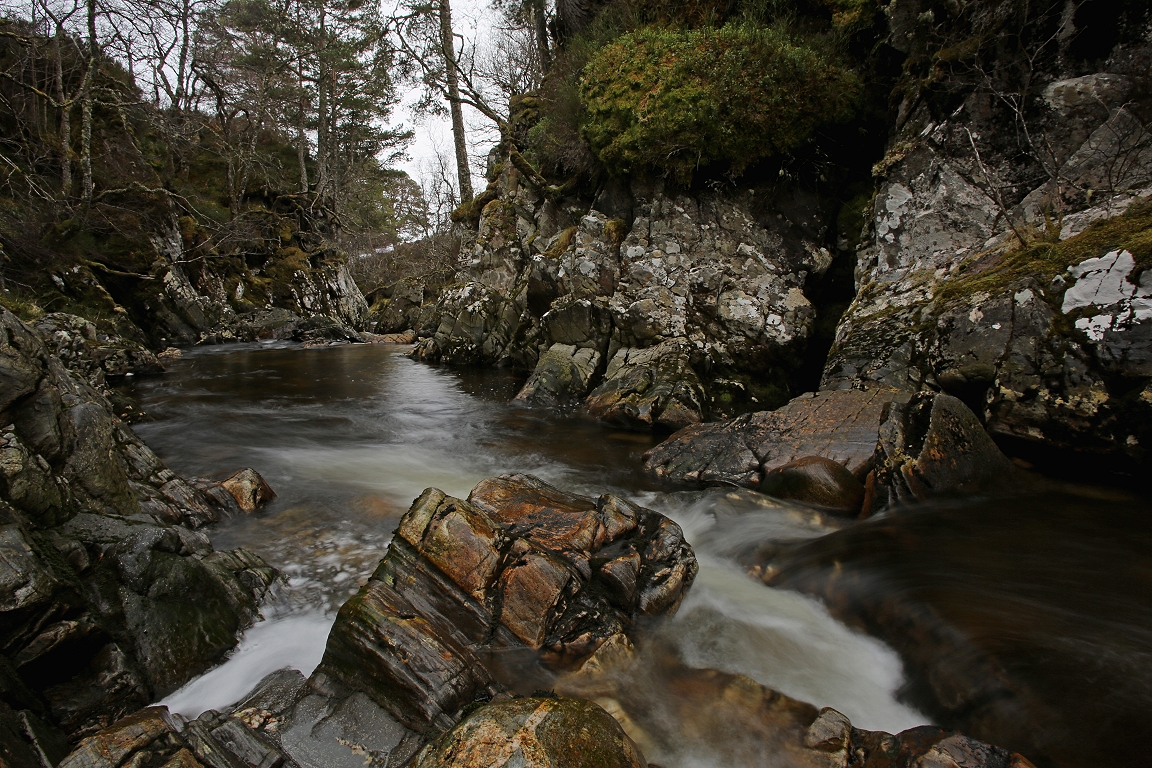
In the middle of March I made another visit to the Abhainn Gleann nam Fiadh burn in Glen Affric. This is the largest of the tributary burns that feed into the main lochs and river system in Glen Affric, and I’ve written a couple of blogs about it last year, in September and February. On each of those occasions I’d spent the day in some relatively small sections of the burn, working upstream from where it discharges into Loch Beinn a’ Mheadhoin, but there’s still lots more to explore, so this day was an opportunity to photograph another section.
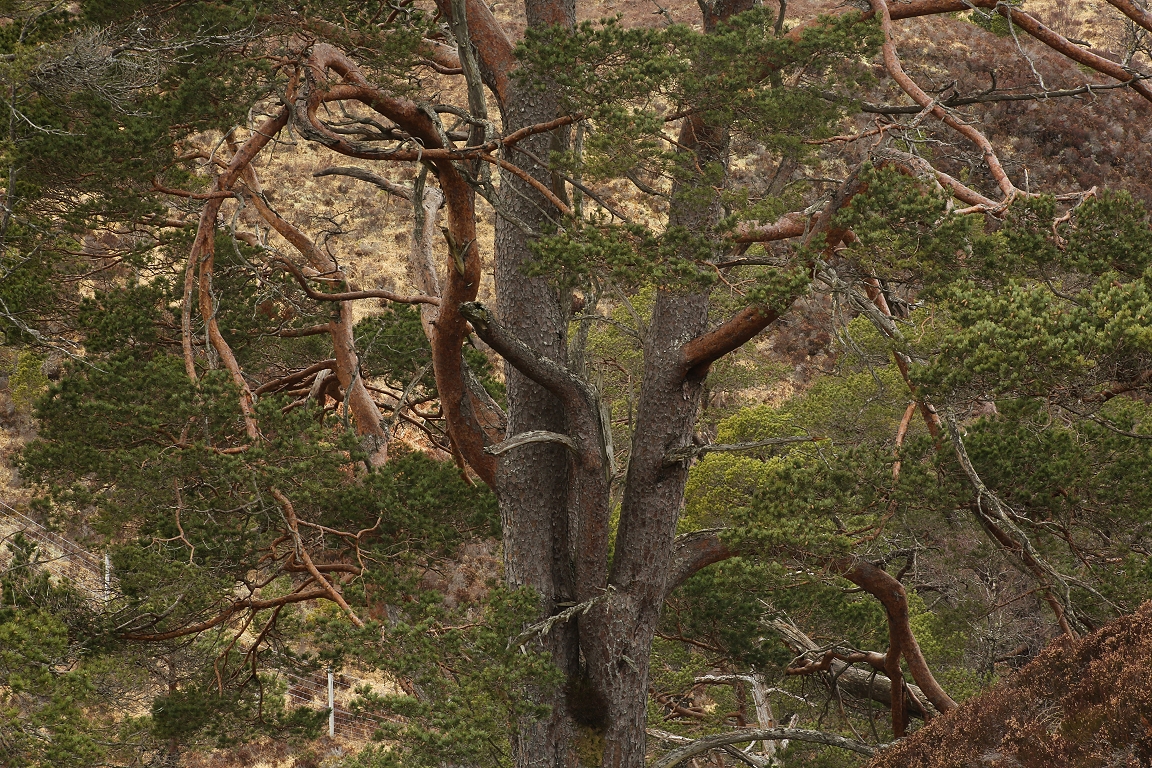
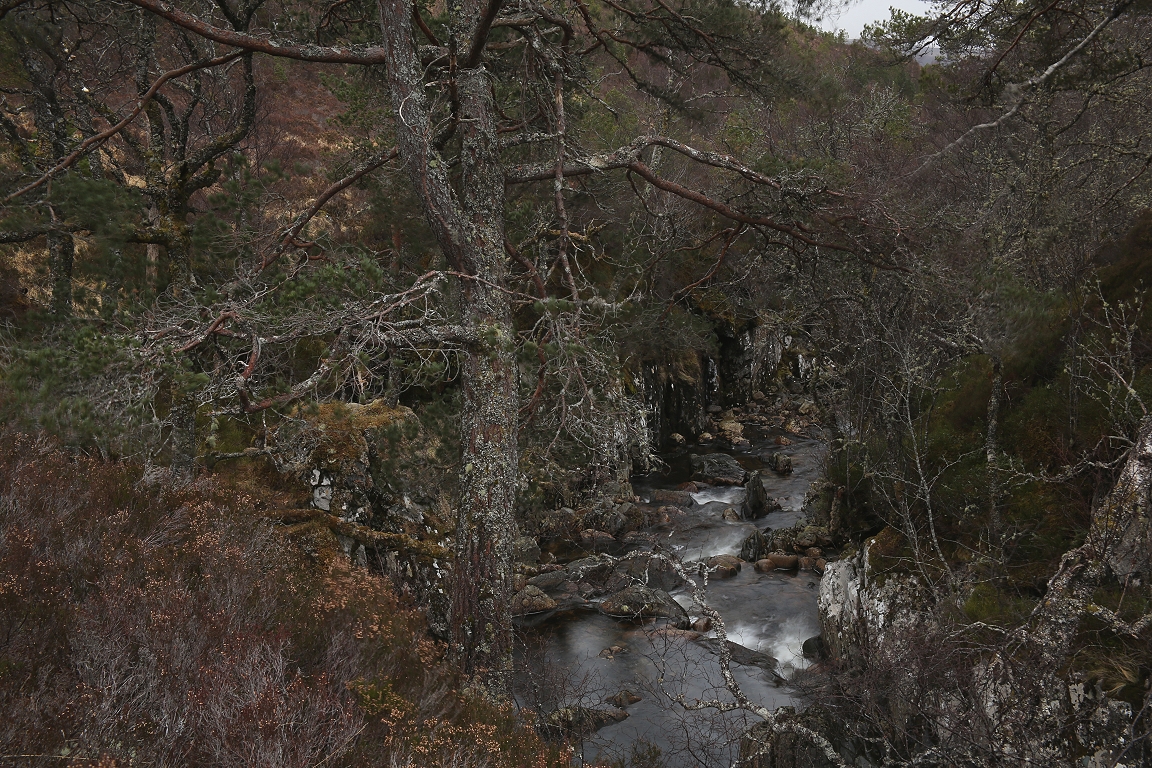
I walked up the track from the loch, which leads towards Carn Eige, the highest peak north of the Great Glen, and a major destination for hill walkers and Munro-baggers (people who climb the peaks over 3,000 feet in Scotland, which are colloquially called ‘Munros’). There’s a straggle of old Scots pines (Pinus sylvestris) growing along the edge of the burn, especially in the section where it flows through a gorge which I’d visited back in September last year. I headed off the track towards some of those, to link up with where I’d finished on that previous trip.
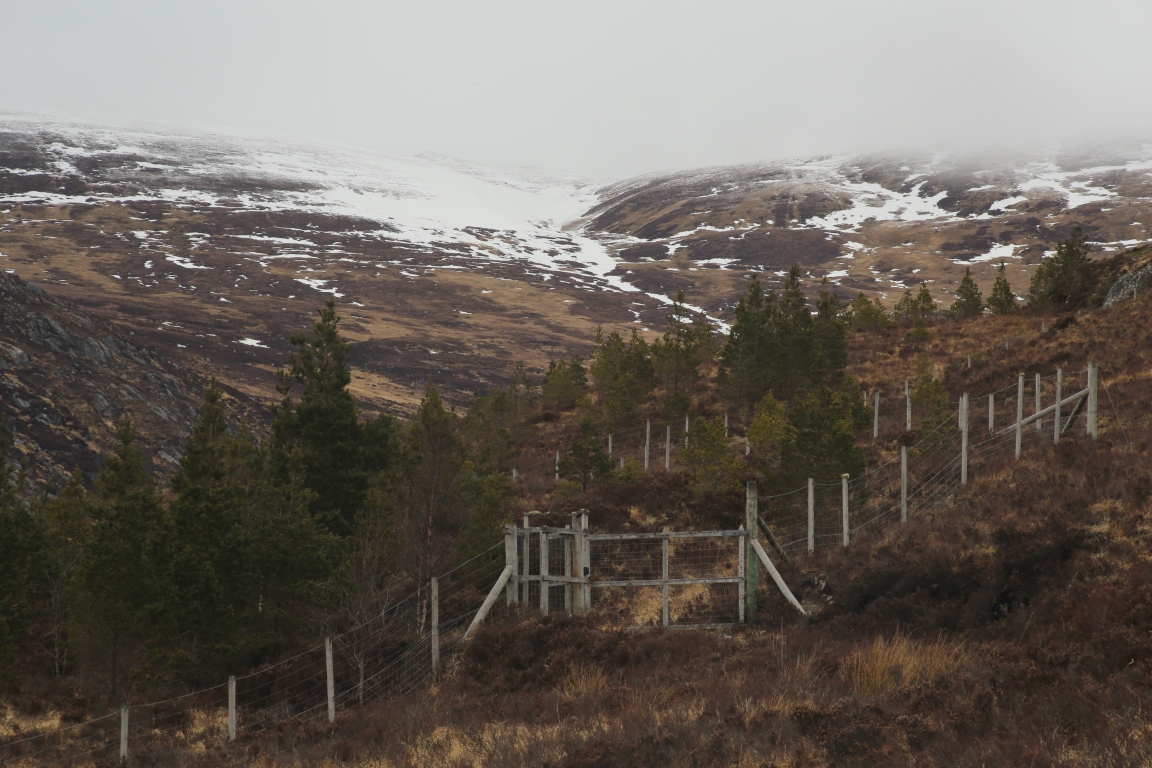
The track continues onwards through a fenced exclosure known as Meallan (after the name of a hill immediately to the west of the fenced area), which was the second major project that Trees for Life was involved with in Glen Affric, in partnership with Forestry Commission Scotland. We funded the fencing of 55 hectares there in 1991, for a combination of natural regeneration and planting, and between 1992 and 1994 our staff and volunteers planted 28,100 Scots pine, with some aspen (Populus tremula) and other broadleaved trees being added later.
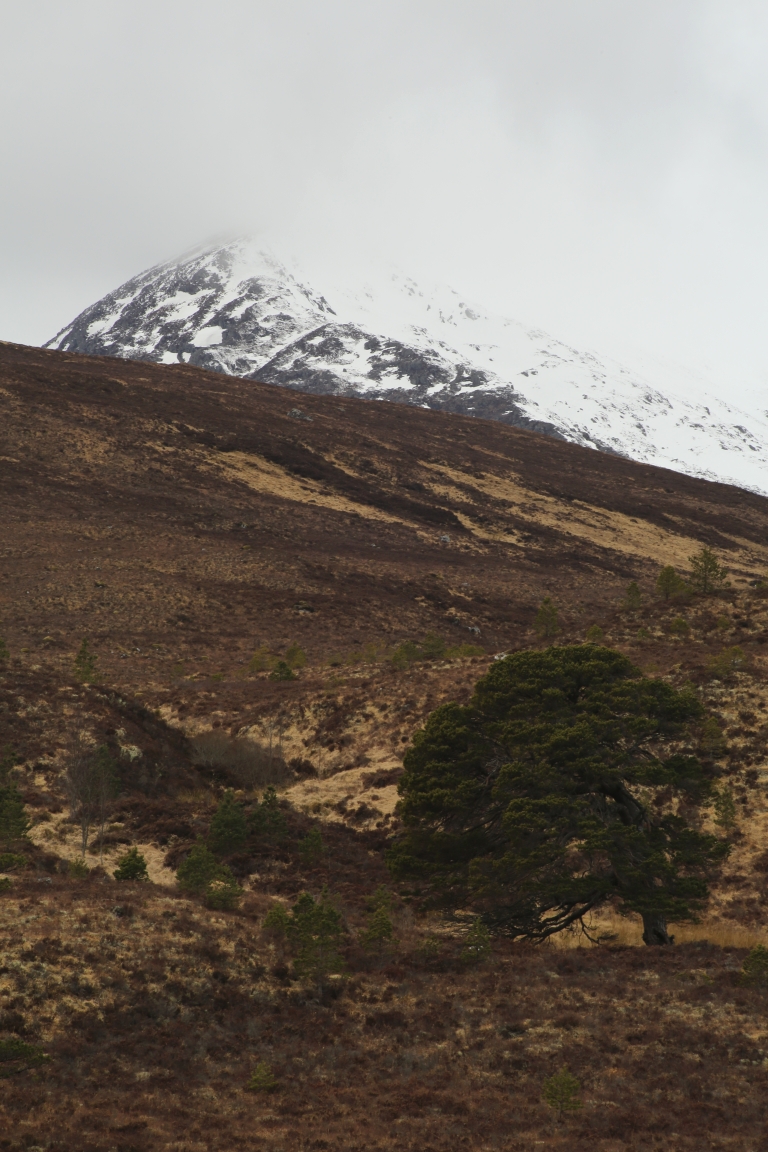
The Abhainn Gleann nam Fiadh burn flows through the exclosure, and it was this section I wanted to spend the day in this time. I took a few photos from outside the exclosure first of all, to show the contrast between the inside and outside of the fence.
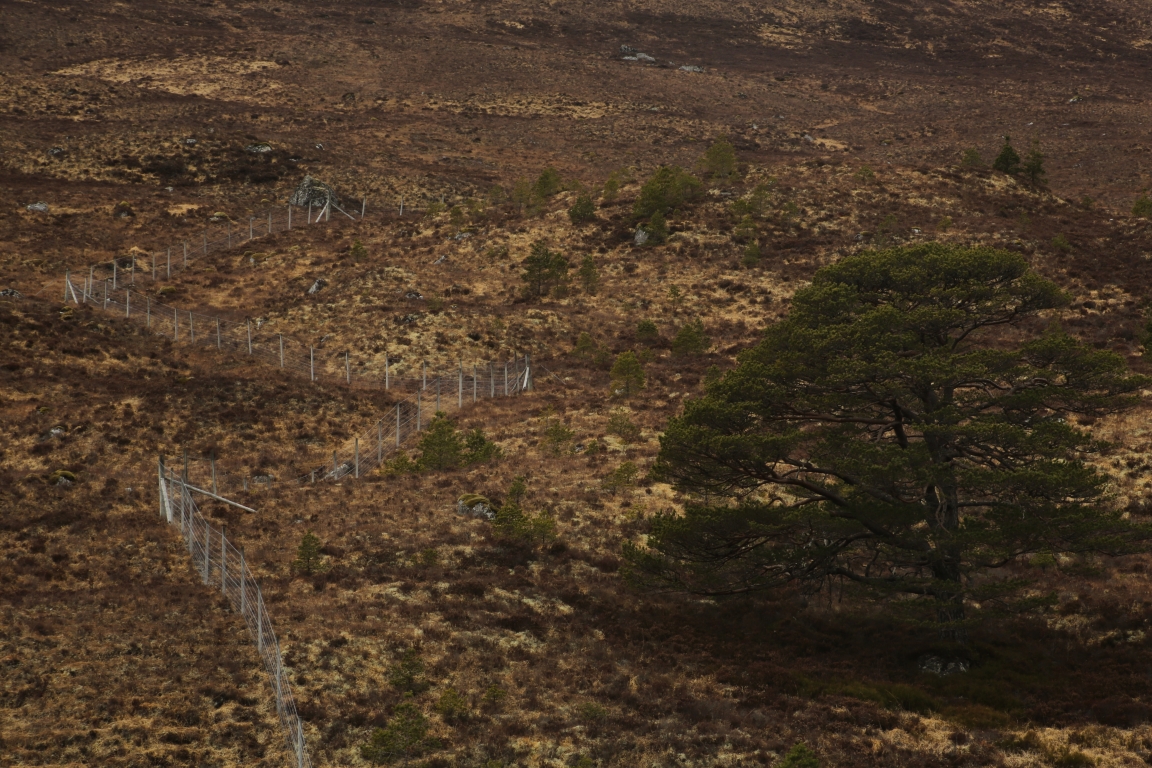

The young trees are growing well in the exclosure, and are providing a new generation to replace the old ones, particularly the Scots pines, that are reaching the end of their lives there. Walking over to the burn, I joined it just where it flows out of the fenced area, so that I could follow it upstream from there.
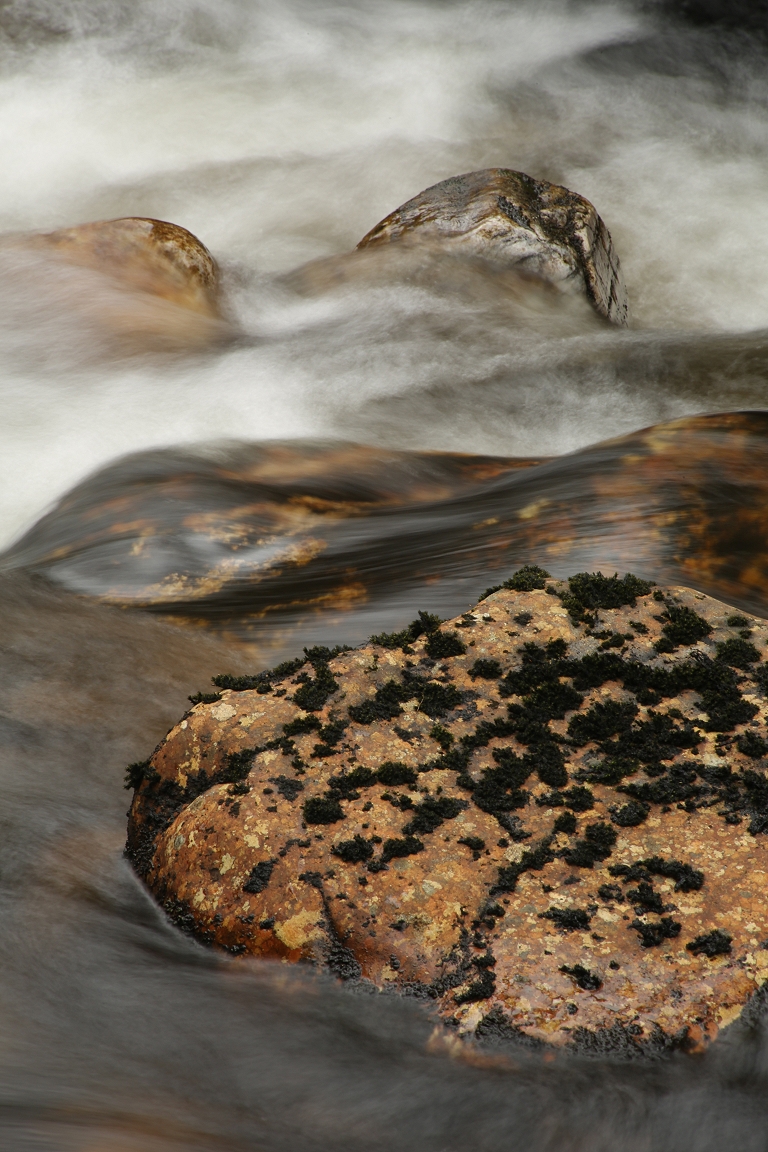
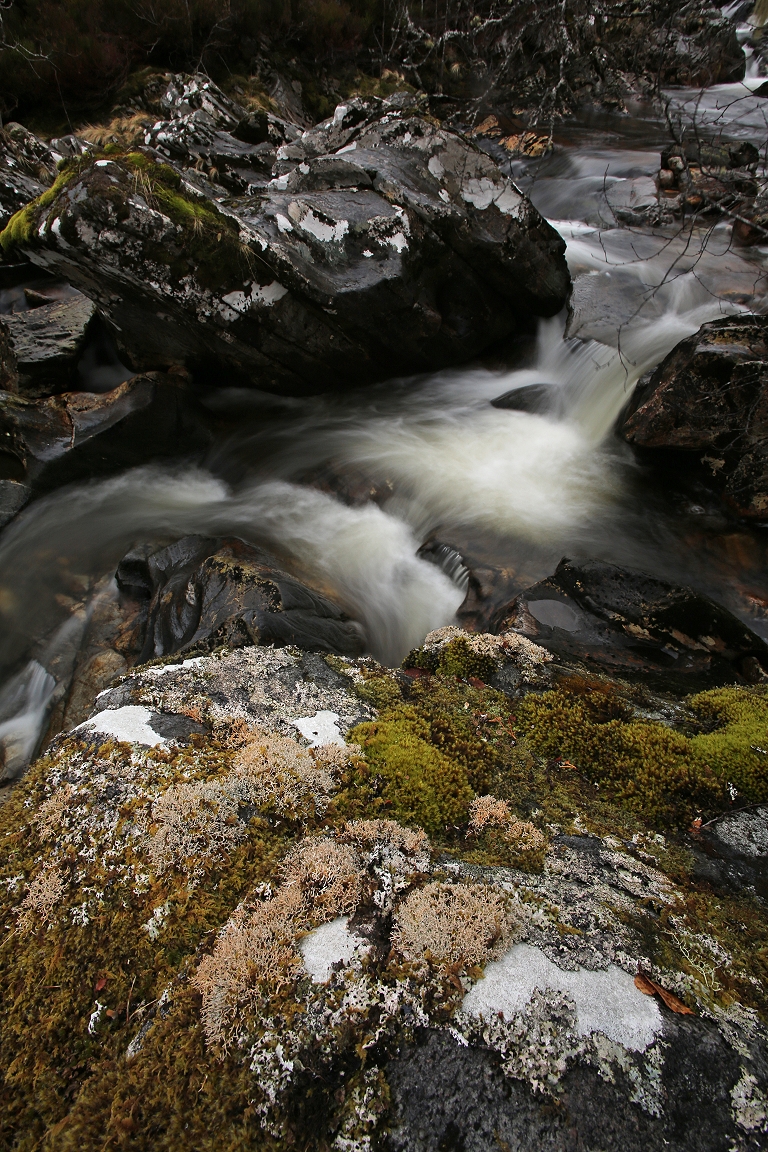
There were some nice rusty-orange coloured rocks in the burn there, so I spent a little while photographing them, and the flow of the water around them, as it tumbled downstream through a series of small cascades.
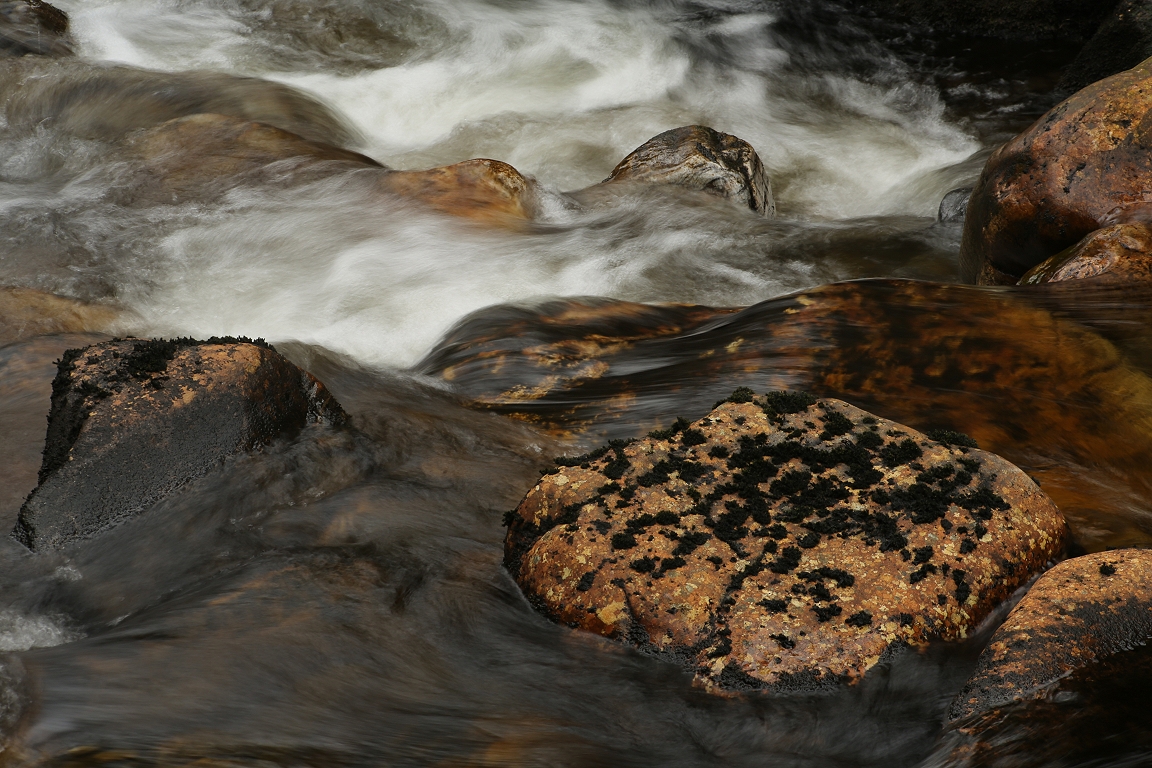

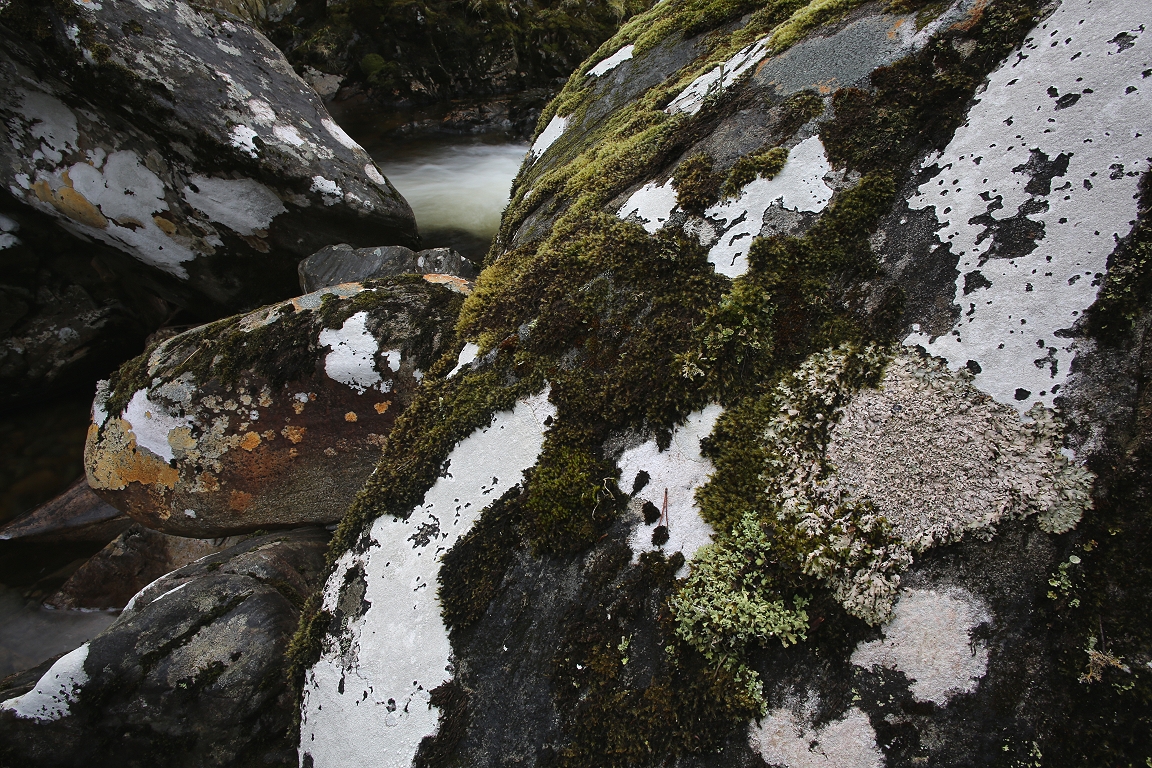
As well as being the largest burn that flows into the lochs in Glen Affric, the Abhainn Gleann nam Fiadh also has the most interesting rock formations, and that’s one of the reasons why I’ve been making repeated visits there. There’s more colour variation in the rocks than in the other watercourses in the glen, and because of the several gorge sections along the burn, these have been eroded into some very organic-looking shapes.
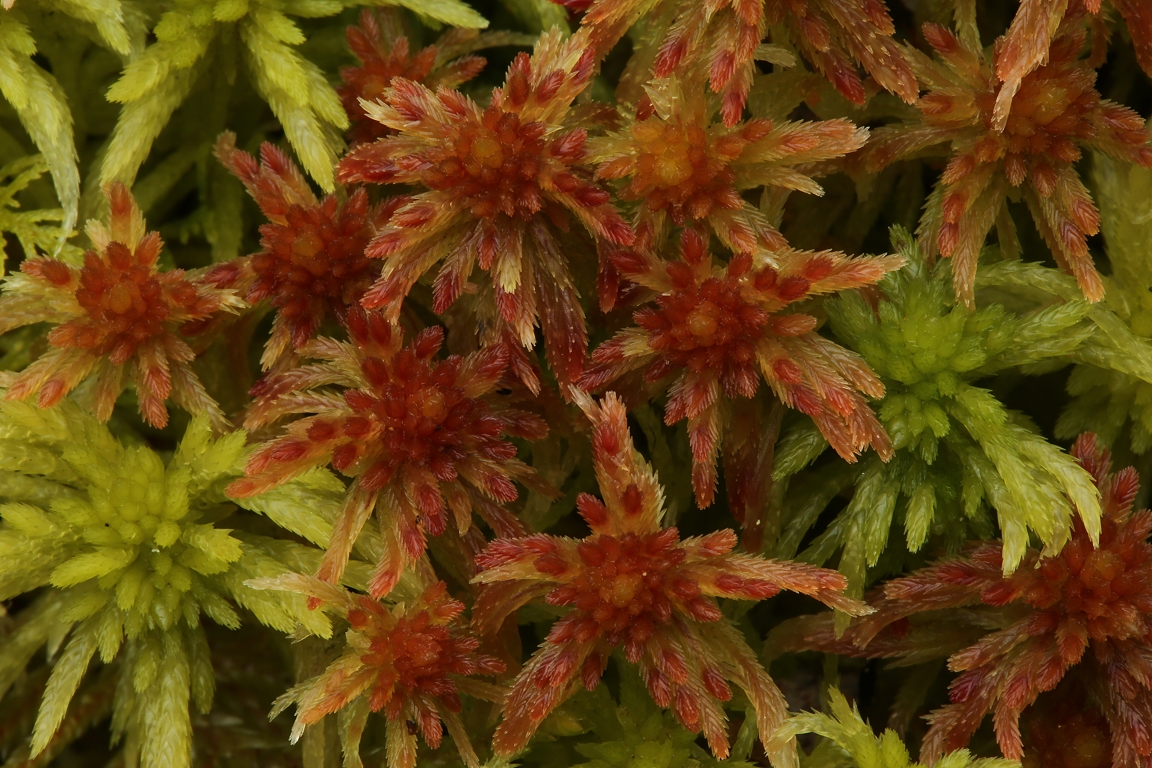
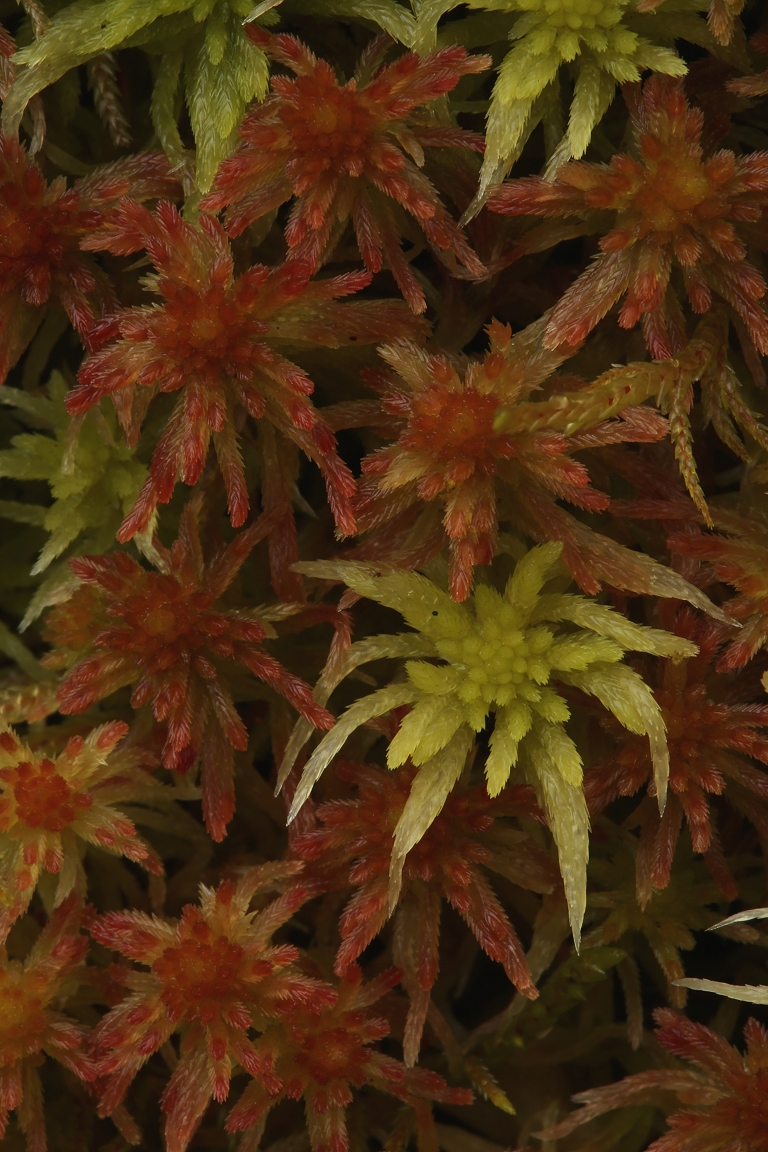
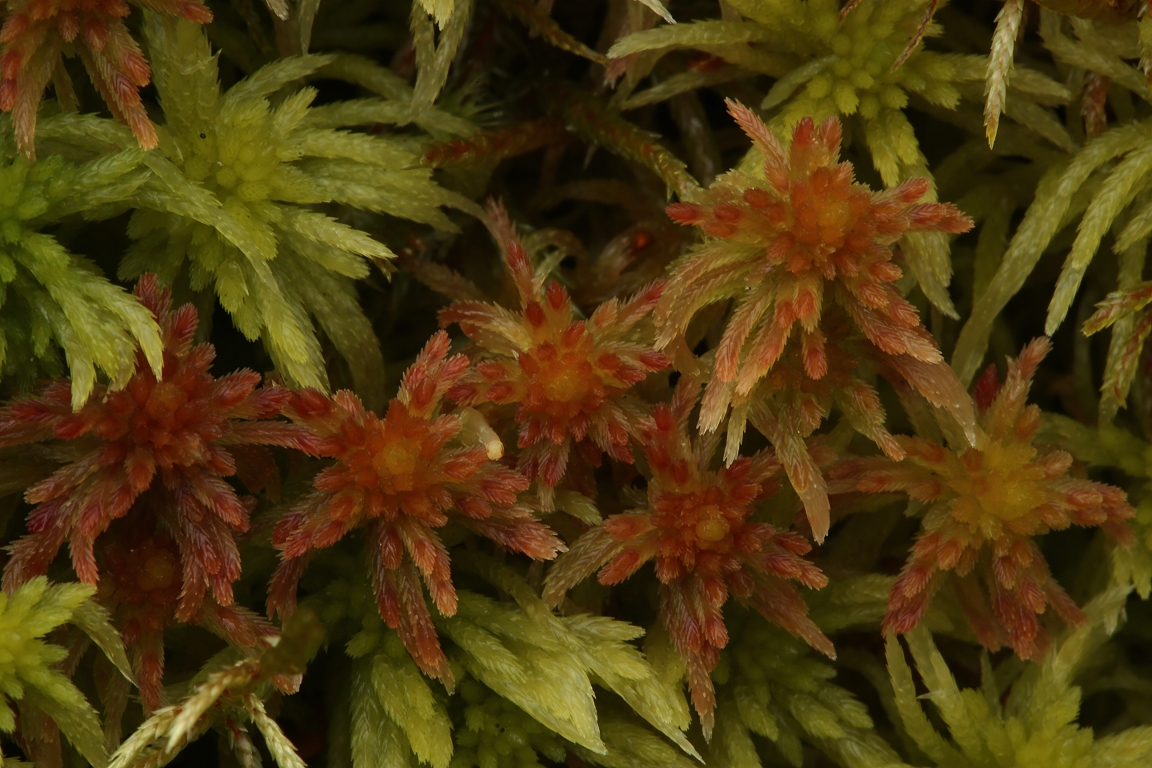
Just beside the burn there was a very nice area of sphagnum moss growing, with a mixture of bright green and intense red colours on its leaves. I took a series of photos of this, but wasn’t sure which species of sphagnum it was, so I had to send the images to Gordon Rothero, an expert bryologist, for identification. Gordon had done a survey of bryophytes for us in both Glen Affric and at Dundreggan a few years ago, and he replied that although sphagnums are hard to identify from photographs, he was fairly confident this was five-ranked bog-moss (Sphagnum quinquefarium).
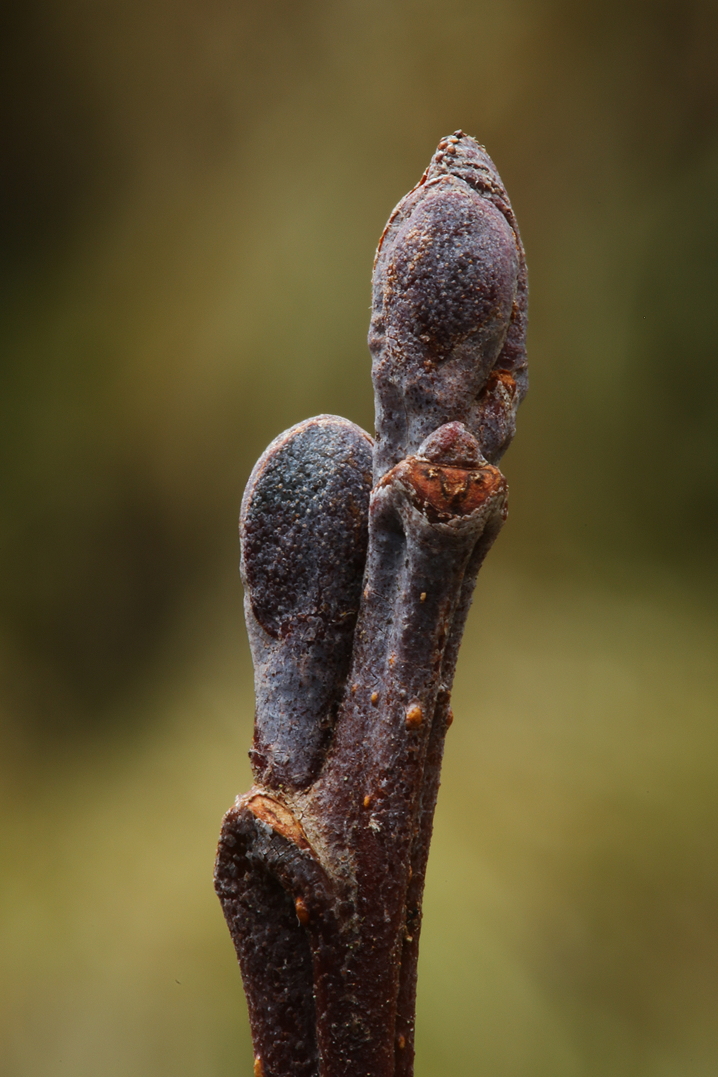
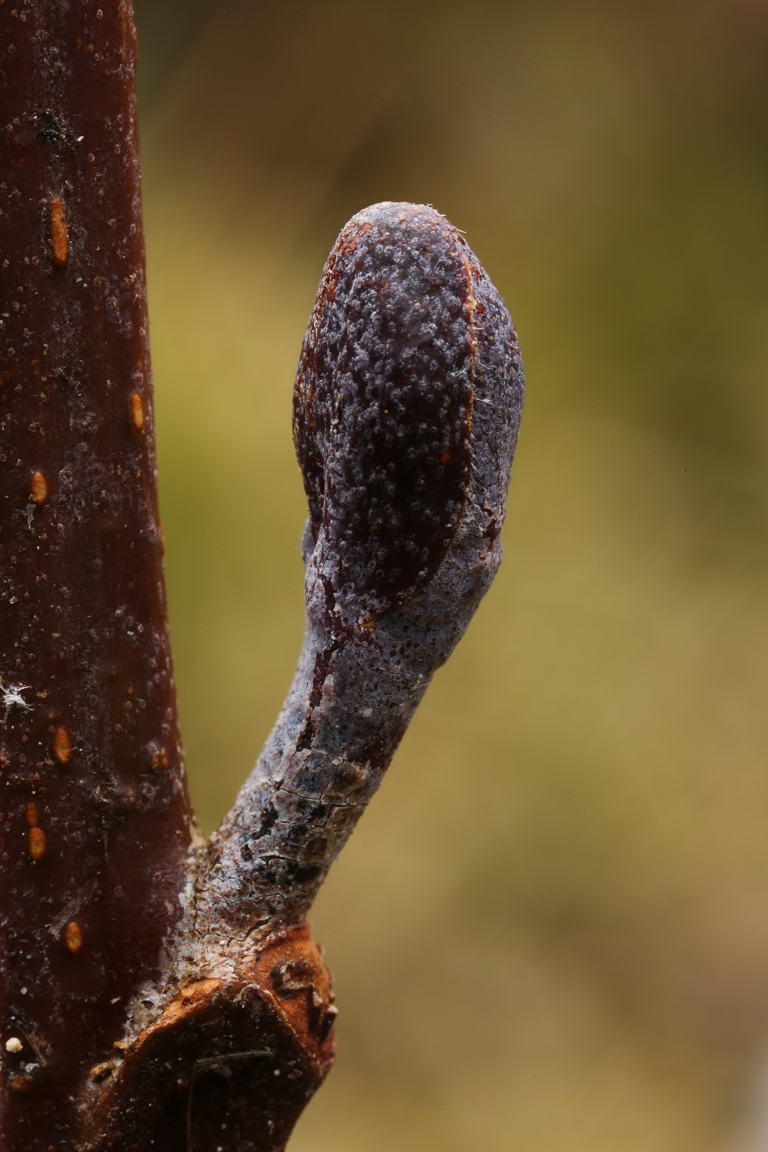
Very close to the sphagnum patch there was a young alder tree (Alnus glutinosa), beside the burn. Its buds were a rich shade of purple in the damp conditions, and looked like they were swelling, getting ready for leaf burst in a few weeks time. In winter, alders are easily recognisable by their distinctive buds, which are different to those of the other deciduous trees in the Caledonian Forest.
However, it was the burn itself, and the rock formations along it, that continued to attract my attention …
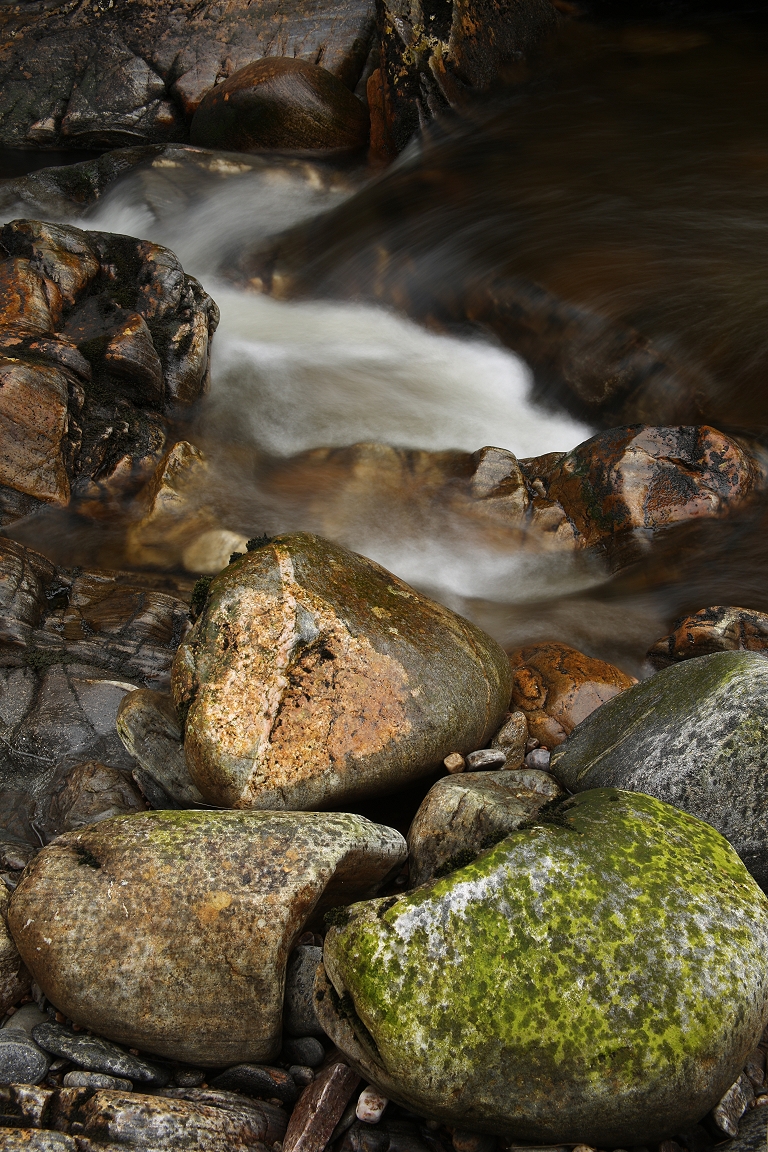
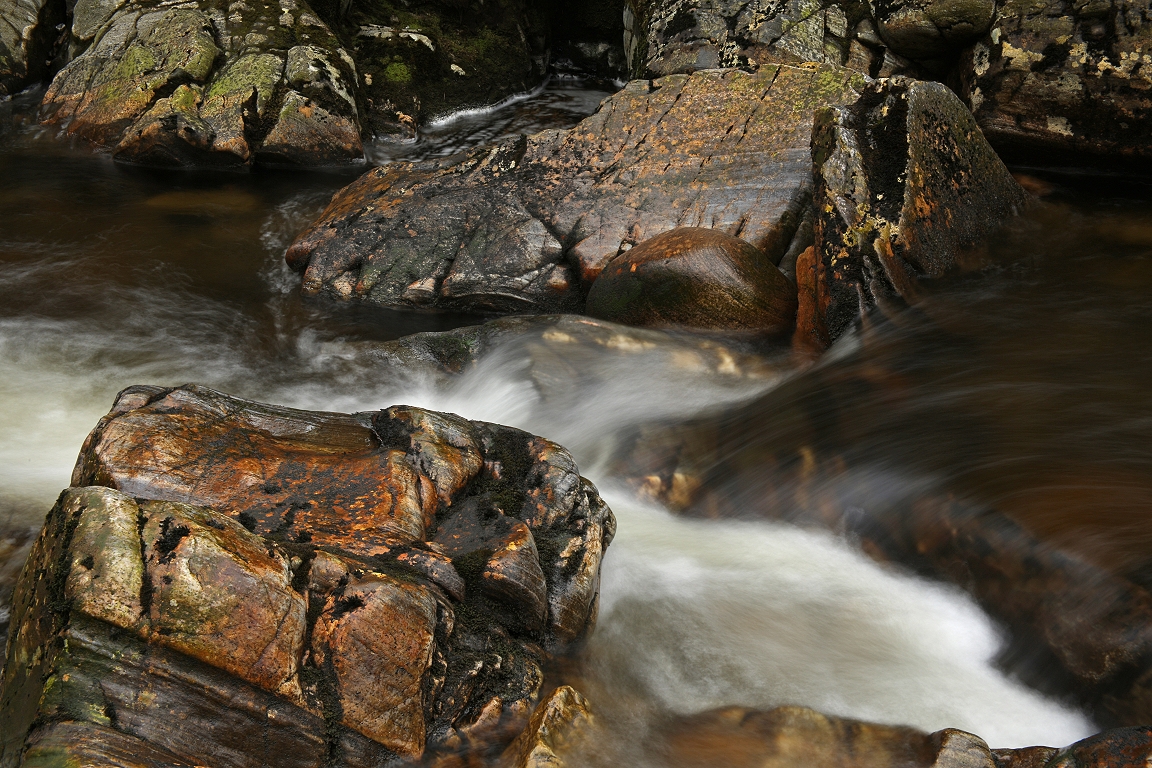
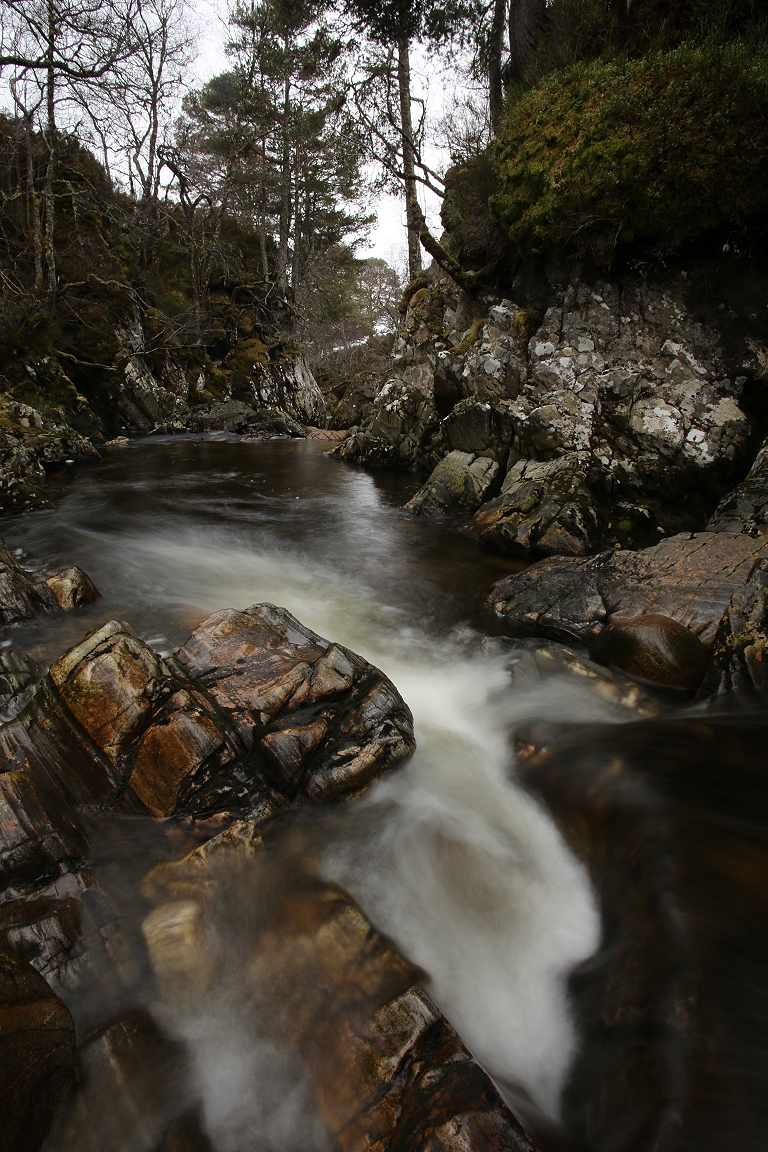

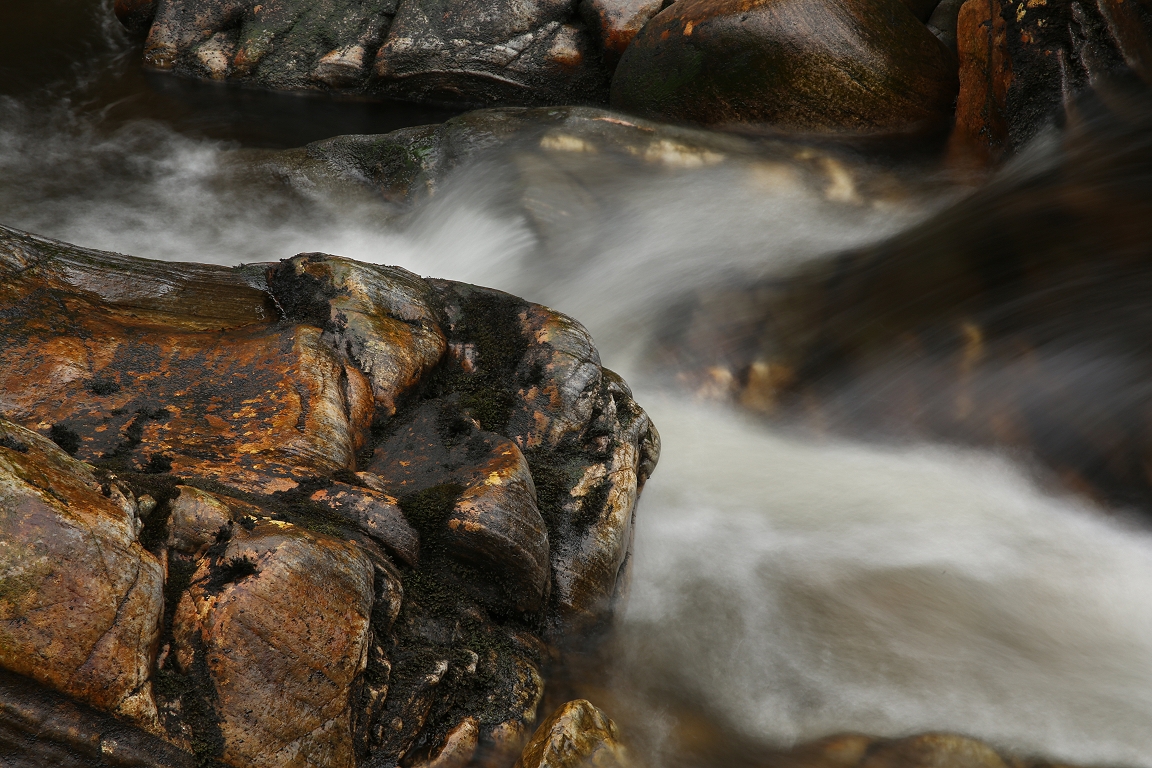
I didn’t even need to move at all, because there were some beautiful rock formations both immediately downstream and upstream from the place where I was standing. I spent quite a while there altogether, taking a lot of photographs and some video footage, and having my lunch in between as well. Because it’s out of sight from the track, I suspect that very few people ever come to this section of the burn, which added to its specialness for me.
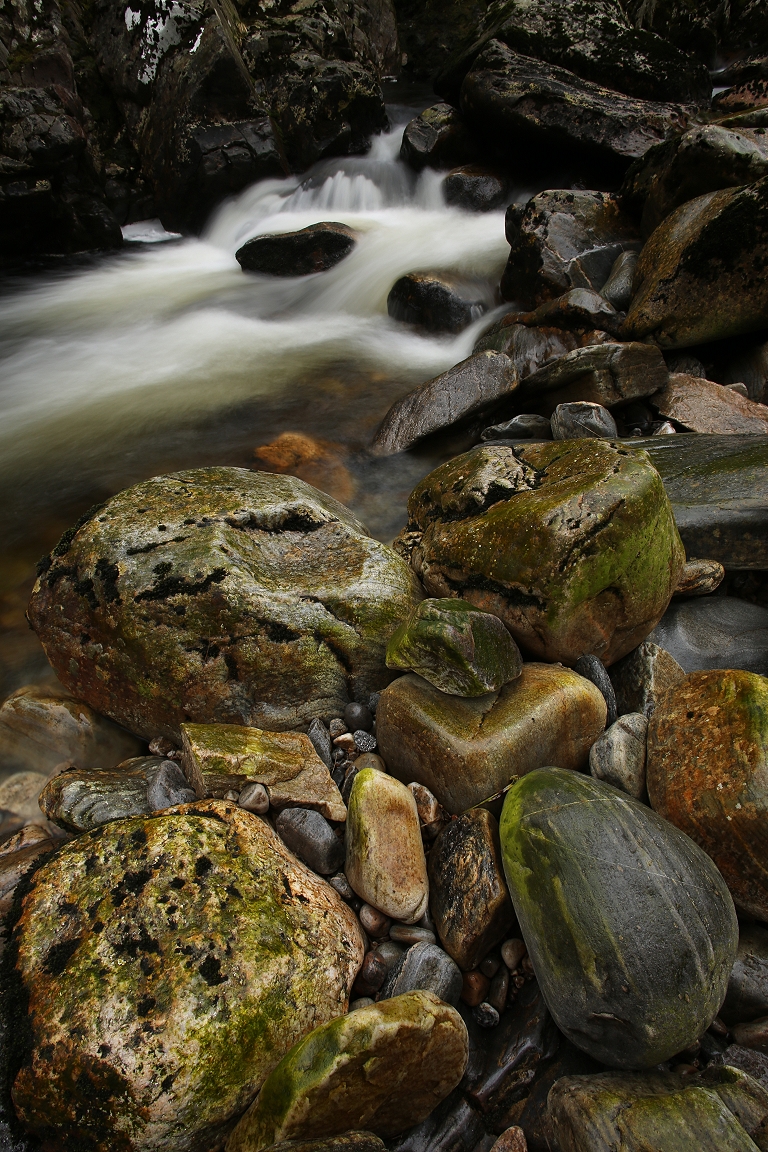
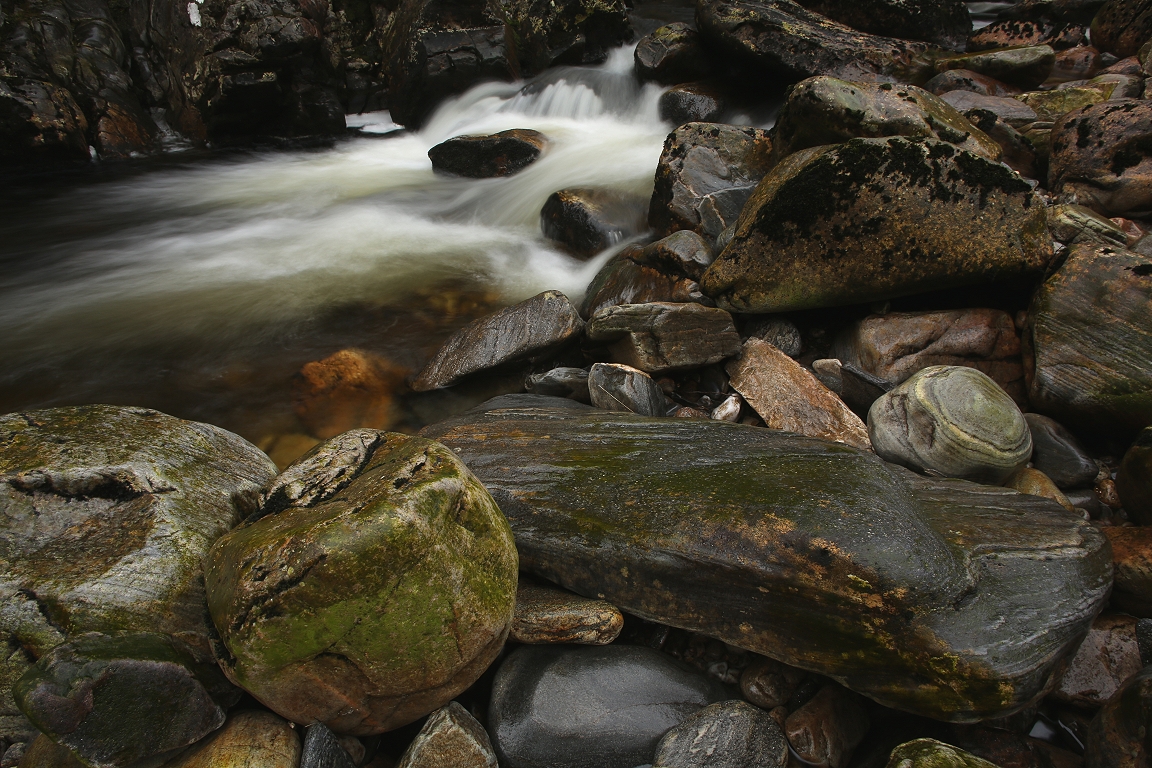
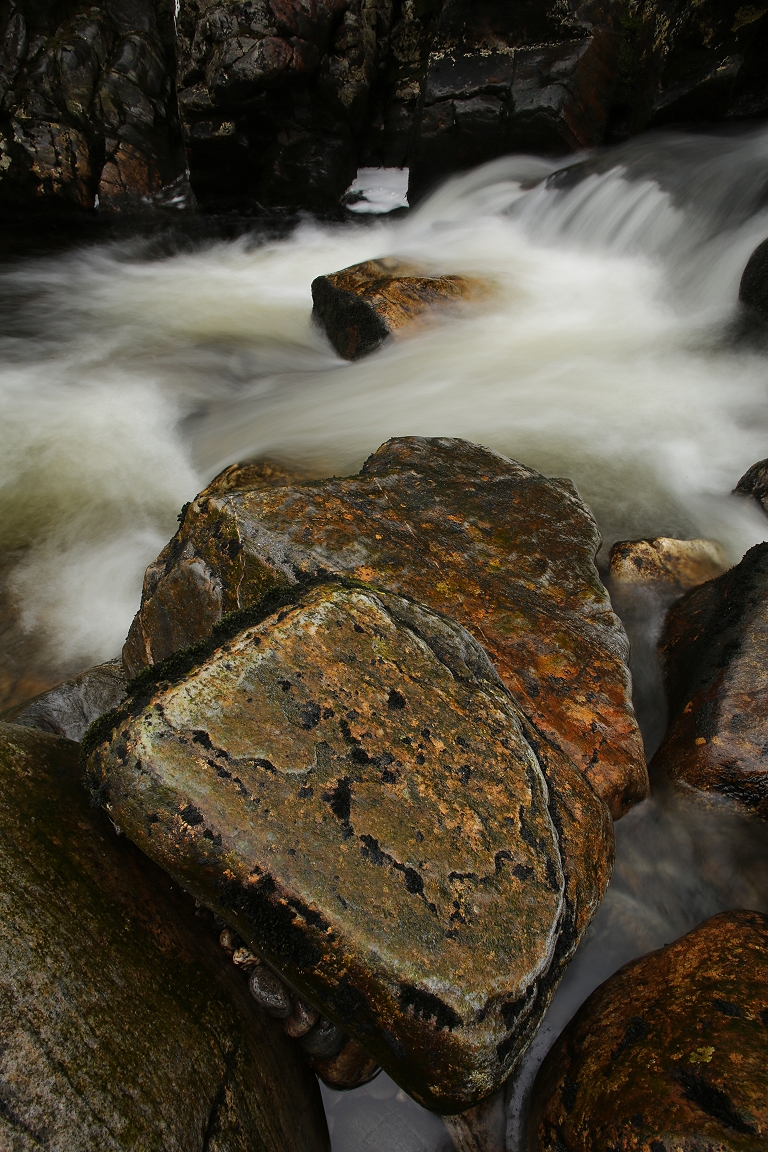
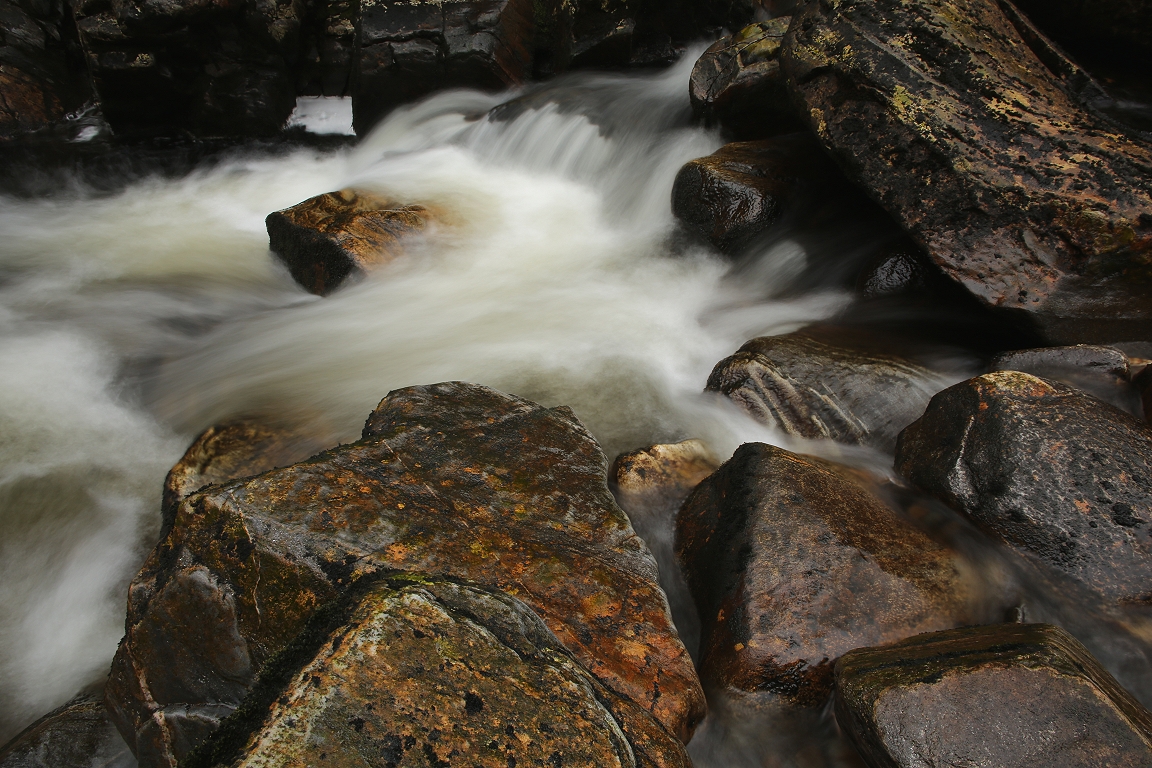
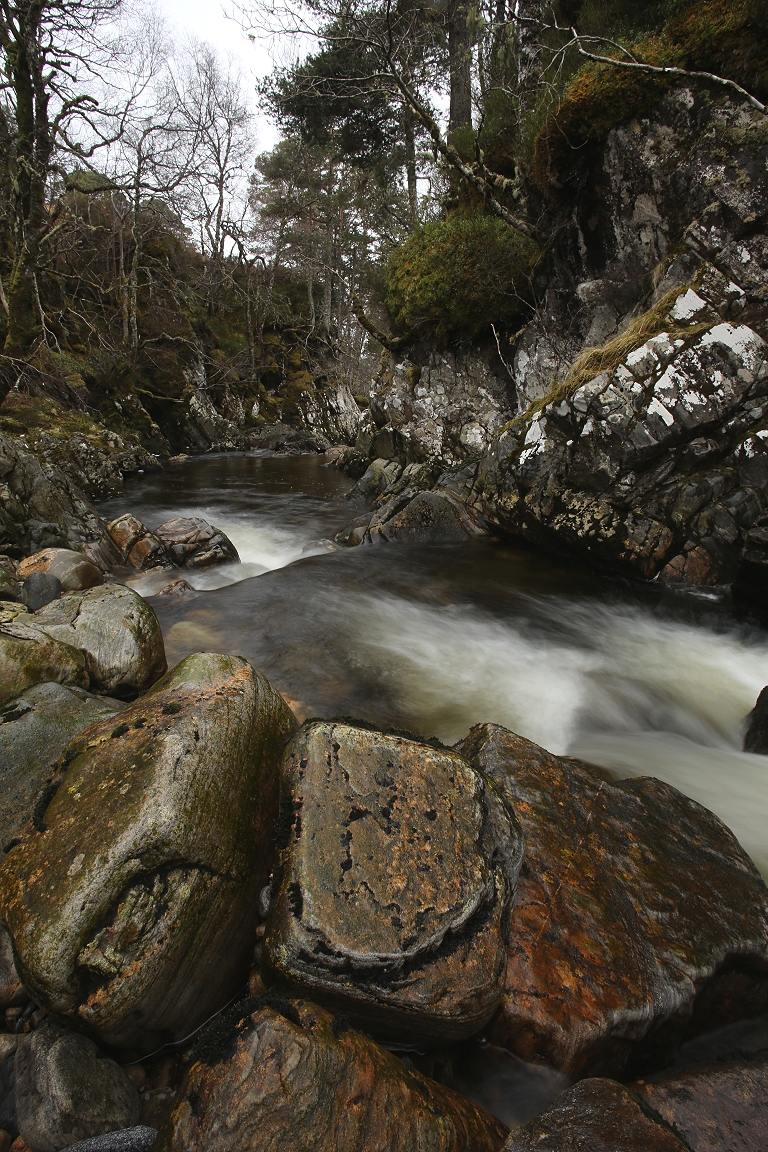
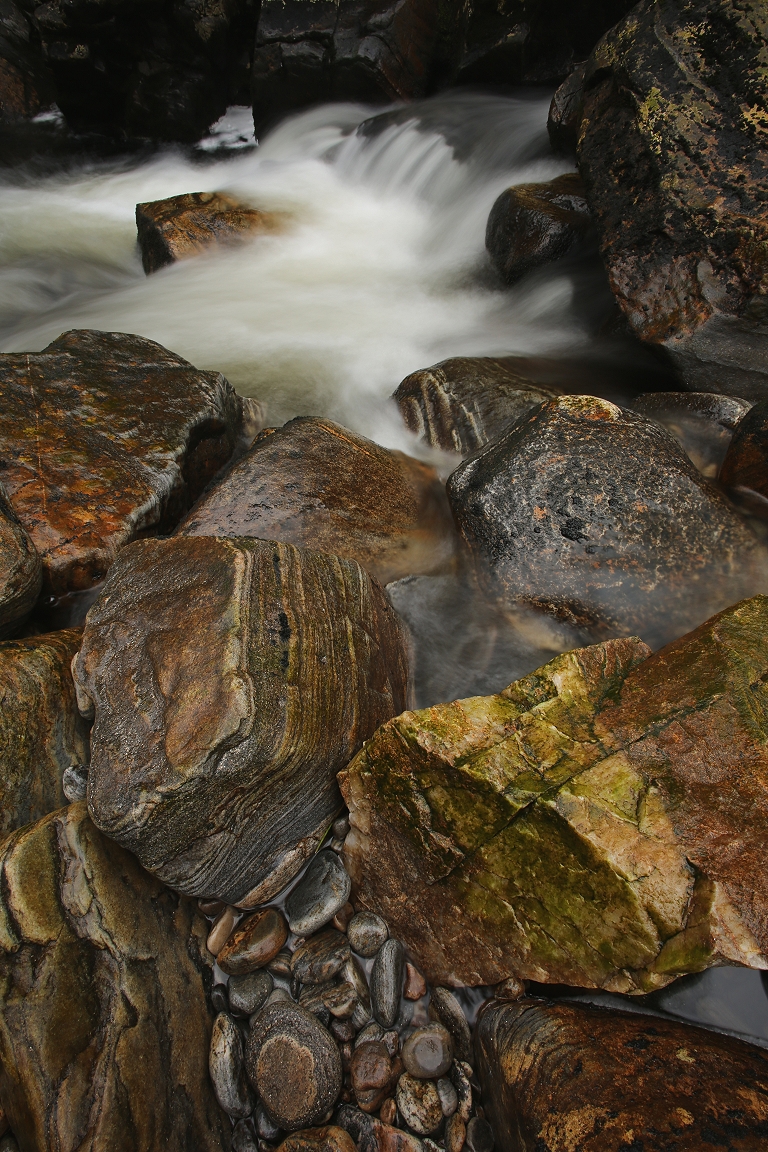
The more time I spent in this one spot, the more beauty I saw. Every rock seemed to me to be full of individuality and personality, and was vibrant in texture and colour from the wetness – it had begun to rain a little while I was there. The combination of shapes and patterns in the rocks offered endless possibilities for appreciation of the beauty of Nature.
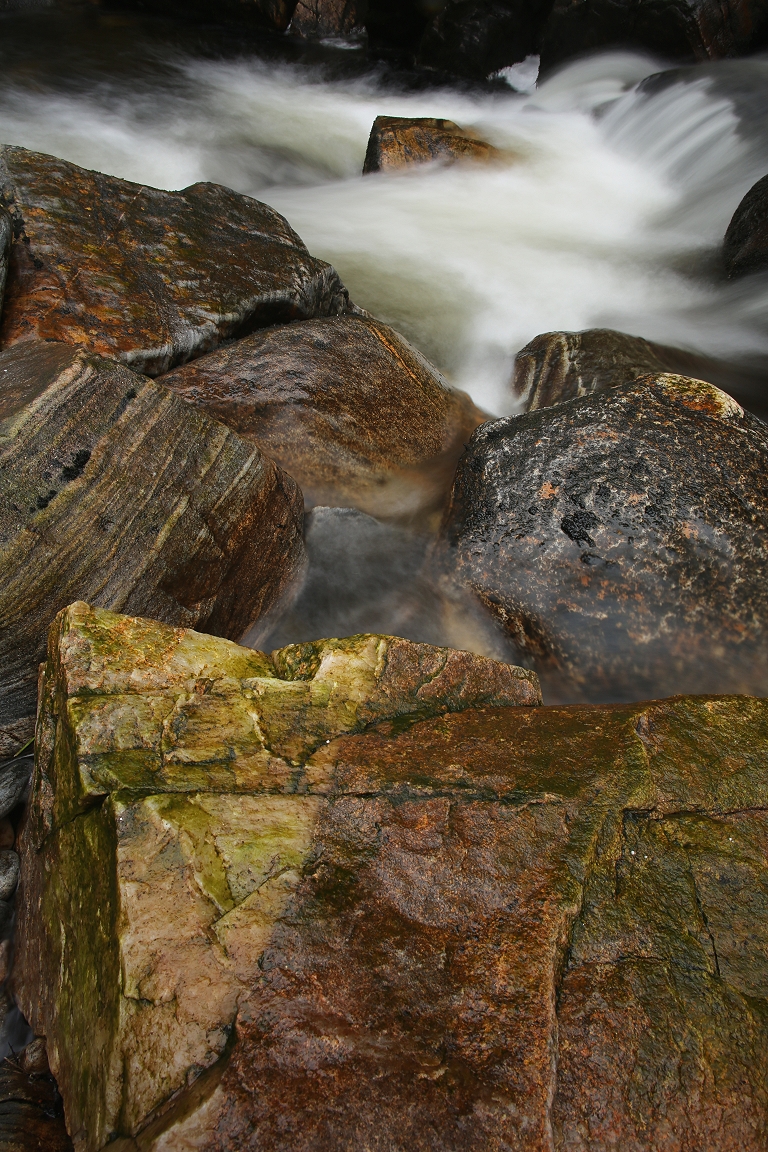
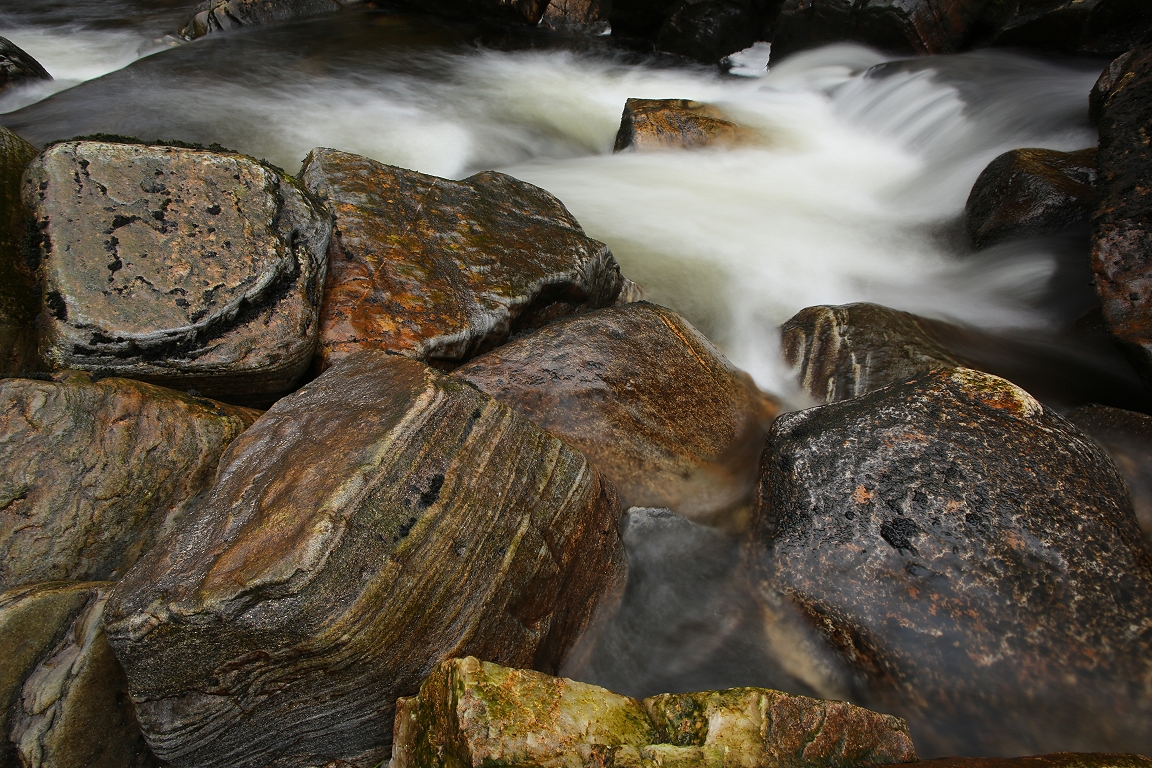
Just upstream from where I’d been the rocks were very different, both in colour and shape – they were less angular and much more rounded, indicating they were of a different mineral content.
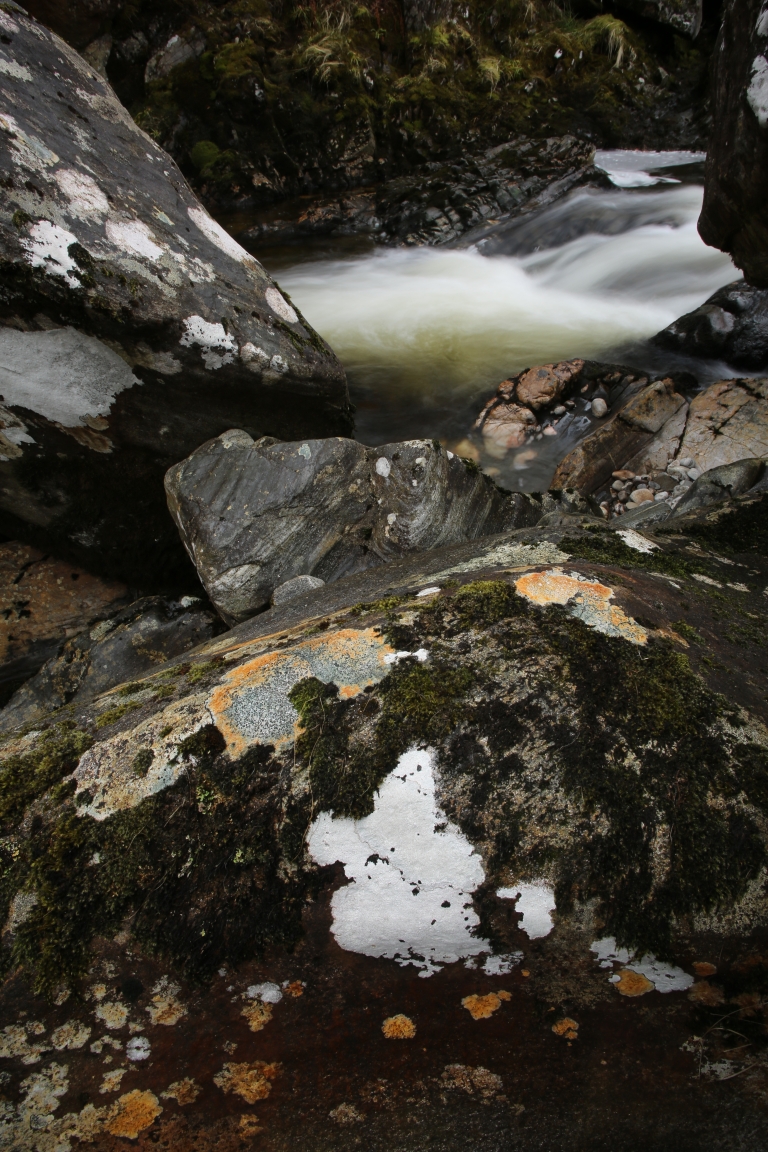
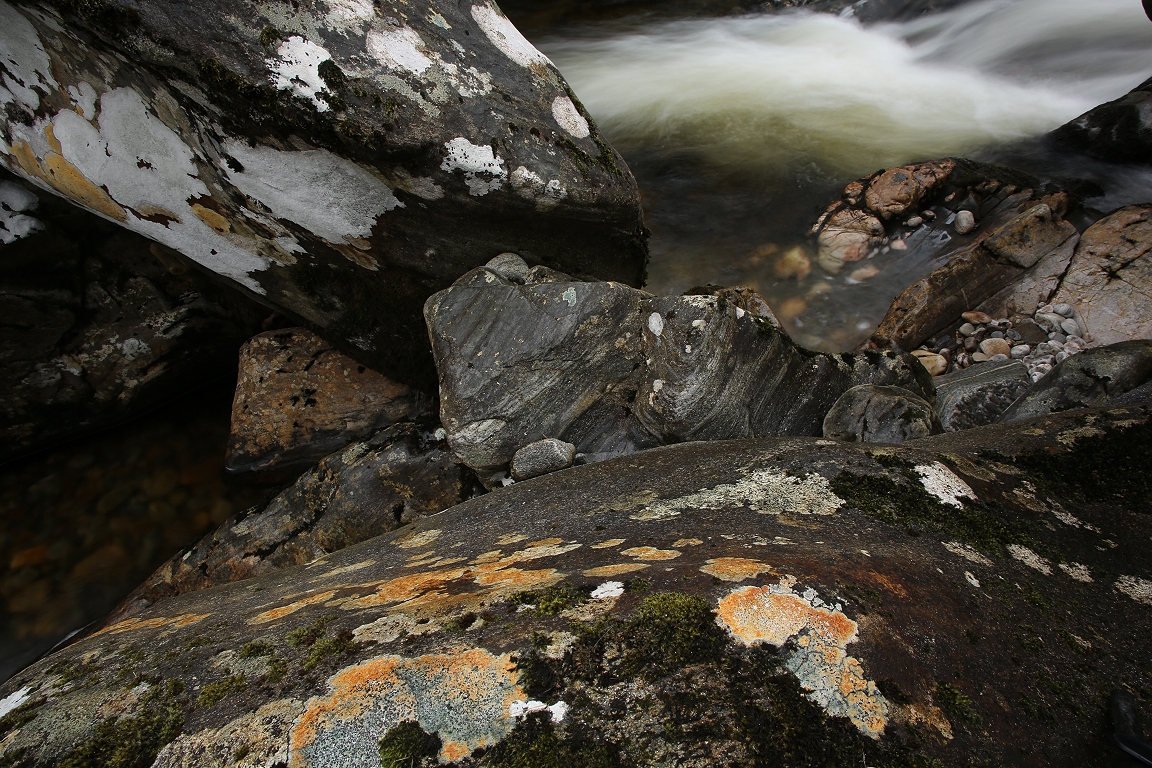
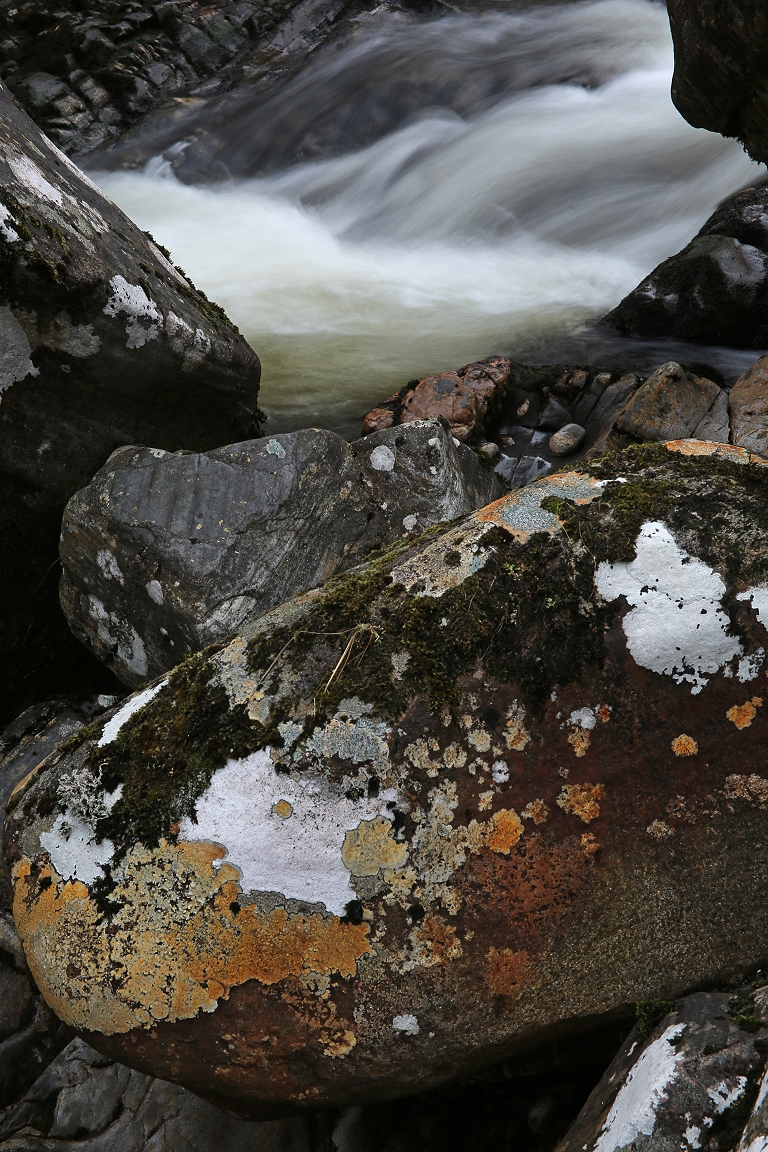
By this time it was late in the afternoon, and I had still only got part of the way up the burn inside the Meallan exclosure – I’ll need to make at least one more trip there to continue my explorations further upstream.
If you’d like to get up close to Nature with me some time, why not book on to our special Conservation Week of that name, which is running from 7th – 14th September this year?
To finish with, here’s a compilation of some of the day’s video footage:
[jwplayer config=”alan29may” file=”http://www.alansblog.org.uk/alan5apr13a.mp4″ html5_file=”http://www.alansblog.org.uk/alan5apr13a.mp4″ image=”http://www.alansblog.org.uk/alan5apr13a-preview.jpg”]
Hi, I came across your blog after reading today on the Walkhighlands website of the devastation caused by contractors installing this and another micro scheme in Glen Affric. As a hillwalker I have walked up this small glen a number of times in the past and was struck by the wild beauty of the upper part and in particular the natural forest regeneration scheme in the lower glen. To destroy this lovely place is a crime. The damage caused will take decades to heal and no doubt there will be a service road bulldozed through the trees and left there for ever. Wild places where you can go for peace and quiet and marvel at nature are becoming rare and future generations will never know the beauties that our generation knew.
I have enjoyed reading your blog, it has given me an insight into parts of the glen that I didn’t know existed.
Hi Alan
Thanks for an interesting read as always.
Best wishes
Ron
Hi Ron, Thanks for your feedback, and for all your support for our work – I really appreciate you featuring our press releases on your website.
With best wishes,
Alan
Thanks Alan . The lichens and rocks are stunning and I enjoyed the flowing water.
Hi Joan, Thanks for the feedback. There’s more flowing water, lichen and rocks coming up in the next blog as well!
With best wishes,
Alan