After a busy week in the office, and two weeks since my last dedicated photography day out in the forest, I was looking forward to some quality time out in Nature. So on Saturday I headed to Glen Affric again, on an overcast but dry day, with the vague intention of continuing my exploration of the Abhainn Gleann nam Fiadh burn, which I’d visited a couple of times in the past few weeks.
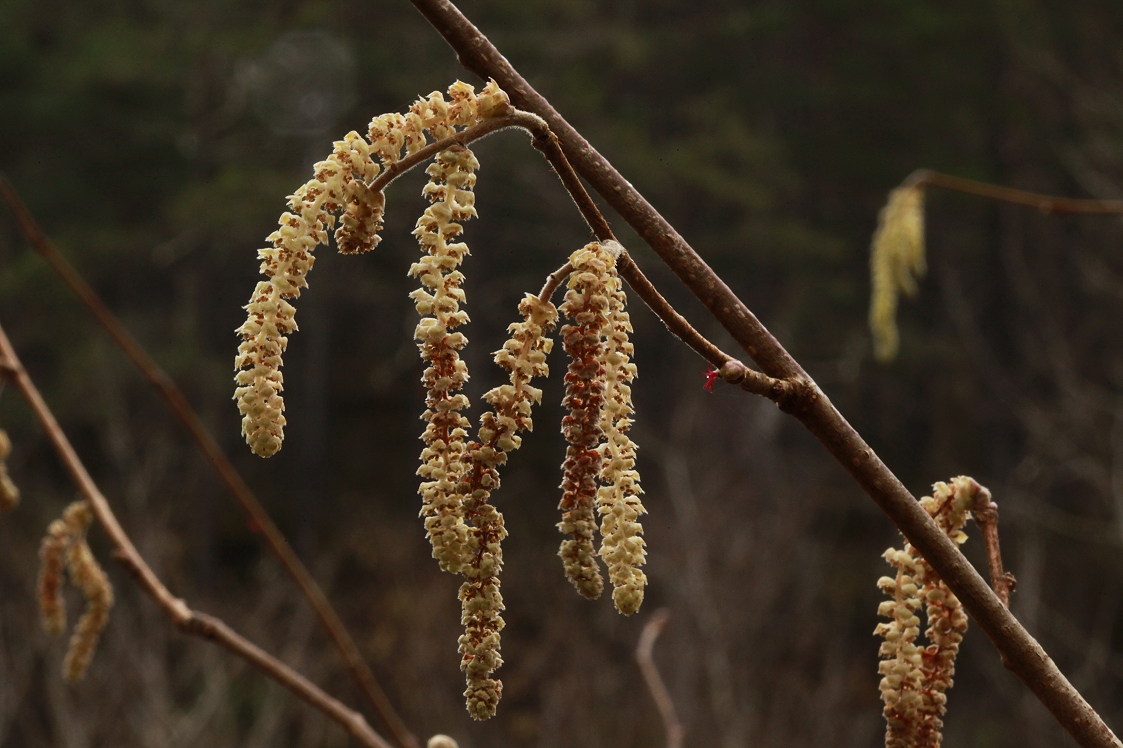
However, having seen the catkins of hazel trees (Corylus avellana) out in many areas along the way, I decided to have a close look between Badger Falls and Dog Falls in the glen, as that’s the main area where hazel occurs in Affric. Driving along that section of the road I saw a few catkins just opening on some of the hazels, and then saw one young hazel that was covered in fully open catkins, so I made that my first stop of the day.
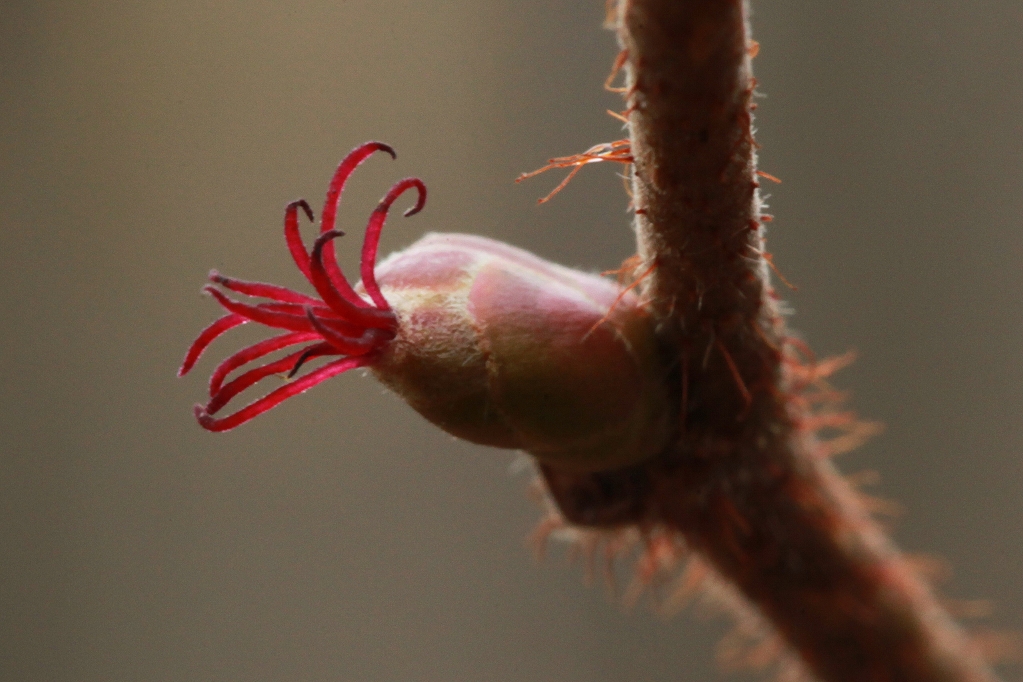
Catkins move in the slightest breeze, making it very hard to take still photos of them, but there was very little wind when I arrived there, so it was a good chance to get some photographs of these early signs of spring. I was able to get some images of both the catkins, which are male and release pollen, and also of the tiny female flowers which are red, and, upon pollination, grow on to produce the tree’s fruit – ie hazelnuts.
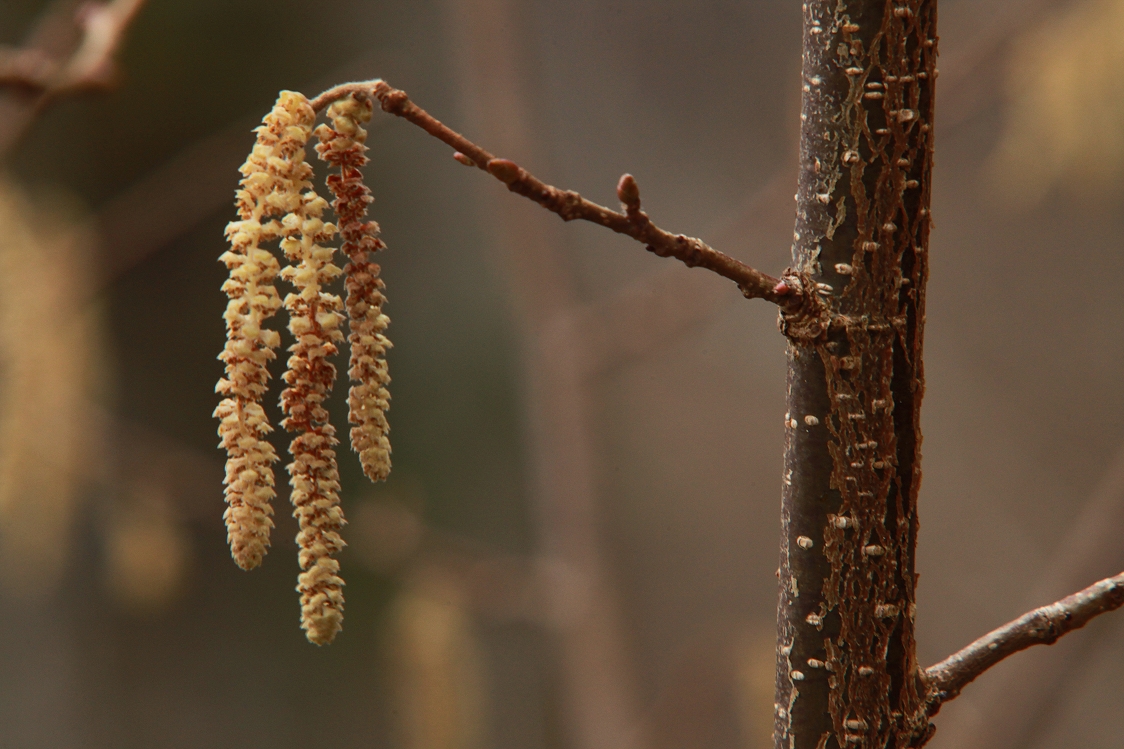
This particular hazel was young and very healthy-looking and vigorous in its growth, and was more advanced in terms of its catkin production than any other that I saw during the day. Interestingly enough, the tree was growing out of the wall embankment on the downslope side of the road, so it may be that this south-facing spot, plus the mineral soil that must have been used as fill when the road was put in, had given the tree an advantage.
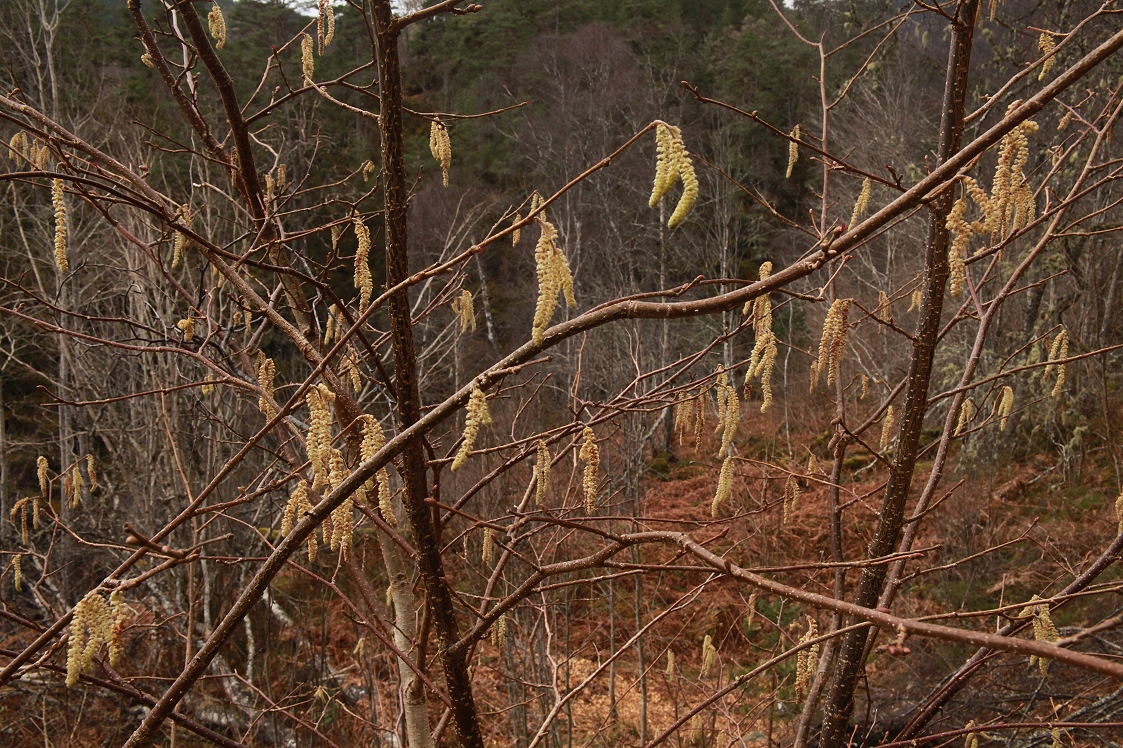
Whatever the reason, it was loaded with catkins, and by standing on the parapet at the edge of the road, I was able to be in amongst the catkins and get a feeling almost of being part of the tree – I got odd looks from the people in the one or two cars that passed by while I was there! I’m always in awe of how these delicate and seemingly very fragile catkins can emerge from their buds and the tough wood of the hazel stems themselves – it seems to me to be one of the miracles of Nature.
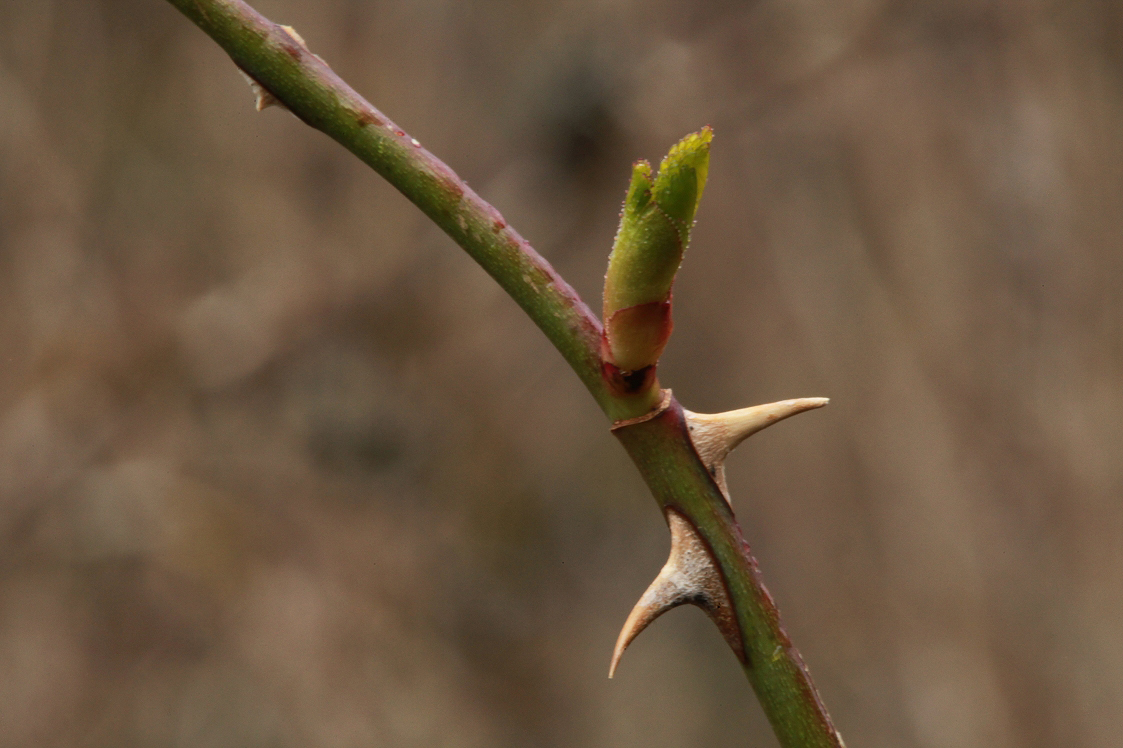
I spent over an hour with this one hazel, taking a number of photographs, and having to wait sometimes for the breeze to stop, so that the catkins wouldn’t become blurred in my images. Heading back along the road to where I’d left my car, my eye was caught by another sign of spring – a bud opening on a dog rose (Rosa canina). On this, the tender and delicate new growth of the bud contrasted not only with the tough woody stem, but also with the sharp, curved thorns as well.
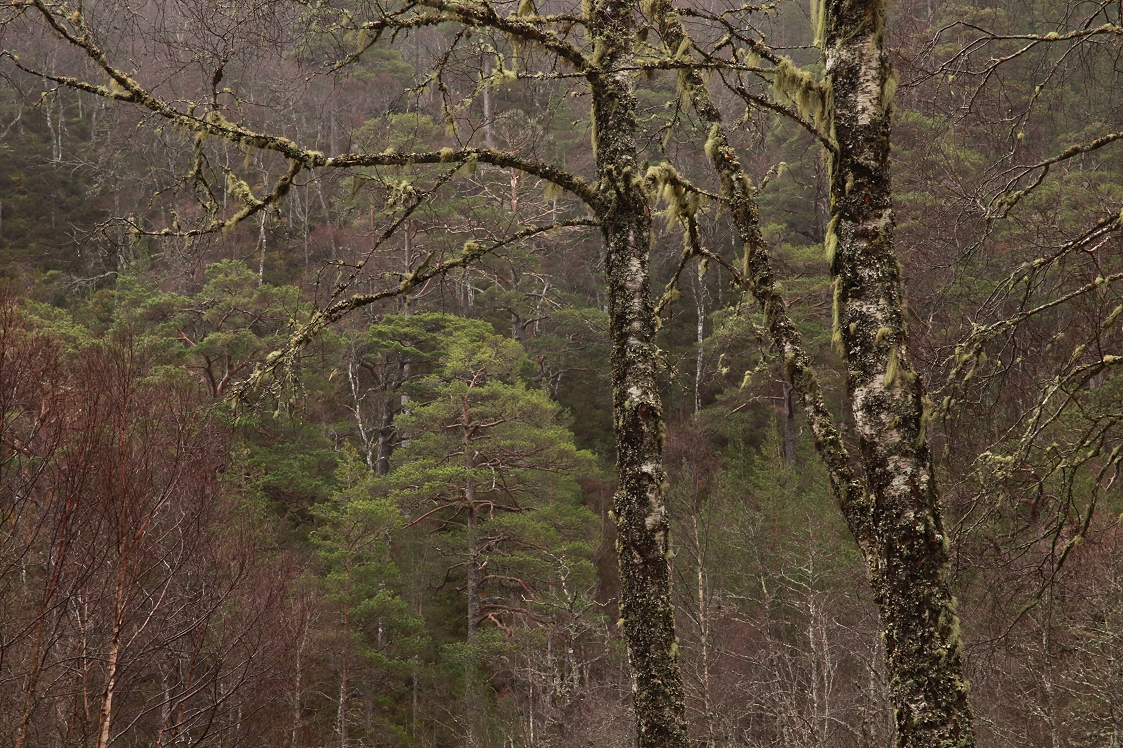
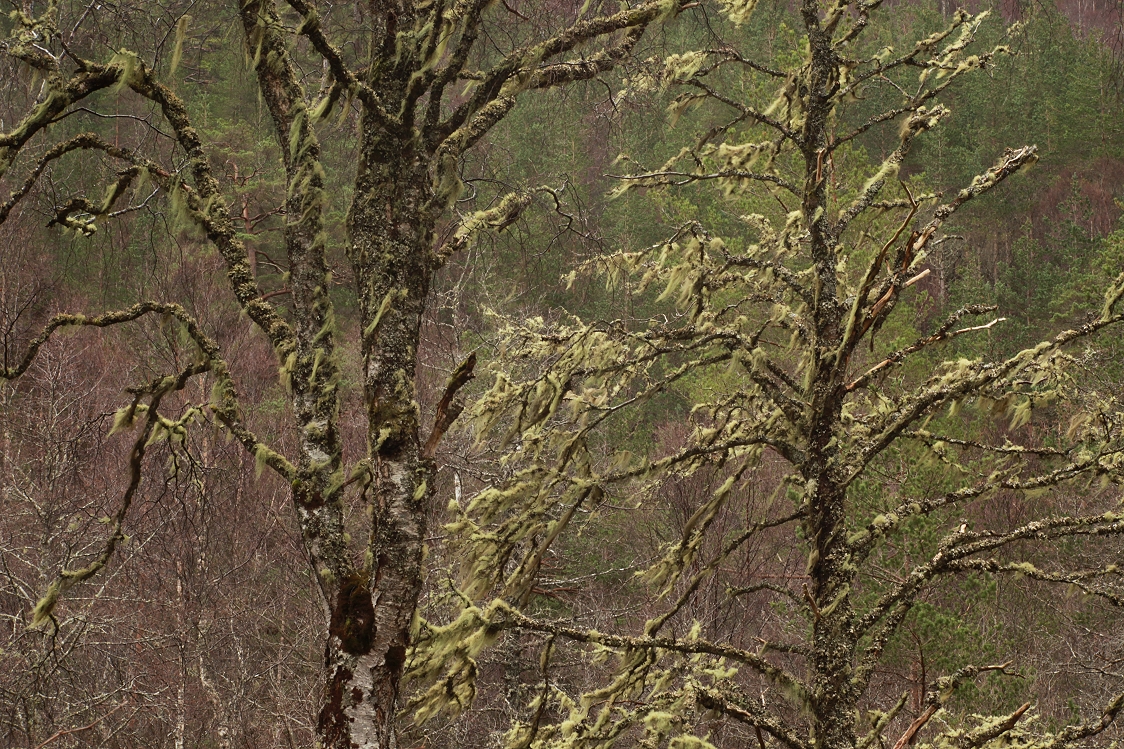
I continued on to the Dog Falls car park, where Forestry Commission Scotland, who manage the Glen Affric National Nature Reserve, have been installing new visitor information boards and some composting toilets. I had a look around at the work, which wasn’t finished yet and enjoyed looking at some birches and alder trees that were festooned with beard lichen (Usnea filipendula) while I had my lunch.
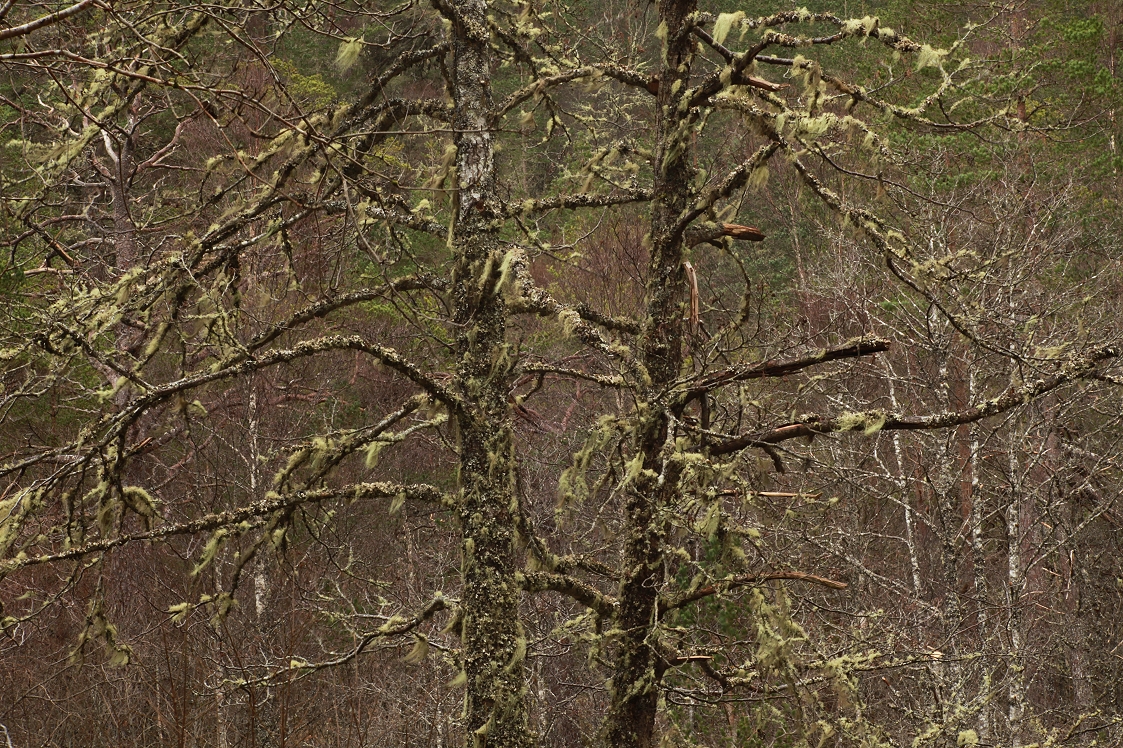
Although the glen is relatively open at this point (unlike further downstream at Dog Falls itself, where the narrowness of the gorge creates a temperate rainforest micro-climate), the spray from the water gives rise to regular humidity in the air, thereby enabling an abundance of lichens to flourish on the trees. Much of this is comprised of beard lichen, and it brings a lot of character to the trees it is growing on.
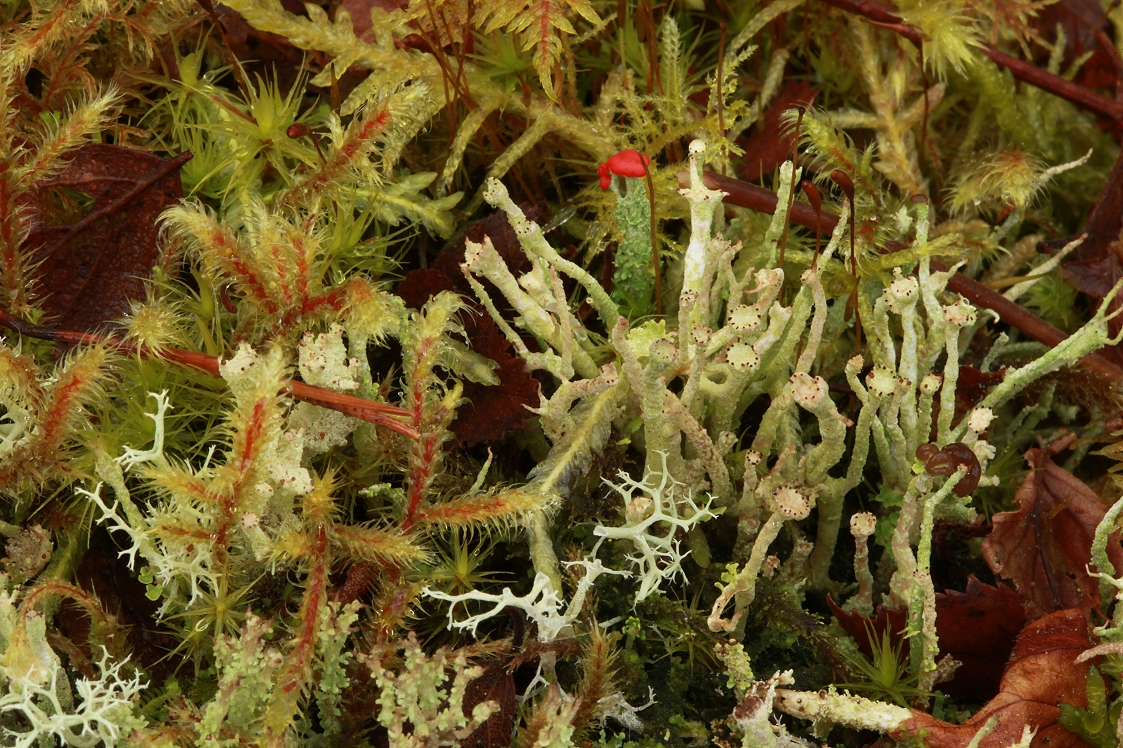
Nearby, the overgrown stump of an old fallen birch tree drew my attention, as it had a profusion of moss and lichens growing on it. The bright red apothecia or fruiting body of one species of Cladonia lichen was growing amongst two other different species of Cladonia, interwoven with a clump of big shaggy-moss (Rhytidiadelphus triquetrus). They formed what looked like a miniature forest landscape, in which the moss and lichen podetia (or fruiting stalks) were the tiny trees.
In between the still photographs, I had also been shooting some more video:
[jwplayer config=”spring2012_affric” file=”http://www.alansblog.org.uk/spring2012_affric1.mp4″ html5_file=”http://www.alansblog.org.uk/spring2012_affric1.mp4” image=”http://www.alansblog.org.uk/spring2012_affric1_preview.jpg”]
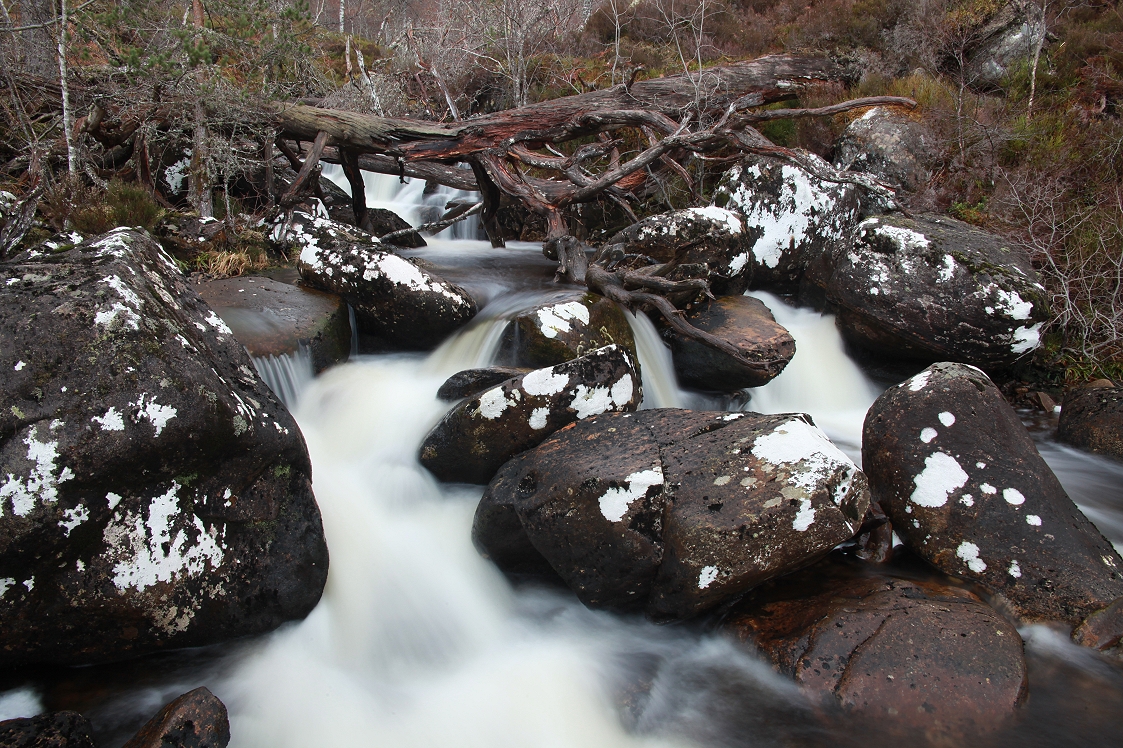
By now I realised it didn’t make sense to follow my initial intention of exploring the Abhainn Gleann nam Fiadh burn, as there wasn’t enough time for me to drive to where the road crossed the burn and then walk up to the part I hadn’t yet visited. Instead, I decided to spend the rest of the day on the Allt na Imrich burn, which also flows into Loch Beinn a’Mheadhoin, but was nearer to where I was, and has a gorge on it closer to the road as well.
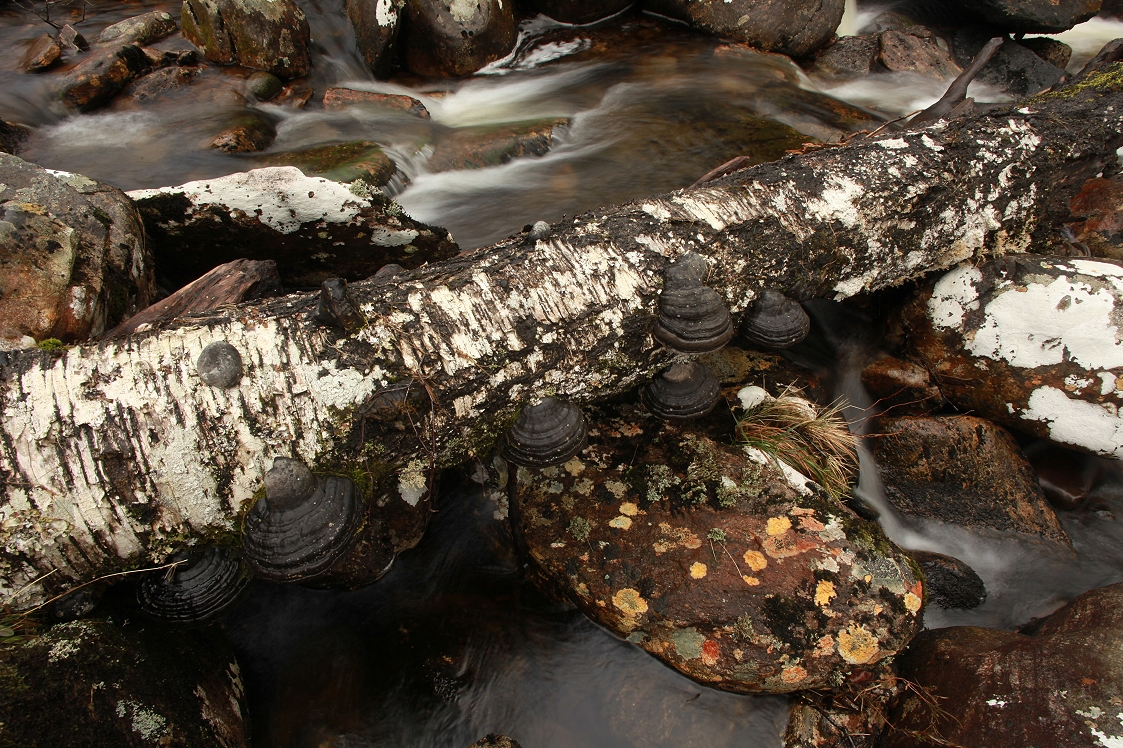
As it turned out though, I never even reached the gorge, as I was attracted to a long narrow island on the lower stretch of the burn, about 150 metres upstream from the road. As I was walking up the burn, I saw a large birch log, washed up on the upstream end of the burn, with a number of tinder fungi (Fomes fomentarius) growing out of it. There were also some interesting looking lichen-covered rocks nearby, so I found a place where I could ‘rock-hop’ over to the island, to take a closer look.
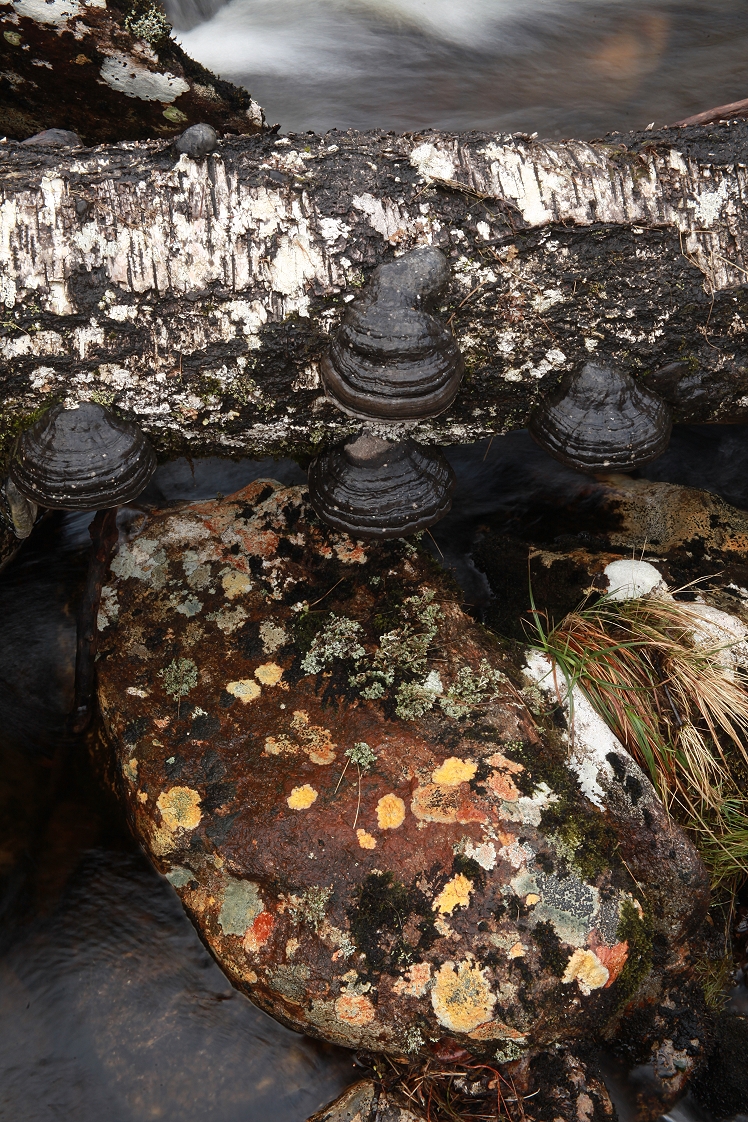
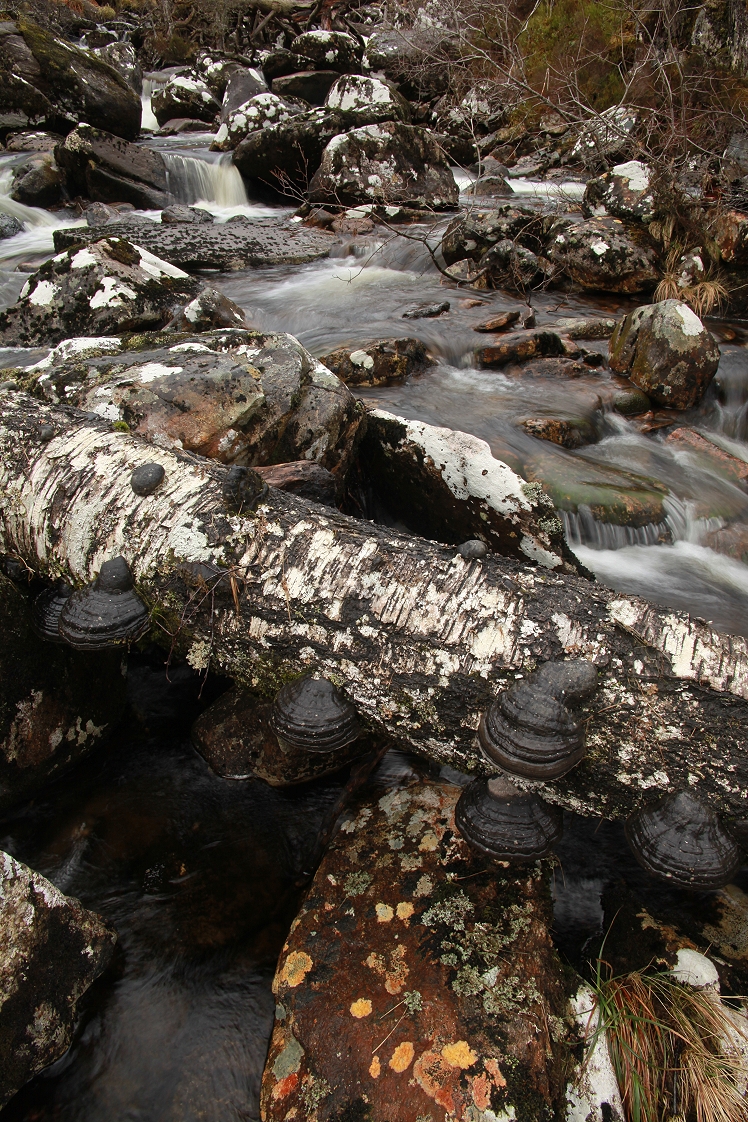
The birch log being in this place was probably the result of two types of natural disturbance acting together – high winds which blew the tree down, and then floods which carried it into the burn and down to this point where it became stranded on the rocks at the upstream edge of the island.
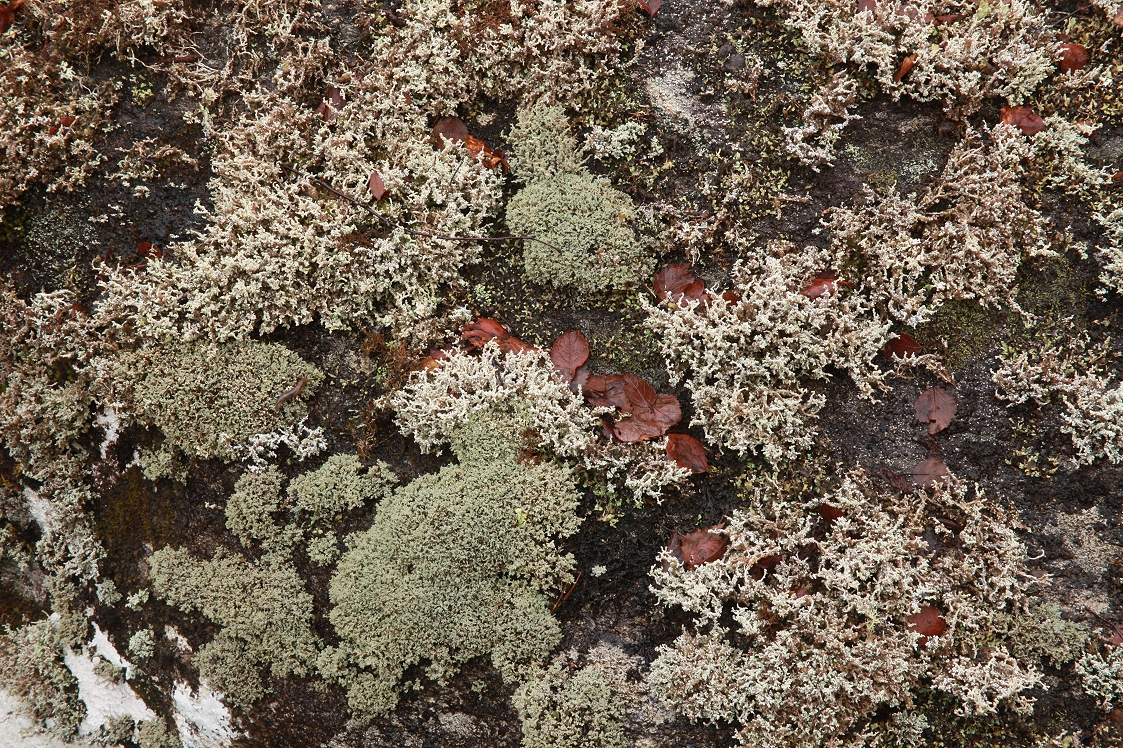
Such combinations of disturbance factors create unusual niches and mini-habitats in the ecosystem, and it was unusual to see tinder fungi fruiting in the middle of a watercourse like this. I spent some time looking at the log, and also at the wonderful lichen gardens growing on the large rocks nearby. Some of the lichens looked like miniature corals, in terms of their shapes and branching growth.
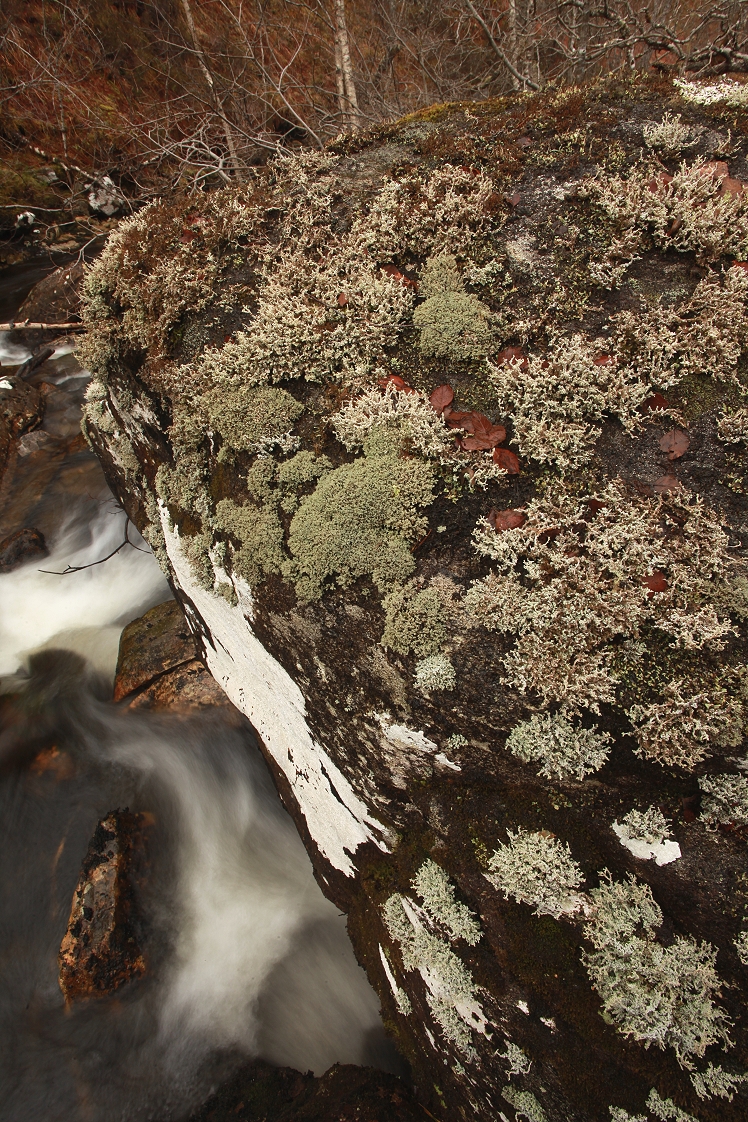
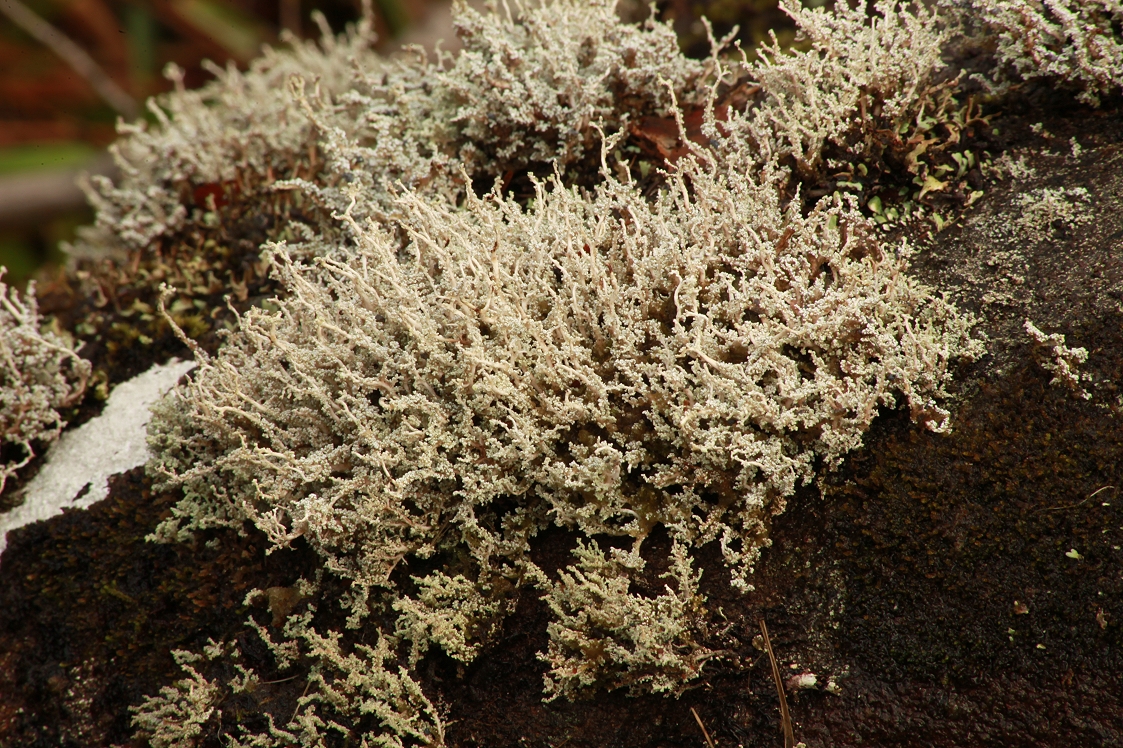
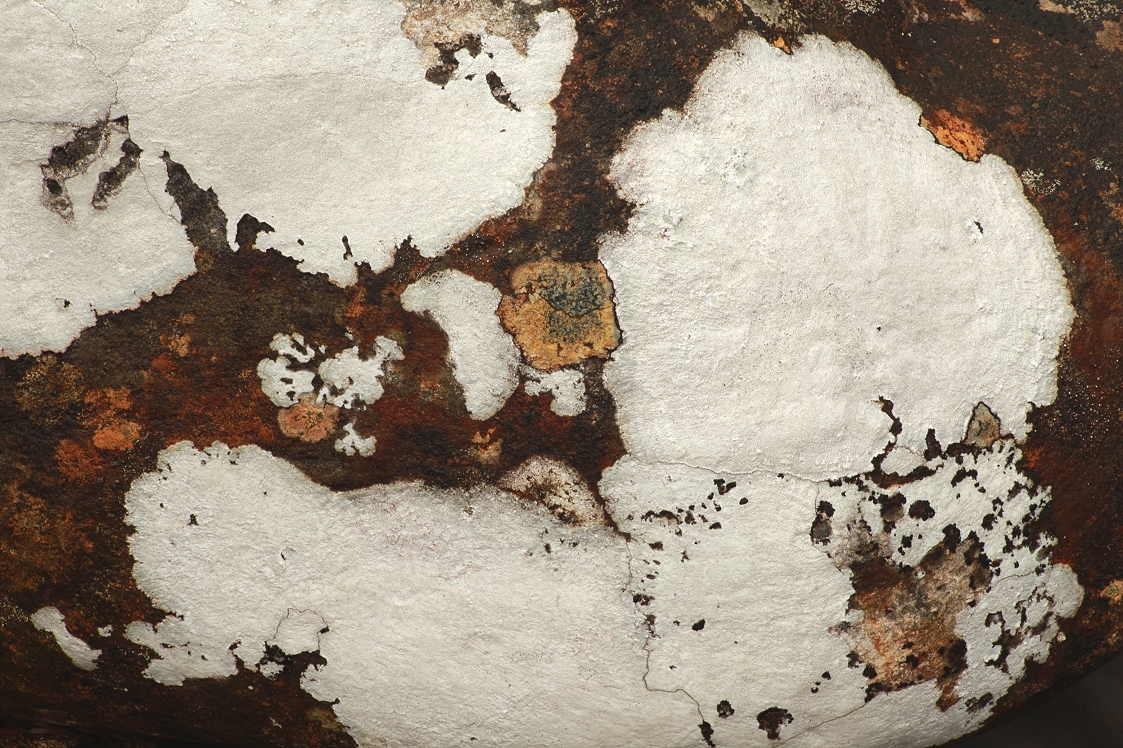
Other rocks just had crustose lichens on them – those which grow flat or flush against the rock itself – and these completely covered the rocks, so that the original colour of the mineral surface was invisible, underneath the lichens.

About 20 metres upstream from the birch log with all the tinder fungi on it, another tree had fallen across the burn. This was a large Scots pine, and it looked like it had been there for some years, as the bark and small branches were all gone from it. Dead pines like this can persist for decades, due to the resin in the wood acting as a natural preservative. Studies in the Pacific Northwest of North America have shown that coarse woody debris in rivers plays an important ecological role, slowing down the flow of water and creating ideal breeding sites for fish such as salmon. That’s not quite so relevant here, as Atlantic salmon are naturally absent from Glen Affric – the waterfalls at Badger Falls and Dog Falls on the Affric River are too high for migratory salmon to ascend.

The dead pine will probably stay there, across the burn, for several more years at least. It will take a long time to decompose and break down into smaller pieces that can be carried further downstream by floods. It will be interesting to return to this spot on an occasional basis, to document the changes that take place with this large log, and to see how long it plays a role as an obstacle in the burn itself.
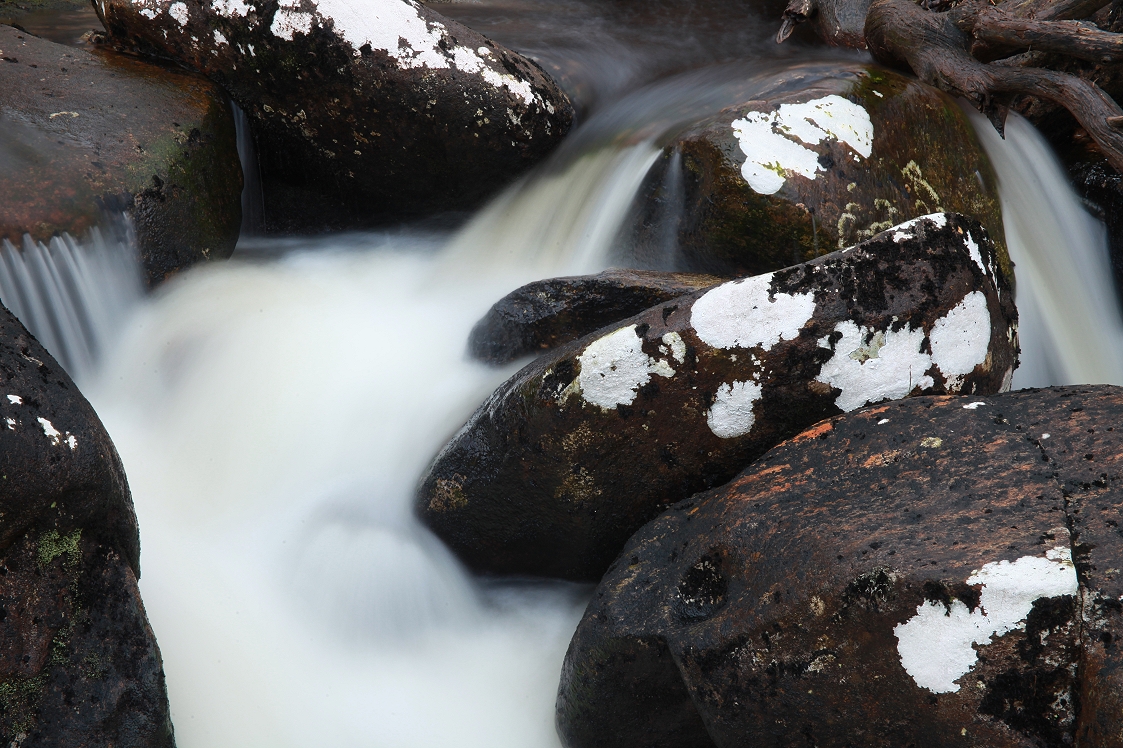
While the water will assist in the breakdown of the log fairly rapidly (in terms of ecosystem time-scales), it is also having a similar effect, over much longer time frames, on the rocks in the bed of the burn. These are eroded and rounded very gradually, over millennia, as the hard mineral structure gives way to the relentless pounding and pummelling of the cascading water. The crustose lichens growing on them will flourish for a while, before an exceptional flood at some stage will grind the rocks together, removing them in the process. The cycle will then repeat as new lichens become established on the freshly-exposed rock surfaces. Nature is all about constant change, even though it sometimes operates on time scales far beyond individual human lives.
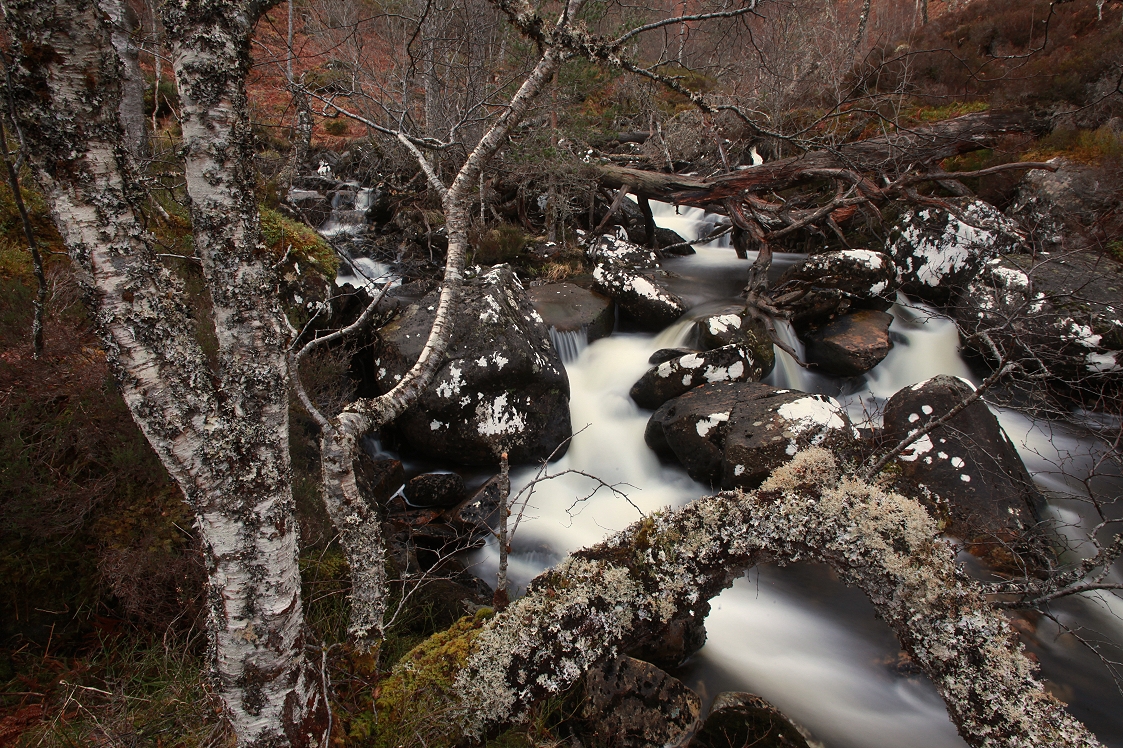
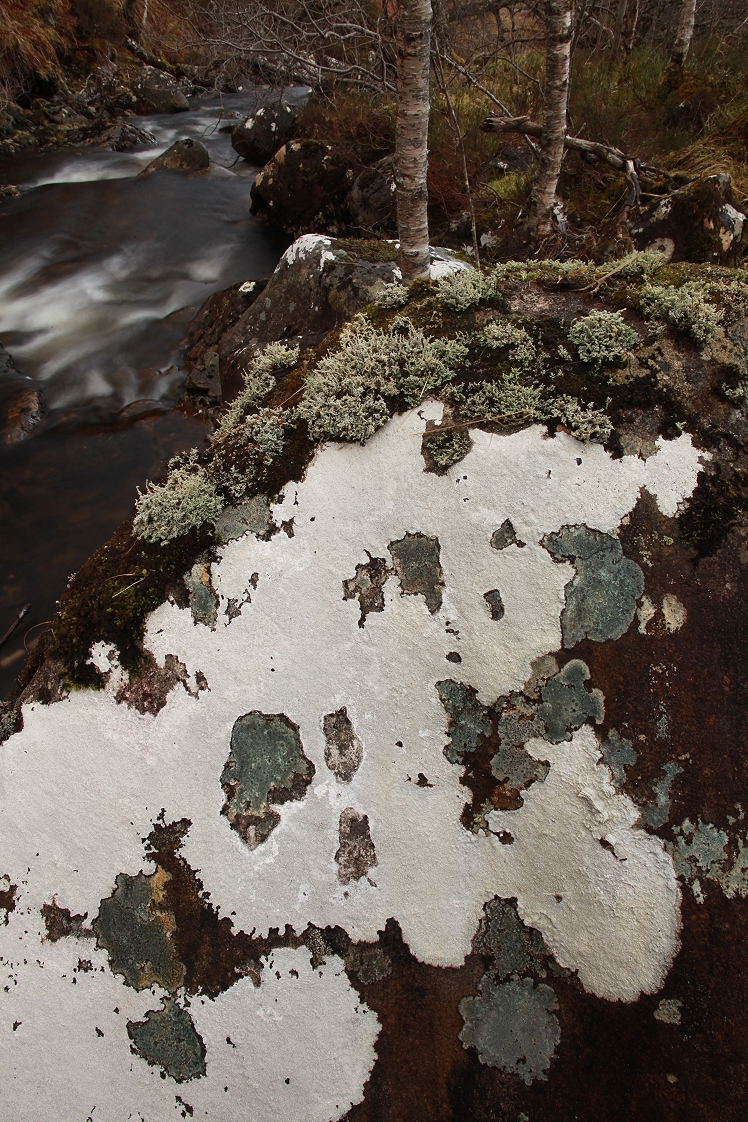
Once again, I hadn’t covered a lot of distance on my day out in the forest, but I had found plenty of interest in the small areas that I’d explored. I also shot quite a lot more video during the day, so I’ll finish this blog entry with another compilation clip of some of the footage:
[jwplayer config=”spring2012_affric” file=”http://www.alansblog.org.uk/spring2012_affric2.mp4″ html5_file=”http://www.alansblog.org.uk/spring2012_affric2.mp4” image=”http://www.alansblog.org.uk/spring2012_affric2_preview.jpg”]
Thanks for this, Alan. Seeing the video is great with all the sounds and images. It really transports me there. Lovely and sunny as Headingley is today, it’s not quite Glen Affric and there ain’t much beard lichen!
Thank you for everything TFL has done and continues to do for and on behalf of all of us.
Jim Kieran.
Hi Jim, many thanks for your comments – it’s great to get appreciation like that. Quite a few people have been giving positive feedback about the video clips, so I’m aiming to shoot some each time I’m out now. I note you’re in Headingley – I’ll be in Leeds next month as part of the lecture tour I’m doing around the UK, to celebrate the planting of our millionth tree, so if you get a chance to come to the talk there that would be great.