
I didn’t have a dedicated photography day out in the forest this past week, because I spent two days out with the Findhorn Foundation’s Ecovillage Training programme group, in Glen Affric and at Dundreggan, so this blog entry covers that trip. That programme has been running for 14 years now, and takes place for a month each year in February/March – I’ve done a session with them in each of those years. I’d given this year’s group of 25 people a talk and Powerpoint presentation about the forest and the work of Trees for Life on Wednesday evening at Findhorn.
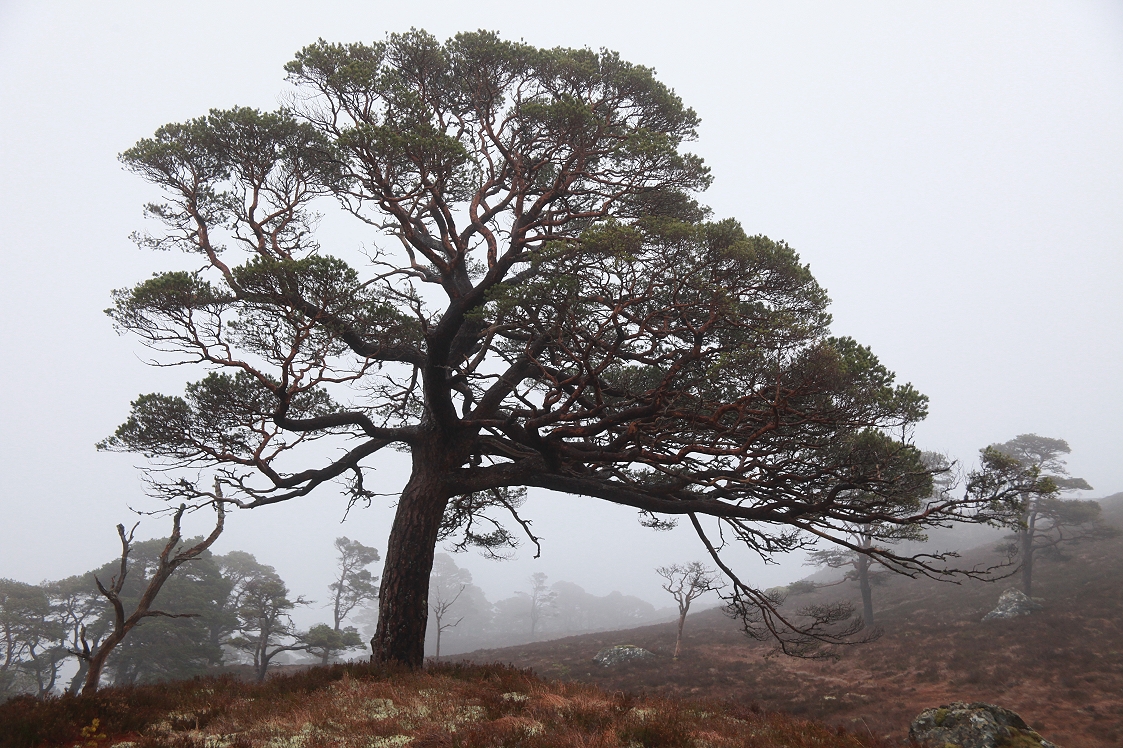
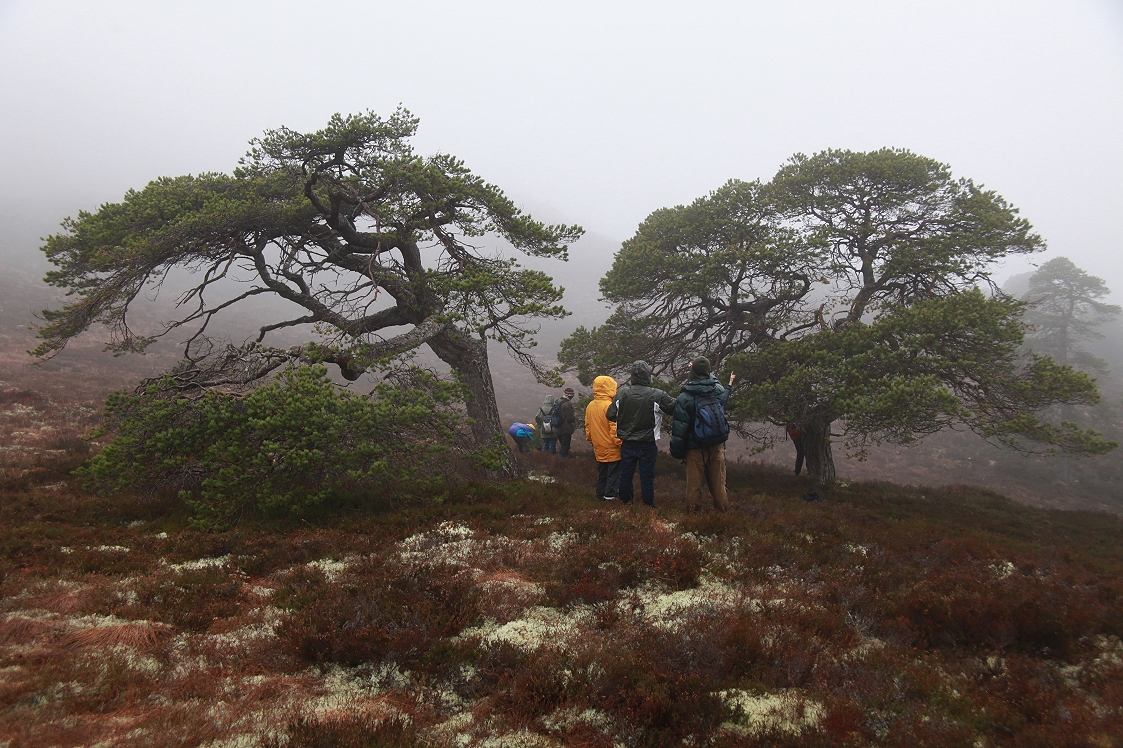
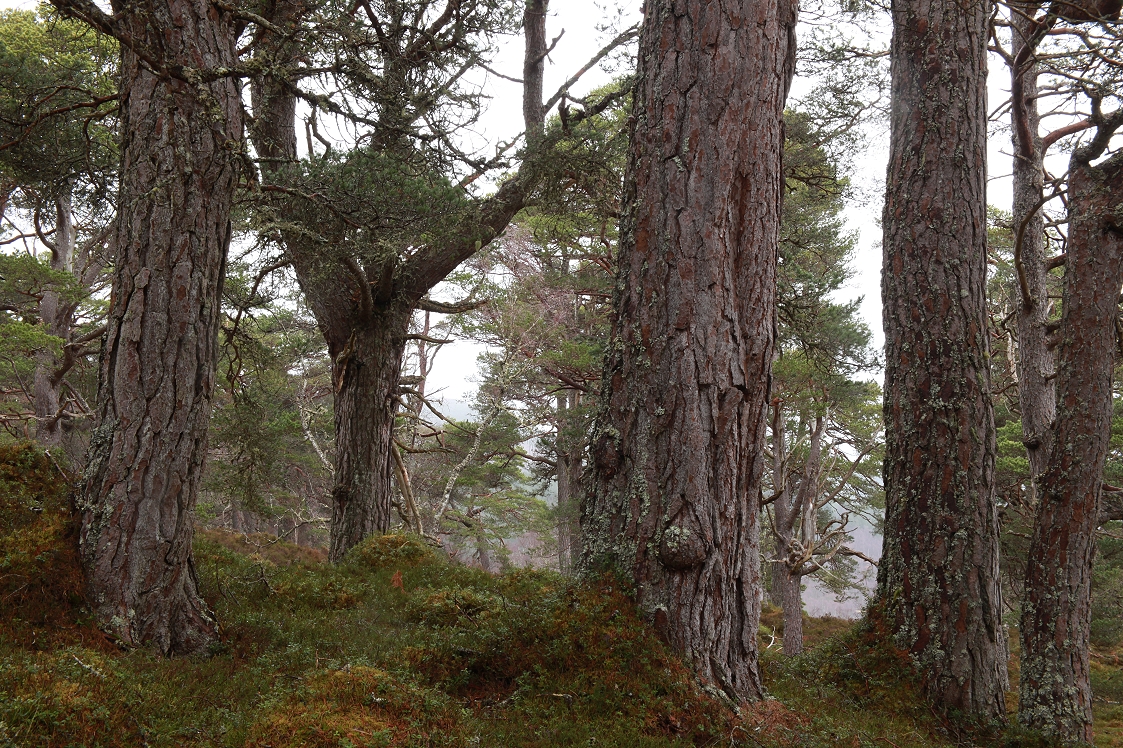
The next morning we set out for Glen Affric, where I took them on the introductory walk we do in the Caledonian Forest at Coille Ruigh na Cuileige, the site of our first major project, when we funded a 50 hectare fence for natural regeneration in 1990. It was a dreich day, with low-lying cloud and a dampness in the air, and as we climbed up through the old Scots pines (Pinus sylvestris) to reach the exclosure, we went into the clouds themselves, so that we were walking in fog. This meant that the normal view down to Loch Beinn a’Mheadhoin was completely obscured, but it created a wonderfully atmospheric ambience in the forest.
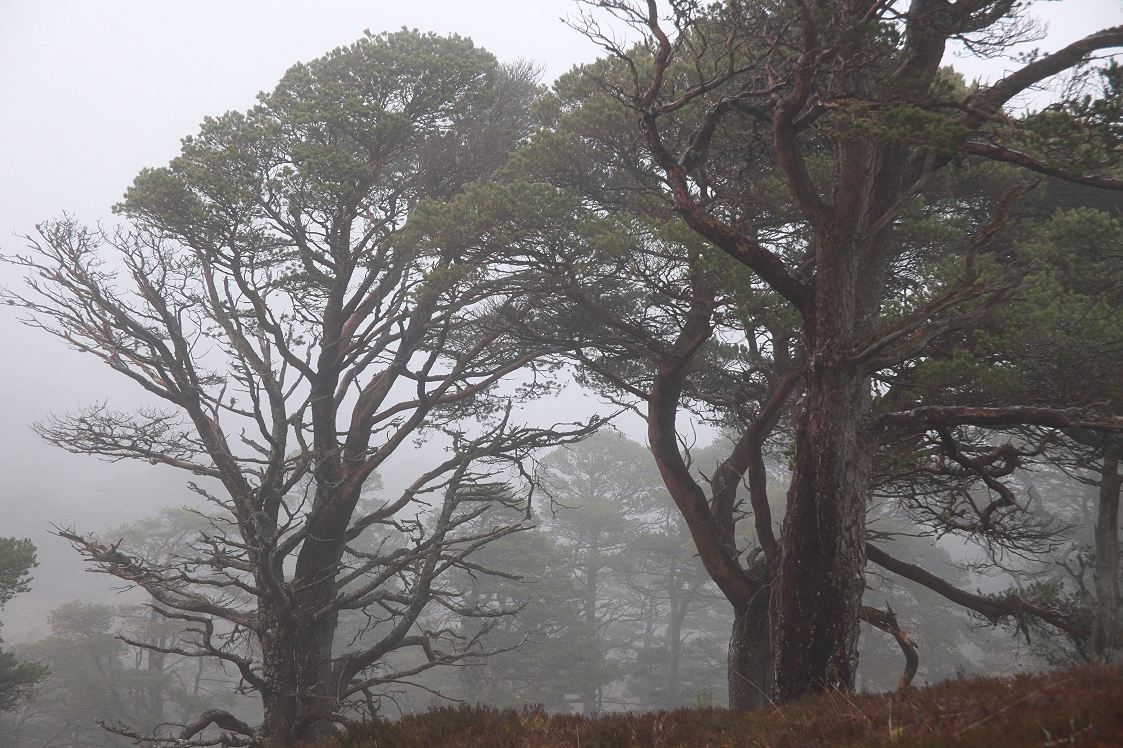
I find these days very evocative and magical, and said to the members of the group how I call them ‘Forest out of time’ days. This is for two reasons. Firstly, the venerable old Scots pines looming out of the fog always make me think of them as being the forest that stretches back through the mists of time, linking with the ancient forest that colonised the Highlands 10,000 years ago, when the glaciers retreated at the end of the last Ice Age. The other reason is of course that many of the surviving forest remnants are literally running out of time, as the old trees are dying of old age, and, in the absence of any regeneration measures, are not being replaced by a new generation of young pines and other native trees.
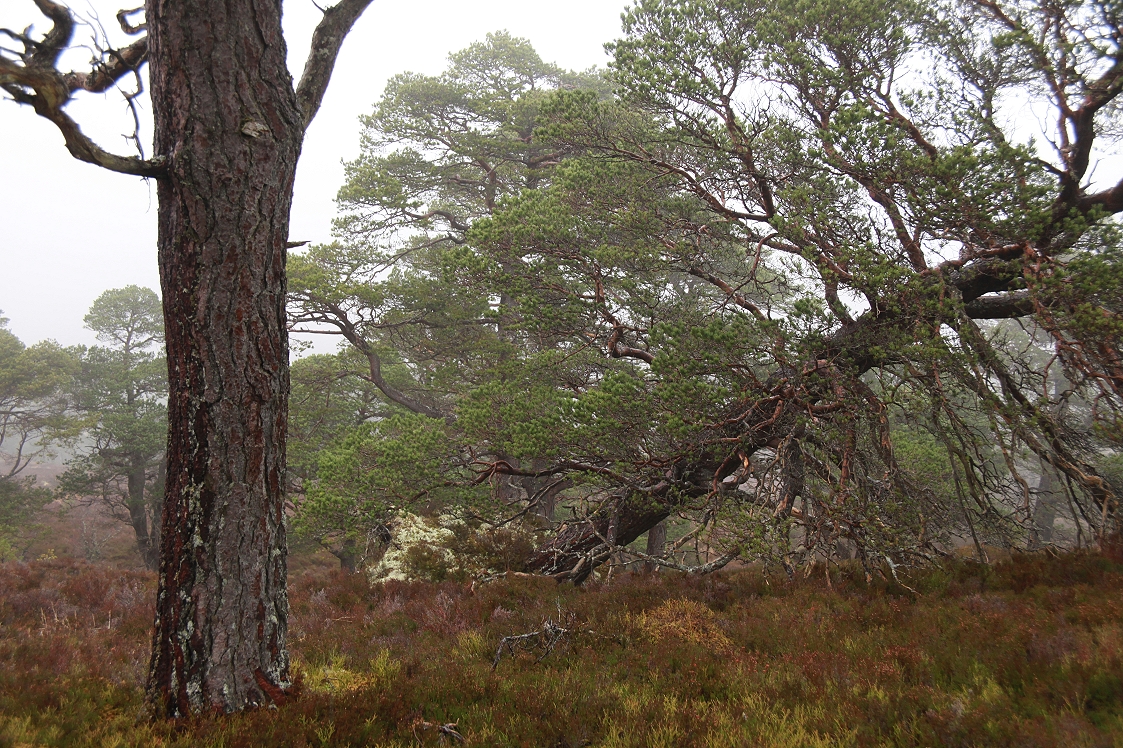
That isn’t the case at Coille Ruigh na Cuileige however, as there’s an estimated 100,000 young Scots pines regenerating there successfully in the 22 years since the fence went up, as well as birches, rowans, junipers and a few other trees such as holly and eared willow. It provides a powerful example of how the old forest remnants respond to the removal of grazing pressure, and it always touches and inspires groups that I take there, such as this one.
In previous years, when I’ve taken the Ecovillage Training groups out to Glen Affric, there’s often been snow on the ground, which was quite exciting as some of the participants have come from countries like Bangladesh, Burma and Sri Lanka and had never seen snow before. However, with the mild weather we’ve had this winter, the only snow visible was a few patches near the top of the high peaks in the glen, which were momentarily visible when the clouds lifted for a few minutes.
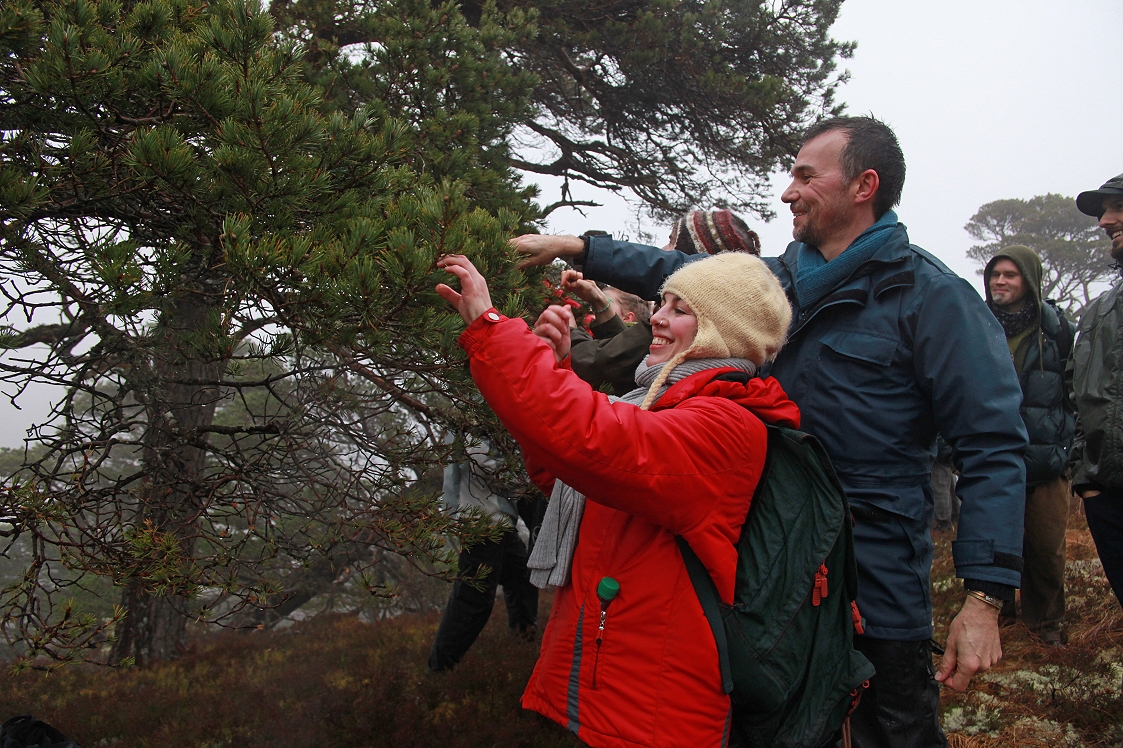
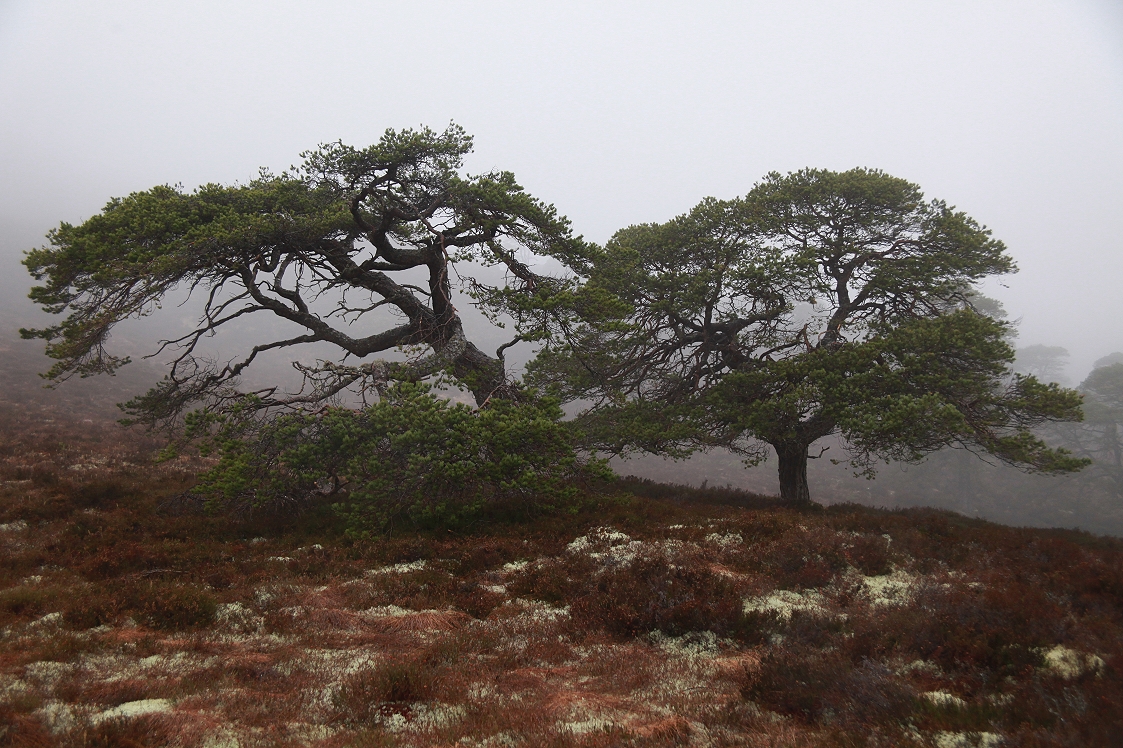
I always like to engage these groups in some practical work during the introductory walk at Coille Ruigh na Cuileige, and early March is a perfect time to collect cones from the pines, to extract the seed for propagating new trees. Higher up in the exclosure, many of the trees are growing in a smaller and spreading form, because of the exposure, and this means that many of their branches are reachable from the ground, so cones can be collected without the need to climb the trees.
The cones of Scots pines take two years to ripen, after being wind-pollinated in the late spring. They open whilst still on the trees, usually in late April and early May in our area, when the days get sunny and warm, and the seeds, which have a small wing on them and fly like miniature helicopters, are released to get carried on the wind away from their parent tree. Collecting the cones before they open means they are still full of seeds, and putting them in a warm place for a week or two encourages them to open so that the seeds can be collected and put in the soil in a nursery to germinate.
By this time the slight precipitation from the fog had turned into rain, and some members of the group had already gone back down to the car park beside Loch Beinn a’Mheadhoin, where our minibus was parked. Some more energetic people had climbed up to the very top of the hill, above the exclosure, so when they returned I headed down as well with the remaining people. Back at the minibus we drove down to the Bearnock hostel in upper Glen Urquhart, where we spent the night.
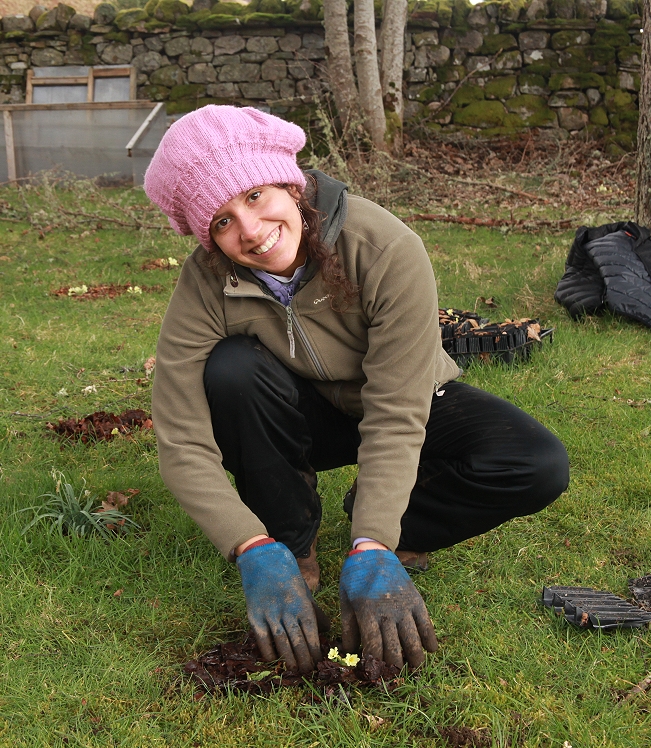
The next day we drove to Dundreggan, where the group had a chance to see the wild boar (Sus scrofa) getting their morning supplementary food, and Steve Morris, our Operations Manager for the estate, explained the boar’s role in clearing bracken (Pteridium aquilinum) and creating the exposed soil conditions that are ideal for tree seeds to germinate in. After that it was time for the group to do some practical work for a few hours and we had three different tasks lined up, so that all 25 of them could make a personal contribution to the restoration of the Caledonian Forest. One task was to plant out some bluebell bulbs and primrose plants, which had been grown from seed in our old nursery at Plodda Lodge, under the trees behind the office at Dundreggan, as part of the transformation of the lawn there into a woodland wildflower area.

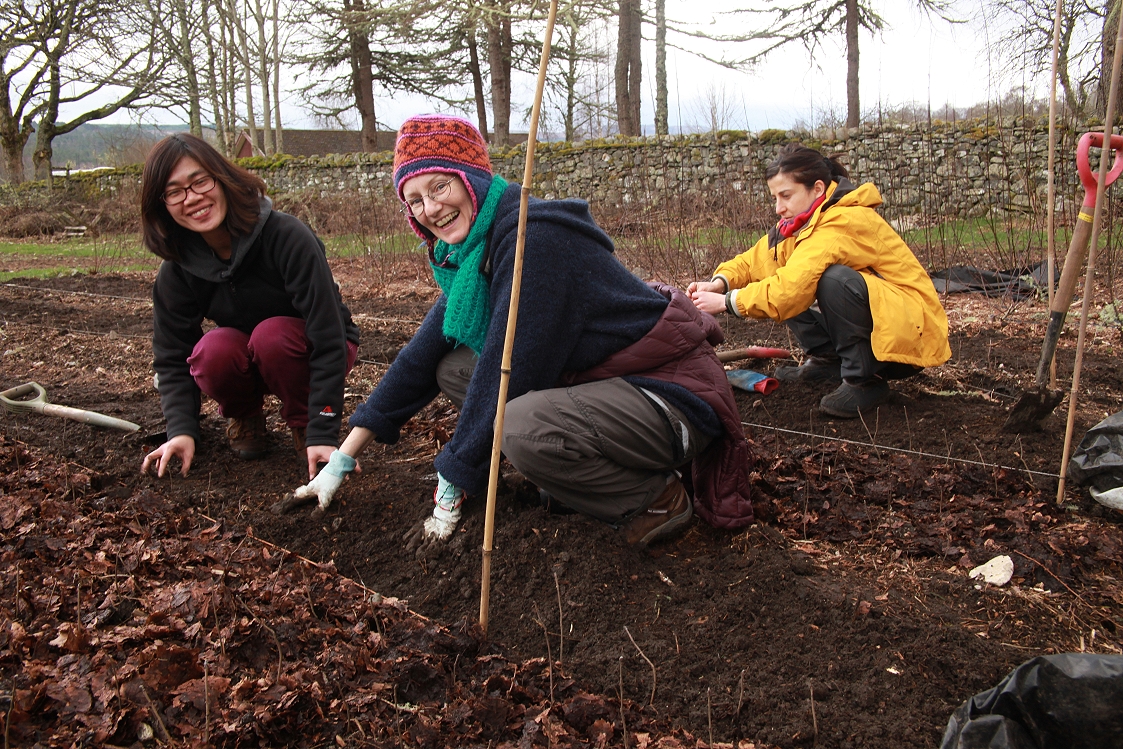
The second task was to line out some rowan seedlings (Sorbus aucuparia) that were already in a holding bed at Dundreggan. These young trees will grow on for another year before being ready to plant out in the Allt Fearna exclosure, where we’ll be establishing a new native woodland of about 70 hectares during the next 3 years. The seedlings needed more space than they’d had before, so they were being spread out in a new area of the holding beds.
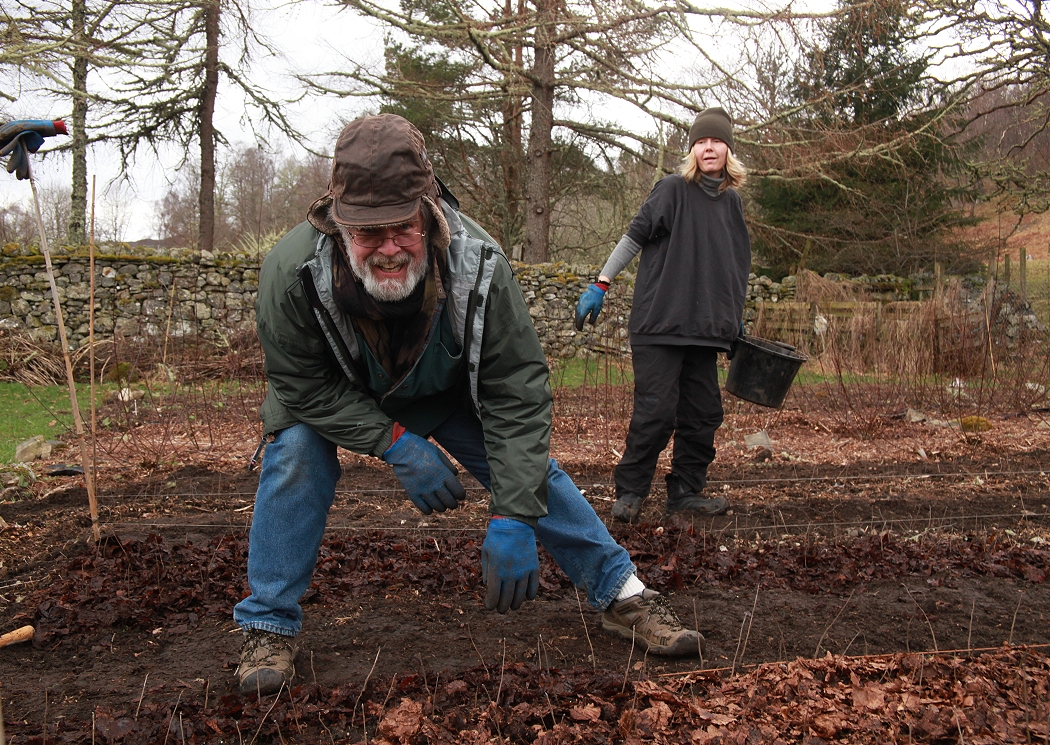
This was being done under the supervision of Jill Hodge, who ran our nursery at Plodda for over 9 years, and is now our project coordinator at Dundreggan. Part of her job now is to set up a new tree nursery at Dundreggan, which we’ve recently received funding for from the UK Heritage Lottery Fund’s ‘Awards for All’ scheme.
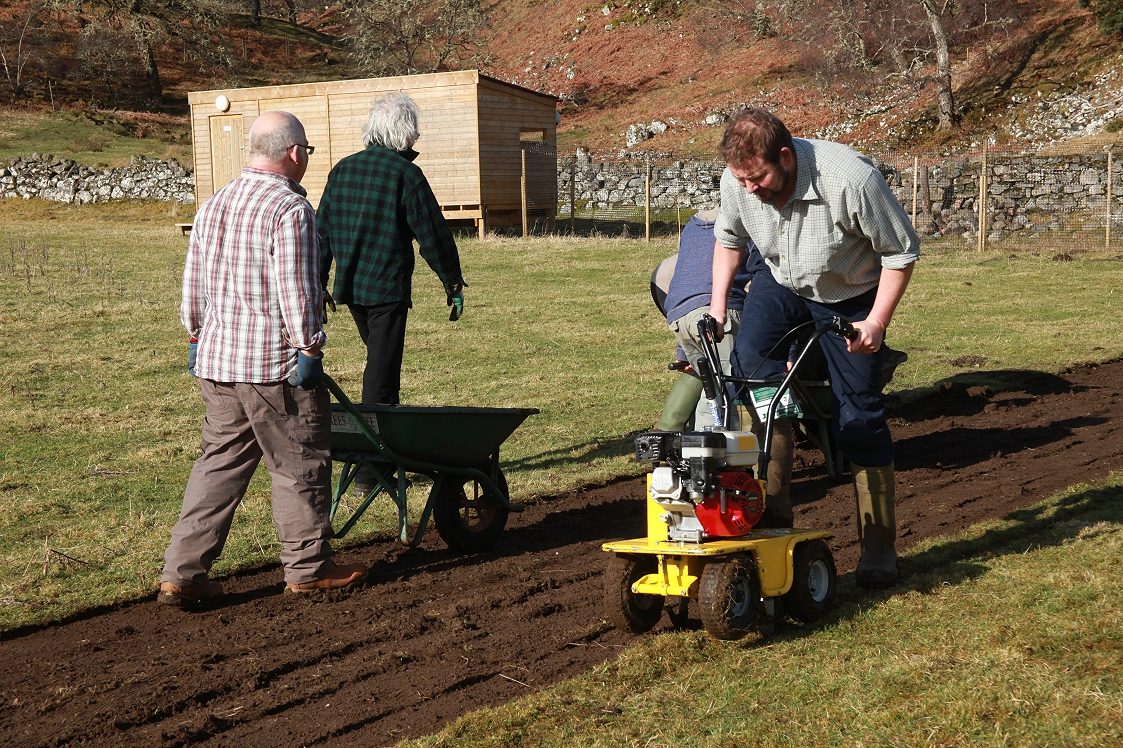
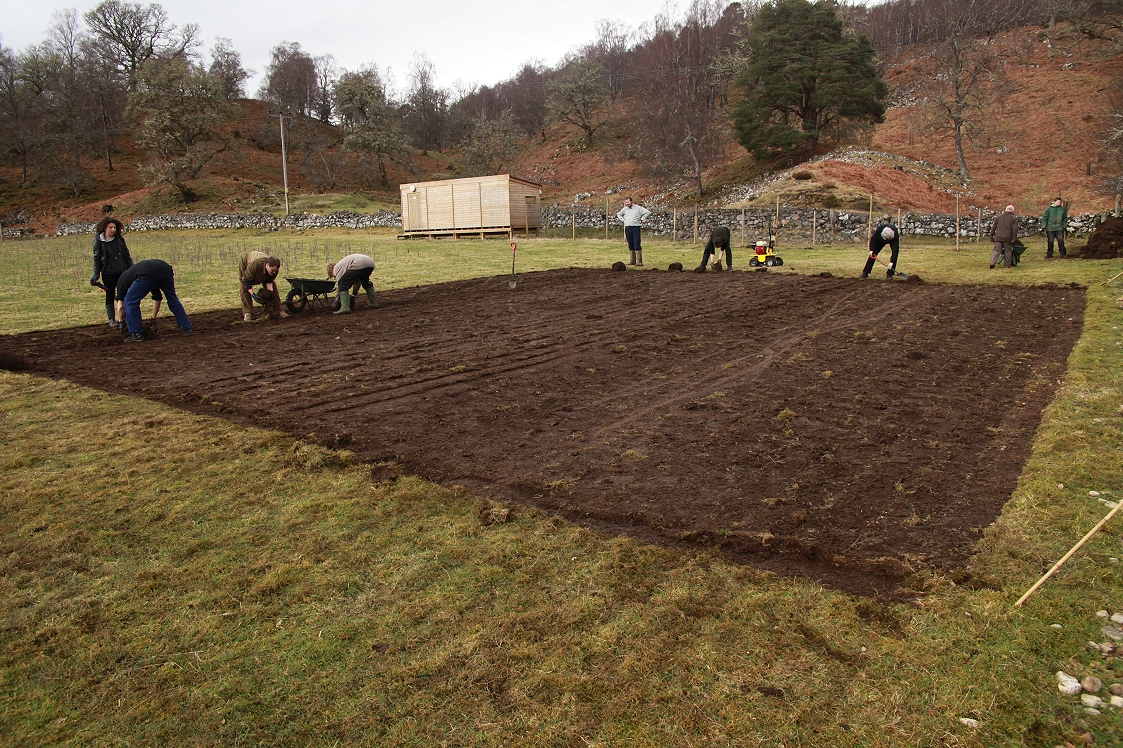
The third task for the day was to clear an area in the field next to the garden and existing poly-tunnel, near the office, for two new poly-tunnels to be erected there. This involved the removal of turf from the area, and Steve had rented a turf cutting machine for the day to help with this. This was the most physically-demanding of the jobs, but working in the sunshine helped, and made a pleasant contrast to the dreich weather of the previous day.
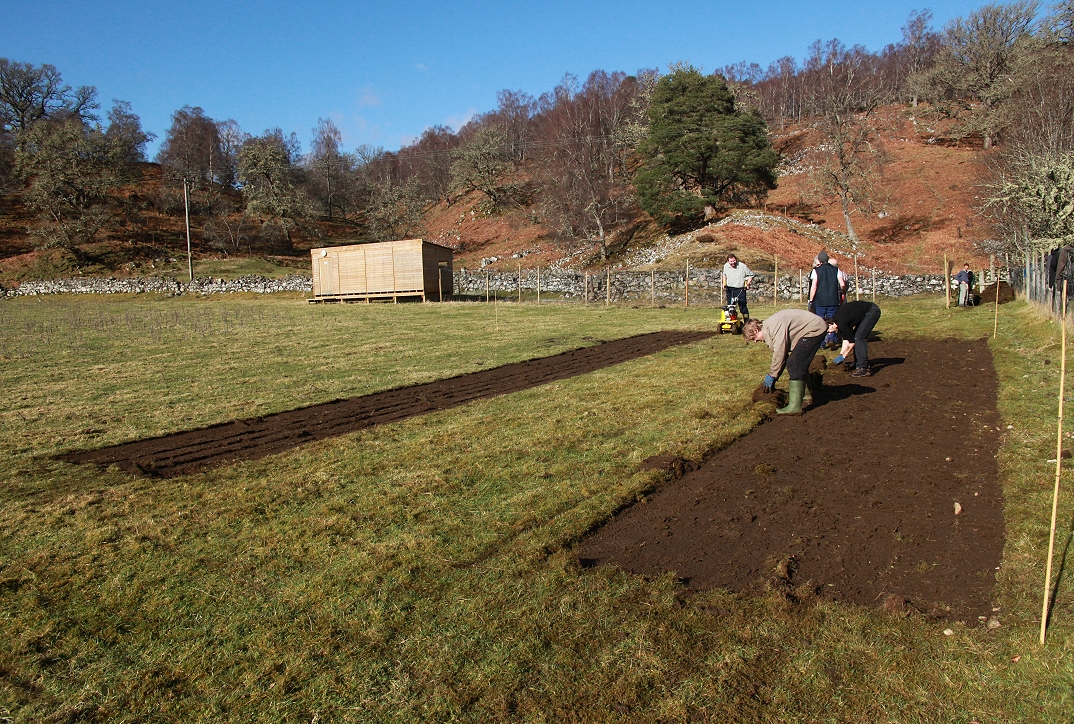
Digging up and removing all this turf by hand would have taken several days, whereas with the aid of the machine it went very quickly, and a substantial difference to the area could soon be seen. The cut turf was stacked in the corner of the field, where it will be left to decompose, and the resultant soil will be used as compost in the nursery in future. After a break for lunch, work continued, with some of the group swapping from one task to another.
An extra job in the afternoon was to begin the propagation of a series of aspen roots that Mick Drury, our Field Projects Coordinator, had recently collected from Rogie Falls (in the north of our Project Area). These root sections are placed in trays of compost in the poly-tunnel, and after a few weeks they send up new shoots that can be cut and grown on as individual trees. We’ve been working with this technique for aspen since 1991, and are one of the major producers of new aspen trees by this method in Scotland.
We finished work at 3 pm, in order to return to Findhorn, where the group was continuing with their programme for another week. I was very pleased to have this time with the Ecovillage Training group again this year, and I hope that some of the participants will get involved (or indeed initiate) forest restoration projects in their own countries when they return home.
Leave a Reply