
After the lecture in Brighton on 19th April, I went up to London for the start of the last week of the Lecture Tour. The talk in London was one of the better attended ones, and the audience included two directors from the company Phoenix Trading Ltd., which made a substantial donation to us recently – they hope to come to the planting of our Millionth Tree itself at Dundreggan on 20th May. It also included Richard Buggs, a researcher at Queen Mary University College in London, who has recently obtained funding for a 3 year PhD project for a student to do work on dwarf birch (Betula nana), that will be based largely at our Dundreggan Estate.
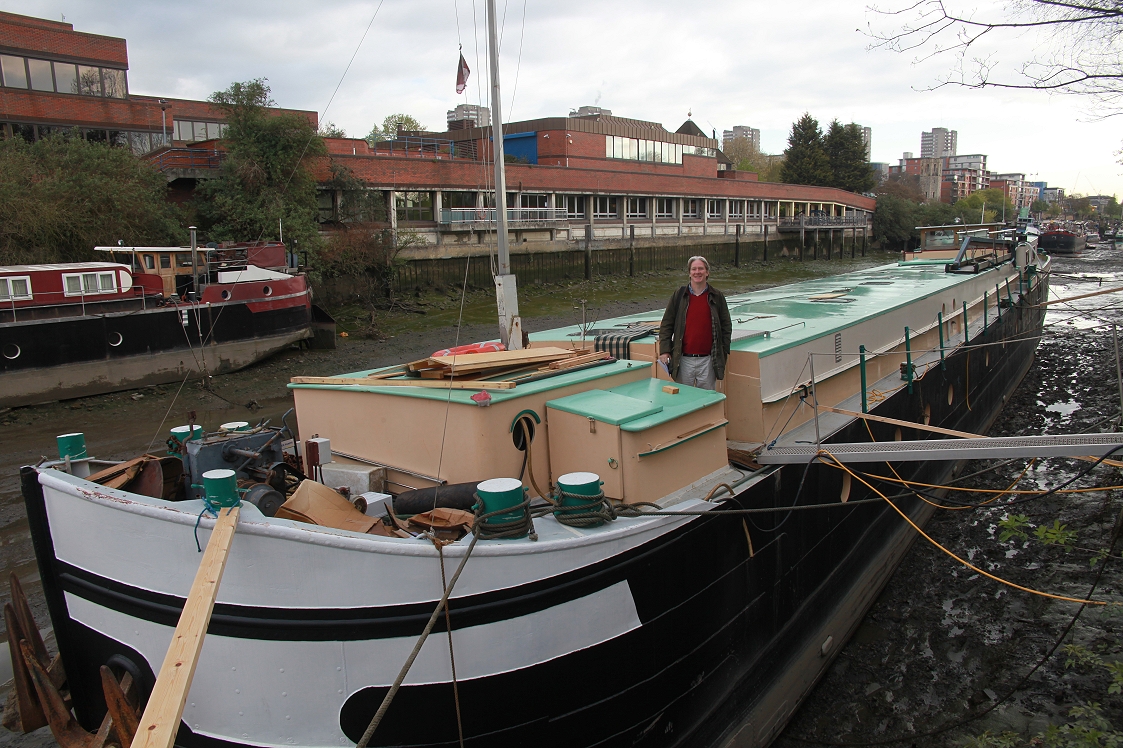
It was also great to meet up with Julie McPhilips at the talk – she’s been coming on our volunteer weeks for almost 20 years, featured in the film we made about the project in 1993, and now focalises some of our volunteer weeks each year. I’d organised for the London talk to be filmed, and this was done by Richard, a friend of Elmer Postle, another long-term Trees for Life supporter who did some of the camera-work on our 1993 film.
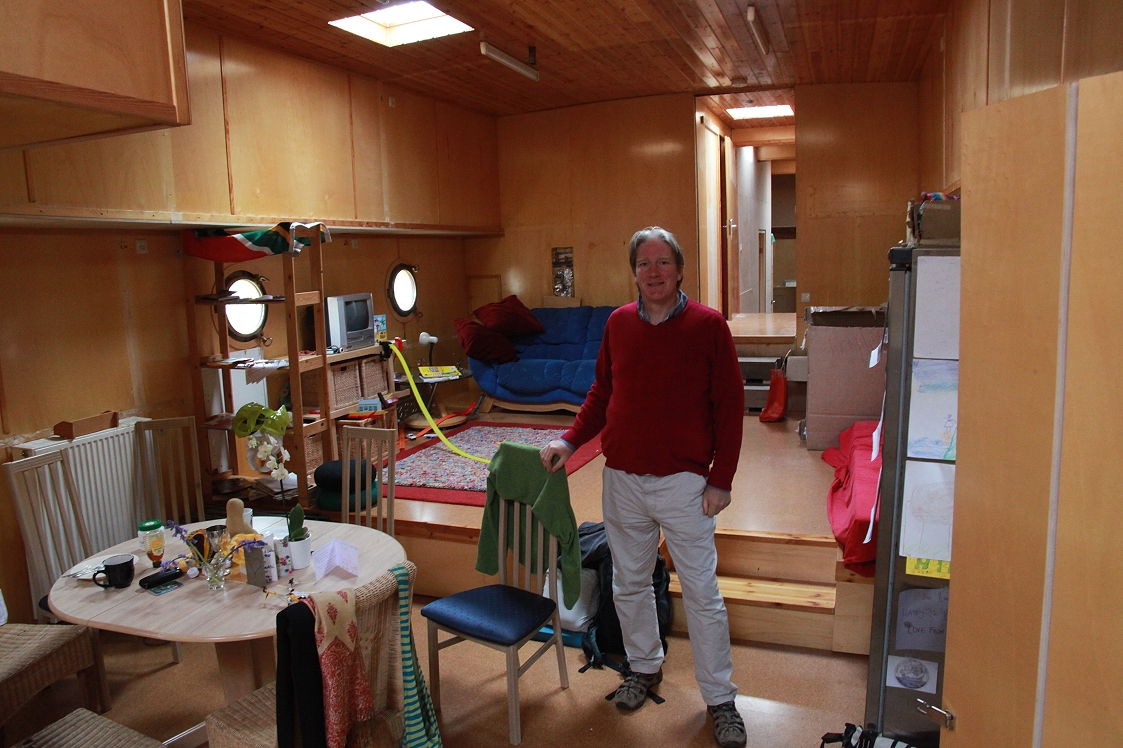
Elmer had kindly offered me a bed for the night, and it was certainly the most interesting of all the places I slept during the Lecture Tour as he and his family had recently moved into a 40 metre long barge on the Thames. It was a remarkably different place to live, and I was very impressed by the way he was doing up the barge, and how spacious it was inside. It had apparently been used previously as a floating yoga centre in Holland, before being brought to the UK.
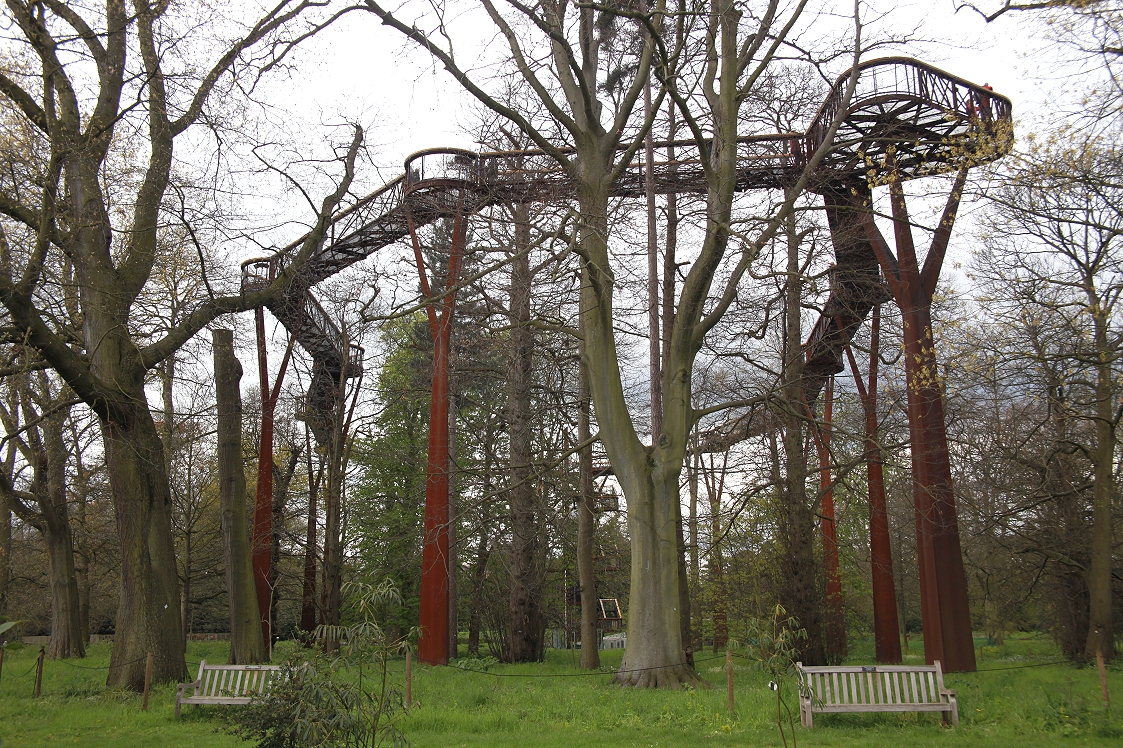
Where the barge was moored was just across the river from Kew Gardens, so as I had some time the next morning, before heading to Norwich for my talk on Saturday afternoon, I decided to spend some time there – I’d not previously visited Kew at all. I didn’t have enough time to see that much of the gardens, so I concentrated on just two of the attractions – one was the forest canopy walkway, which was of particular interest, given the explorations of the forest canopy that we have underway at Dundreggan with staff and students from Plymouth University.
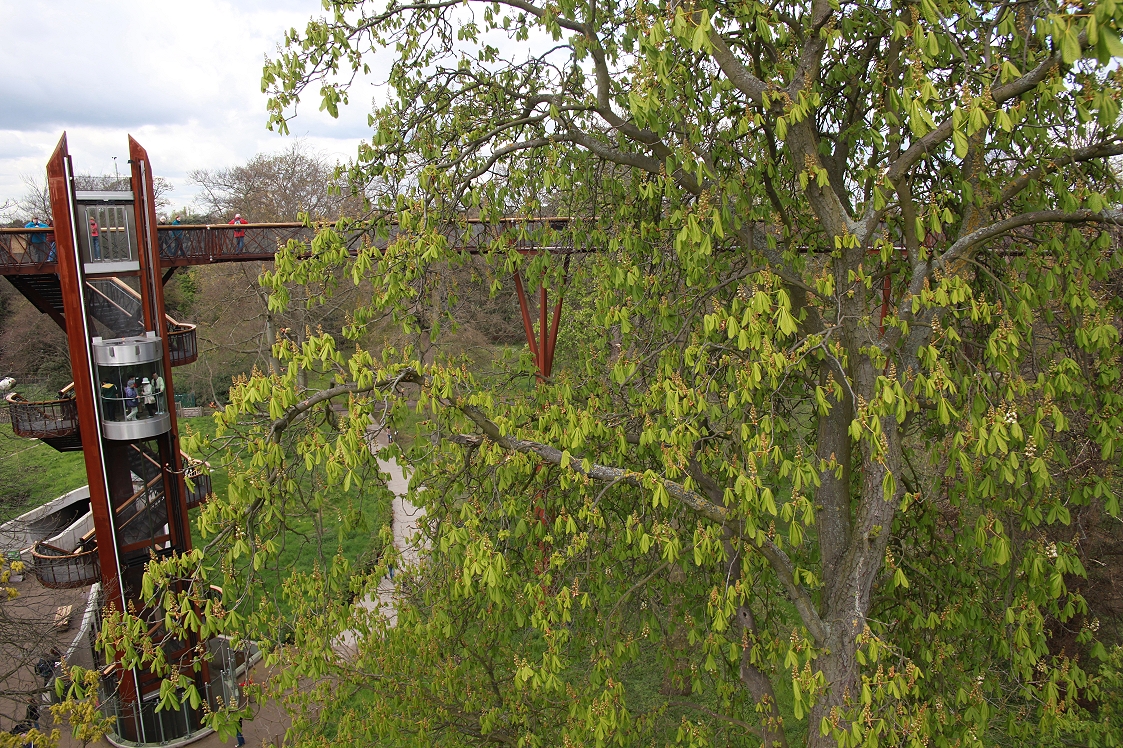
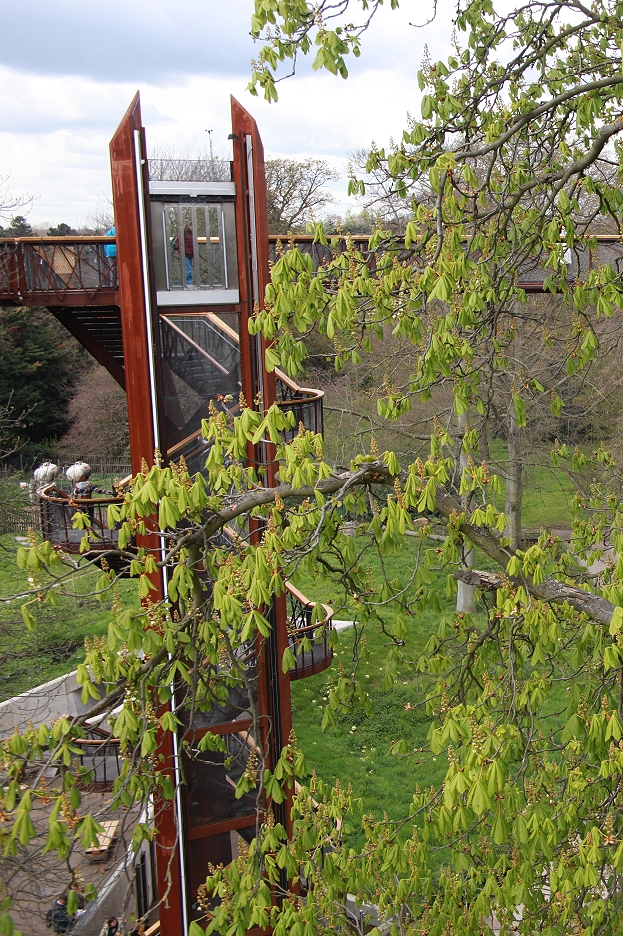
The walkway is quite an impressive structure, with good views into the tops of the nearby trees, and is complemented by an adjacent attraction called the Rhizotron, which illustrates the life under the soils, amongst the tree roots. This includes details of mycorrhizal fungi and their symbiotic relationships with the trees, and as that is something I’ve been featuring in my lectures it was great to see Kew also publicising what is a relatively little-known but crucial relationship that is essential to all forests in the world.

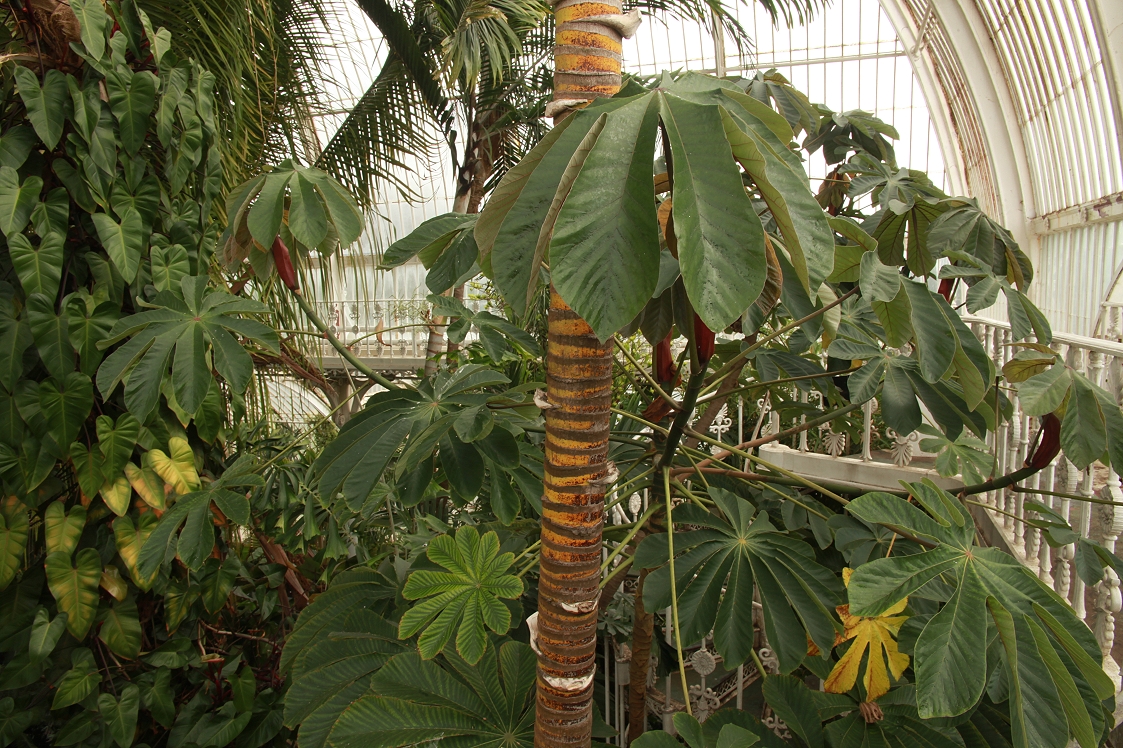
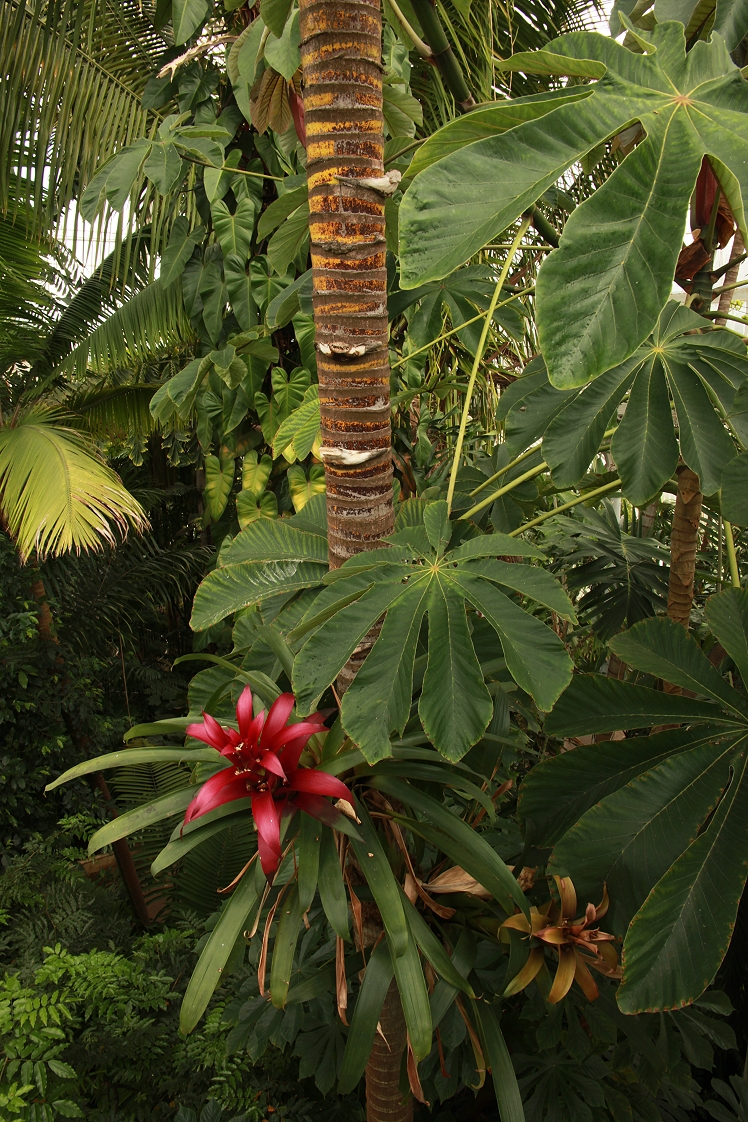
The other part of Kew that I spent time in was the Palm House, a remarkable building that was completed in 1848, and is the world’s most important surviving Victorian glass and iron structure, containing a unique collection of tropical plants and trees. Wandering around inside the Palm House provided a good complementary experience to my time in the rainforest biome at the Eden Project earlier in the week, and I recognised many of the trees and plants there from my own trips to the tropical rainforests over the years.
I didn’t have enough time to explore any more of Kew Gardens that day, so I’ll need to make another visit at some point in the future, although my visits to London are rare and infrequent nowadays!
My talk in Norwich that afternoon provided an opportunity to meet up with another long-term supporter of Trees for Life, Alan McEwan, a Scottish vet who had been on the same volunteer week as Julie McPhilips back in 1993, and who also featured in the film we made that year. I hadn’t seen Alan for many years, and it was quite a long time since he did his last volunteer week with us, but he was still as enthusiastic about Trees for Life as ever. The Norwich talk also provided me a long-overdue opportunity to meet Rex Hancy, an expert on plant galls who has been helping me with the identification of galls for many years, and promoting Trees for Life frequently through his column in one of the local weekly newspapers – it was great to have some time with him and his wife.
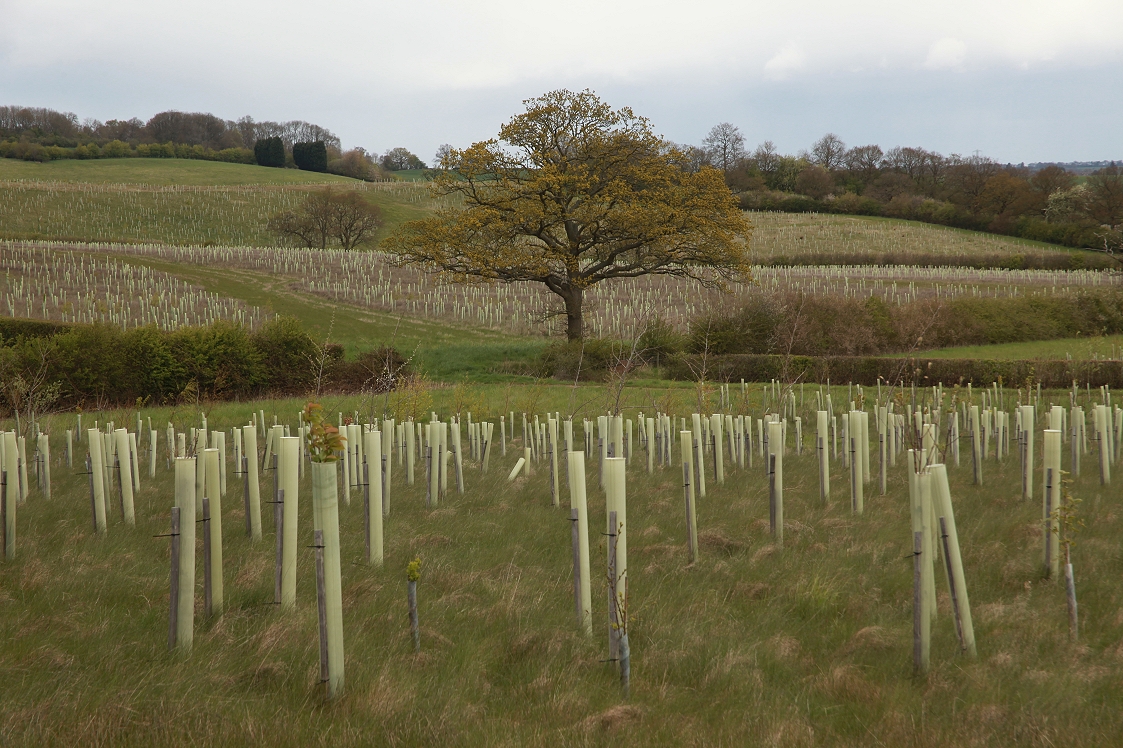
After Norwich, my next talk was scheduled for Sunday afternoon at the Rutland Water Nature Reserve near Leicester. I managed to squeeze a quick visit before that in the morning to the Heart of England Forest Project in Warwickshire. This is a very ambitious project established by Felix Dennis, who made a donation towards our purchase of Dundreggan in 2008, and which aims to create a large area of new native forest in the Midlands.
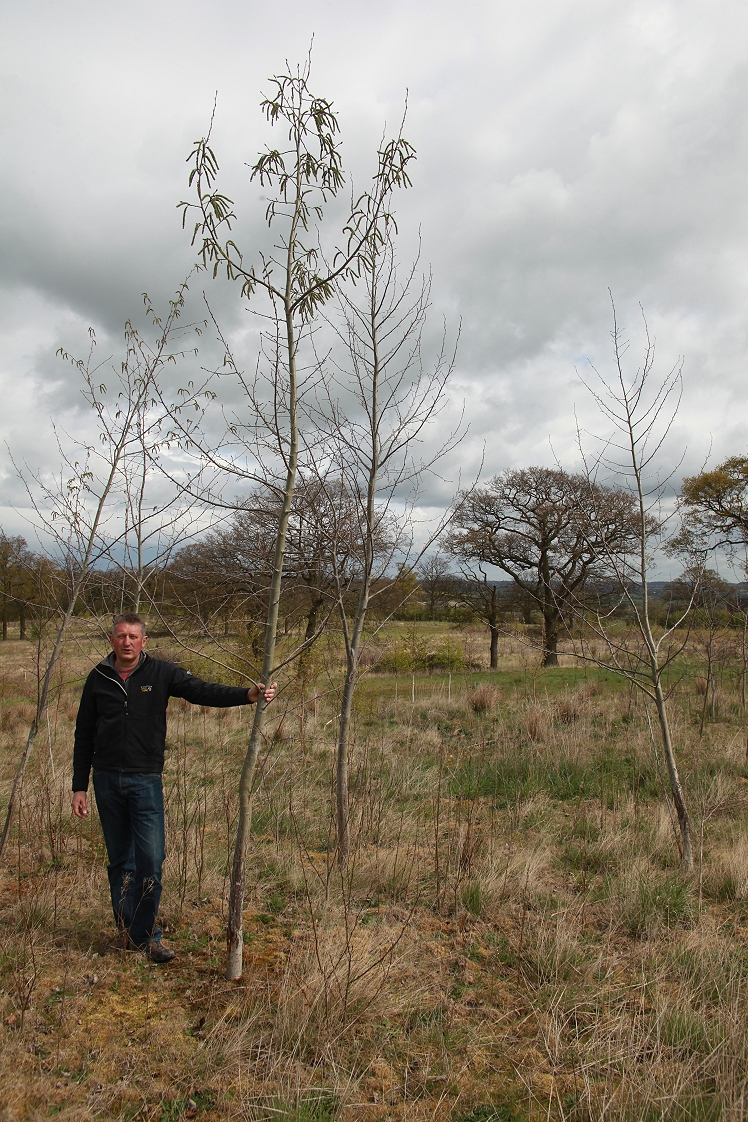
I was given a quick tour by Stephen Coffey, the forester working on the project, and it was very impressive to see how they are working with a similar vision to Trees for Life – linking up some existing areas of native woodland to create a large contiguous extent of broadleaved forest. They started planting in 1996 on a small scale, and will reach a total of a million trees planted later this year – not long after we plant our Millionth Tree on 20th May.
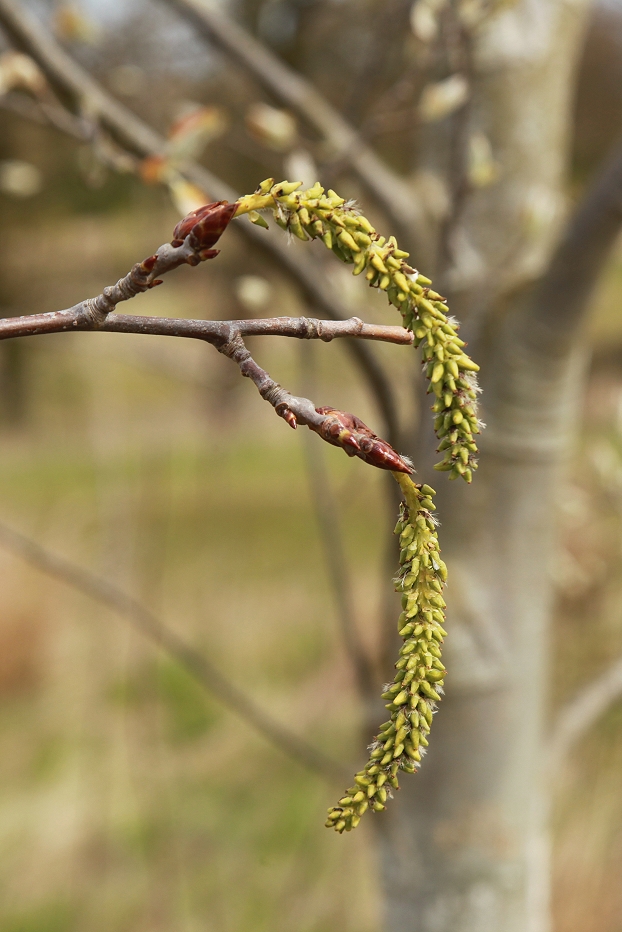
Their planting sites are on former arable land, so the soils are much better than ours are in the Highlands, and that, together with the milder climate in the Midlands, means that their trees are growing more rapidly than ours are. I was particularly impressed by some aspens (Populus tremula) they had planted in 2006 and were now about 14 feet tall, and were flowering when I was there. It is quite rare to see aspen in flower in the Highlands, so I was very pleased it was doing so there, although Stephen wasn’t so happy about how the aspens were already producing so many suckers from their roots!
After my talk on the Sunday at Rutland Water Nature Reserve I went on to Leeds, where I gave a talk on Monday to 3rd year students in the School of Geography at Leeds University. Steve Carver, a senior lecturer there, has been a good friend and colleague for many years, having co-founded the Wildland Network that co-organised the ‘Wild, Free and Coming Back?’ conference at Findhorn with Trees for Life in 2008. I’ve given talks to his students a number of times in previous years, and this visit provided a good opportunity to discuss some possible research projects, particularly at Dundreggan, that could be offered to MSc students in his department.
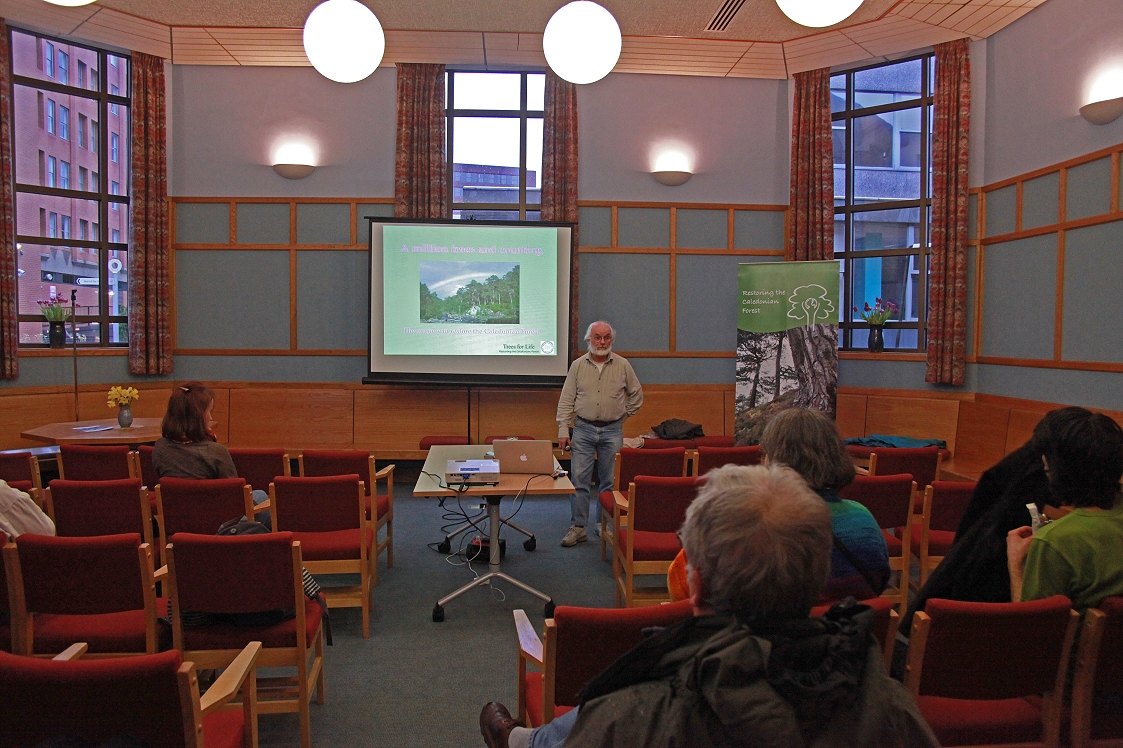
Steve and his family very kindly accommodated me for two nights, and I also gave a public talk in Leeds, which provided an opportunity to meet another long-term supporter of Trees for Life, Jim Kieran, who told me he’s done 11 of our volunteer weeks over the years, but whom I hadn’t previously met up with. Then it was on to Sheffield, where I was hosted by Jenny Patient, who leads some of our volunteer Conservation Holiday programmes (as our Work Weeks are now called). This was the last talk of the tour!
By this time I had given 18 talks in 16 days on the English and Welsh legs of the tour, and a total of 23 lectures altogether, including those in Scotland in March. I was ready to head for home, and drove back to Findhorn the next day in very wet conditions. Arriving back home at Findhorn in the early evening, I worked out I had driven a total of 2,932 miles since I’d left home on the 8th of April for the English and Welsh legs of the tour, with an average fuel consumption of 43.8 miles to the gallon – not too bad I thought.
I’m very grateful to all the people who hosted me during the tour, to everyone who helped set up for the talks each day, and to all those who made donations to Trees for Life, particularly those who have sponsored me on our upcoming Treelay event in early May. I’ve now raised £748 towards my target of £5,000, so if you’re reading this and would like to make a contribution, you can do so here – thanks for any support you can provide! Please spread the word too to anyone else who you think may be inspired to make a donation to this inspiring sponsored event.
Alan I’ve always wanted to say thank you for the hard work you’re continuing to do. I think you’re a very unique & special person that’s done one of the best things ever in Scotland’s history as well as your staff at TFL as every bit as much for saving the Caledonian Forest.
Having surveys to what grew in that particular area , natural regeneration, planting where none genes exist. Making the forest as natural possible , right up to bringing extinct species back to their rightful place which in return takes this to support the whole biodiversity to make it work in harmony.
This was a brave & huge struggle for you in the early days, yet you pursued your goals , never to to give in.
For this you are an idol & inspiration to me always & never to be forgotten. A huge thanks & I will offer my labour one day to help as I can’t imagine a more beautiful place to be out in, god bless.
Hi George, Thanks for your comment and all your appreciation for our work here at Trees for Life.
With best wishes,
Alan
Alan, it was great to meet you again & to hear you restate & reaffirm your mission.
I am sure I am not the only TFL supporter who has been able to dip in & out of the project over the years who still feels the same passion about the objective but lacks the ability to dedicate as much time to the cause as it deserves. To have someone as steadfast & single-minded as you have been, has allowed those lesser mortals amongst us to continue to make their more limited contributions as & when they are able.
It is great to read about so many other work week volunteers, many whose names & memories are still familiar, who have continued to support TFL directly or as you told me who have branched off into related projects.
Jim Kieran, writing above, is absolutely right when he suggests that the message we should heed is obvious when you can see it. Sadly there are not as many people looking as I would like! But I am taken with the idea that there is a bigger timescale here & that really we are just at the beginning. Perhaps people looking back later will appreciate the commitment & dedication required to play ‘the long game’.
In a much smaller way I am reminded of the same idea when I think of the trees that I & others have planted along the way, as well as the old ‘Grannys’ freed from encroachment, which continue to grow even in the years when I cannot get back to visit (& chat to!) them.
Having said that the last time I was able to visit the Glen the changes that I saw were enormously encouraging & I am sure will continue year on year. Good luck with your efforts & best wishes to all involved.
Alan McEwen
Hi Alan, It was a real treat to meet you again in Norwich last week, and it felt as though it only been a few months since we last spoke, rather than the almost 2 decades that it actually is. You’re very much a kindred spirit, I feel, and it was great to hear your enthusiasm and support for our work, as strong and clear as ever. I hope the move for your clinic goes well, and that we’ll see you up here again on one of our weeks before too long!
With best wishes,
Alan
Just wanted to thank you, Alan, for a terrific lecture at the Friends Meeting House in Leeds. Both myself and my wife, Lindsay, enjoyed it immensely. I’d never actually spoken to you before, in 20 years as a member despite having 10/11 work weeks under my belt!
You spoke about restoration of the forest, and of the World’s eco system as a whole, with such gentle and informed passion that was virtually unassailable.
I asked you how, after so many years, you managed to maintain that fervour and not be worn down by the setbacks and the opposition from conservative forces at play in the TFL’s target area – and indeed elsewhere. You simply said that you concentrated on the successes and didn’t feed energy to negative forces, resistant to the message. In that way you were able to remain positive. You also reminded yourself that it was a long term project. Landowners aren’t there forever and new generations take their place. It was a lovely response, delivered with quiet conviction.
Your lecture was very well received and I wish I could have waved a magic wand, plonked you down in Leeds Civic Hall and filled it with the surrounding population! Such, we felt, was the importance and impact of what you had to say.
Having said that , one of the things we will remember was that you gave it the same amount of energy as you would have done, if you had actually been in Leeds Civic Hall!
And you were still answering questions at 9:50pm, having started at 7pm.
We emerged into the frenetic hustle and bustle of the main road and Leeds University precinct, lots of people heading in to the centre, or on their way home. Meanwhile we’d been learning how to save the Present and create the Future, a sustainable one. If they’d only known!
Thank you once again for the lecture and everything else Trees For Life has given me over the years.
Jim Kieran.
Hi Jim, Many thanks for your comments, and it was great to meet you at last, having known your name as one of our best supporters over so many years. I’m pleased that you enjoyed the lecture in Leeds, and yes it would have been better if the audience had been larger – however, it was definitely a case of quality if not quantity, in terms of the people who were there! My heartfelt thanks for all your support for our work over the past 2 decades, and I hope you’ll get up on another Work Week soon.
With best wishes,
Alan