• Skip to primary navigation
  • Skip to main content
  • Skip to primary sidebar

Alan Watson Featherstone

ECOLOGIST, NATURE PHOTOGRAPHER AND INSPIRATIONAL SPEAKER
FOUNDER OF THE AWARD-WINNING CHARITY TREES FOR LIFE

  • Home
  • Public speaking
  • Writing
  • Photography
  • Events
  • Shop
  • Blog
  • About me
  • Contact

Insect life on aspens in Glen Affric

Glen Affric: 19 August 2011 2 Comments

Cloud formation over Scots pines, between Loch Affric and Loch Beinn a'Mheadhoin in Glen Affric

Last Sunday, 14th August, I spent the day in Glen Affric, hoping to enjoy the classic August landscapes of blooming heather amongst the old Scots pines. However, when I got there the heather was not at its best, perhaps because of the cool and wet summer we’ve been having this year. Certainly there was some heather in flower, but it wasn’t as vibrant and abundant in its massed blooming as I’ve seen it at the same time in other years – perhaps its peak of flowering is still to come. The day was intermittently sunny and cloudy, and there were some dramatic but constantly-changing cloud formations over the ancient pinewood, due to the windy conditions.
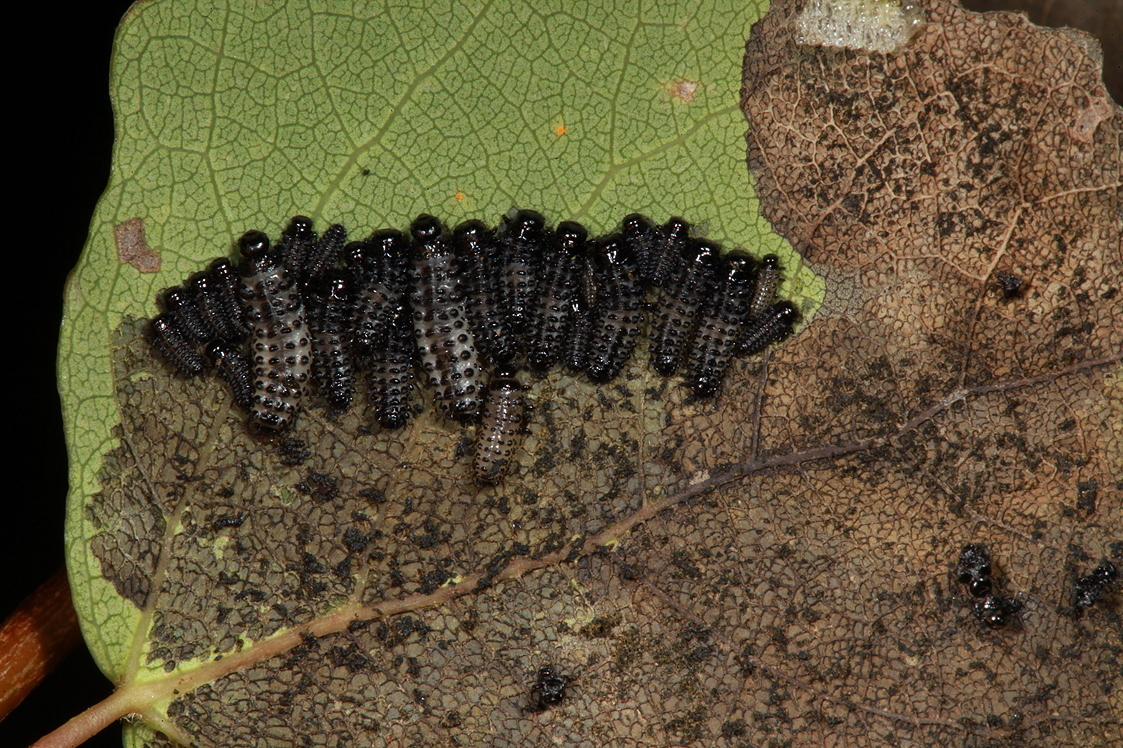
Leaf beetle larvae feeding on an aspen leaf

On my way up the glen, I stopped at a couple of places to look at some stands of aspen trees – something that I regularly do, because of my interest in the diversity of species that are associated with aspens. At the first group of aspens I soon spotted a number of larvae feeding communally on the underside of a leaf – I had seen some identical-looking ones at Dundreggan recently, and suspected they were of a leaf beetle (Phratora vitellinae) that I’ve found on the same group of aspens in previous years. In fact, there was an adult that looked like that species not far from the larvae, and I’m currently waiting on confirmation of their identity.
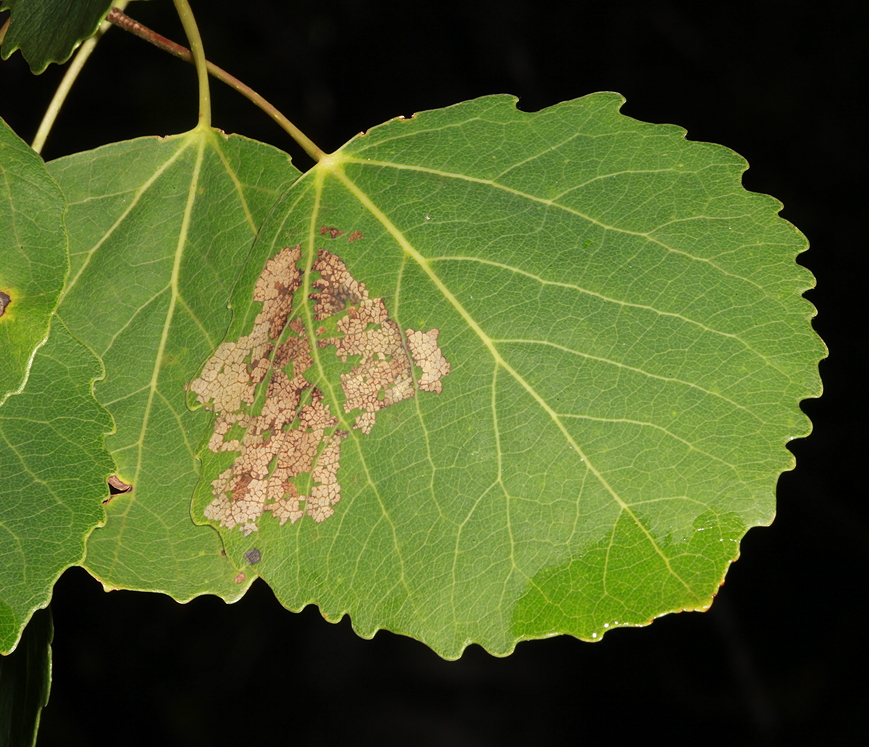
These aspen leaves had been sewn together by a caterpillar of the poplar lutestring moth, so that it could feed safely inside, without risk of predation by birds.

Elsewhere on the same tree, some aspen leaves that were sewn together proved to contain an early instar caterpillar of the poplar lutestring moth (Tethea or), a  species that commonly feeds on aspens. Carefully pulling the leaves apart revealed the caterpillar inside, as well as its distinctive method of sewing the leaves together. Unlike some other species of moth caterpillars, where the sewing is done continuously around all the surfaces where the leaves touch each other, the poplar lutestring caterpillar uses a ‘spot welding’ technique, with small blobs of white silk fastening the two leaves together at intervals around the perimeter of where they meet.
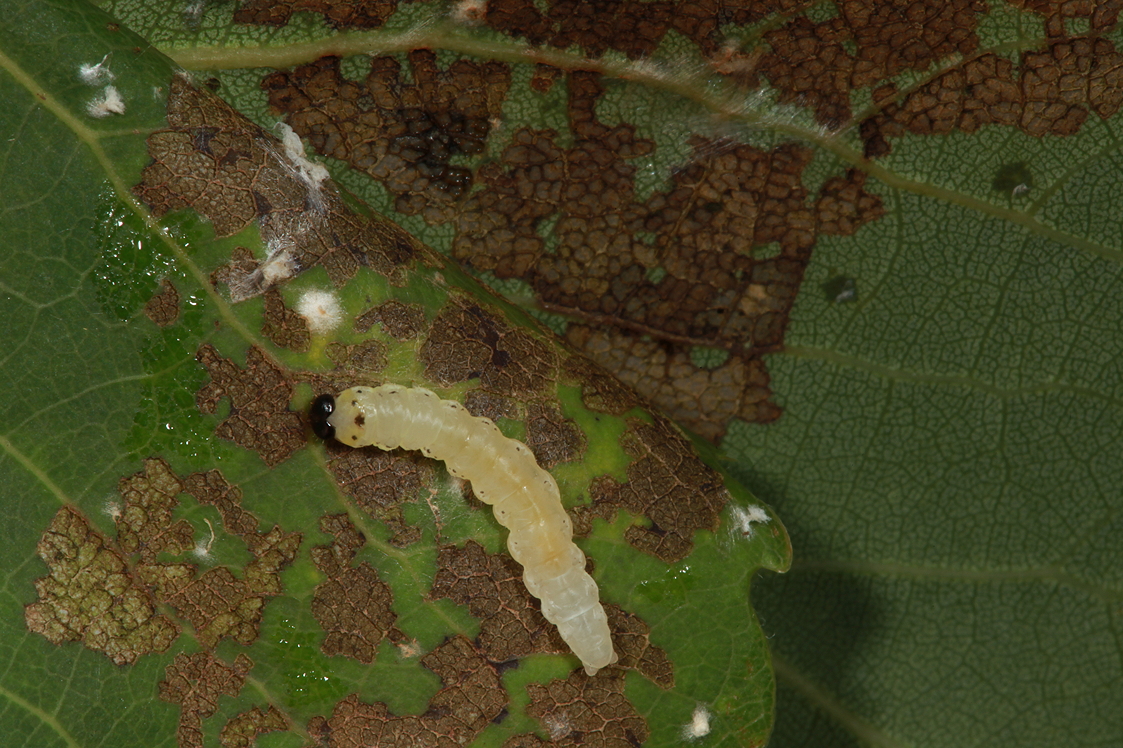
Caterpillar of the poplar lutestring moth that was inside the sewn-together aspen leaves

The evidence of this can be seen in the photograph here, in the form of the white spots at several points on the leaf surface, around the caterpillar itself.
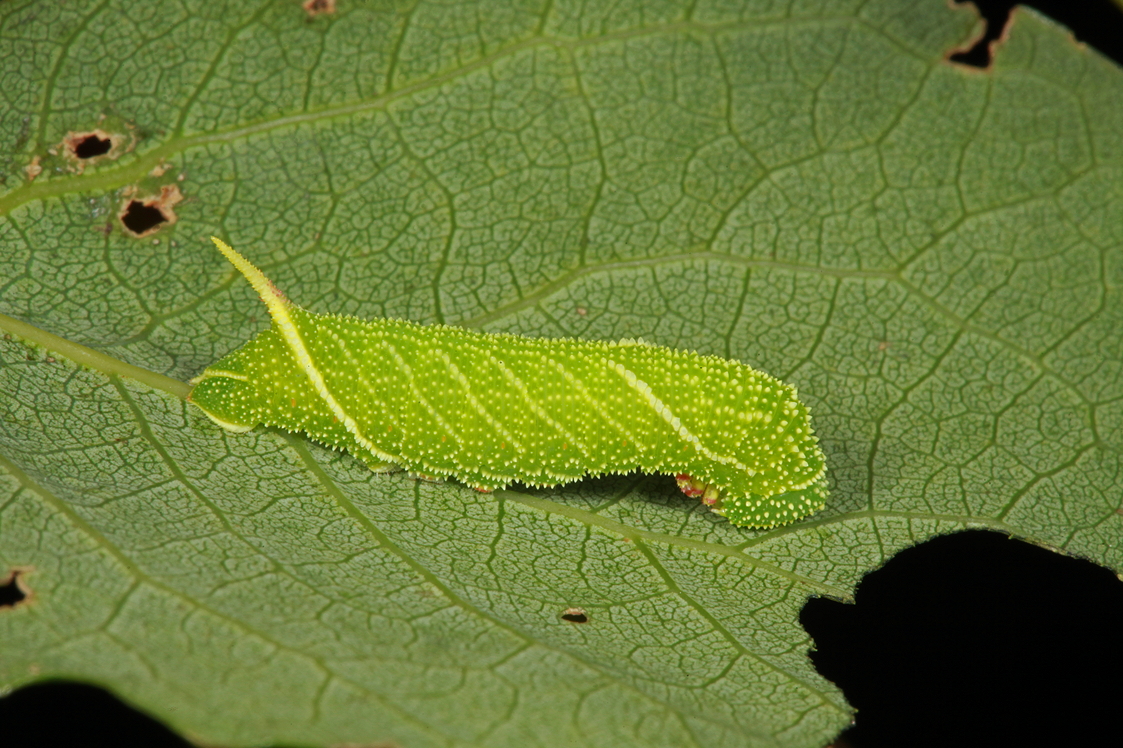
Poplar hawk moth caterpillar on an aspen leaf

Moving up the glen to another group of aspens, overlooking Loch Beinn a’Mheadhoin, I came across a caterpillar of the poplar hawk moth (Laothoe populi). This was a relatively early instar, as it wasn’t very large, but it already displayed the superb camouflage which this species exhibits, whereby it almost perfectly matches the appearance of a rolled up leaf, complete with a tail spike that resembles the petiole or stem of a leaf.
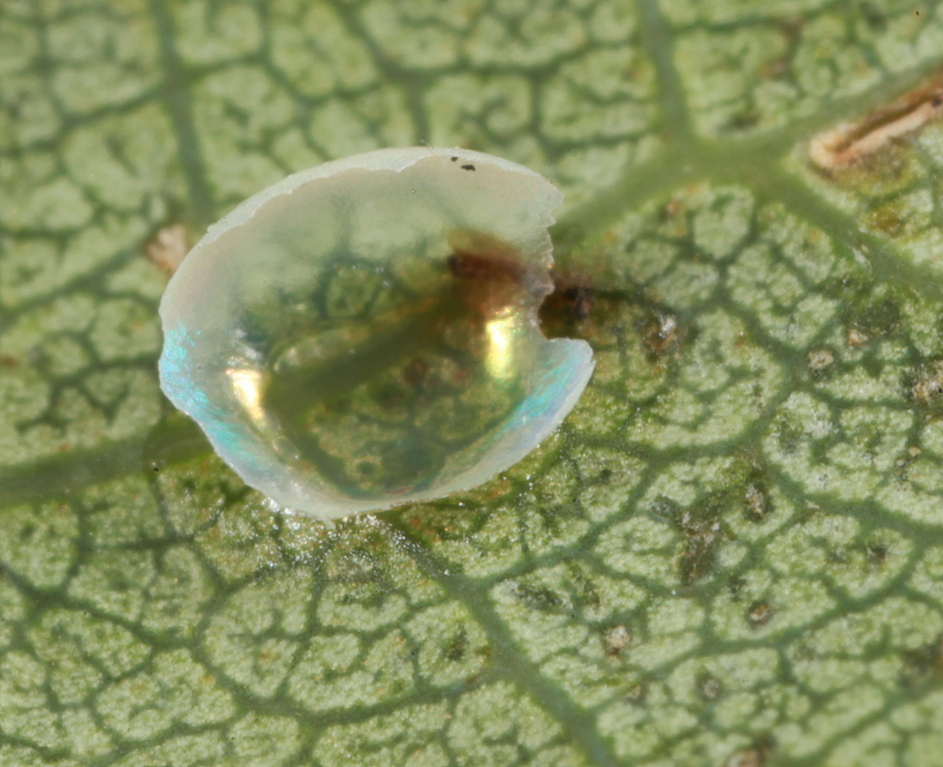
This broken egg on a nearby aspen leaf is likely to be the one that the poplar hawk moth caterpillar emerged from

On a nearby leaf I found the remains of an egg which I suspect is the one that the caterpillar hatched out of – it looked like the right size, and was also similar to one of the poplar hawk moth that’s on the UK Leps website. However, the only way to be absolutely certain of this identification would be to be there when the caterpillar emerged – a rather unlikely occurrence!
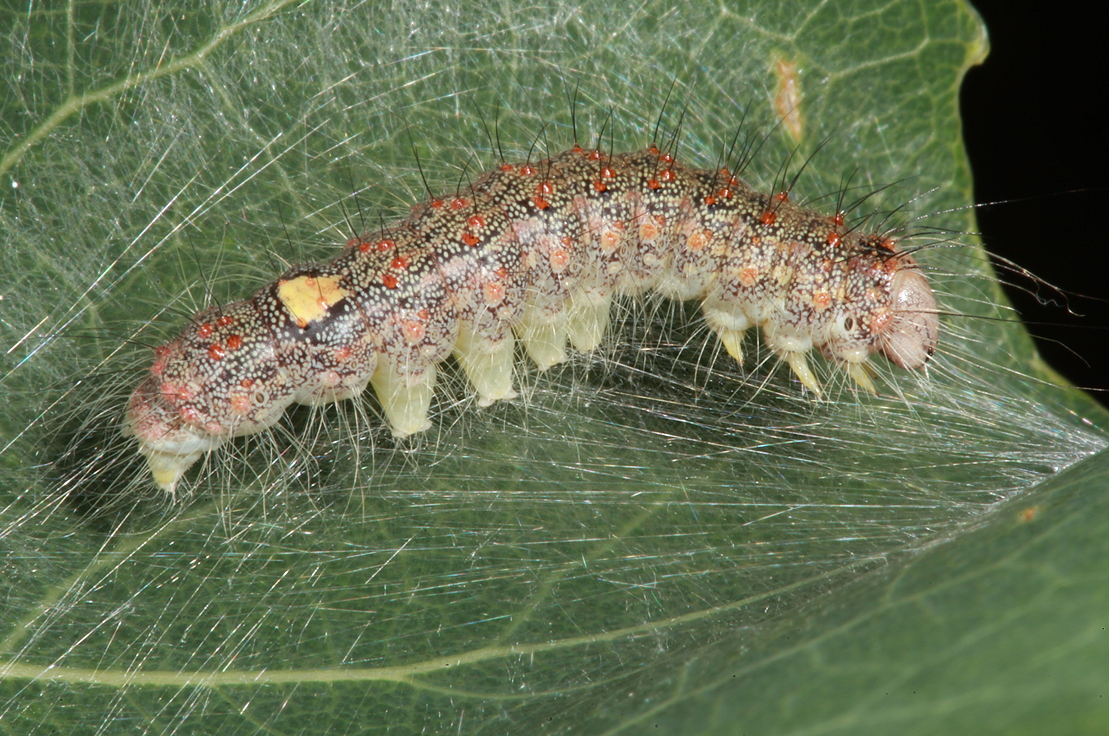
Caterpillar of the poplar grey moth on an aspen leaf

Looking around some more, I found a different caterpillar on an aspen leaf – another easily-identified species, in this case of the poplar grey moth (Acronicta megacephala).


None of these species are particularly rare, but they illustrate some of the large range of biological diversity that is associated with aspen,  making it one of the most interesting trees in the Caledonian Forest.

Dragonfly survey and dwarf birch discoveries
Ascent into the canopy of a Scots pine

Reader Interactions

Comments

  1. Suzie Harrison says

    5 August 2018 at 7:12 pm

    Thank you so much for your excellent picture of a hawk moth caterpillar – snap! You have solved a mystery for me.

    Reply
    • Alan Watson Featherstone says

      6 August 2018 at 11:40 am

      Hi Suzie,

      Thanks for the feedback – I’m glad my photo was helpful.

      With best wishes,

      Alan

      Reply

Leave a Reply Cancel reply

Your email address will not be published. Required fields are marked *

This site uses Akismet to reduce spam. Learn how your comment data is processed.

Primary Sidebar

My TEDx talk – Restoring the ancient Caledonian Forest.

TEDx TEDx – Restoring the Caledonian Forest

Recent posts

  • The abundant life of dead wood, part 3
  • The abundant life of dead wood, part 2
  • The abundant life of dead wood, part 1
  • Gannets galore, part 2
  • Gannets galore, part 1

News

  • Rewilding workshop in Glen Affric 10-17 October 2026
  • Rewilding workshops in 2024
  • ‘A Rewilding Journey’ Workshop 27 May – 3 June
  • 2023 Caledonian Forest Engagement Diary now available
  • Revised dates for our next Rewilding workshop: 15 – 22 October 2022.

I’m speaking at…

  • A Rewilding Journey: Rewilding the World and Ourselves – 10 October 2026–
    17 October 2026
  • Over on X (Twitter)…

    Alan Watson Featherstone Follow

    Ecologist, nature photographer and inspirational speaker. Founder of the award-winning charity Trees for Life that is restoring the Caledonian Forest.

    AlanWatsonFeat1
    Retweet on Twitter Alan Watson Featherstone Retweeted
    robinmonotti Robin Monotti @robinmonotti ·
    27 Aug

    JULIAN ASSANGE: "The goal is to have an endless war, not a successful war."

    War is a Taxation Based Money Laundering Racket for the Transnational Security Elite - It matters very little to them whether it's in Afghanistan or Ukraine, the real goal is theft of public money.

    Reply on Twitter 2092854045736063145 Retweet on Twitter 2092854045736063145 3558 Like on Twitter 2092854045736063145 6991 Twitter 2092854045736063145
    Retweet on Twitter Alan Watson Featherstone Retweeted
    covie_93 Covie @covie_93 ·
    27 Aug

    -It is still Lake Ontario
    -It is still the Gulf of Mexico
    -It is still the John F. Kennedy Center for the Performing Arts.
    -He is still a pedophile.

    Thank you for your attention to this matter.

    Reply on Twitter 2093031919009075331 Retweet on Twitter 2093031919009075331 11706 Like on Twitter 2093031919009075331 67291 Twitter 2093031919009075331
    alanwatsonfeat1 Alan Watson Featherstone @alanwatsonfeat1 ·
    21h

    RT @daiannaa99: ¿Les asusta lo de Nepal? Pues prepárense, porque la crisis climática traerá cada vez más catástrofes. Y no, esto no es el a…

    Reply on Twitter 2093083046043942947 Retweet on Twitter 2093083046043942947 6880 Like on Twitter 2093083046043942947 Twitter 2093083046043942947
    Load More...

    Copyright © 2026 Alan Watson Featherstone | Wikipedia | LinkedIn