
During early March we held a three day conference for our staff at Dundreggan, to look at our organisational strategy, and the direction that Trees for Life is going in with its work. Those of us based at our Findhorn office stayed over at Dundreggan for two nights, and on the third day I woke up early to find it was a clear and cold morning, with a thick frost covering all the trees and grass etc. Dressing quickly, I headed outside to enjoy the beauty of the morning for an hour or so before the final session of our conference.
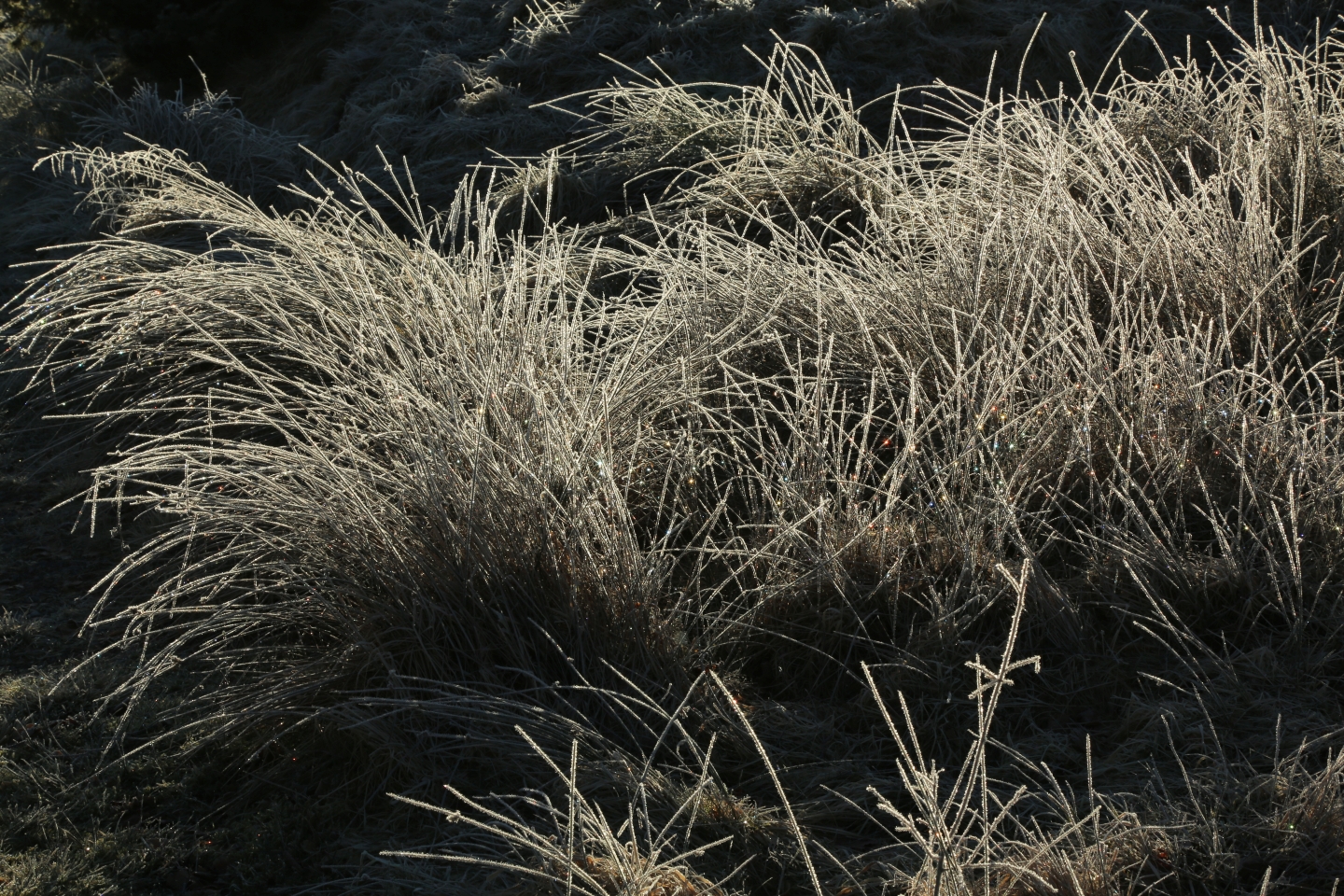
Because these three days at Dundreggan were taken up by the staff conference, I had left most of my photo equipment at home, only bringing my camera and a single lens with me. I didn’t have my tripod or cable release with me this morning either – they are part of my kit that I use for almost every shot – so I wasn’t really prepared for photography. However, I decided the morning was too good an opportunity to miss, so I set myself the challenge of making the most of the situation with just the camera and one lens, with no tripod.
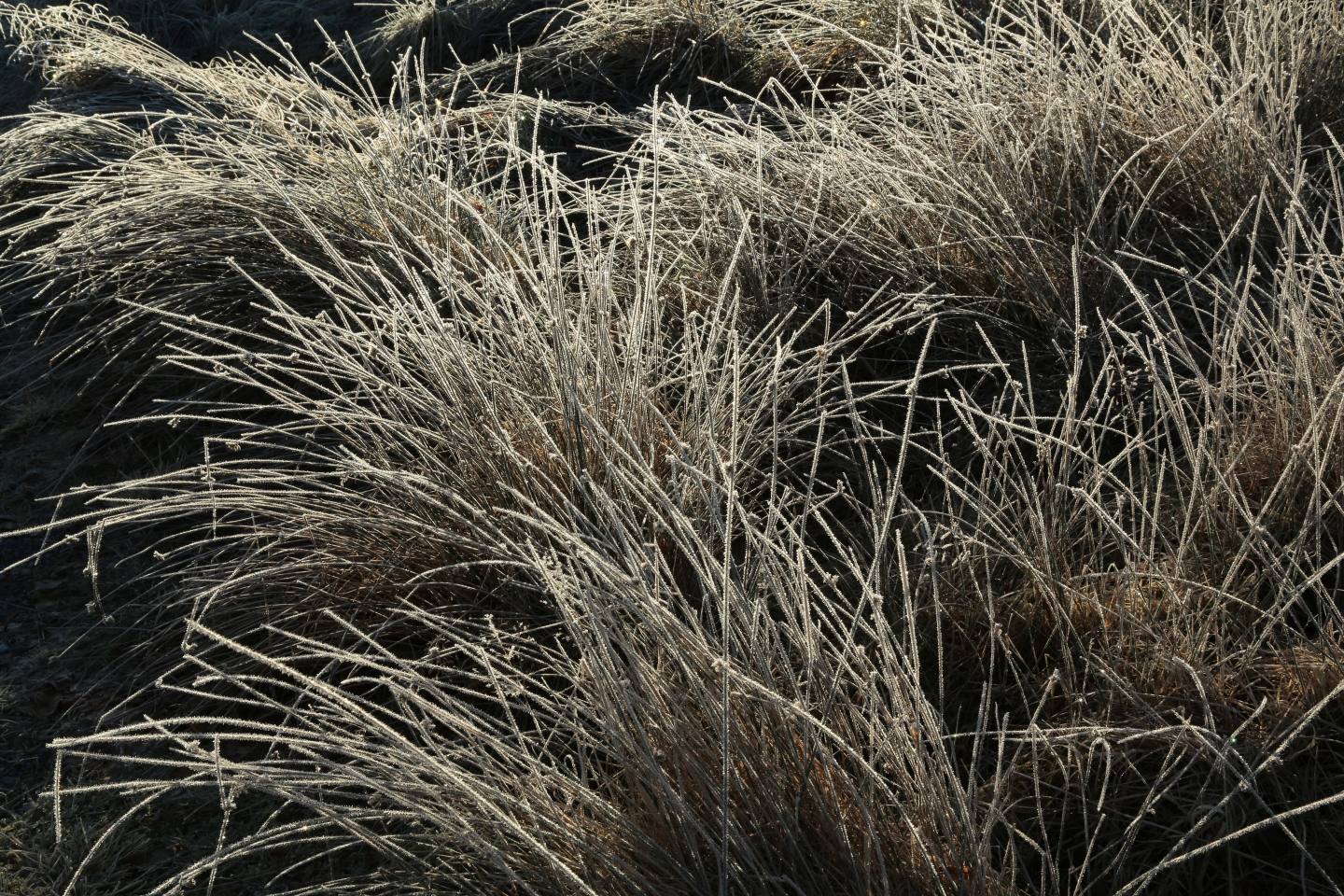
This necessitated a change in approach to my style of photography for the day, and was actually a very creative process, as it prompted me to take images that I would not normally have done. Without the tripod, I used higher shutter speeds to avoid camera shake, and that led me to seek more light-filled images, so a lot of my photographs from the morning are backlit ones. This helped to highlight the frost, which outlined the twigs on the trees and each blade of grass on the ground.
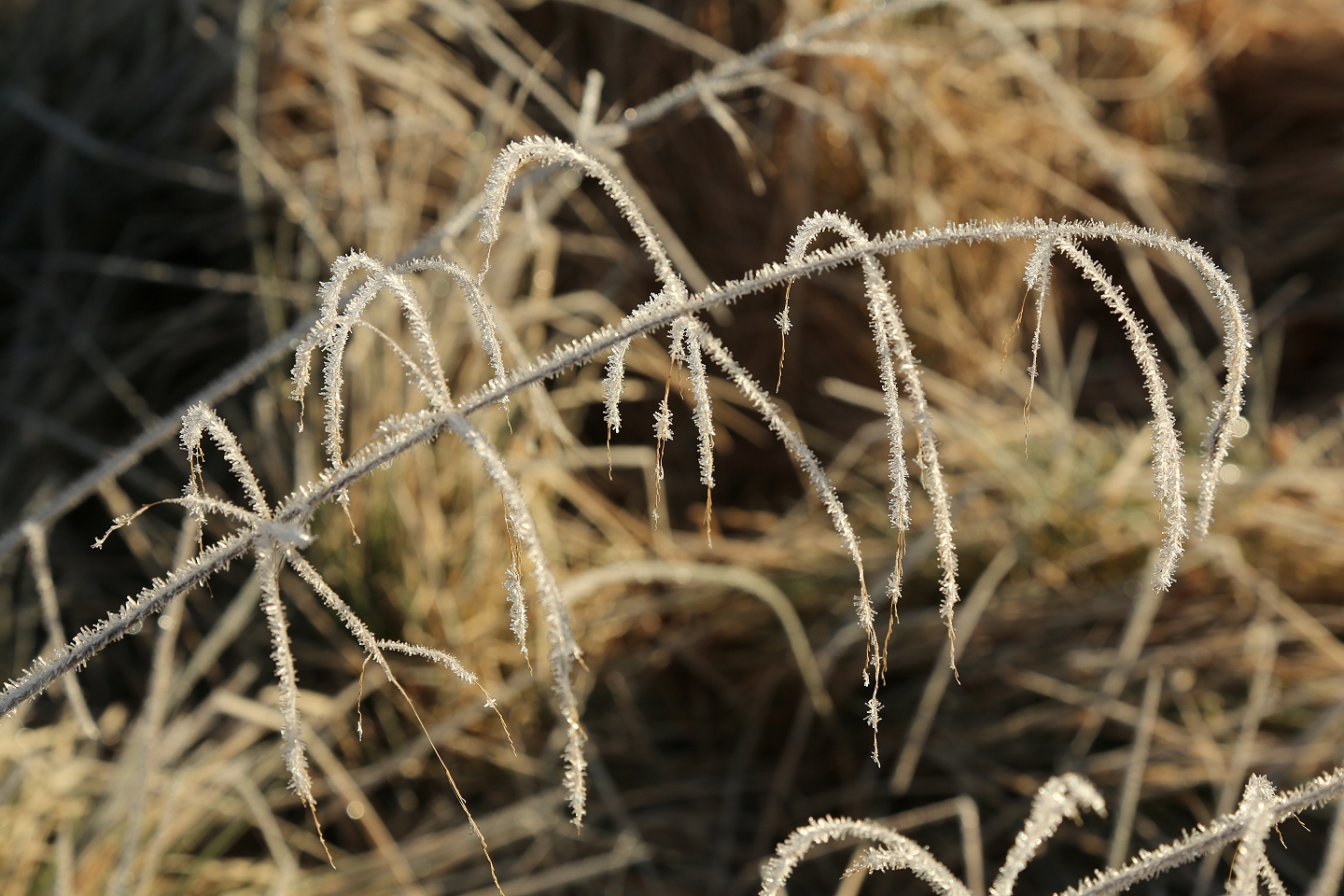
If I’d had my macro lens with me I would almost certainly have spent some time taking high magnification close up photographs of the frost crystals, but instead I had to make do with this image here, showing the delicate curve of the grass stems, laden down with the weight of the ice on them. The structure of the frost can just about be made out in the image, but it is the effect of the frozen moisture on the grass in weighing down the grass stems that is most obvious in the photo.
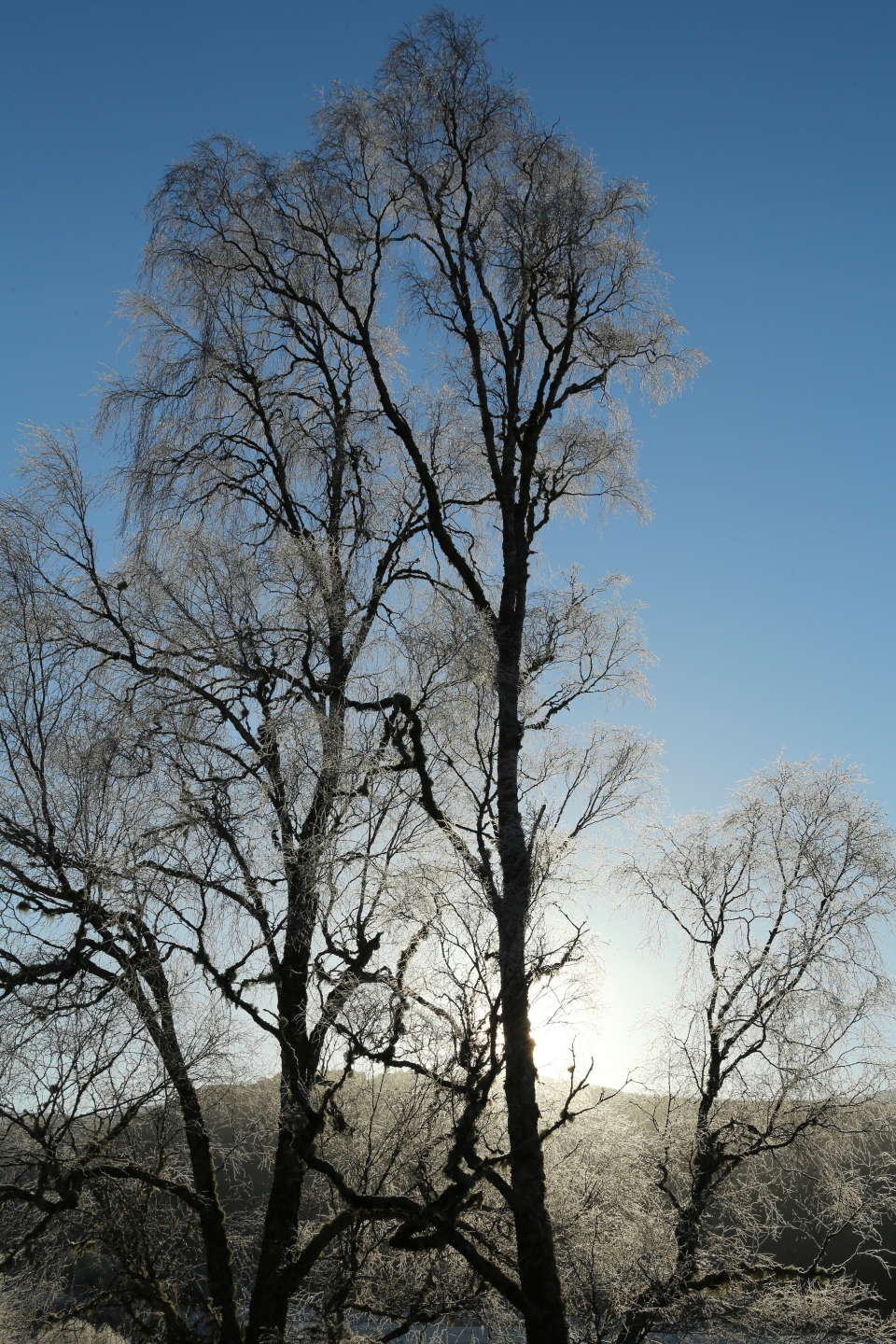
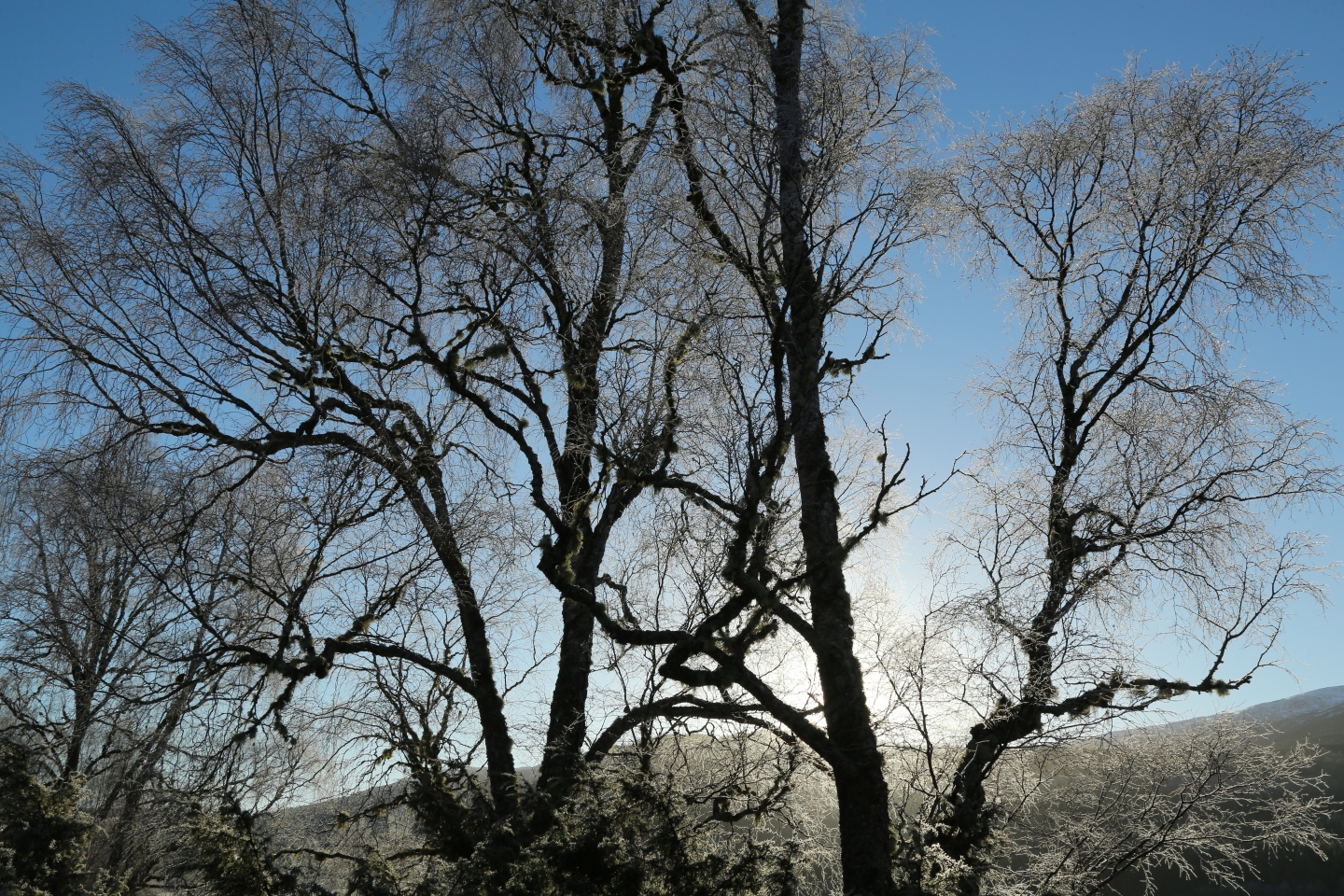
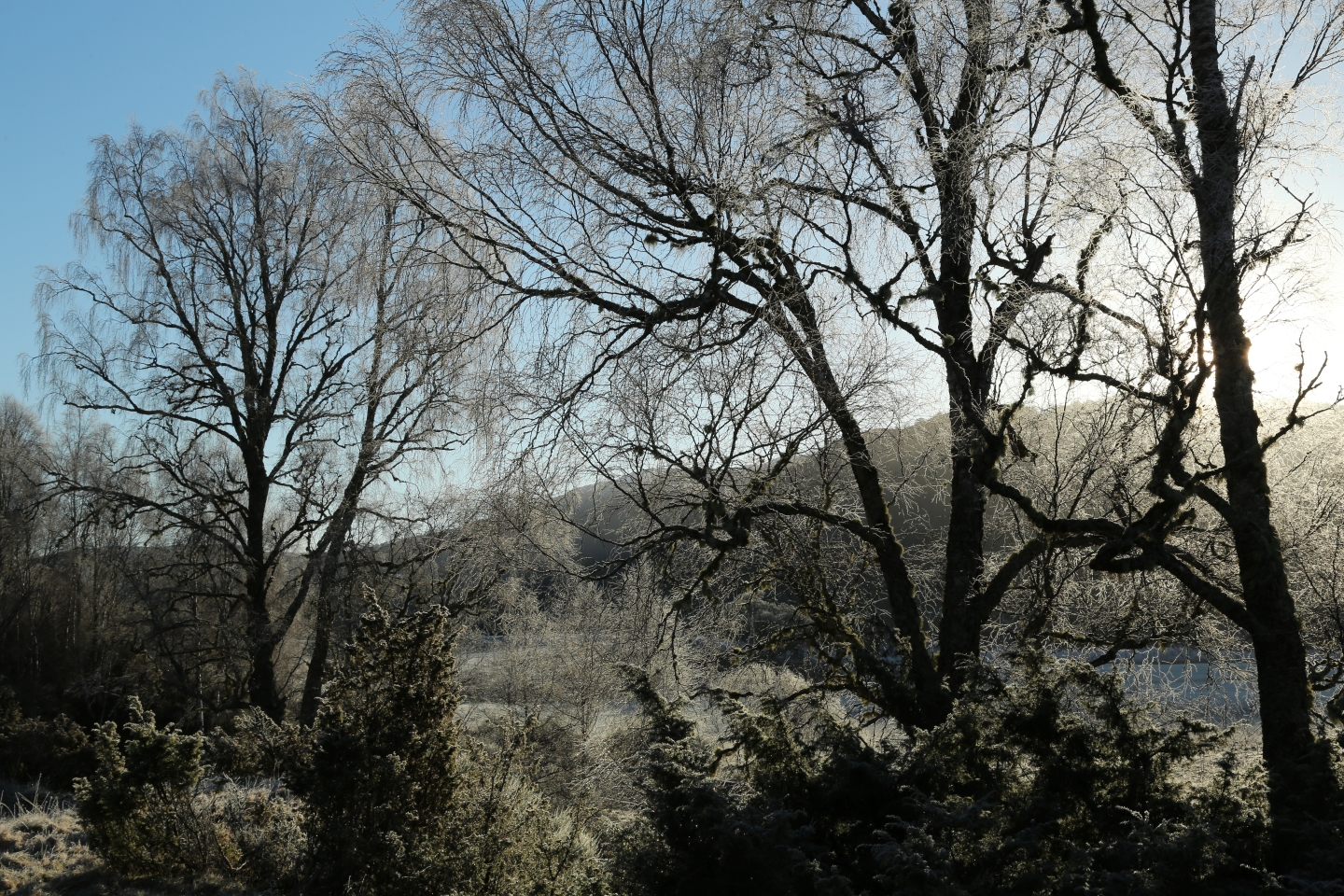
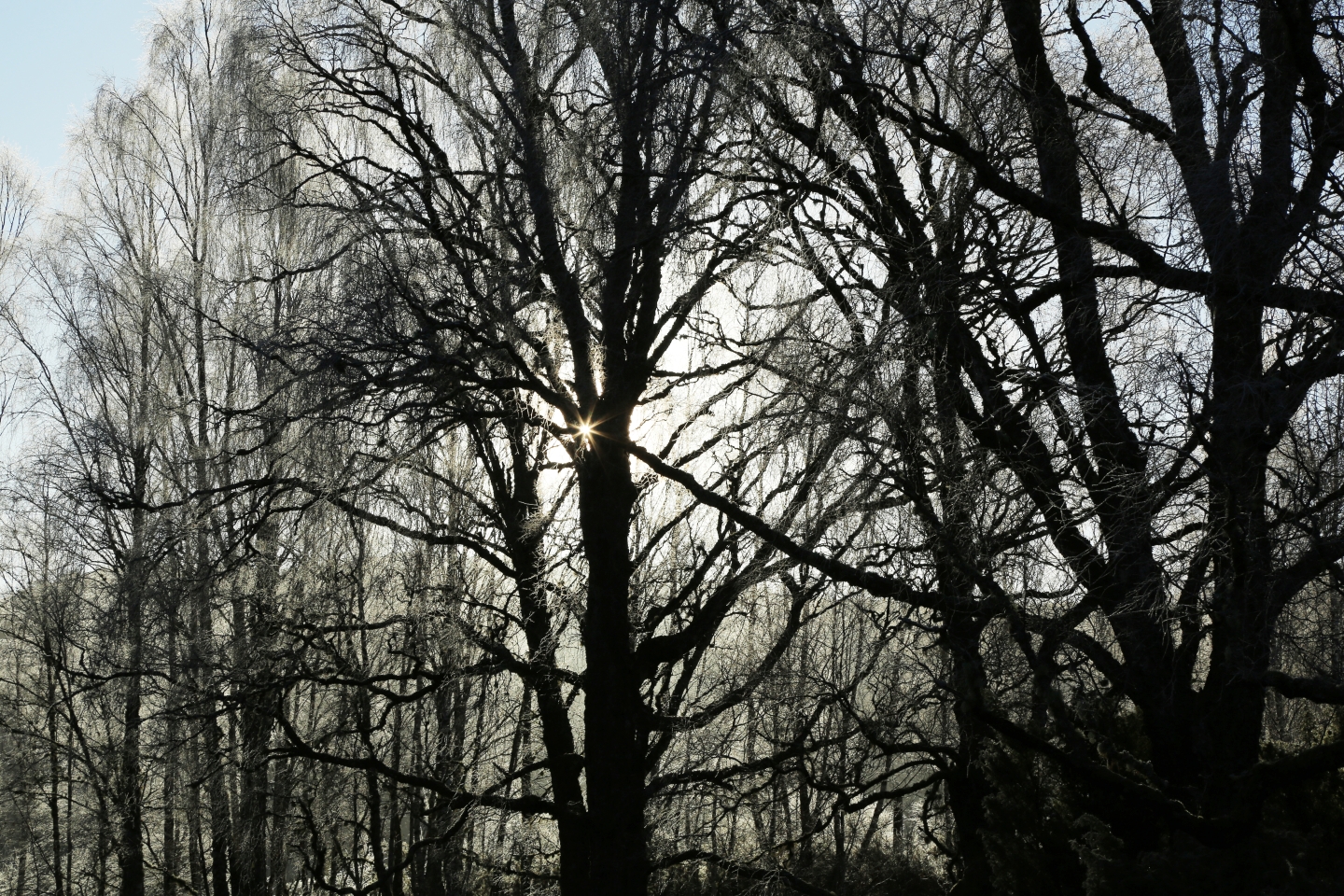
There was a very special quality to the light this morning, with the sun having just risen above the hills to the south, and illuminating all the frost on the branches and twigs. The sunlight was almost tangible or palpable as a radiant white glow in the air, and this formed a dramatic contrast with the silhouetted trunks and branches of the trees. The effect was most noticeable when I stood in the shadow of one of the tree trunks – otherwise the sunlight was too dazzling. In this photograph here, positioning the sun in the fork of two branches on a tree has given rise to a ‘starburst’ in the centre of the image.
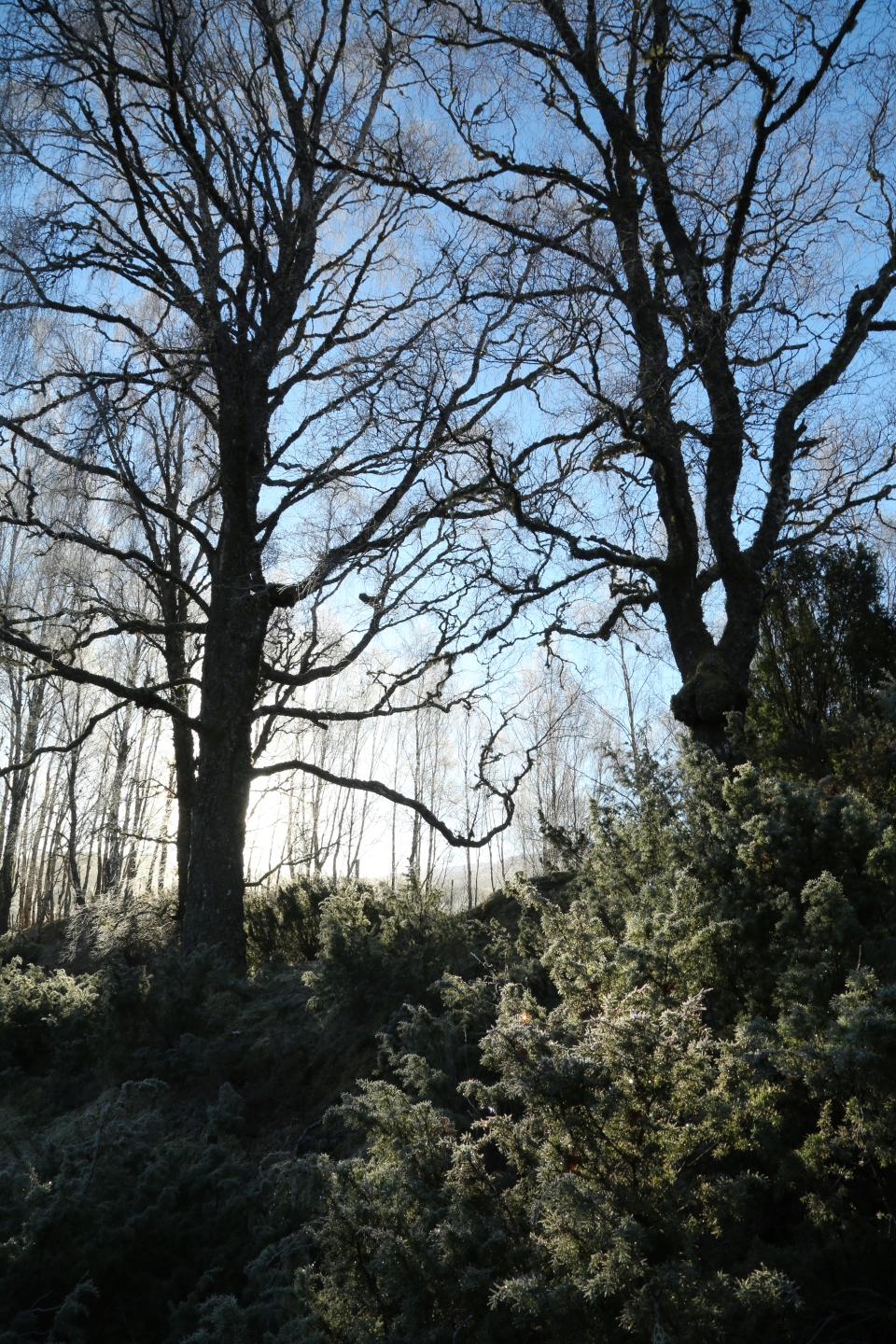
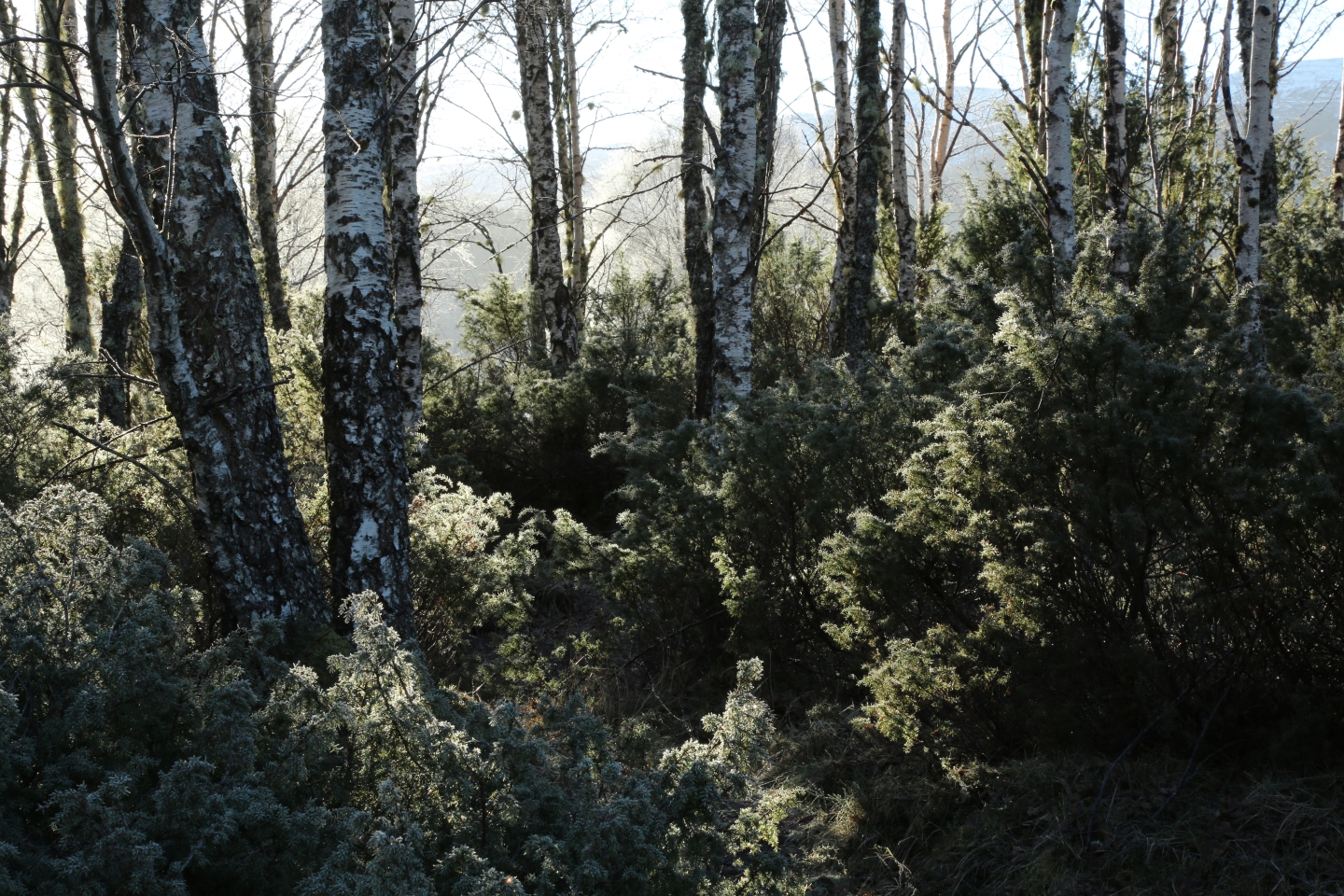
Somewhat unusually for me, I was taking these photographs very quickly, partly because I wasn’t having to set the camera up for each one on my tripod. The need for fast action was also due to the fact that the sun was rapidly melting the frost, even as I looked at it, and because of the limited time I had before our first conference session of the day began.
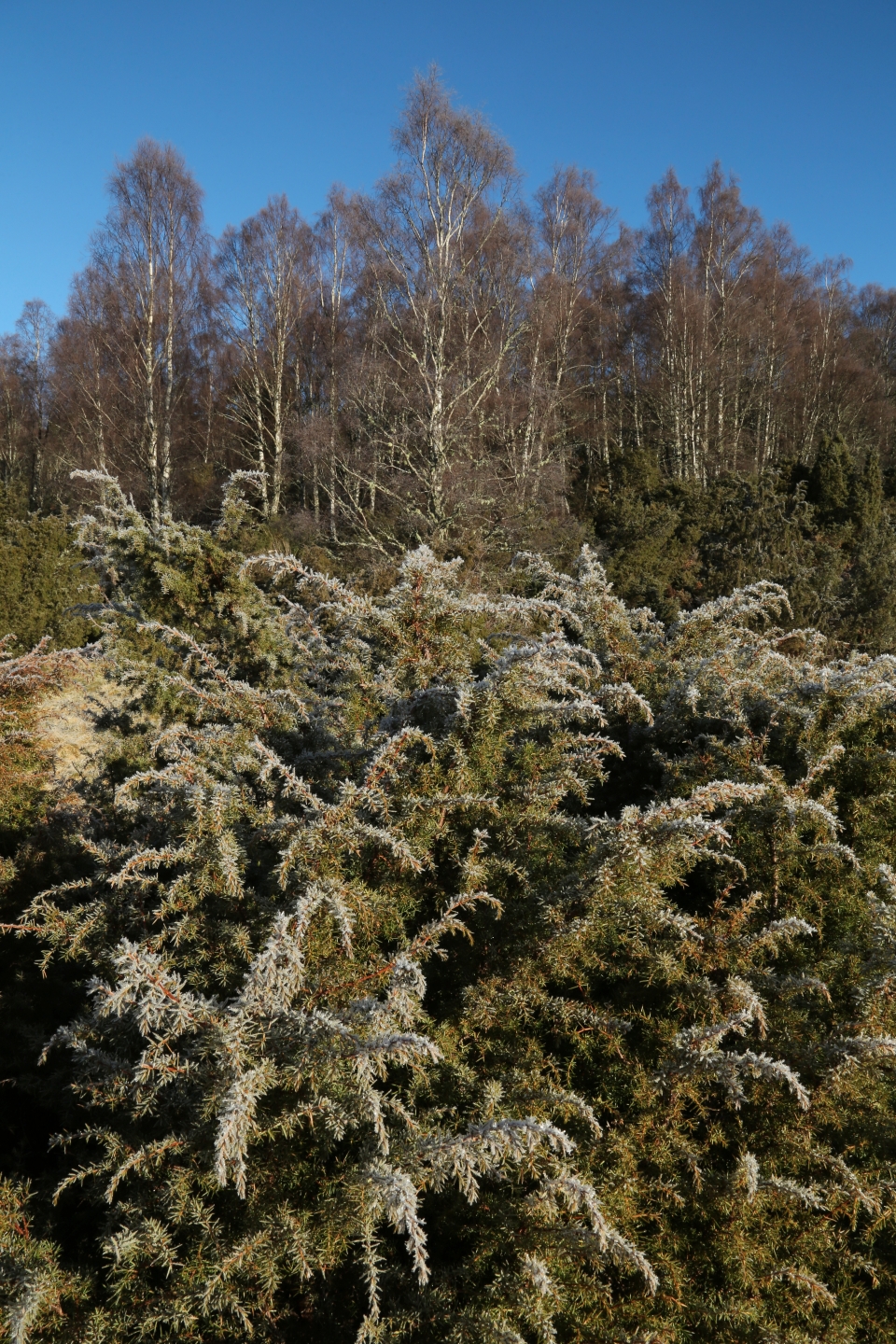
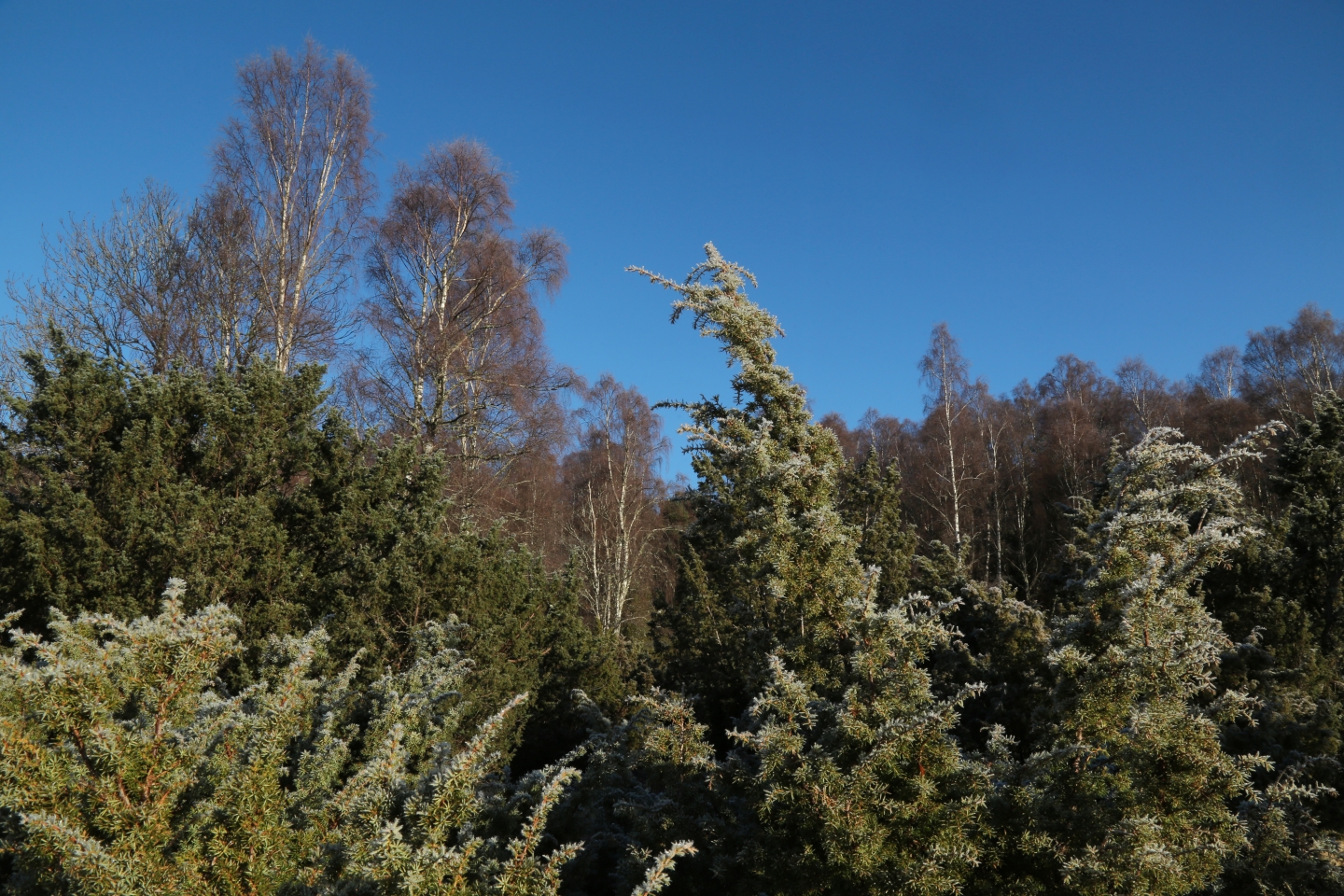
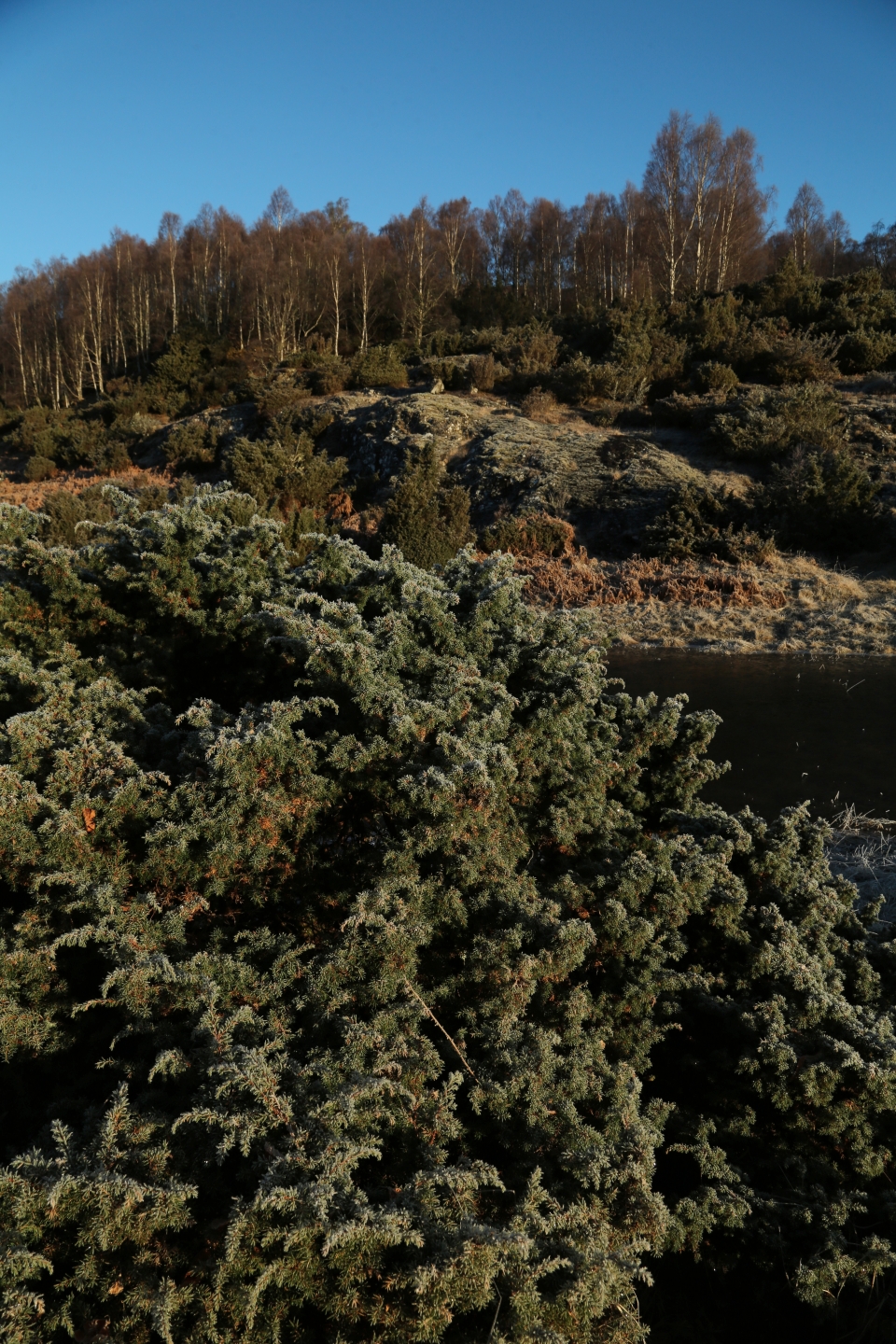
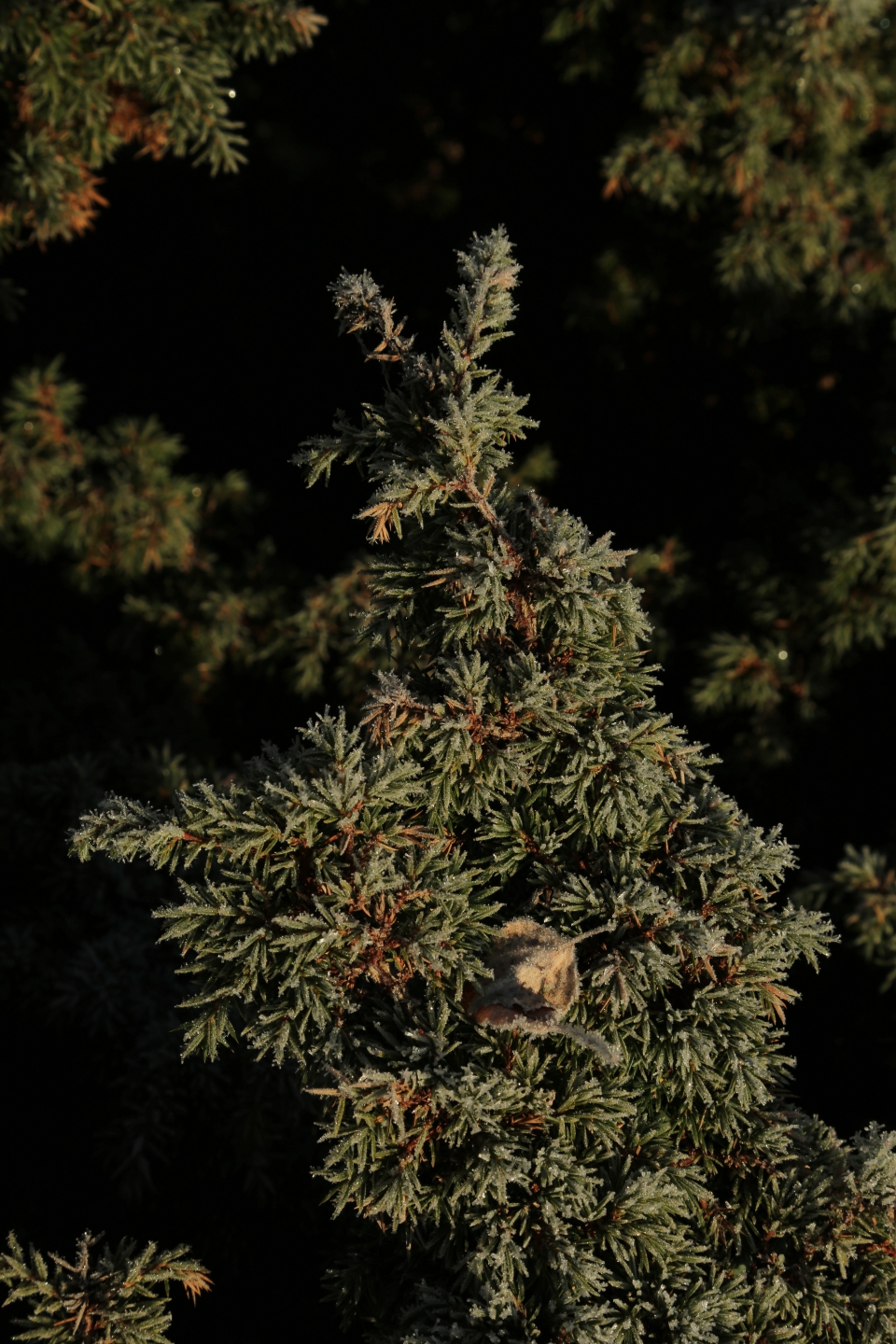
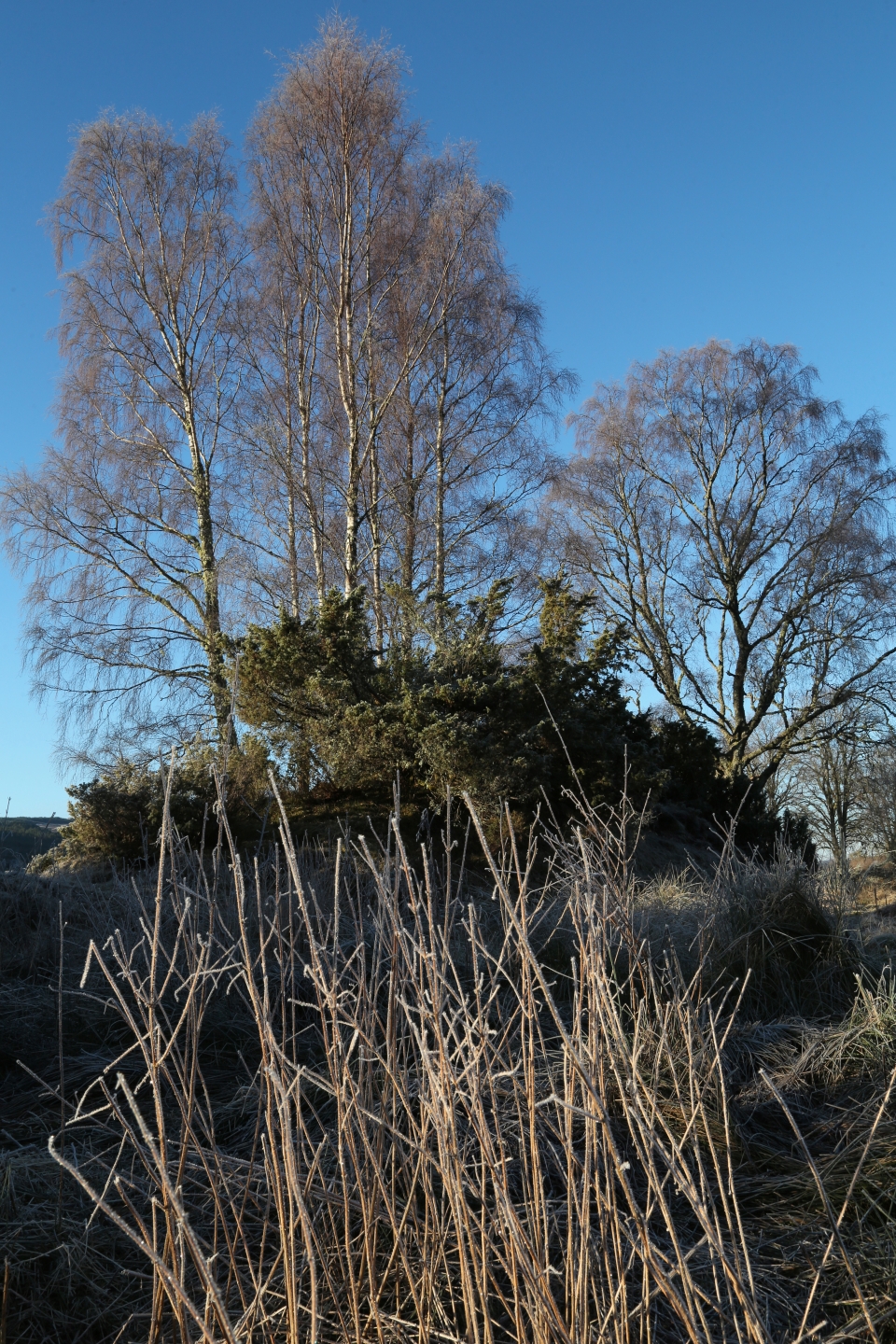
All too soon it was time to turn around and head back to the buildings for our session. The return walk provided a different perspective as the sun was behind me now, so I took a few last photographs of the birches and junipers in full sunlight. I’d been outside for less than an hour, but the time had allowed me to immerse myself fully in the transient beauty of the morning, and that provided a valuable counterpoint to all the time spent indoors in our staff conference. By the time we took a mid-morning break from the meeting, the frost had all disappeared , and although it was still a lovely sunny morning, the special qualities of the early morning light and the frosted landscape had gone, at least until the next cold, sub-zero night produces similar conditions again.
A friend had trees planted at Dundreggan for myself, husband and son some time ago. That was the first time we heard of the wonderful work which is being done in our homeland. I have since bought trees for a Scottish friend and my sister, who lives in Canada now. I hope they will also give trees to others. In this way the trees in the Scottish Highlands will continue to multiply. We left Scotland in 1980 and made our home in Australia. We enjoy the newsletters and beautiful pictures of the Scottish Highlands. My husband works with environmental groups here in Victoria. We live in country Victoria, Australia. Keep up the great work. Regards from ‘Down Under’.