
It was another Sunday to head out into the forest, and like last week, I was seeking some good displays of autumn colours – this time I was going back to Dundreggan. However, as it turned out, like the previous Sunday, it was very windy, which I was slightly dismayed about, not only because of the difficulties it poses for photography, but also because it meant that the leaves would be blown off the trees more quickly than they otherwise would.
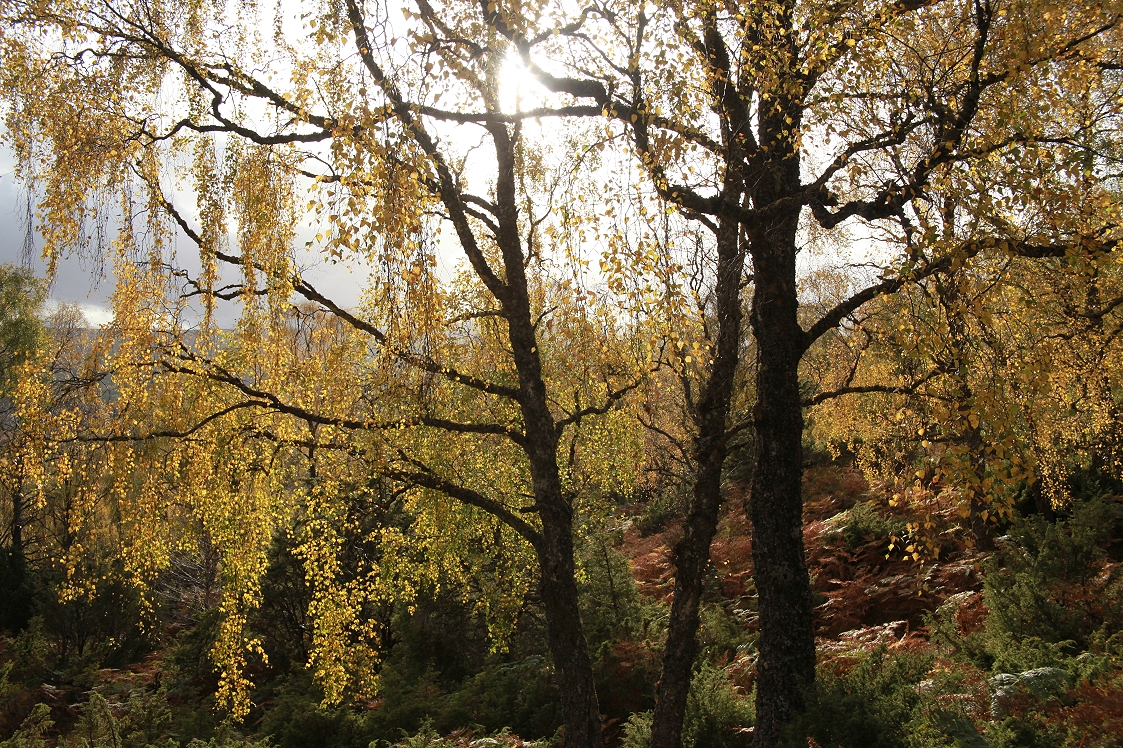
Additionally, because we haven’t had much in the way of frosts yet, the autumnal colours have seemed rather muted so far this year, and some of the leaves are falling from the trees without first going through a bright phase of yellow.
When I arrived at Dundreggan it was a beautiful sunny morning, but sure enough the wind was gusting strongly and leaves were falling all around.
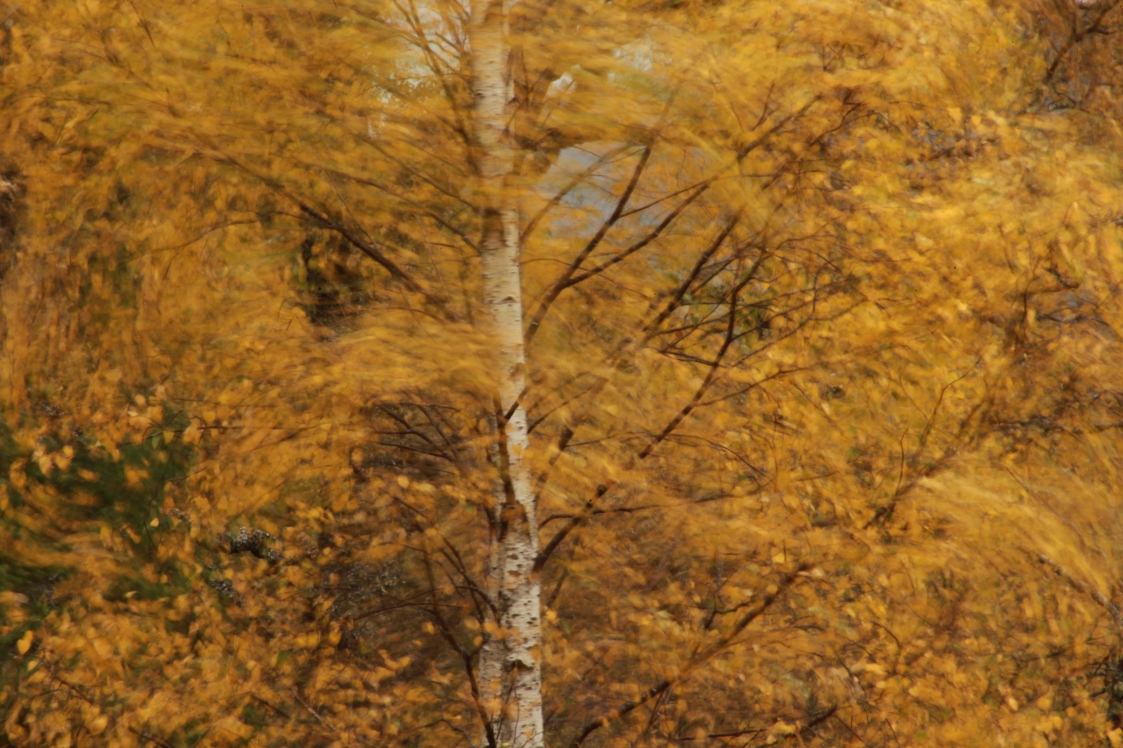
When the wind blew fiercely, there was a flurry of yellow, almost like some strange autumnal version of a blizzard, as the leaves were stripped from the trees. This day, the wind was intermittent, so in between the gusts there were periods of relative calm, and I was able to appreciate the colours more and take a few photographs. During one gust I took a long exposure of one of the trees, seeking to capture the power of the wind in the blurred image.
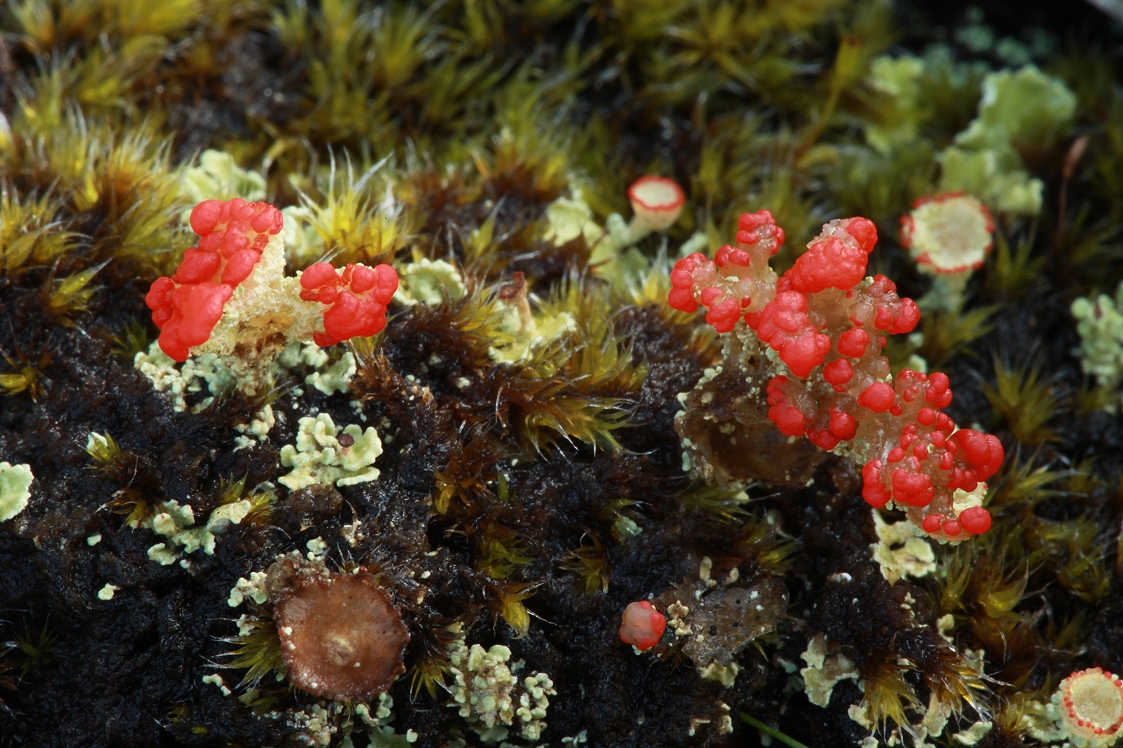
Perhaps inevitably, the falling leaves drew my focus down to the ground, and I soon found myself exploring the forest floor. On some rocks a bright splash of red caught my eye. It was another species of Cladonia lichen (Cladonia coccifera), different to those I’d seen last week in Strathfarrar, but also with red apothecia proclaiming loudly that it was fruiting. This species doesn’t produce cups, but stalk-like vertical growths (known as podetia) that are covered with irregularly-shaped red caps, which are the apothecia. I’m fascinated by the beauty and diverse growth forms of lichens such as these, and I usually can’t resist the opportunity to photograph them, even though I may have plenty of images of the species already. Each one is unique and individual in its shape, and a manifestation of Nature’s boundless creativity and artistic expression.
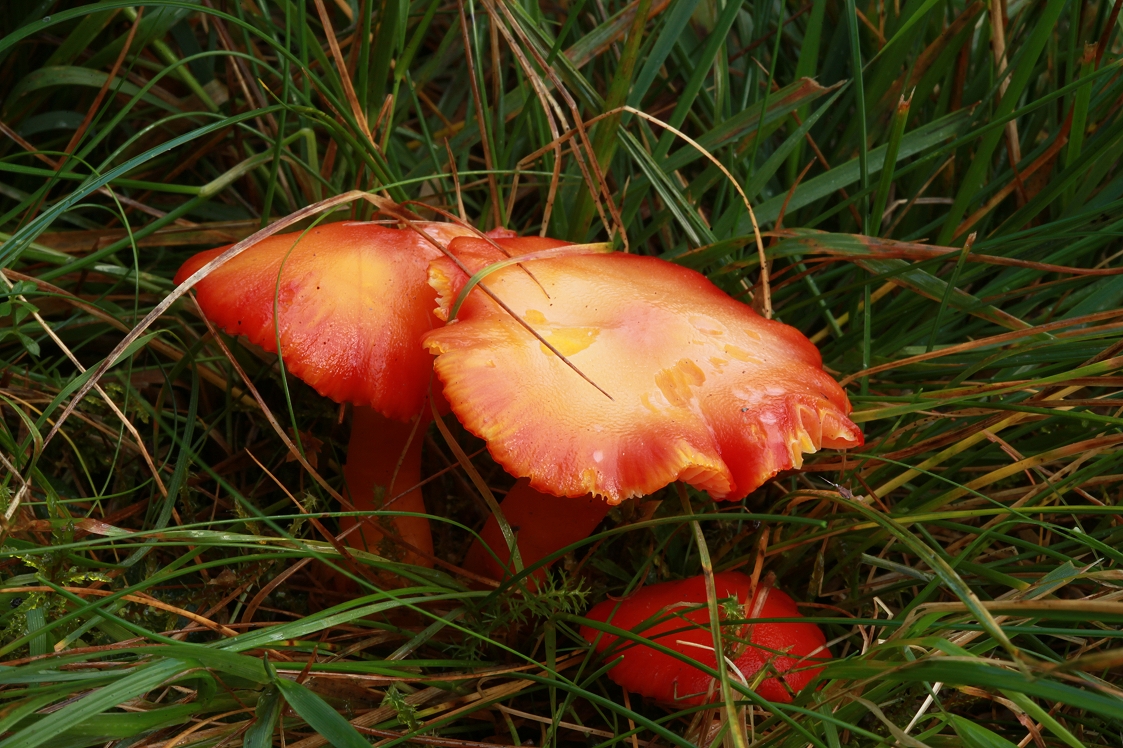
Increasingly I find that once my attention is drawn to the detail of an area, I discover more and more things there that catch my interest. This can result in me spending a lot of time, hours even, in a little patch of forest, exploring all sorts of things I would otherwise overlook if I was just walking past, without slowing down to really see what is there. So it was this day, and nearby to the lichens I saw some brightly-coloured waxcap fungi (Hygrocybe sp.) amongst the grass. They were a little bit past their best, but still quite stunning in the intensity of their colour.
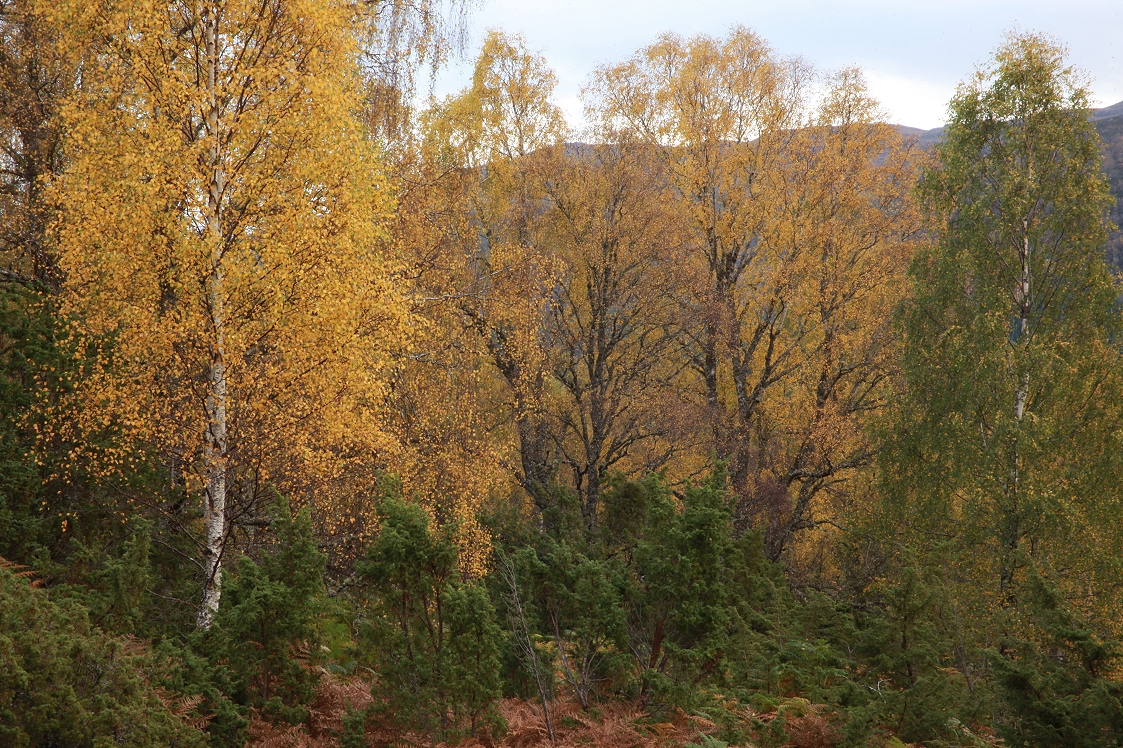
I walked further up into the birch and juniper woodland, and the contrast between the bright yellow of the birches and the rich green of the junipers growing beneath them made for some classic autumn forest landscapes. In this part of the forest, the occasional Scots pine growing through the canopy of the birches also added to the colour contrast – I find the combination of bright yellow and forest green very pleasing to the eye.
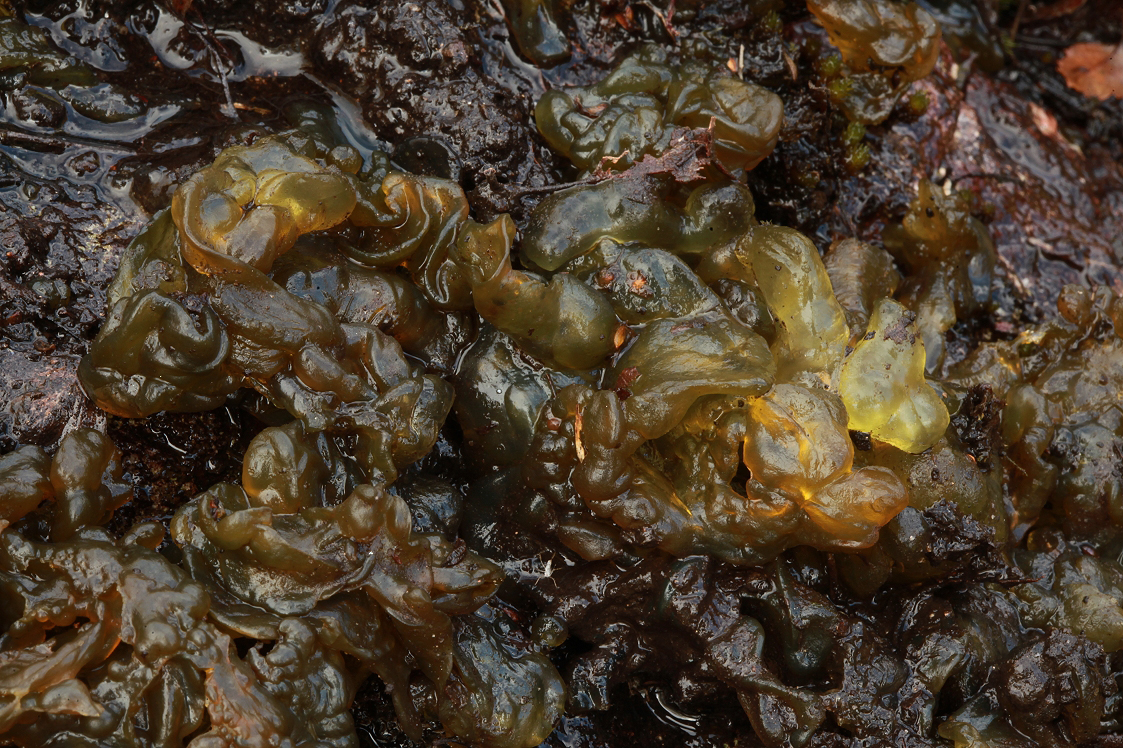
As I walked, I came to an area of exposed, sloping rock, which looked quite wet and slippery. Looking closer, I noticed a brownish-yellow jelly-like amorphous shape on the rock surface, which I recognised as a cyanobacterium (Nostoc commune). Also known as a blue-green alga, I had come across this species earlier in the summer in Glen Affric, and had drawn upon the knowledge of an expert to get it identified. Cyanobacteria can suddenly appear after rain, because they get rehydrated after perhaps being dormant for a while, and take on different shades of green, brown and yellow, depending on the conditions.
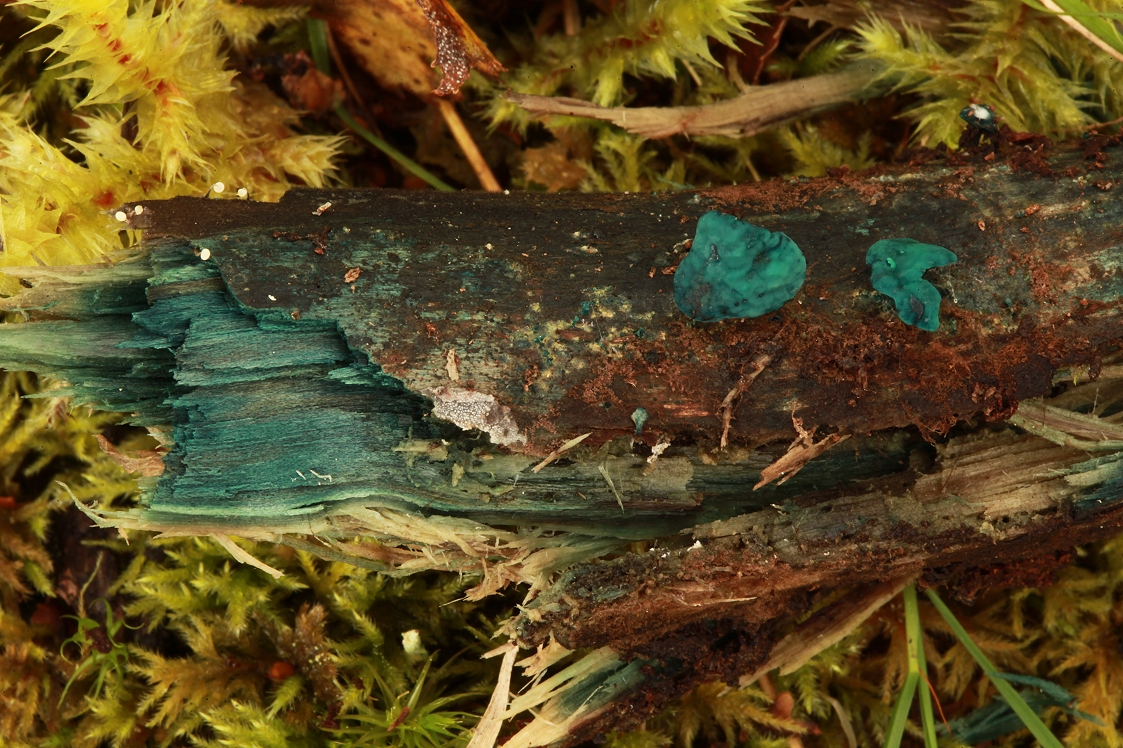
A little further on, as I looked underfoot, a glimpse of turquoise drew my attention. It was the green elfcup fungus (Chlorociboria aeruginascens), a saprotrophic species that grows on dead wood, helping to break down and recycle the cellulose and lignin it contains. This is another species I’m fascinated by, and whenever I see it, I always have a close look, because the fungus occasionally fruits, producing green discs, but I’d never yet seen any of them. This day was different though, and when I picked up the piece of wood the fungus was growing on, I was delighted and excited to see some discs on it!
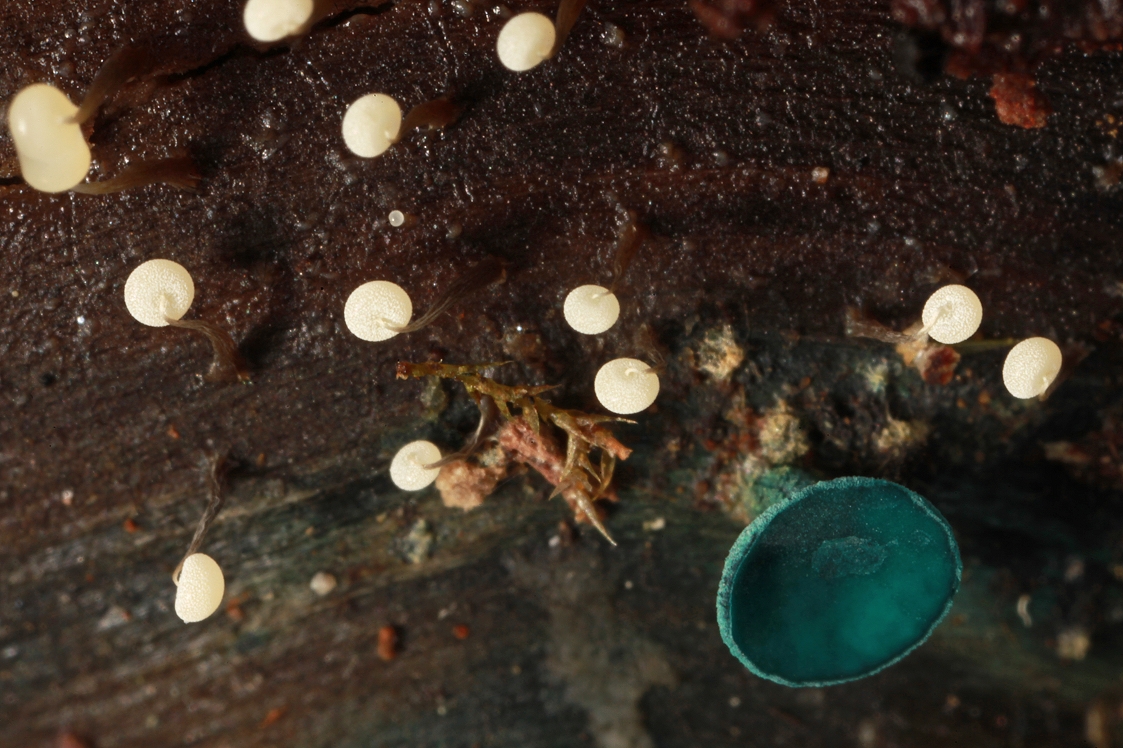
I wondered if it was because of the very wet summer we’ve had, which has led to such an abundant season for fungi in general, that had resulted in this species fruiting as well, given that I’d searched in vain for discs on every sample I’d seen in the previous couple of years?
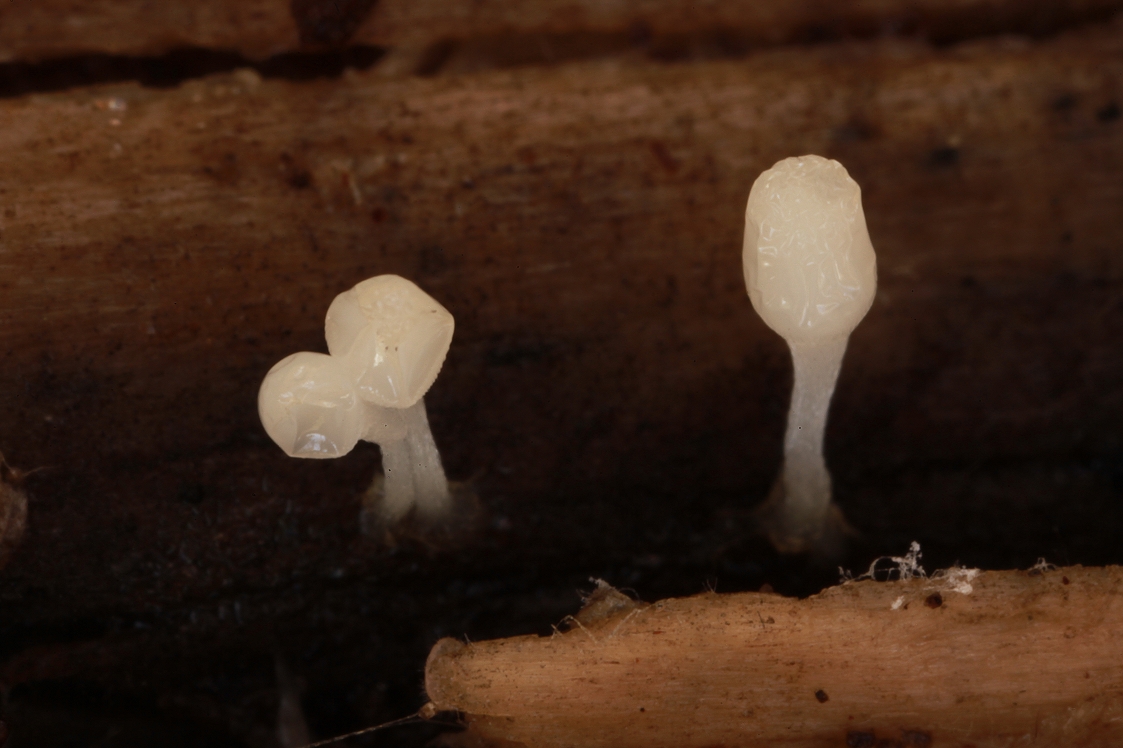
As I continued to look at the piece of wood, I also noticed some slime mould sporocarps on it, and I’ve had them identified as being a different species (Physarum album) from those I had seen in Glen Affric recently. With my growing fascination for the remarkable organisms that slime moulds are, I find myself encountering them more often in the forest these days, and the more I see them, the more I want learn about their unusual, multi-phase life cycles.
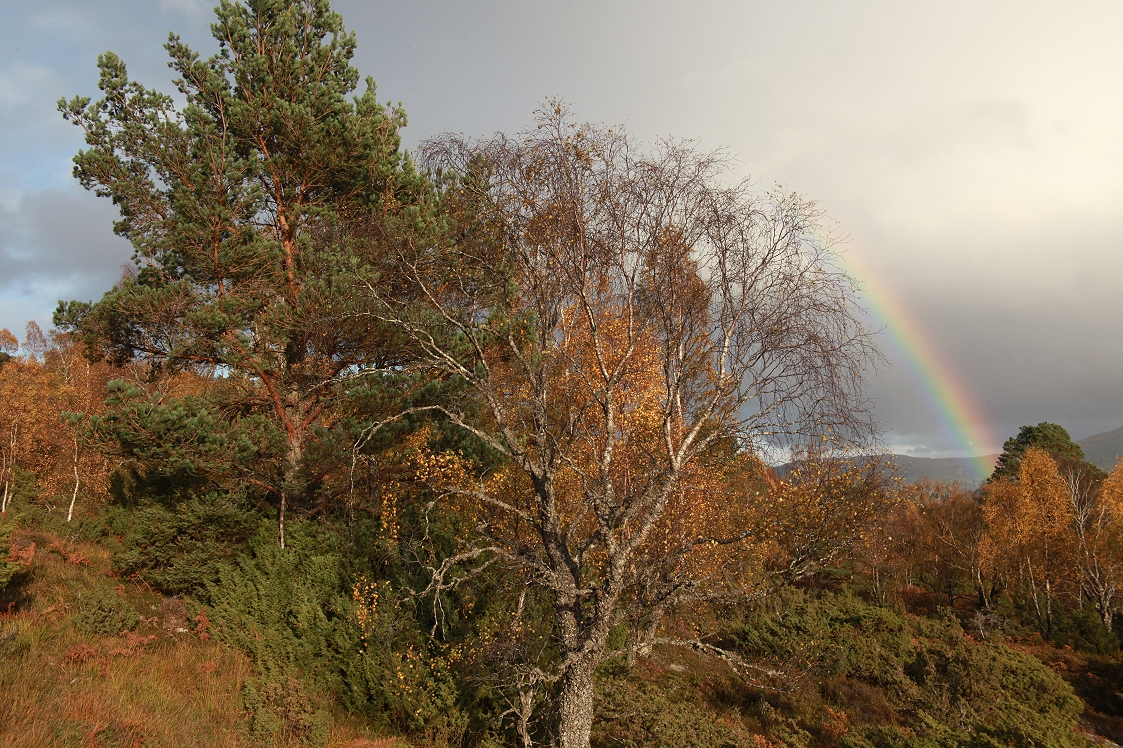
By this time it was late in the afternoon and I was due to leave soon to return home. However, I headed uphill a little more, to get to where the trees thin out and there would be a view over the forest, as the sun was now shining. When I got there, I could see a band of rain moving down the glen from the west, and I knew from experience that it would pass by below me. If I waited for a few minutes there was a good chance a rainbow would appear, when the rain coincided with sunshine. A couple of years previously I’d been in almost the same spot when that had happened, and sure enough this time again a rainbow appeared a few minutes later. Being prepared, I was able get some good images of it, and it seemed like a very fitting and rewarding end to another good day in the forest.
Beautiful blog! The rainbow image is lovely, and yes, what a rewarding and fitting end to your forest trip, Alan. Thanks for sharing.
Thanks Nicki! Rainbows always feel like a real gift when they appear in the sky. I’ve seen a few more recently, but didn’t have the camera handy…
Really enjoyed reading your articles – just spent a windy and cold week in Speyside enjoying the autumn colours but you have also reminded me to look for the smaller details as well.
Thanks Margaret – I had more luck with the autumn colours this week-end, although it was windy and wet most of the time. Glad you’re enjoying my blogs!
Thank you for your blogs, Alan – I’m so much enjoying them. Today’s was like a breath of fresh air after a long day up in London. Please keep them going.
Thanks for your feedback, Diana. I’m just back from 3 days out at Dundreggan and a neighbouring pinewood remnant on the south side of Glen Moriston, so I’ve got enough to do another blog or two … when I have the time!