
In the summer of 2012, my colleague Steve Morris, our Operations Manager at Dundreggan, discovered some previously unknown large bushes of dwarf birch (Betula nana) in the large exclosure of new native woodland established by the previous owner of the estate in 2002. The fence for that area includes some ground reaching up to about 450 metres in elevation, and there must have been some dwarf birch plants already there, which began to grow once they were protected from overgrazing by red deer (Cervus elaphus).
When I was out looking at those dwarf birch plants myself in July, I spotted a small caterpillar inside a partial silk wrapping around some of the leaves, and took a couple of photographs of it, thinking it would be easy to get the species identified.

However, that turned out not to be the case, as the two different experts I emailed the photos to both said it was very difficult to identify micro-moths from the physical caterpillars themselves, and would be impossible to do from the photos I’d taken.
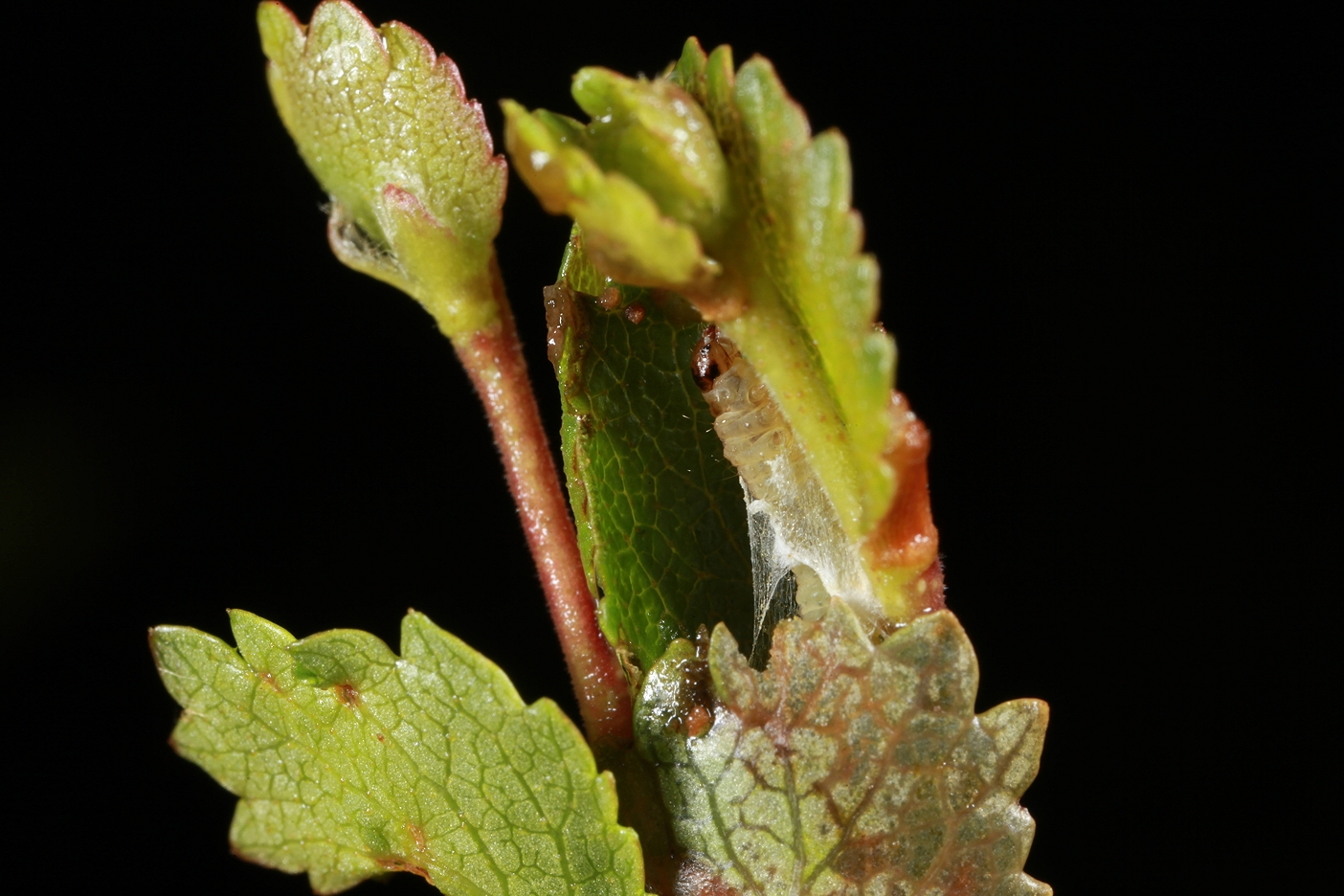
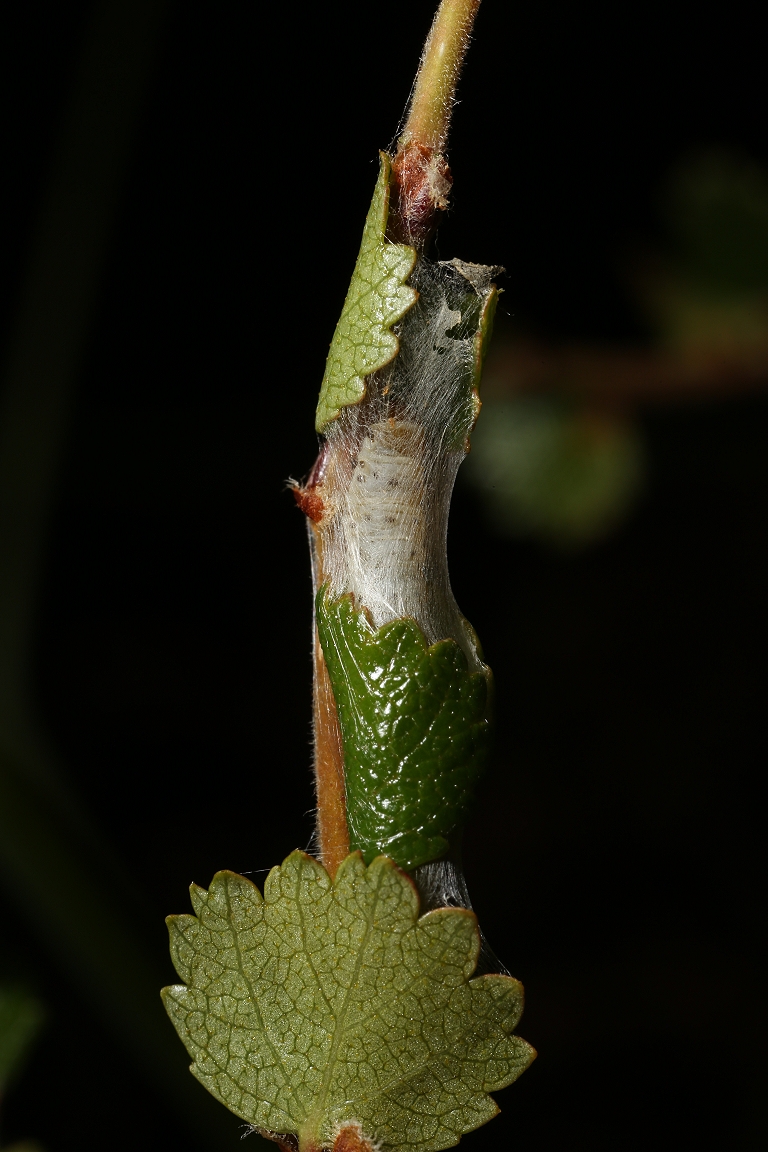
I was rather disappointed not to be able to get this larva, which had made a very photogenic home for itself on the dwarf birch, identified, but there was nothing more to do about it.
That changed though when I visited the same patch of dwarf birch in July this year. I was quite surprised to find, on the very same dwarf birch bush, and in virtually the same place on it, another caterpillar in a similar silk structure. This time though I was much better organised, and I took a series of photographs of the caterpillar, which seemed to cooperate with me by coming up out of the silk-spun leaves, so that I got a clearer view of it. I also knew that it would not be possible to identify the species from the caterpillar itself, so I clipped off the section of the dwarf birch plant it was on, to take it home so it could be reared to adulthood.
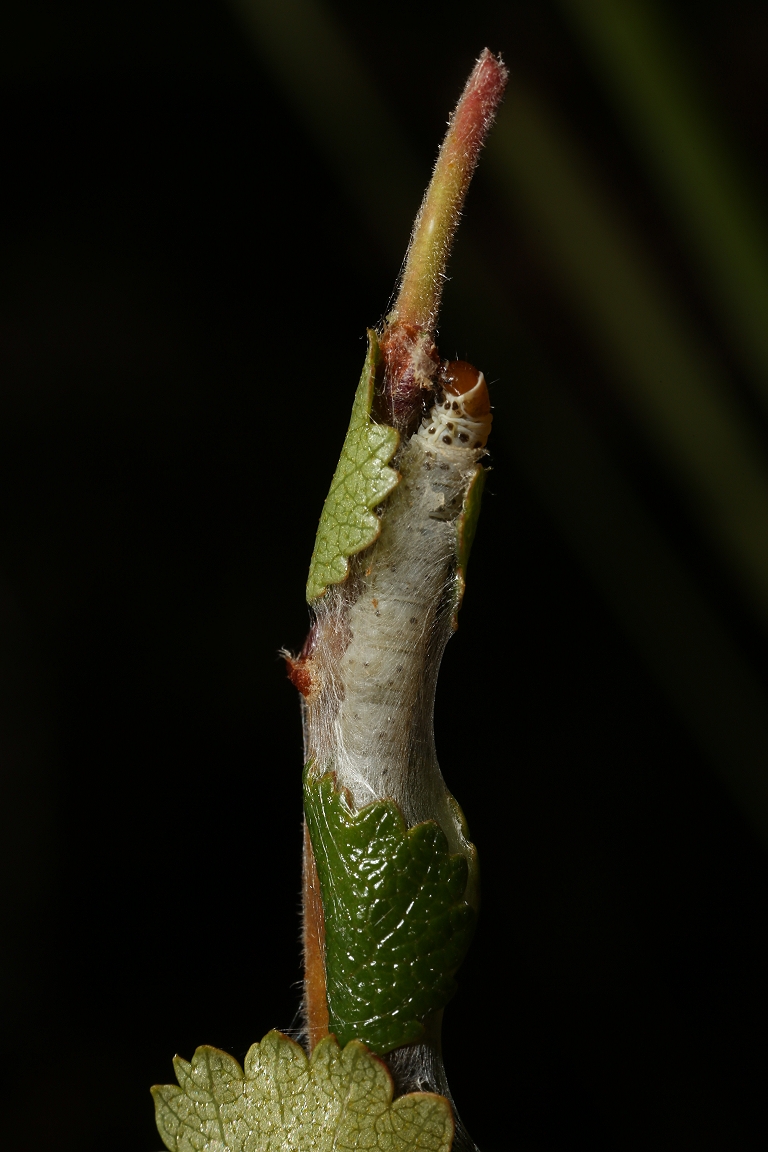
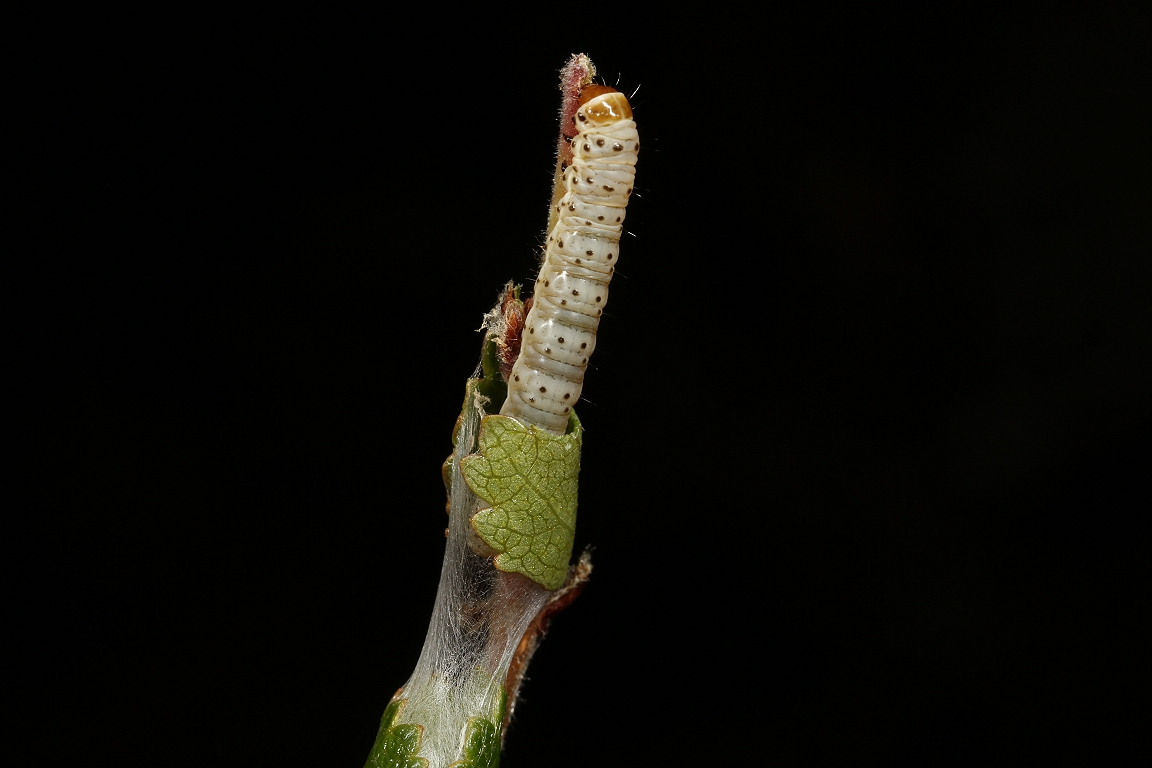
Before doing so though, I watched fascinated for a while, as the caterpillar came out, went back inside, and then came out again, providing me with the opportunity to take several photographs of it.
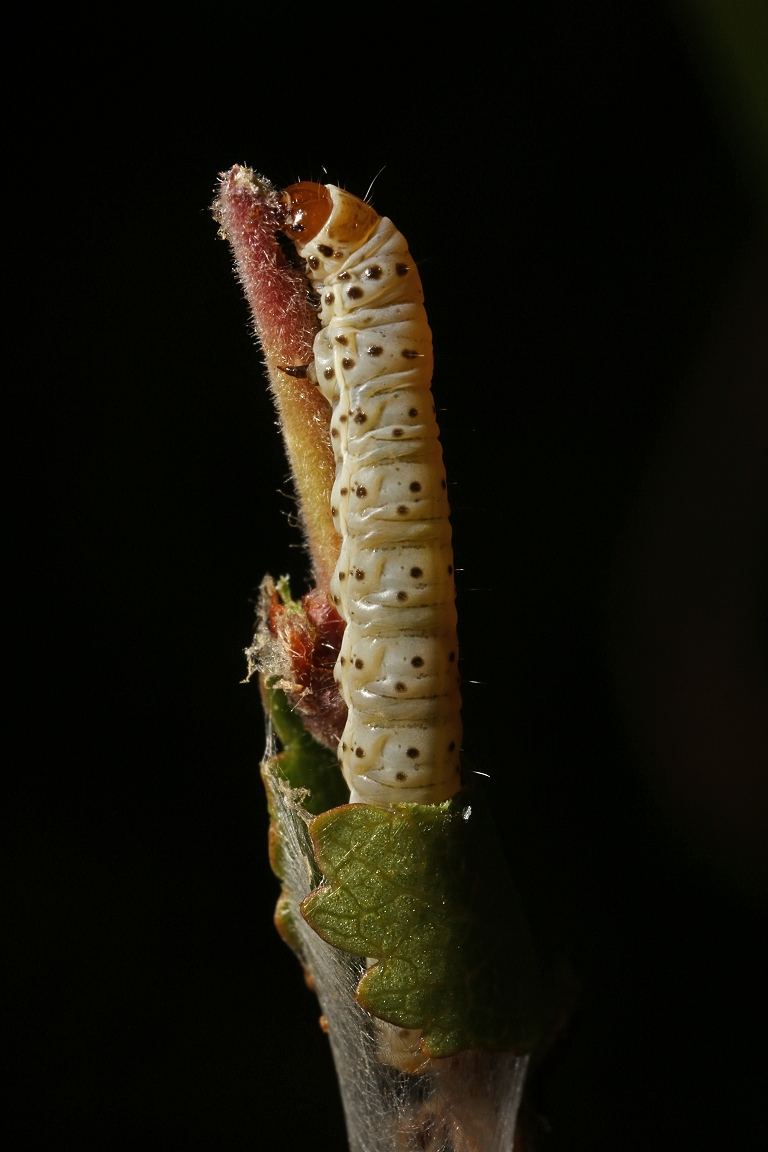
These images don’t really provide a sense of the scale though, as my macro equipment makes the caterpillar look quite large. However, the dwarf birch leaves are about the size of a person’s smallest fingernail, so it really was quite tiny, and was obviously the larva of a micro-moth. I did have some qualms about removing the caterpillar from the plant, but I knew it was the only way I would get it identified, so I decided to go ahead anyway. I cut off several inches of the dwarf birch below where the caterpillar was living, so that it would still have some leaves to feed on. However, I’d noticed that there wasn’t much feeding damage visible on the leaves, so I suspected that the caterpillar may have been just about ready to pupate, and had prepared the silken retreat to do so, out of sight of potential predators for the time when it would be completely vulnerable, as it underwent the metamorphosis from larva to adult moth.
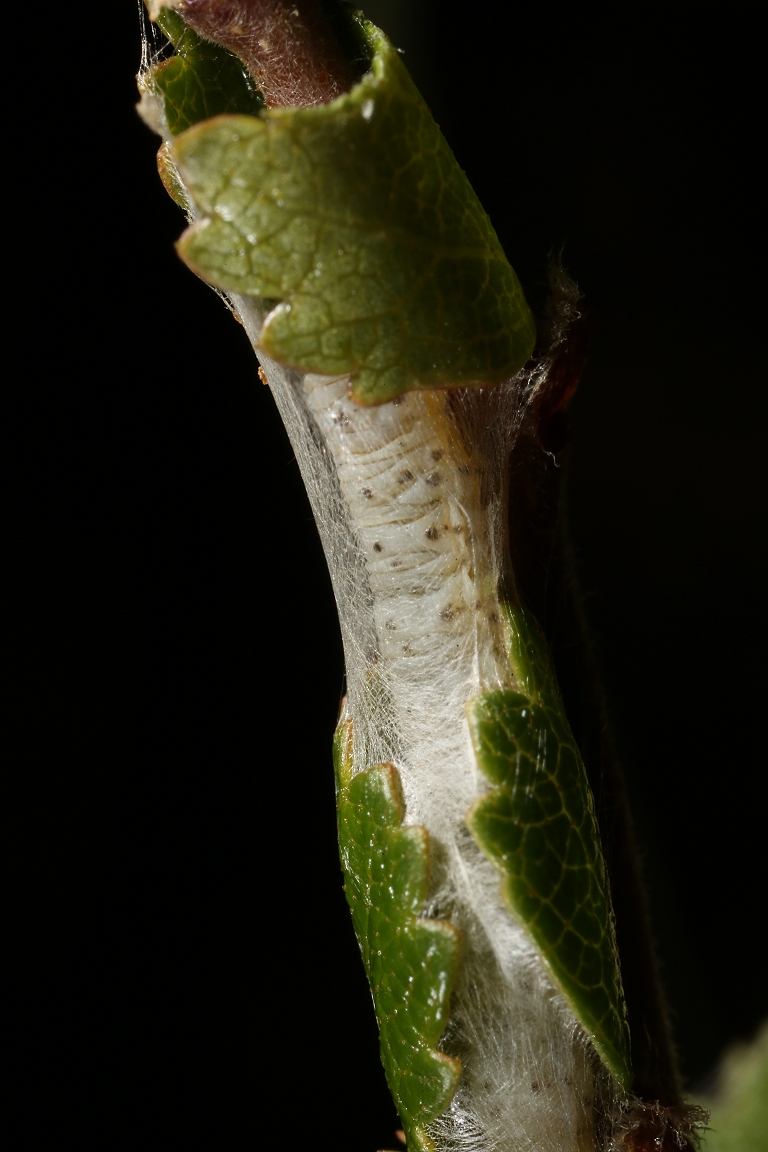
When I got home, I emailed the photos I’d taken to a couple of specialists, and one of them, Bob Heckford, replied that it looked like a species of Epinotia, possibly Epinotia solandriana, which makes silken tubes in the leaves of (regular) birch trees. However, as I suspected, Bob said it would need an adult to make a definitive identification. By the time I received his reply, the caterpillar had indeed entered its pupal phase, and from looking on the Internet, I’d found that the species he suspected it could be has a flight period of July/August. This meant that it would likely emerge as an adult quite soon. The only problem was that I was about to leave for a 10 day trip to Ireland, which meant it could emerge as an adult during my absence! I therefore decided to take a chance and send the pupa to Bob, who lives at the opposite end of the country to me, in the hope that it would survive the journey, and if it emerged, he’d be there to see it.
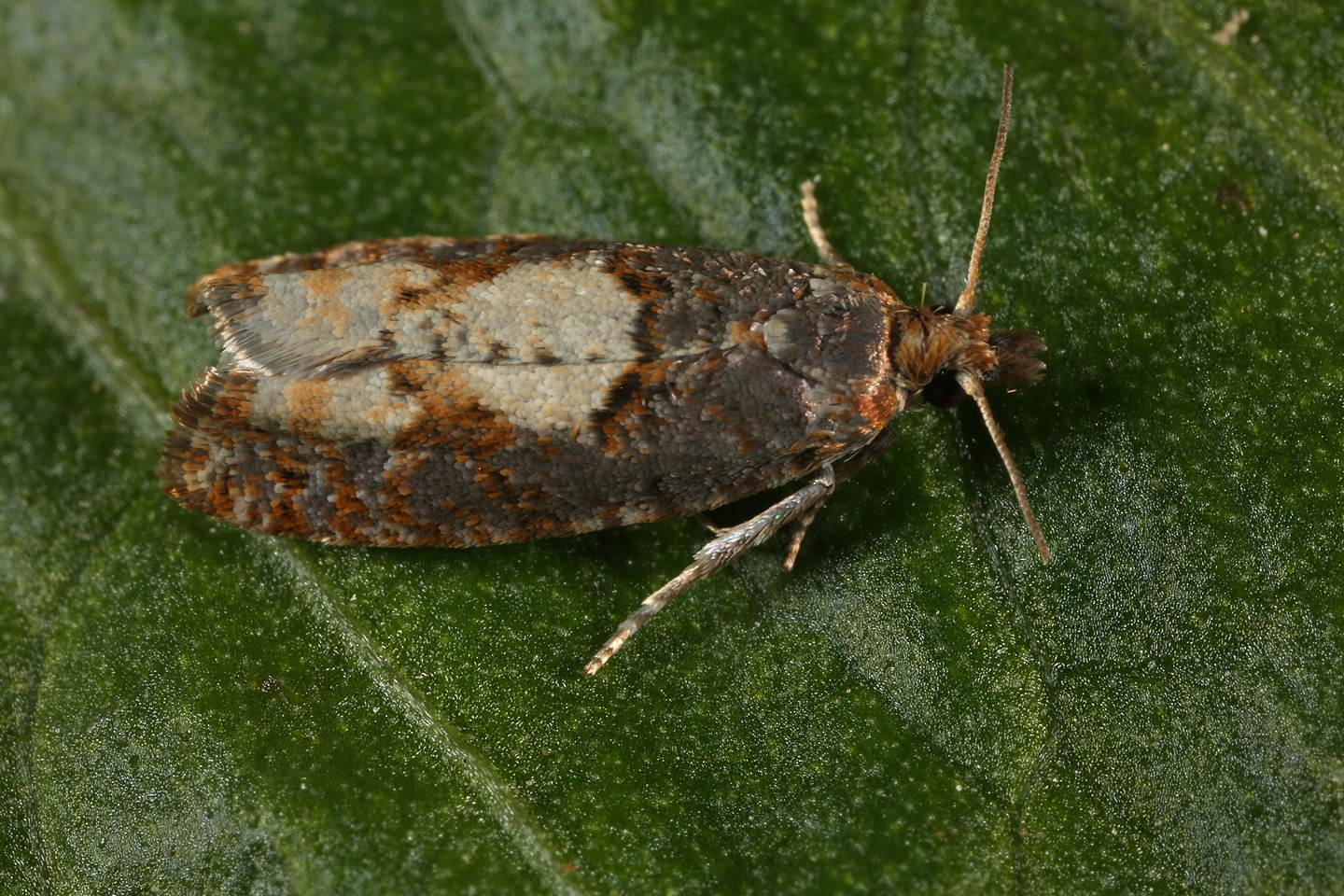
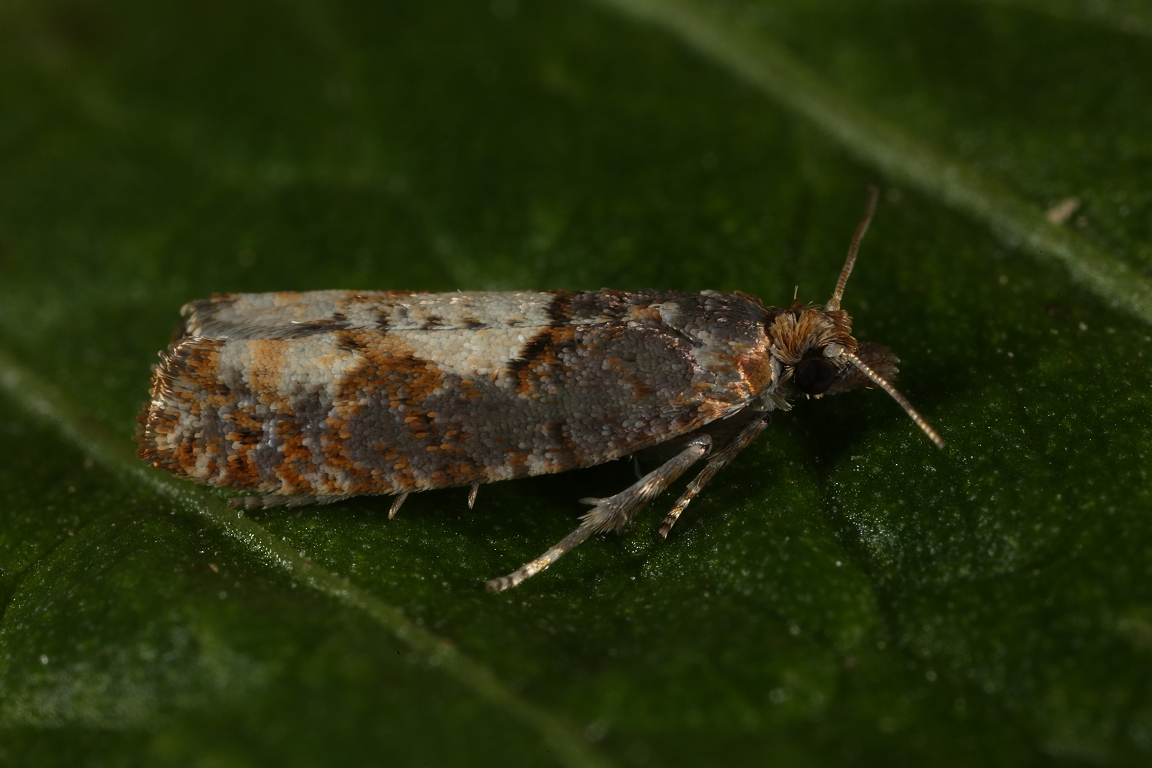
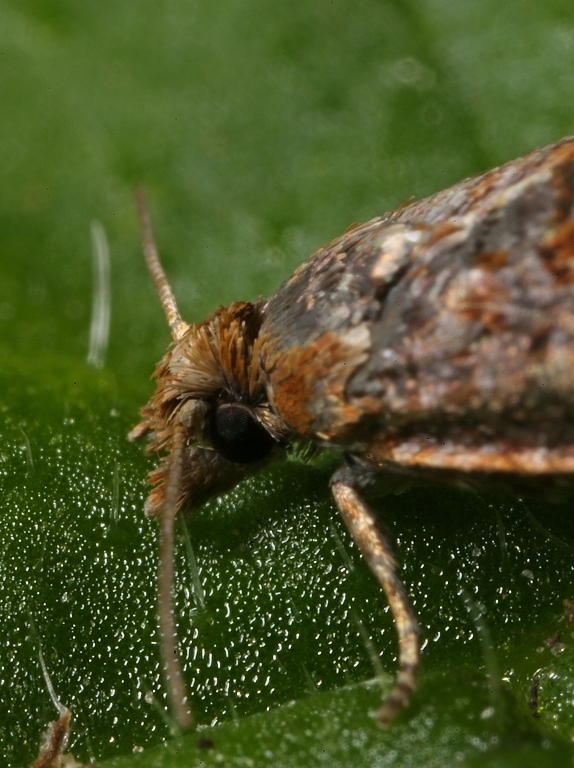
I duly went off to Ireland, and when I returned, I got an email from Bob a few days later, towards the end of August, saying that the adult micro-moth had emerged! He’d been able to identify it, and although it wasn’t the species he had thought, it was a closely-related one, Epinotia trigonella, which is quite common throughout the country. However, he suspected that it hadn’t been recorded from dwarf birch before.
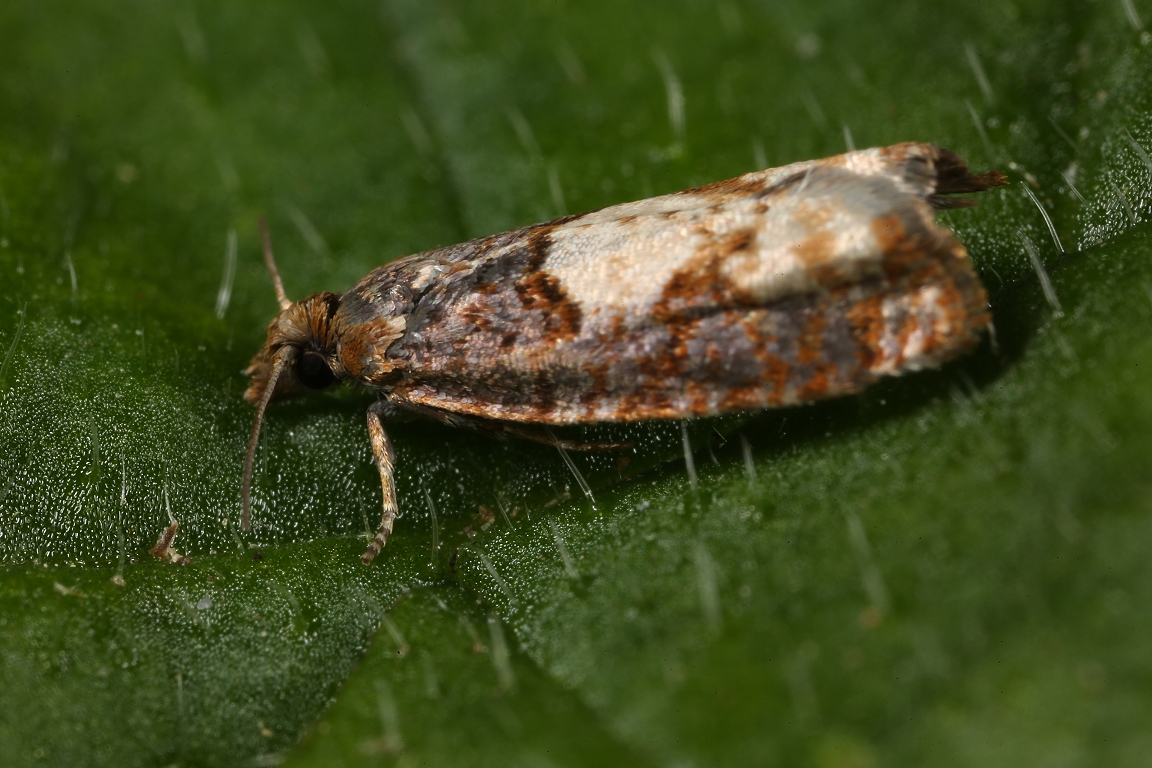
I was delighted by this news, but I was also keen to get some photographs of the adult moth, so I took another chance and asked Bob to post the moth back to me. Thanks to the efficiency of the Royal Mail, it didn’t take long to arrive, and the moth was still alive when it reached me. I was able to take a series of photographs of it, before releasing it in my garden. I don’t know whether it would find a mate there or not, but Bob had said it’s a common species throughout the UK, and I have a couple of silver birch trees in my garden, so I thought it was as good a place as any to let it go in. I did so with much gratitude for it having been such an interesting subject for me to photograph, and to write this blog about. It had also done remarkably well for such a small invertebrate – having survived the journey from Scotland to Cornwall and back again!
I will never know what the species was that I photographed in 2012, as there are a number of very similar looking caterpillars from a variety of micro-moths, but I was very pleased to have a successful outcome for the caterpillar I’d found this year. It has added to our knowledge of the species that are feeding on dwarf birch at Dundreggan, and are benefitting from the regeneration of the plant that we’re achieving on the estate. It was also a very good experience for me to be able to rear a caterpillar through into its pupal phase and then have the adult successfully identified before being released into the wild again. This gives me confidence to attempt this with more species in future.
Leave a Reply