
In the second half of July I spent a day in Glen Affric exploring the Abhainn Gleann nam Fiadh burn, which flows down from the upper flanks of Carn Eige, the highest peak north of the Great Glen in Scotland. This is the largest of the tributary burns that feed into the main lochs and river system in Glen Affric, and I’d explored some of the lower section of it earlier in the year. Now, I wanted to continue upstream, particularly in light of the fact that the burn is being seriously considered for a micro-hydro development.

Walking up the track that leads from the road beside Loch Beinn a’Mheadhoin, I kept my eyes open for some fragrant orchids (Gymnadenia conopsea), as I’ve often seen them flowering right beside the path in previous years. Sure enough, they were there again, just where I remembered them from before, although many of them were past their peak of flowering.


I took some time to look at the ripening seed capsules on some of the orchids – a part of the plant that I’d not paid attention to previously, when I’d been interested mainly in the beauty of the flowers. However, the capsules have an elegance and interesting shape to them as well, and this enhanced my appreciation for the species. It also makes me aware of a desire to pay more attention to the fruits of plants in general, not just their flowers!

While I was photographing the orchids, a dor beetle (Geotrupes stercorarius) crawled out on to the middle of the path nearby and remained motionless on a rock for several minutes, almost as though it was posing for me. It provided an excellent opportunity to appreciate the bright blue colour at the edge of its elytra, or wing cases, and to take some good photographs of it from a close distance.
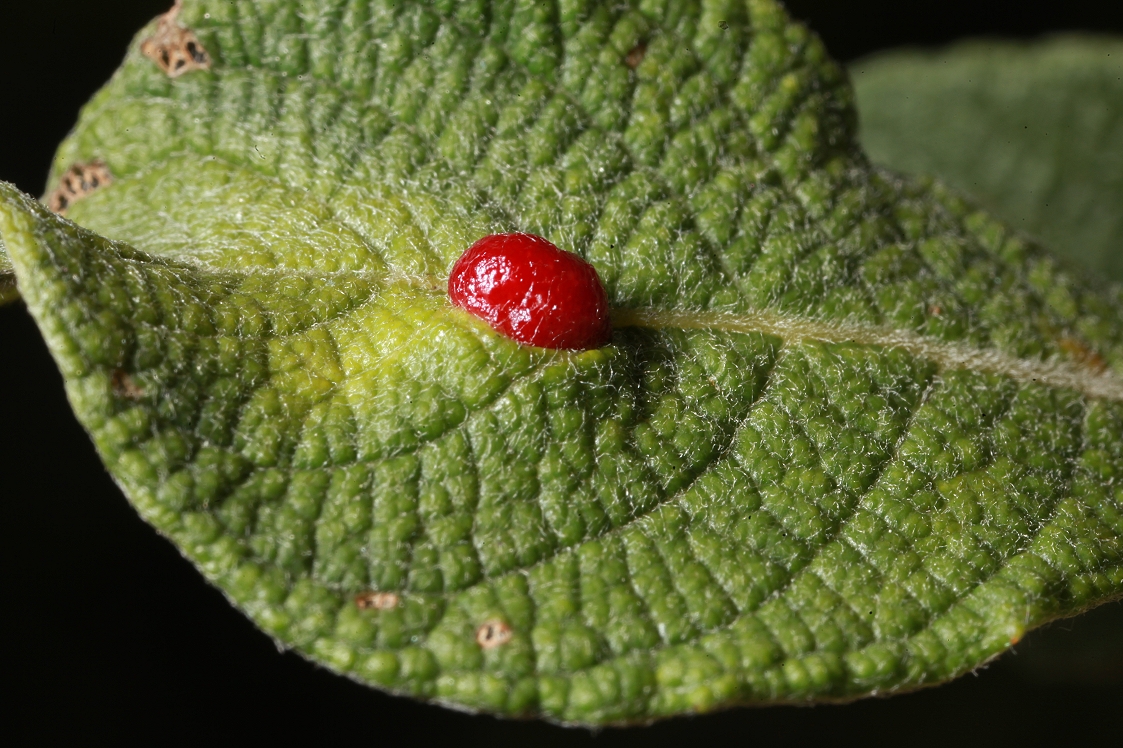
While I was watching the dor beetle, I also spotted an eared willow (Salix aurita) growing near the path, so I went over to have a look at it, as that species often has insects associated with it. My eye was drawn very quickly to a bright red growth on one of the leaves, which I recognised as being a gall. This is induced by a sawfly in the genus Pontania.

I wasn’t sure which species of Pontania was involved in this case, as the gall looked different to other galls I’d seen previously on eared willows. Turning the leaf over, the underside of the gall was very hairy, and the sawfly larva develops inside it, safe from predators, feeding on special nutritious tissue that the tree is induced to produce by the sawfly. I’ll need to consult with an expert to get the identity of this particular sawfly species confirmed however.

On a different part of the same eared willow bush, another flash of bright red colour caught my eye. Looking closely, I saw it was a tiny red mite (Leptus sp.), attached as a parasite to a harvestman (Mitopus morio), which itself was well-camouflaged amongst the twigs of the willow. I see a few of these parasitic mites on harvestmen each year, and sometimes there are several on the same host, where they usually feed on the leg joints. There’s also been sightings of similar red mites attached to dragonflies and damselflies, and I’ve been trying to find someone who can identify them for me. I’ve had no success in the UK so far, but I have contacted a specialist in Poland who has studied them extensively, so I’ve sent this one off to him and am currently waiting to hear if he can tell me which species it is.

While I was photographing the mite on the harvestman, a cleg (Haematopota pluvialis) began flying around me, looking for an opportunity to land and bite, so that it could suck some of my blood. These insects are a pest on warm sunny days in the summer in the Highlands, taking the place of the midges (Culicoides impunctatus) that are the scourge of duller, damp days. I managed to stun this one with my hand, and it then obligingly sat on an adjacent bracken frond, so that I could photograph it, before it flew off, obviously wise enough from its experience not to try biting me again!

Having spent quite a while at this spot beside the path, I headed over to the Abhainn Gleann nam Fiadh burn itself, approaching it at the place I had reached during my previous visit there, earlier in the year. This is where a spectacular cascading waterfall tumbles down through the steep and narrow section of the gorge. I’d explored the gorge up as far as this point in detail then, but only had a very quick look at the next section upstream from there, so that was where I wanted to spend some time this day.

Given my current interest in aphids, I’m always on the lookout for them, and when I reached the waterfall overlook I found an aphid on the underside of the leaf of a bog myrtle plant (Myrica gale). This was a species (Myzocallis myricae) that hadn’t been found during Ed Baker’s recent surveys of Dundreggan so I was pleased to find it here (I had to send the specimen to Ed to get its identity confirmed).

There were also some aphids (Pterocomma sp.) on the leaves of a grey willow (Salix cinerea) growing at the top edge of the steep slope of the gorge itself. No doubt the tree had survived there because the location made it difficult for red deer (Cervus elaphus) to browse it. A pair of these aphids seemed to be having a ‘tete-a-tete’ conversation, as they sat together on the underside of one of the leaves!

On another leaf, I found a different species of aphid, again with wings. This was one (Cavariella theobaldi) that I’d seen with Ed on some eared willows at Dundreggan a couple of weeks earlier, during his survey there. The coloration on this one was different to that of the pair of Pterocomma sp. aphids, but to a casual observer they could almost be mistaken for the same thing.

There were some galls on the leaves of the grey willow as well, and these were induced by a midge (Iteomyia capreae). These galls are visible on both the upper and lower surfaces of the leaves, and on the underside, the exit holes, where the adult midges had emerged from the galls, were clearly visible. This midge also induces galls on both eared willow and goat willow (Salix caprea), both of which occur in Highland glens such as Affric.

Descending into the gorge itself above the waterfalls, there were some beautiful rock formations, where the burn flowed in cascades over the sculpted bedrock. This was what I’d come to explore and I spent a while appreciating the beauty of the flowing water, taking plenty of photographs as I did so.


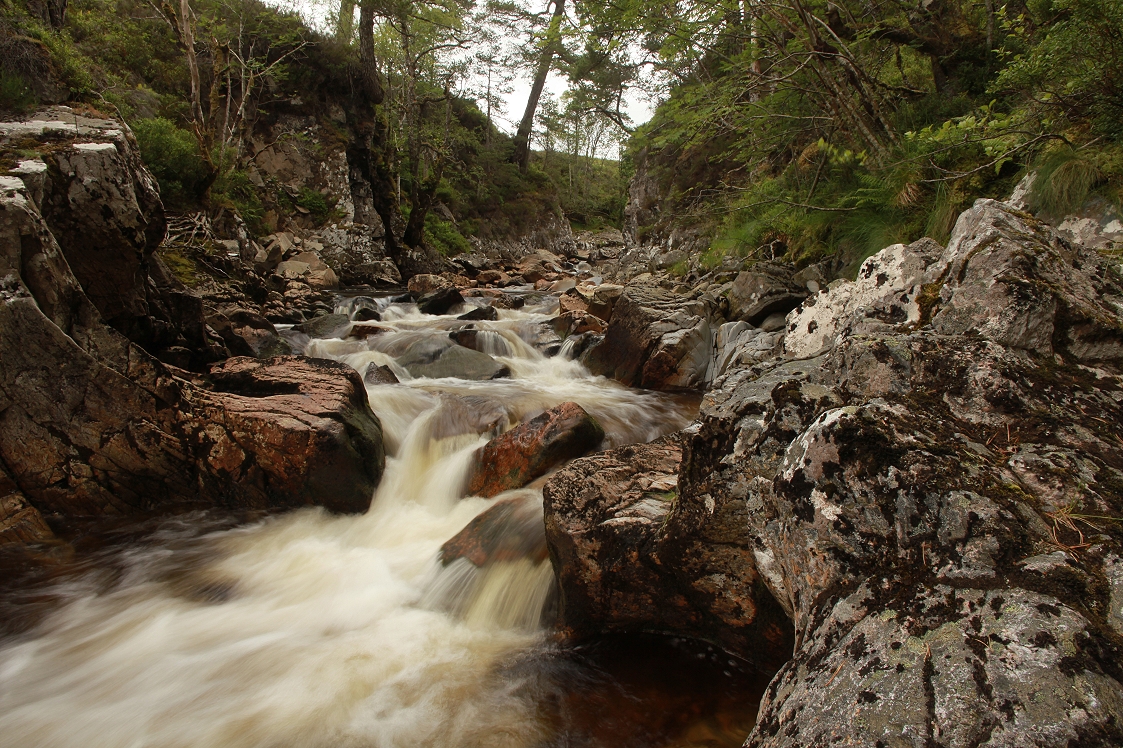
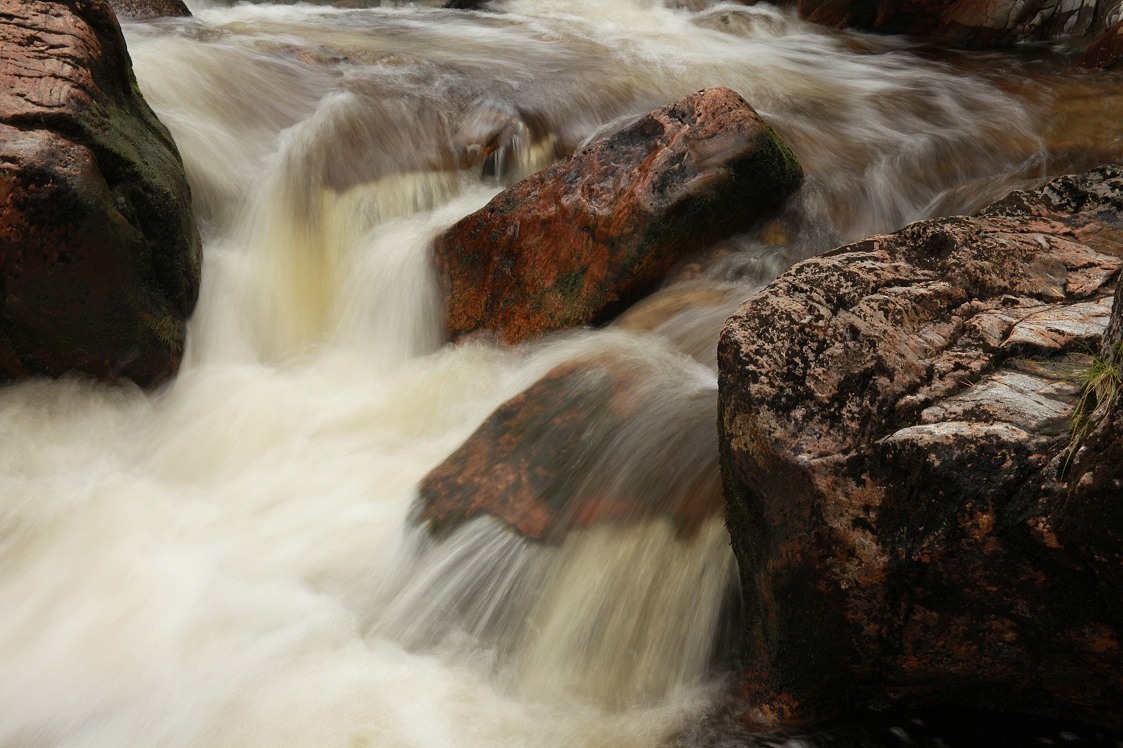


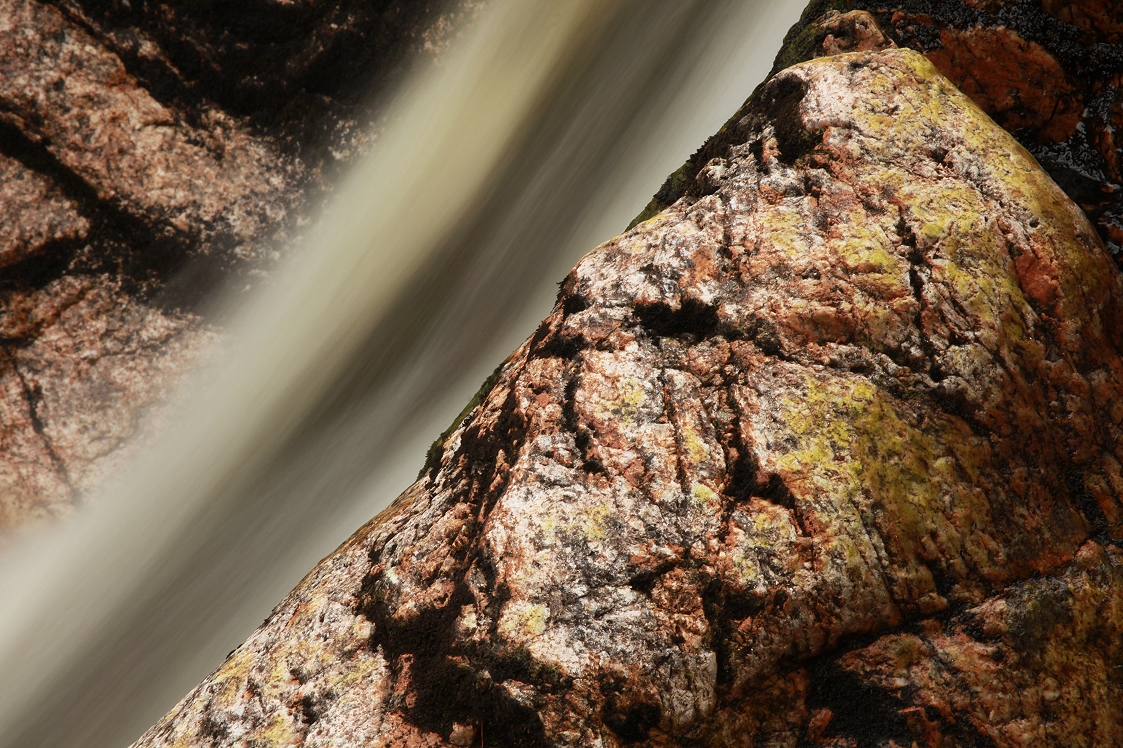
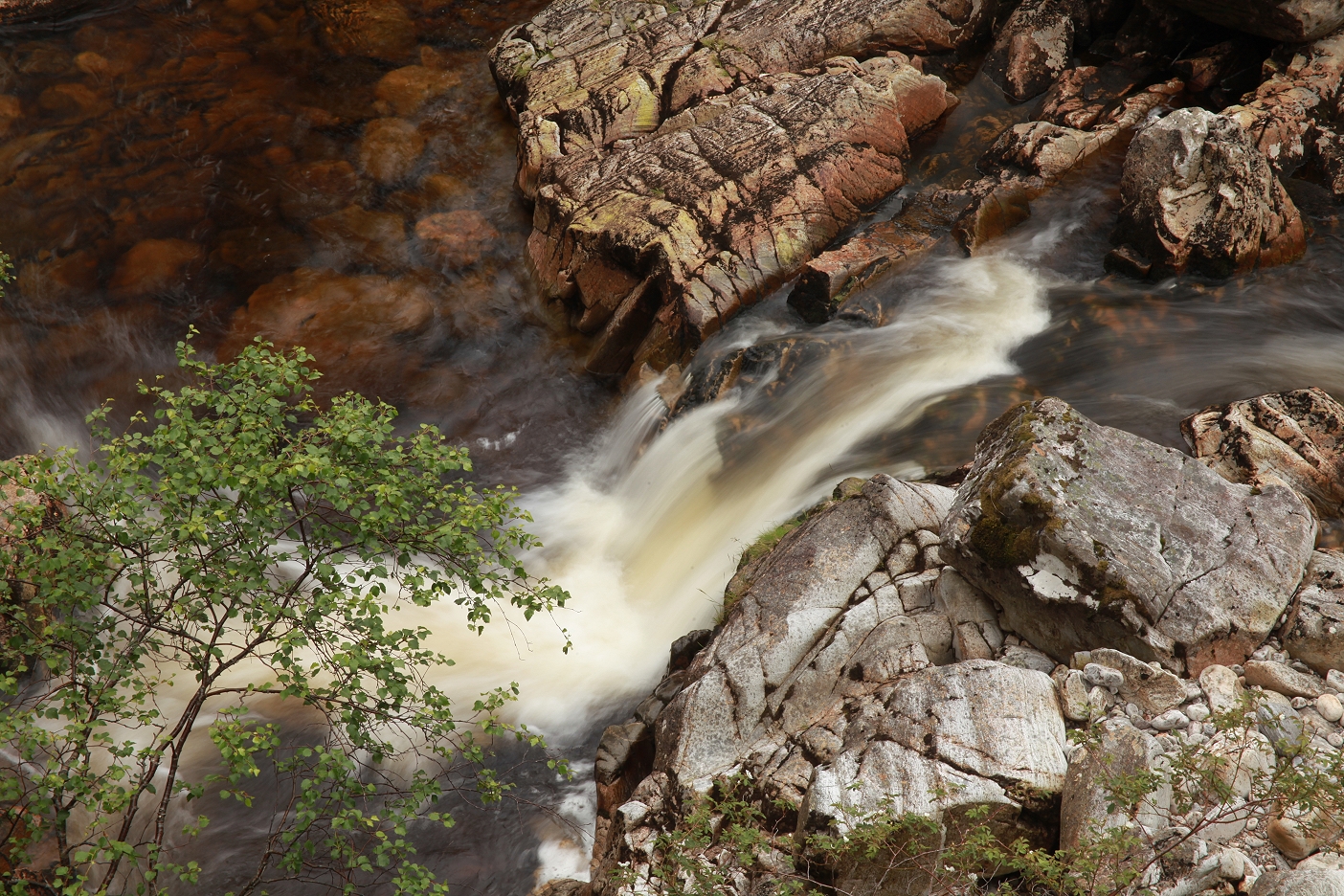
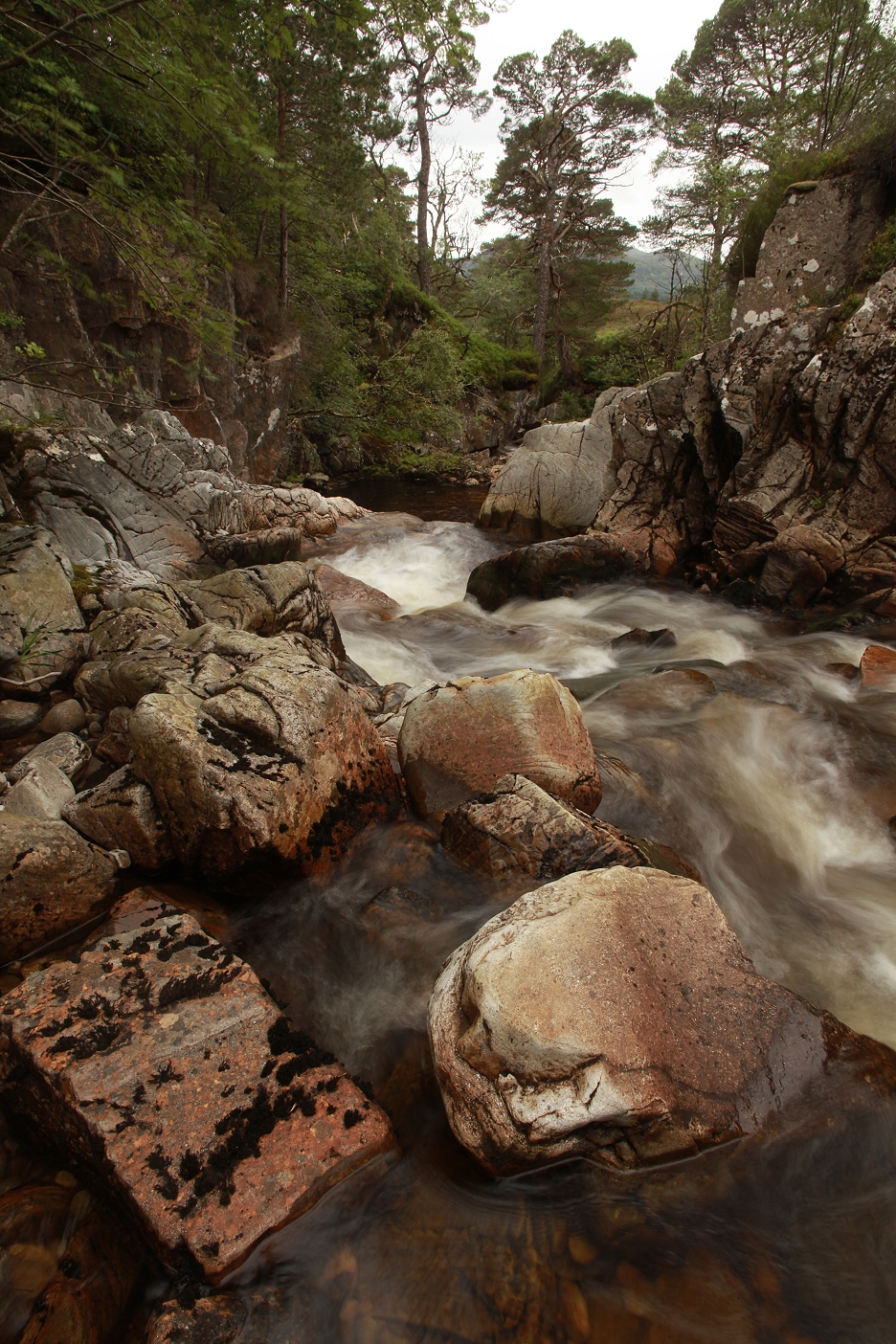
All of these photographs were taken in one section of the burn, about 100 metres in length, and show how remarkable it is. I find it hard to comprehend that a small-scale hydro scheme is even contemplated for this watercourse. It’s in the heart of the Glen Affric National Nature Reserve, which is also a Site of Special Scientific Interest (SSSI), a Special Area of Conservation (SAC) under the EU Natura 2000 scheme and a National Scenic Area (NSA). It’s one of the most designated areas of land in Scotland! Glen Affric is often cited as being the ‘crown jewels’ of the National Nature Reserve system, and is supposed to be managed for the ‘primacy of nature’. If it can’t be protected from industrial energy extraction, what hope is there for any area in Scotland? Under the scheme that is proposed, a concrete weir would be installed in the burn, higher up than this gorge, and water extracted to be piped downhill to a new turbine house presumably to be located near the road and the discharge point of the burn into Loch Beinn a’Mheadhoin. It is one of 4 watercourses within the Glen Affric National Nature Reserve that is being seriously considered for hydro developments, largely to meet the Scottish government’s ambitious commitment to renewable energy. While I support that target, it shouldn’t be achieved at the expense of industrial developments in National Nature Reserves that protect (supposedly!) some of the best remaining semi-natural landscapes in the Highlands.

Continuing upstream, I was attracted to a heath-spotted orchid (Dactylorhiza maculata) that was flowering amongst some bell heather (Erica cinerea). The contrast between the differently-coloured blossoms was very pleasing to my eye … A few metres away, some more bell heather was flowering in amongst some hard ferns (Blechnum spicant), and the combination of fern frond and purple blossoms made for another interesting photographic composition.

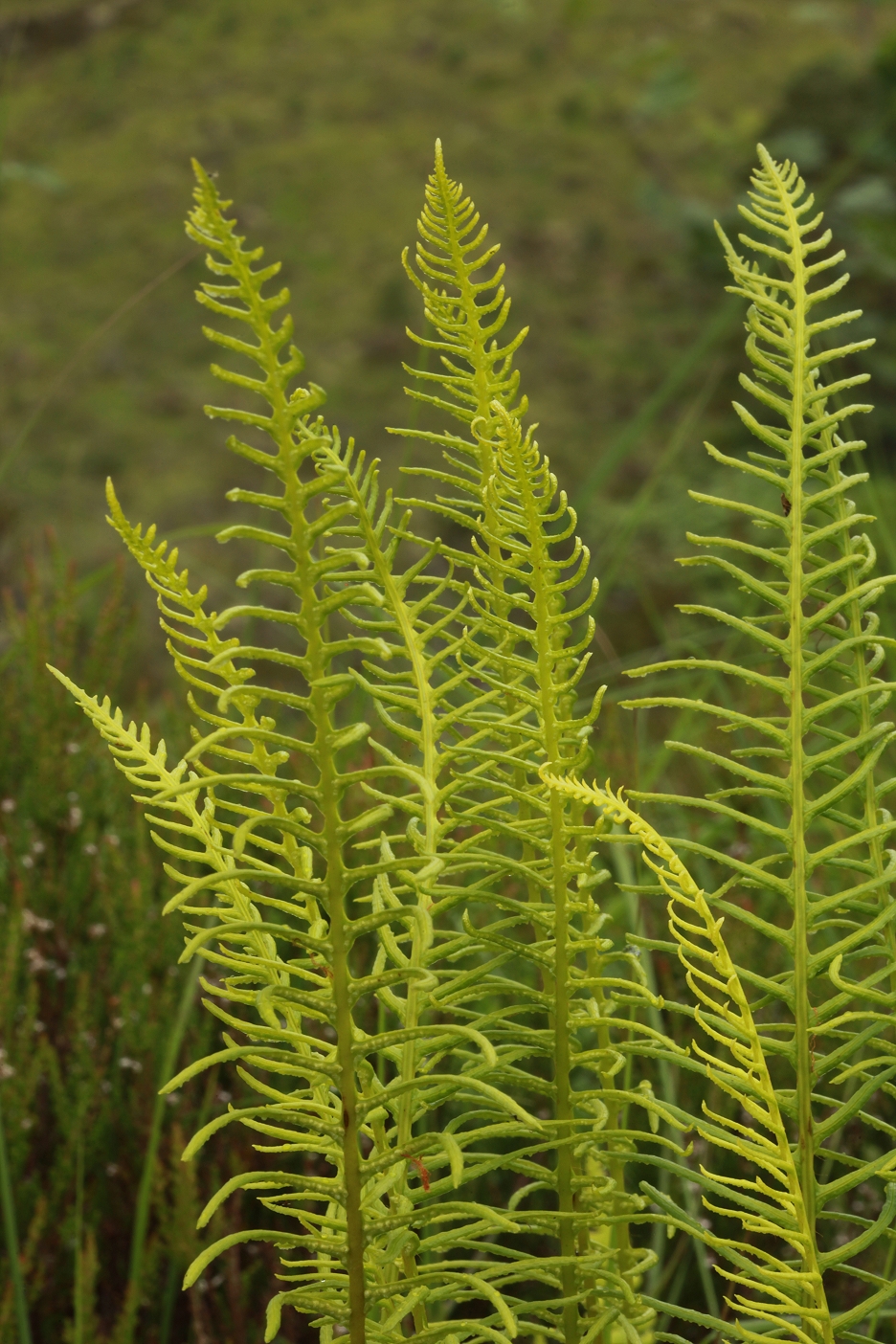

Hard fern has two different frond types on it. The low-growing sterile fronds are evergreen, while the upright fertile fronds, which release the fern’s spores, are more ephemeral, dying back each year. By being raised up by about a foot (30 cm.) or so, they provide a better opportunity for the spores to be dispersed by the wind, so that the fern can reproduce and grow in a new site, at some distance from its parent.

Nearby, a section of the path that goes up towards Carn Eige had a large pool of water across it, and there were a lot of pondskaters sitting on the surface. These insects are able to take advantage of the surface tension of the water to stay there without sinking. I wasn’t able to identify them at the time, but I suspect they were probably the common pondskater (Gerris lacustris).

A little further upstream, I came to one of my favourite parts of the Abhainn Gleann nam Fiadh burn. This is a section inside the Meallan exclosure, which was our second significant project with Forestry Commission Scotland – we funded the fencing of 60 hectares there in 1992, and our volunteers planted over 20,000 Scots pines in 1992-93, as well as some broadleaved trees in subsequent years. At another, smaller gorge, a couple of cascades tumble into a deep, narrow pool, which we used as a swimming hole at the end of some of our days’ work when we were planting the trees.

There are some mature Scots pines and other trees beside this section of the burn, and the tumbling cascades amongst rugged rock formations provides a powerful feeling of wilderness. Unfortunately, this too is likely to be degraded by a reduced water flow in the burn if the hydro scheme goes ahead.

By this stage, it was late in day, and there wasn’t time for me to continue further upstream. My explorations will have to be resumed on another occasion …
During the day, though, I had been shooting some video, as well as taking still photographs, to document the beauty of the watercourse. Here’s a compilation of some of the footage, and I hope that by promoting the specialness of this burn, this can lead to the the abandonment of the proposed hydro development there.
[jwplayer config=”alan24aug” file=”http://www.alansblog.org.uk/alan24aug.mov” html5_file=”http://www.alansblog.org.uk/alan24aug.mov” image=”http://www.alansblog.org.uk/24augpreview.jpg”]
Thank you for these pictures and particularly the video which really takes one there. Such a beautiful burn. All development within the National Nature Reserve should be banned, especially the spoiling of such a gem. I’d be glad to know where to lodge a protest.
Hi Joseph, Thanks for your comment – it’s good to hear from you. I may find out about the status of that hydro proposal in a meeting next week, and if so I’ll post an update here. With best wishes, Alan.
Thanks Alan. Your detailed observations, photos and video must take some time to compile.
Similarly to Reece, this hydro project must be the subject of a planning application and numerous requests for permission from one body or another. Do you have any details yet? In that way individual objections can be lodged and the more objections, the more likely it is to trigger a possible rethink or influence the decision makers. You’re absolutely right. If we can’t protect Glen Affric with its special status, then nowhere’s safe.
Hi Jim, Thanks for your comment – yes it takes quite a while to put my blogs together, especially as they’ve become longer over the months! That’s partly why recently they’ve not been as frequent as previously. I’ll see if I can find out about the situation with planning permission for the hydro scheme, and will post any details I discover. With best wishes, Alan.
Is there any campaign or petition or anything like that over the hydro development proposals that people could join?
Hi Reece, Thanks for your comment. There’s no campaign or petition about this that I’m aware of. I’ll see if I can find out about the situation with planning permission, and will post any details I discover. With best wishes, Alan.