
In late October I spent a couple of days in Glen Affric, as I do most years, to photograph the autumn colours of the trees there when they’re at their peak. The weather forecast for the day seemed ideal for me – it was predicted to be a wind-still, overcast day with morning mist and fog – so I made an early start from home, arriving in the glen just as it was getting fully light. On my way past the village of Cannich, in upper Strathglass, there had been a lot of low-lying fog. I knew from past experience that as the day warmed slightly, this would most likely rise up out of the strath and move into the eastern end Glen Affric, where the River Affric discharges through a narrow gorge into Strathglass itself.

In fact, when I arrived in Affric itself, the fog hadn’t made it there yet, so I took the opportunity of scouting around a little, from the Badger Falls area as far as the eastern end of Loch Beinn a’ Mheadhoin, to see where the colours of the deciduous trees were at their brightest and most vivid. As I soon discovered, there were plenty of birches (Betula pendula and Betula pubescens) just about at their best all throughout that part of the glen, so I began taking some photos from a small promontory that overlooks the end of the loch.


It wasn’t long until the fog began wafting through the trees, bringing an atmospheric and mystical quality to the landscape. I stood and watched as first some small patches and then much larger drifts of fog moved slowly and silently across the tops of the trees, on their own breeze-borne meandering towards the west …


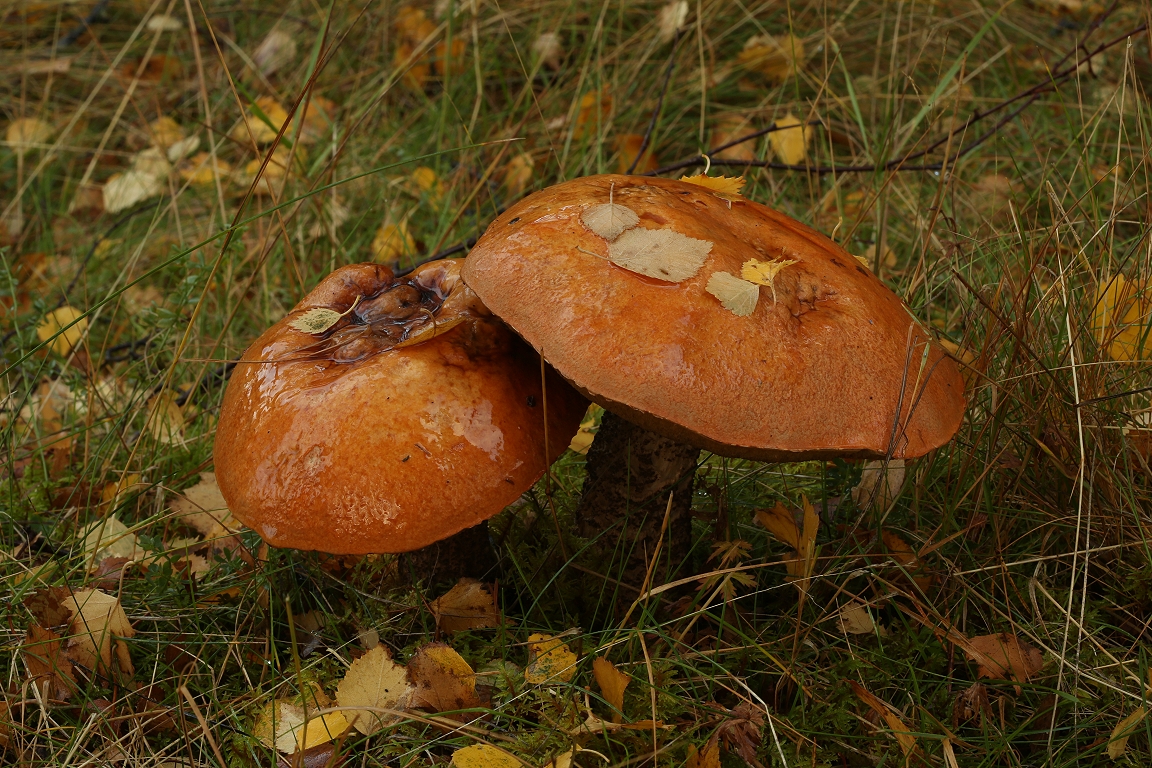

Down on the forest floor, amongst the first of the fallen leaves, there were some vivid orange-brown fungi fruiting. These were the orange birch bolete fungus (Leccinum versipelle), a common species in our woodlands, which grows in mycorrhizal association with the birch trees (Betula spp.). In this symbiotic partnership, the thread-like hyphae of the fungus wrap around the tips of the trees’ roots underground, and an exchange of nutrients takes place. The fungus, having no chlorophyll, is unable to harvest the sun’s energy directly, so it receives sugars and carbohydrates that the tree makes through photosynthesis. In return, the fungus passes to the tree nutrients that it extracts from the soil, which the tree itself is unable to access directly. This mutually-beneficial partnership is essential to the health and life of the forest ecosystem, and similar relationships occur between fungi and trees in all the world’s forests, and also between plants and fungi in other terrestrial ecosystems, such as grasslands.

The fungi weren’t the only signs of autumn on the forest floor, as some areas, particularly under the larger Scots pines (Pinus sylvestris) had a dense carpet of blaeberry plants (Vaccinium myrtillus), and the leaves of these small deciduous shrubs were changing colour before being shed for the winter. Individual patches of blaeberry change to a different colour as the chlorophyll in them is withdrawn back into the rest of the plant. Some patches turn a bright red, but this one here was going more of a pale yellow colour – the variation may be due to different nutrients being available in the soils where the plants are growing.

Autumn is the most colourful time of year in the Caledonian Forest, and there was a rich and constantly varying mosaic of different shades of greens, yellows and browns under foot, as I walked around, even in a small area. The same was true of the view through the trees, as the varied distribution of the birches and pines created juxtapositions of green and yellow colours that were different wherever I looked.
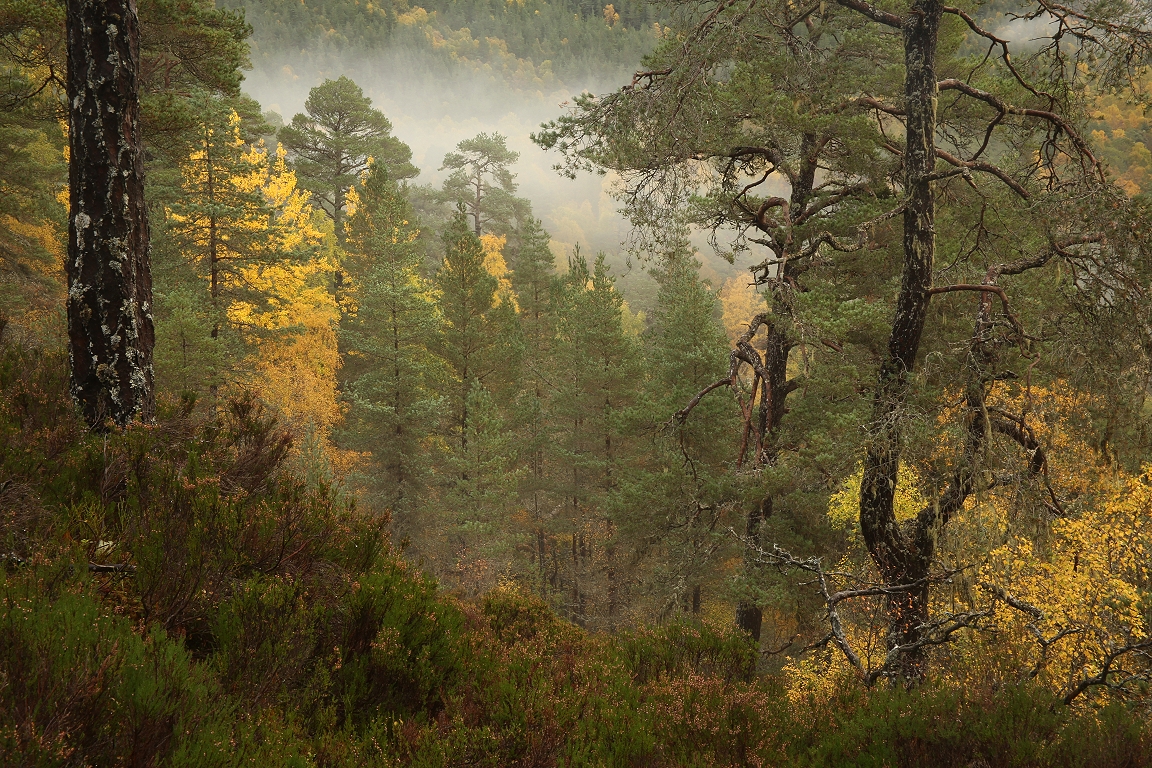
This variation in the colours was enhanced by the constantly changing illumination, as the fog continued to rise slowly up through this part of the glen. It sometimes almost completely obscured the view, while in other moments it vanished virtually entirely, leaving a clarity to the air, until the next drift of fog passed by. It was a classic ethereal and atmospheric day in the forest, and I savoured every moment of it…
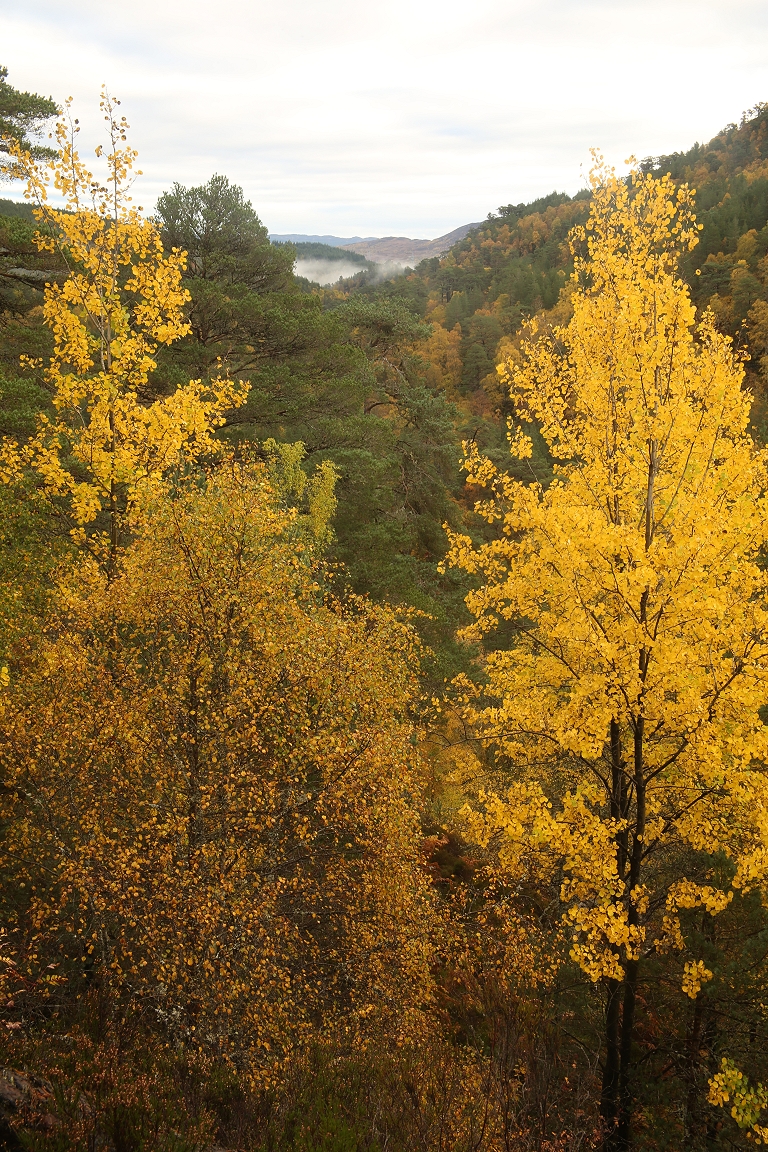
Scattered amongst the birches and pines in this part of the glen, there are a few stands of aspen trees (Populus tremula), and autumn, along with leaf flush in spring, is the best time to see them. The aspens turn a brilliant yellow-gold colour (although, like the blaeberries, a few aspen stands turn red instead) that makes them stand out easily from the duller yellow of the birches.

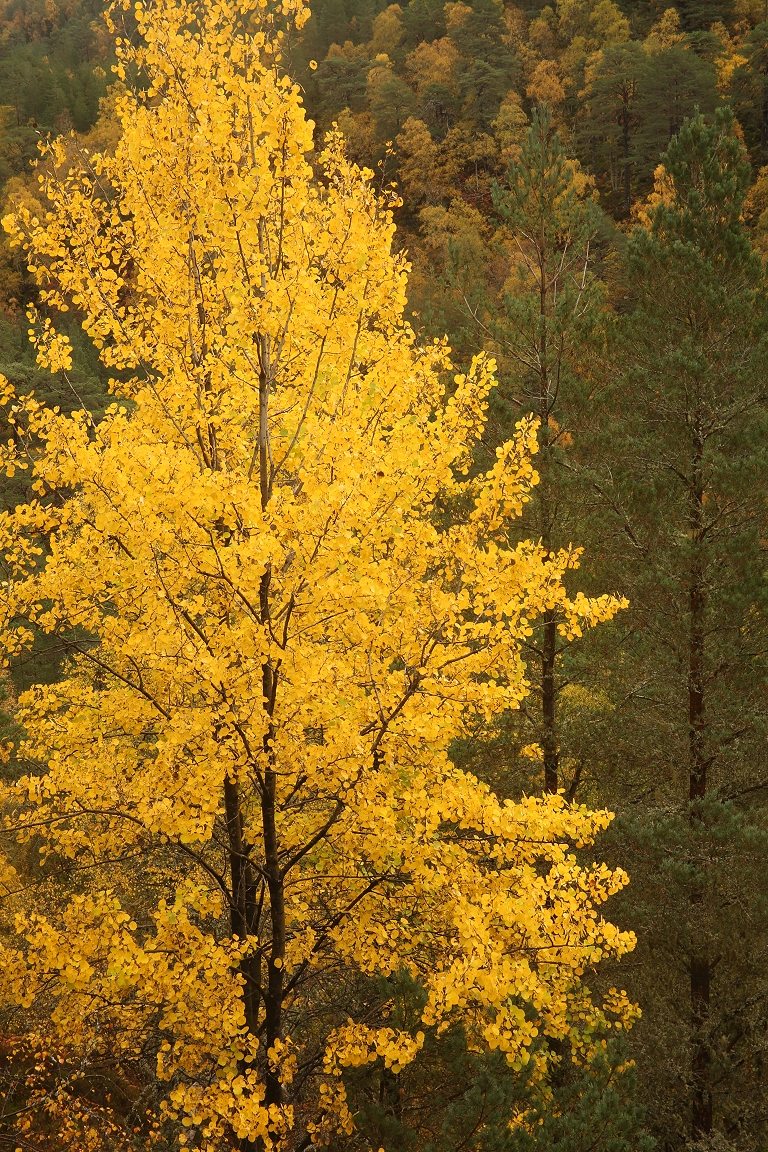
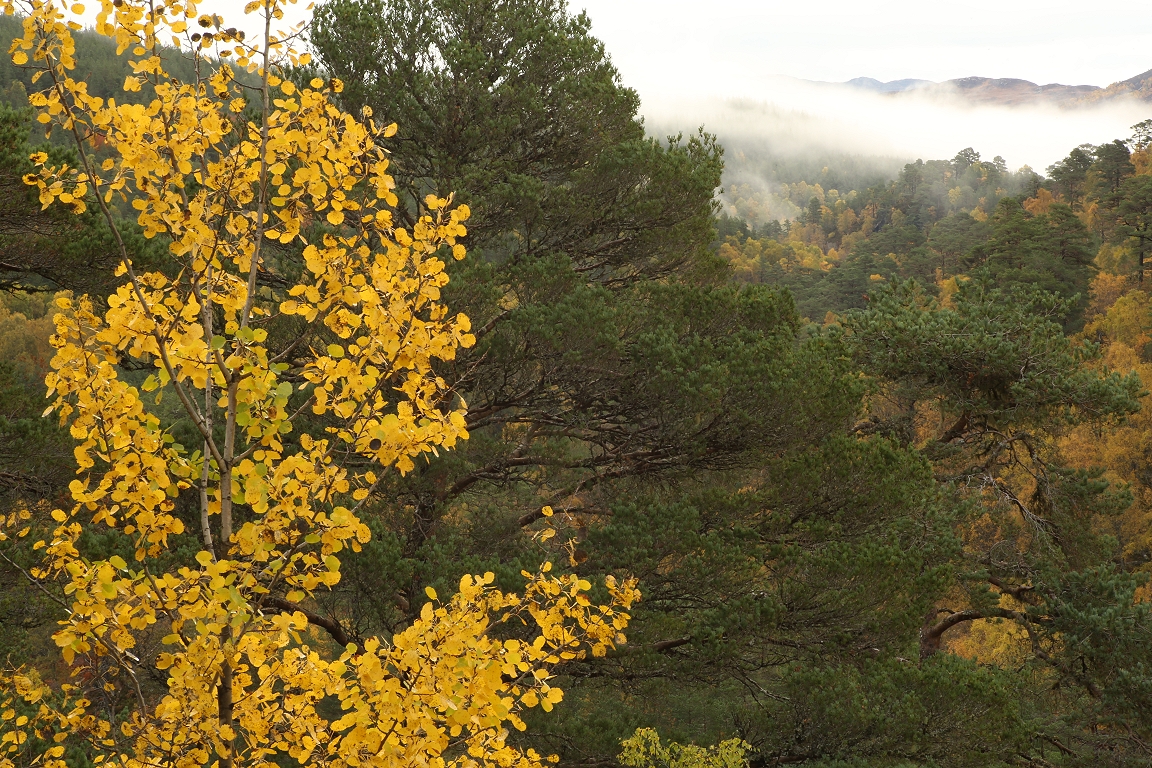

Aspen is one of the first trees to lose its leaves in autumn, and in the Caledonian Forest they are often all on the ground by the middle of October. However, in a sign of the increasingly disturbed weather patterns we’re experiencing in the Highlands (as elsewhere in the world), the aspens were just at their peak of colour this year, on the last week-end of the month.

I spent quite a while in this area, watching the mist and fog move slowly up the glen, towards Loch Beinn a’ Mheadhoin. It was a superb autumn morning, with the aspens’ leaves mostly motionless, as there was so little wind. What breeze there was caused the mist to drift very slowly, but eventually the last of it passed me by. At that stage the temperature in Strathglass must have increased enough for the last of the low-lying overnight fog there to have risen into Glen Affric and past where I was standing …
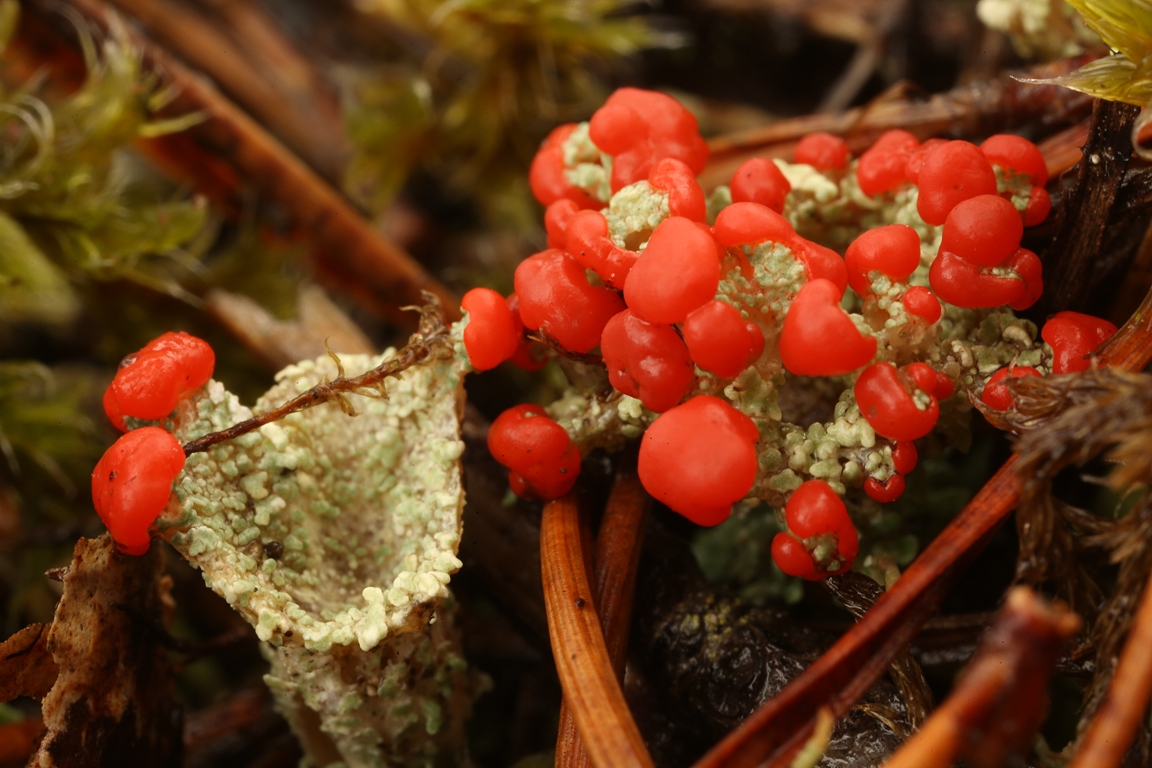
I was just about ready to pack up my equipment and move further west in the glen, when my eye was drawn by a brilliant splash of red on one of the rocks near where I was standing. Looker closer, I saw that it was a patch of one of the Cladonia lichens, with the bright red apothecia, or fruiting bodies, of the fungus in the lichen partnership prominent on the tops of the podetia, or cups, that are a distinctive feature of many species in this lichen genus.

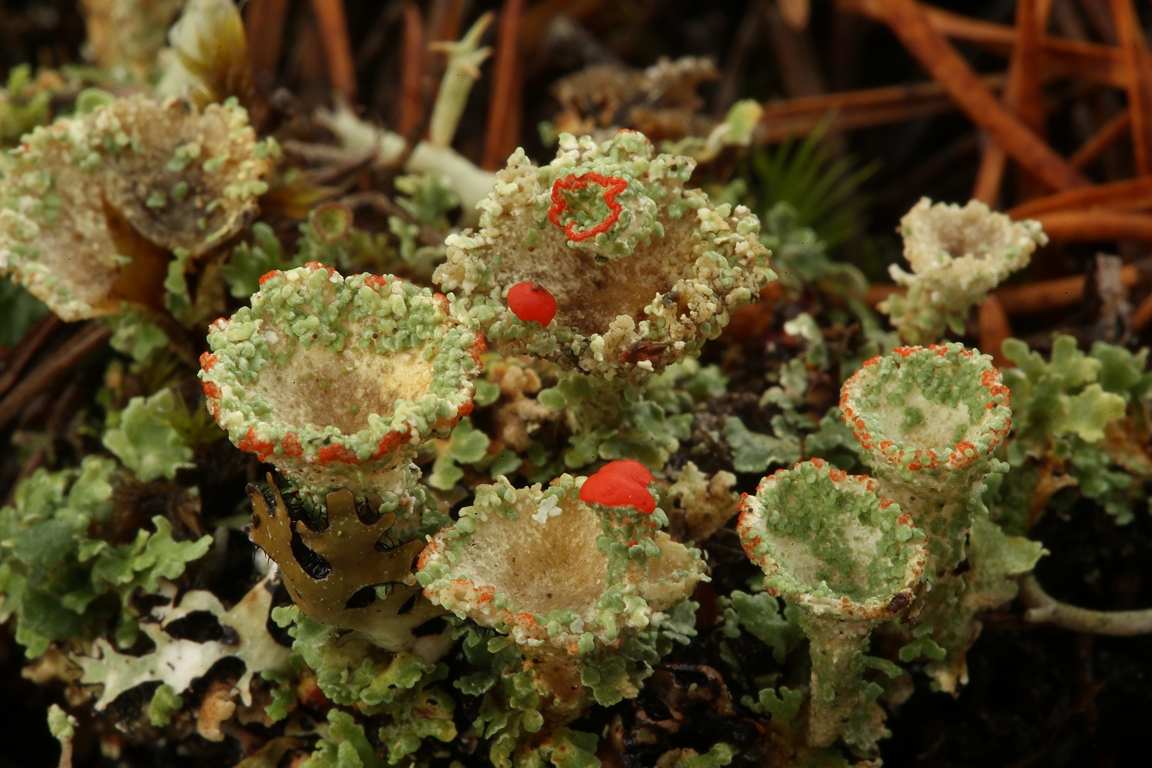
Later, I was able to get species of this Cladonia lichen confirmed as being Cladonia diversa, and although it’s possible to see members of the Cladonia genus with their apothecia visible like this at various times of the year, it seemed especially fitting to do so now. The bright red was the perfect colour complement to the autumnal yellows of the birches, aspen and blaeberries, and illustrated that the seasonal coloration was reflected from the macrocosm of the large trees to the microcosm of the miniature ‘forest’ formed by the podetia of the lichens.
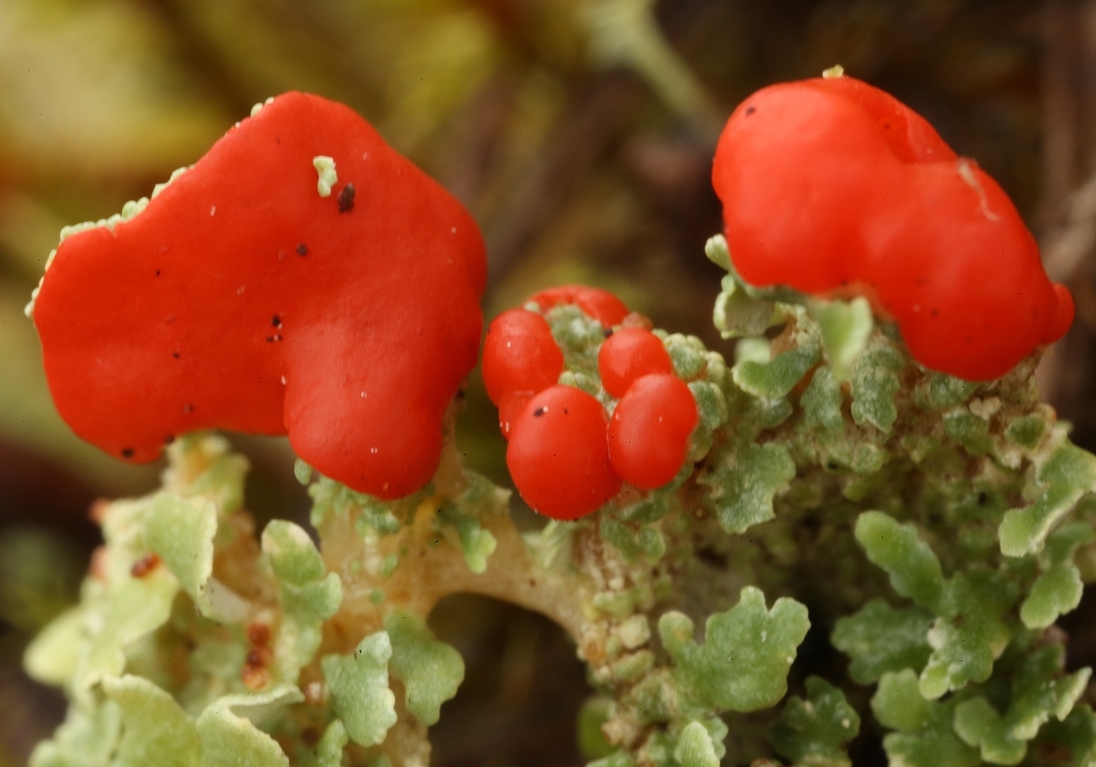

As is often the case, the more I looked at these lichens, the more entranced I became by the miniature world of wonder and spectacular fractal beauty that they create on the forest floor. I probably spent an hour or more looking at this small patch, and taking photographs of their unique and varied growth forms, each one of which seemed to me to be a classic of natural sculpture and beauty.
Eventually though, I put my camera away and headed further west in the glen, to appreciate the autumn colours from another location. That will feature in part 2 of this blog, along with some video footage from the day – watch this space!
Greetings Alan,
I am Grandmother Selina, writing to you from my home of Nova Scotia Canada.
It is a wintry, snowy day here today……just beautiful.
I came upon your lovely blog and upon reviewing it felt inspired to write.
Recently, I experienced a life changing moment of time.
While sitting amongst the trees in a most sacred place here called Kejimkujik Park,
The Tree Elders began to communicate with me.
It has now shaped the form and purpose of my work.
They have asked that I write a book which I’ve begun and create a Course they themselves will teach.
Perhaps you might be willing to communicate with me of this most important unfolding in this time.
I thank you for listening.
In Harmony with the Standing Ones,
Grandmother Selina and the Council of Trees
Skype (selina.watereagle)
selina@grandmothersmedicinelodge.com
Hi Grandmother Selina,
Thanks for making contact with me, and for responding to my blog entry.
I’ve been to Nova Scotia once many years ago – in 1973 – so I know it’s a beautiful area, with some good forests there.
I’ll email you directly, and I wish you well with your project for writing a book about the importance of trees.
With best wishes,
Alan
Hi Alan,
Happy to read of your day’s outing to Glen Affric! I know we have our own amazing forest out here, but part of my heart is always also in the Highlands!
Keep up all your amazing work…
-Guy
Hi Guy,
Great to hear from you again, and I’m glad you my enjoyed my blog about Glen Affric – I’m working on part 2 just now.
You’ll have to come back and visit some time, and experience the forest for yourself again.
I hope your own projects are going over there on Vancouver Island.
With best wishes,
Alan
I had truly never imagined that lichens could produce such colourful displays until I started reading your blog Alan. Thank you.
Hi Diana,
Thanks for your comment – I’m glad that my blogs are continuing to be informative and educational!
With best wishes,
Alan