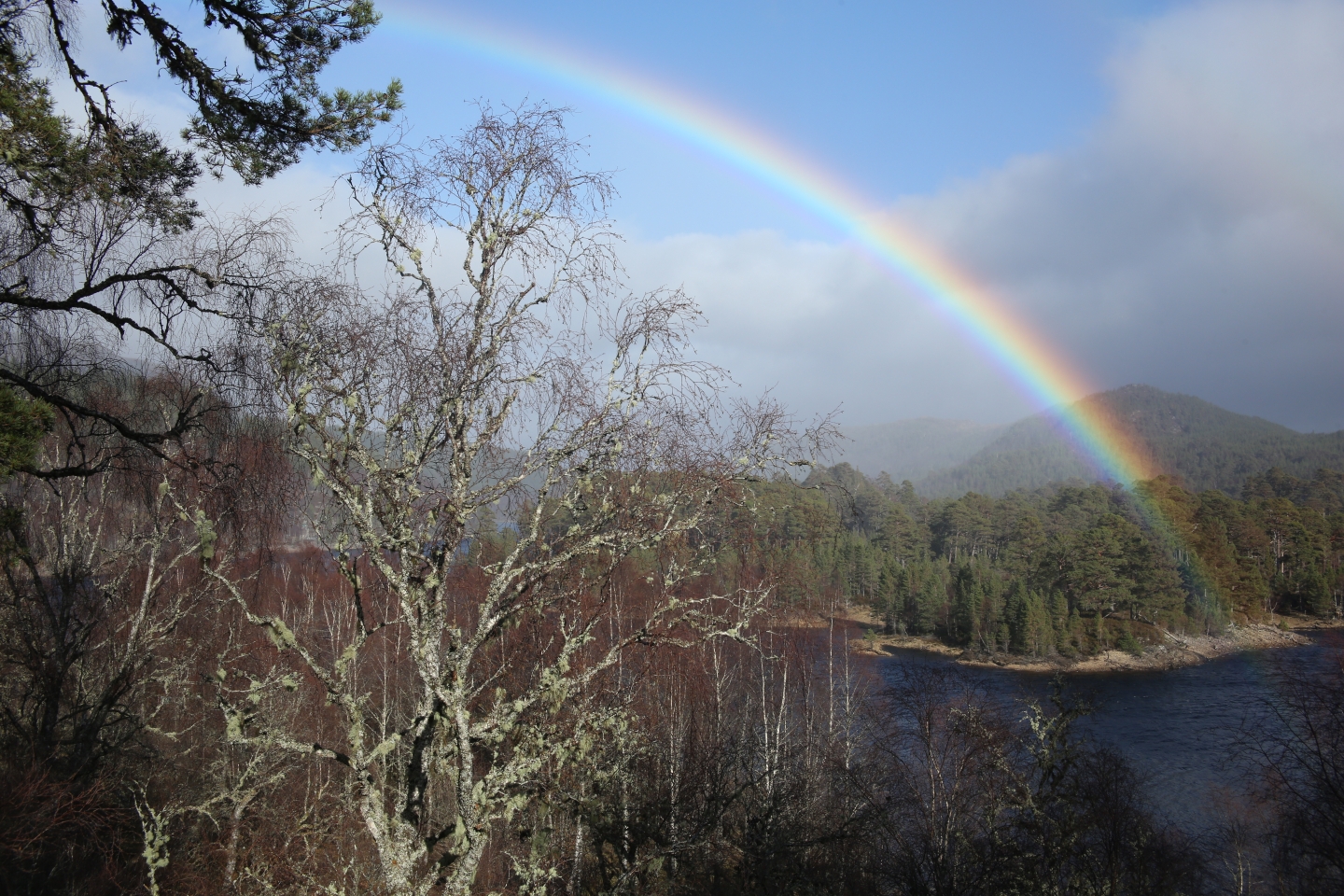
On Sunday 16th March I had my first opportunity for a couple of weeks to spend a day out with my camera, taking photographs in the Caledonian Forest. I was undecided where to go, so I headed out from my home at Findhorn uncertain as to my destination. However, I had the intention of trusting my intuition to lead me to a place where I’d have an enjoyable day, and where I would gain the satisfaction of being creative with my photography.

I’d checked the weather forecast before I left, but that didn’t give any clear indication as to where might be the best site to go to. Sometimes the weather can vary over relatively short distances in the Highlands, so that it could be sunny in Glen Strathfarrar for example, while it would be raining at Dundreggan. However, on this occasion, there was no variation, so I ended up following my gut instinct, and that led me to Glen Affric.
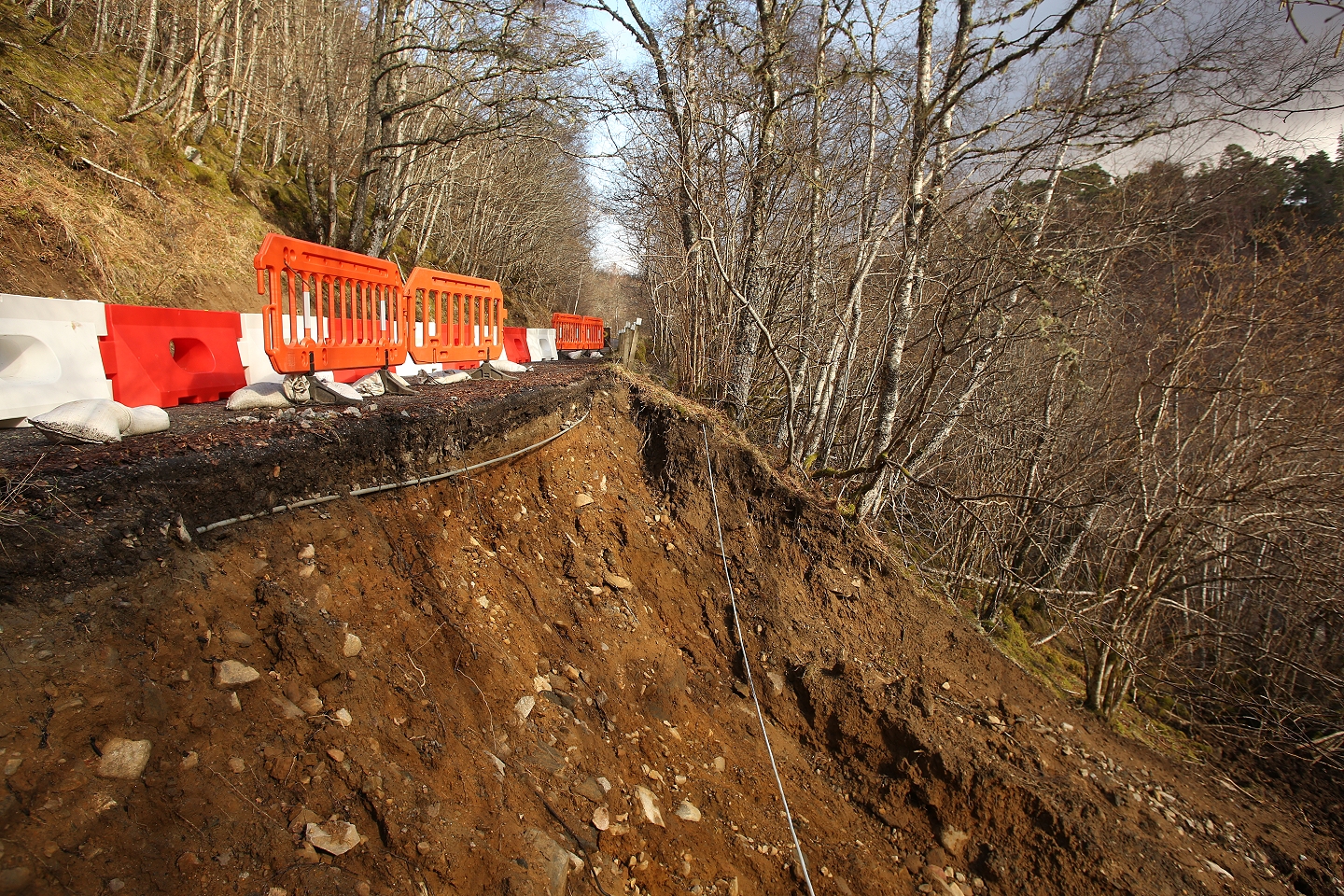
On my way into the glen, I stopped between Badger Falls and Dog Falls, where there were some traffic bollards along the side of the road. I wanted to see what was happening there, and was surprised to see that a landslide on the downhill side of the road had led to the edge of the road itself being undermined. A large volume of soil had slipped down the hill, most likely due to heavy rain, and had washed out at the bottom into the Affric River itself.
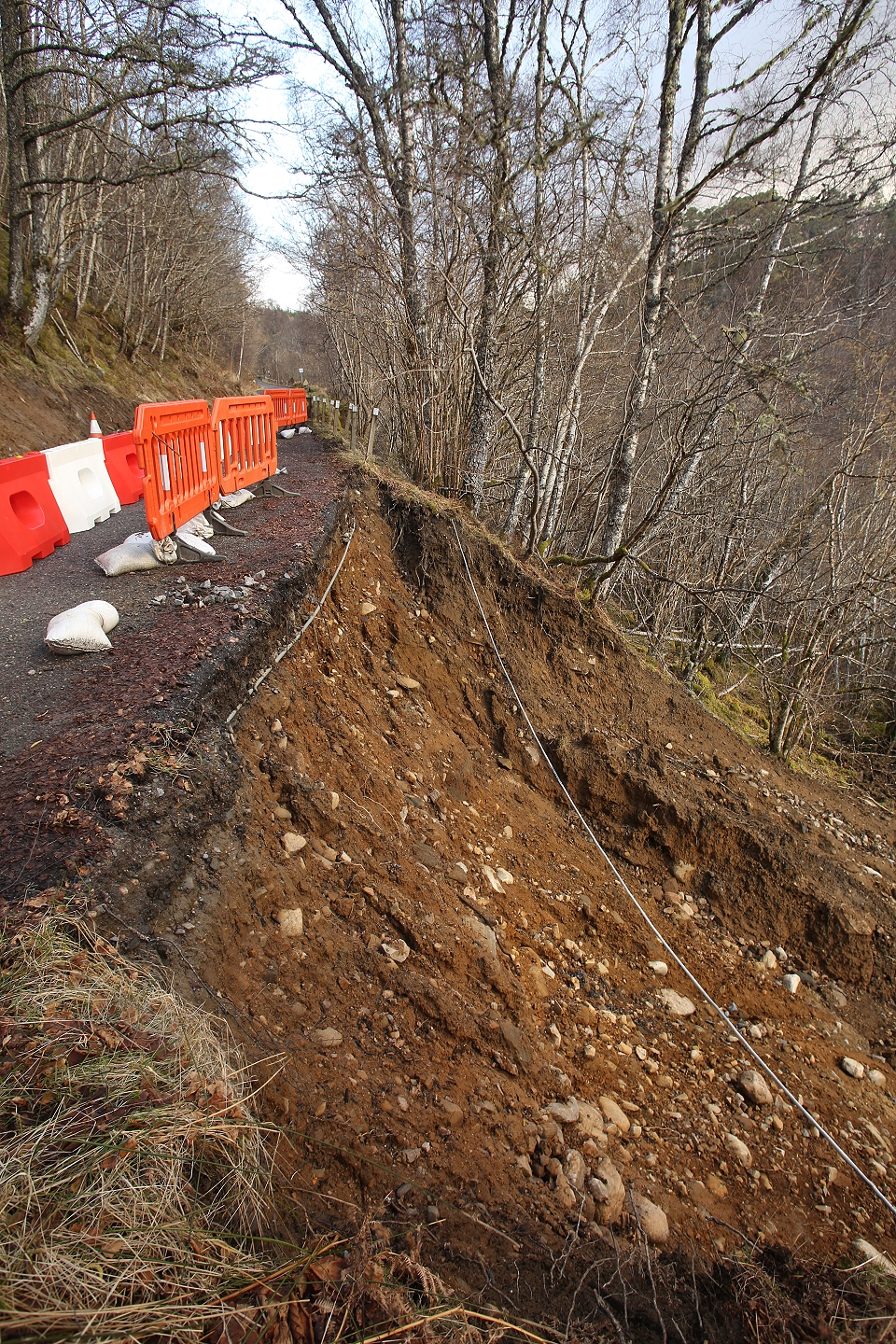

Clambering down the steep slope, I explored the area affected by the slide, which previously had been covered in hazel trees (Corylus avellana) with lots of moss-covered boulders on the ground underneath.
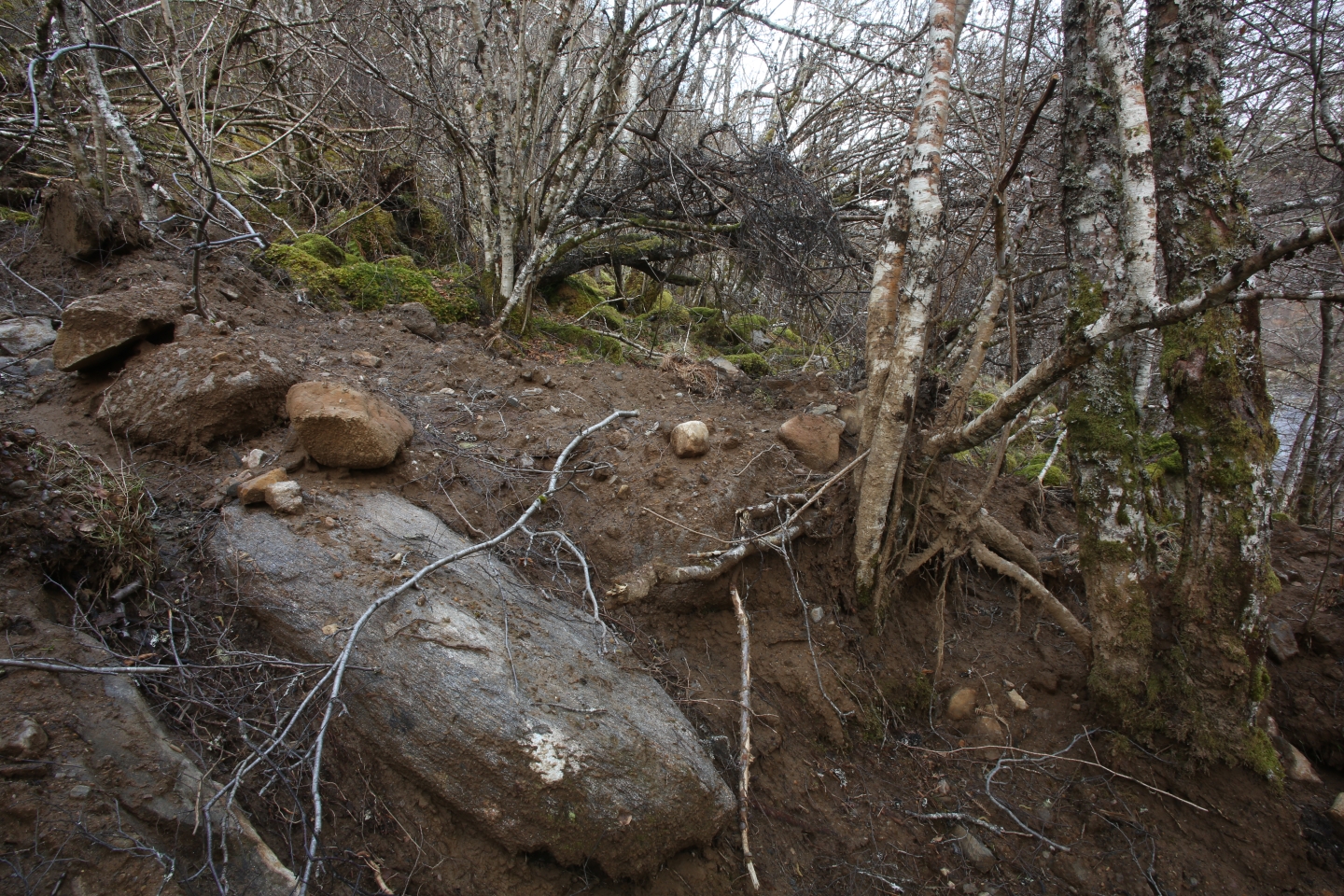
Midway down the area affected by the landslide, mud and bare rocks have been pushed up against the trunks of the trees that survived the event. Note the moss-covered rocks in the background – the whole area was previously like that.
Now, however, the slope was a mixture of standing and fallen trees, with just mud and bare rocks instead of the verdant green forest floor. It was a scene of devastation, and the mud-spattered trunks of the trees showed that when the slide itself happened, the level of the mud must have been considerably higher. I picked my way gingerly over the irregular surface, as it was unstable and in some places the mud was soft and quite fluid still. It gave me impression of what it must have been like when the event happened – I imagine that it occurred very suddenly and quickly, with no advance warning, and was probably over in just a few seconds.
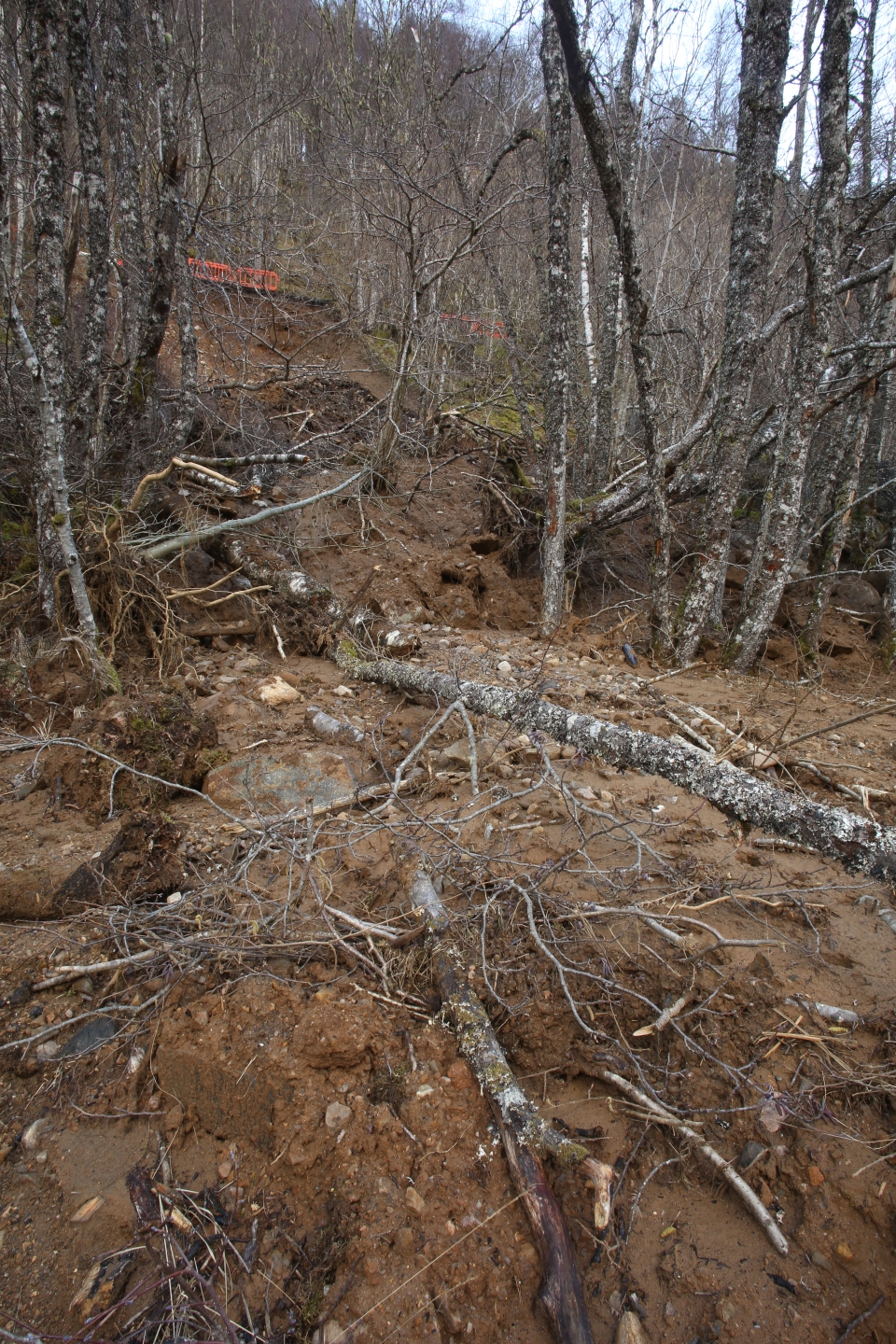

As I walked around the scene of the mudslide I was impressed again by the power of Nature, and particularly by its demonstrable impact this winter. In addition to this mudslide, a powerful storm had blown down a lot of old trees at Dundreggan and in Glen Affric on 5th December, and the River Moriston recently flooded the fields on our land at Dundreggan after sustained heavy rains.

In one of those interesting synchronicities that appear in all our lives from time to time, the evening before this, I’d listened to the song ‘Landslide’ by Fleetwood Mac at home. My partner and I recently been to a tribute concert played by the group ‘Rumours of Fleetwood Mac’, and ‘Landslide’ had been one of the most powerful and evocative songs they’d played then. That prompted me to play it at home, and so the words were still running in my head this day when I arrived in the glen and saw the landslide …
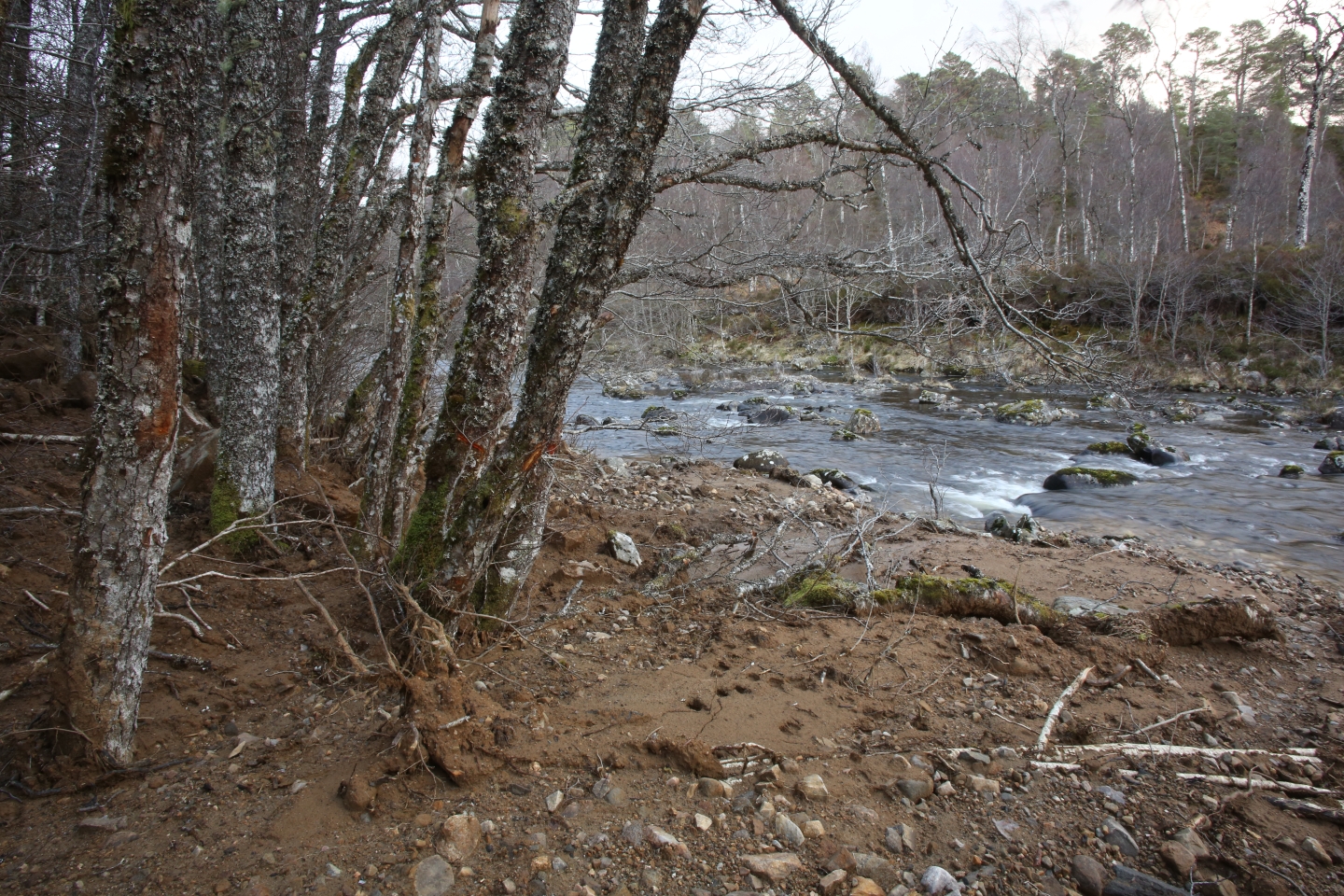
Some of the lyrics in the song seemed particularly relevant and poignant to this situation and how I felt about it, as they speak about the impact of changes in our lives, and I was saddened to see the changes in this area, and what had been lost because of the slide. However, this incident is part of what is called ‘natural disturbance‘ in ecological parlance, and although it seems like devastation, it also opens up a lot of new opportunities for life and growth, and is in fact part of the never-ending cycle of change in Nature. I’ve been doing a quite a lot of speaking writing about natural disturbance in recent months, so this day was very appropriate in providing me with a first hand encounter with the results of it.

I left the area of the landslide in a very thoughtful mood, and drove a little further into the glen, stopping at a viewpoint overlooking Loch Beinn a’ Mheadhoin to have my lunch. The sun was shining on the trees on a promontory on the other side of the loch when I reached this spot, but soon a grey curtain of rain swept down the glen from the west, in what had become a rapidly strengthening wind. There was still a lot of blue sky around though, and I had the intuition that there would be a rainbow in the sky soon as a result, so I finished my lunch quickly and drove a little further west, stopping at the picnic site beside the loch. Near there is a small knoll with a great view over the loch, and I was hoping I might get a sight from it of any rainbow that was being created by the juxtaposition of sun and rain.
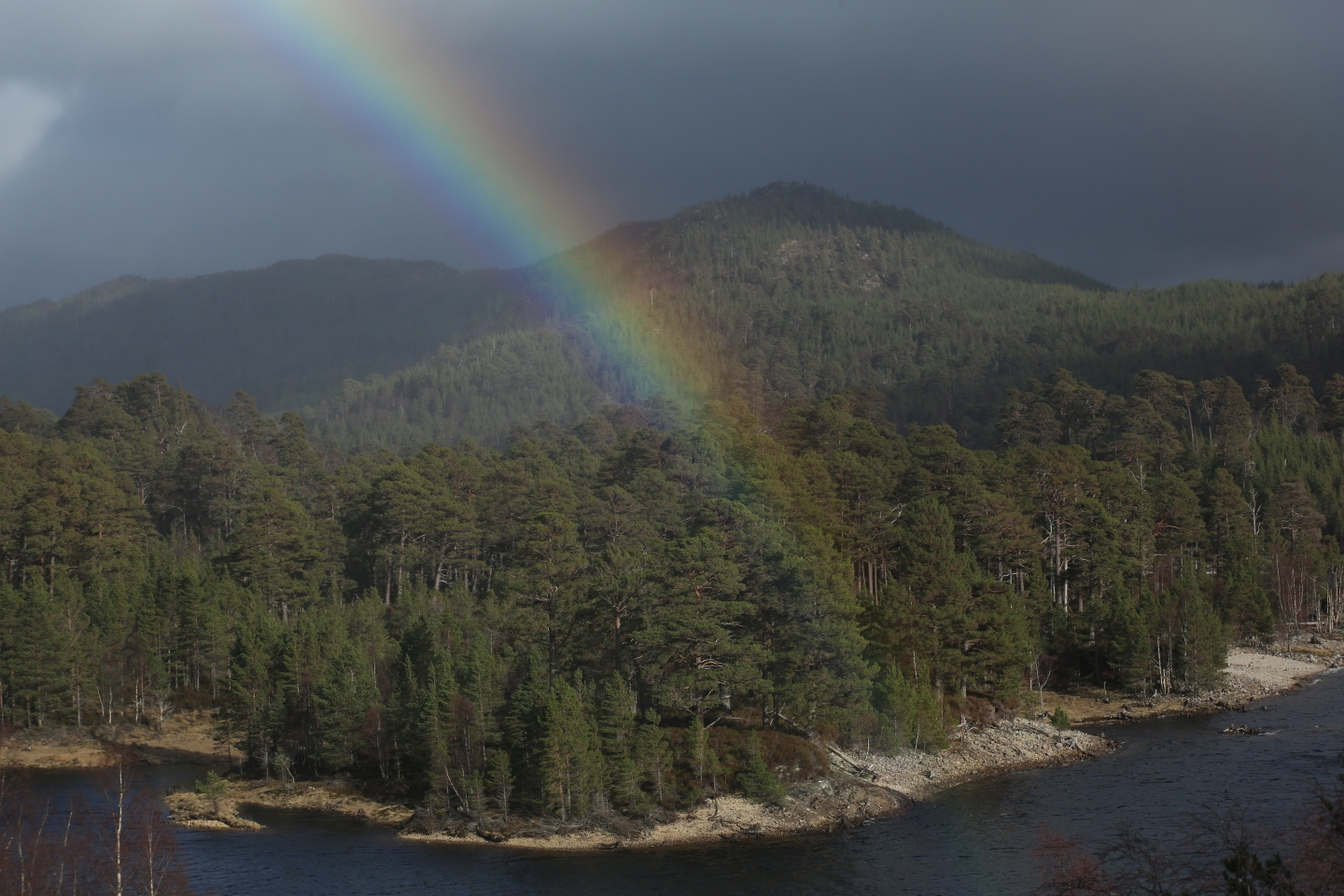
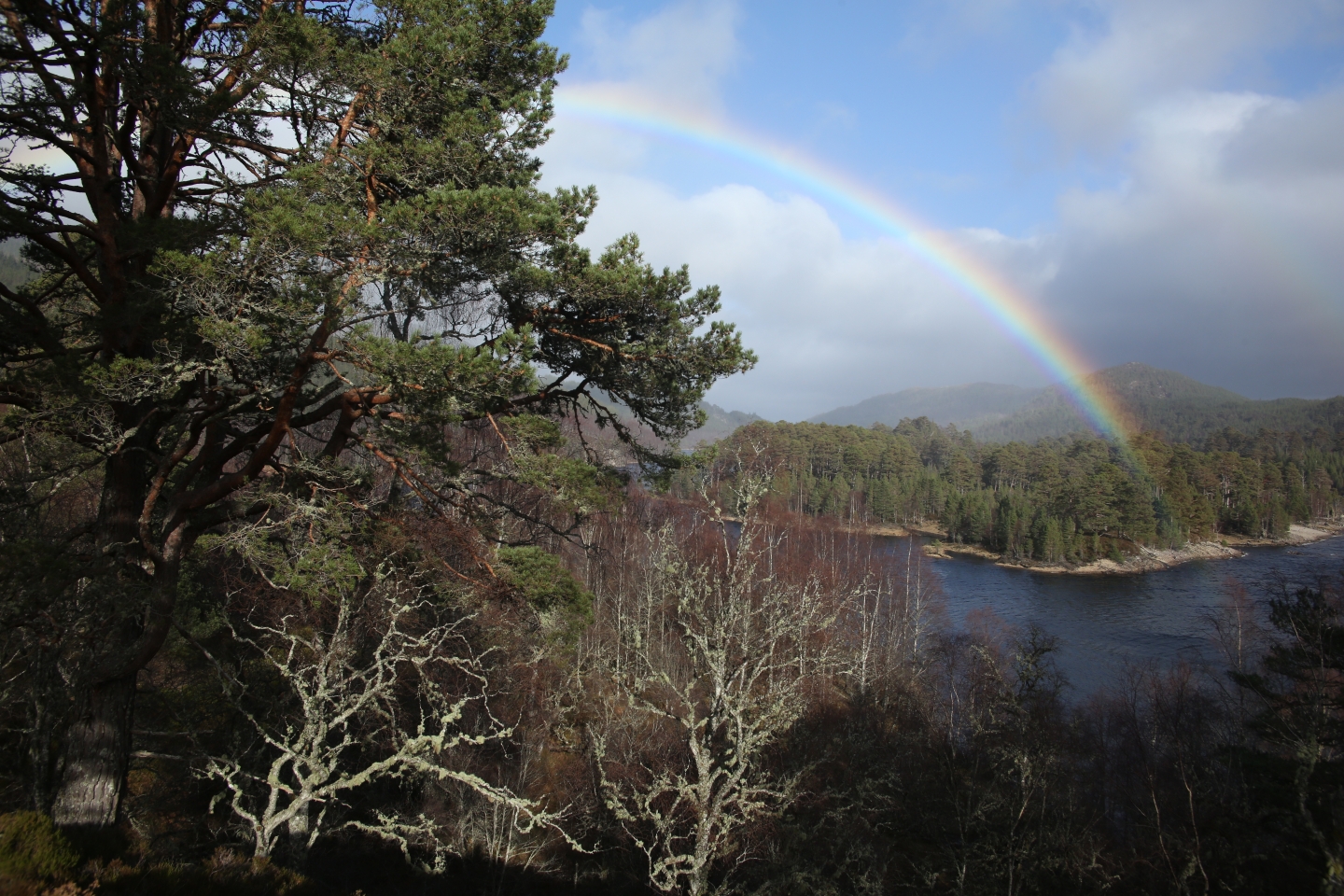
In fact, I had barely reached the top of the knoll when I saw that my intuition had been correct, and that there was indeed a beautiful rainbow over the loch and the Scots pines (Pinus sylvestris) growing on a peninsula extending from the other side of the loch. Rainbows are often highly ephemeral, especially on windy days like this, and last for only a few seconds, so I quickly pulled out my camera and took a series of photographs.
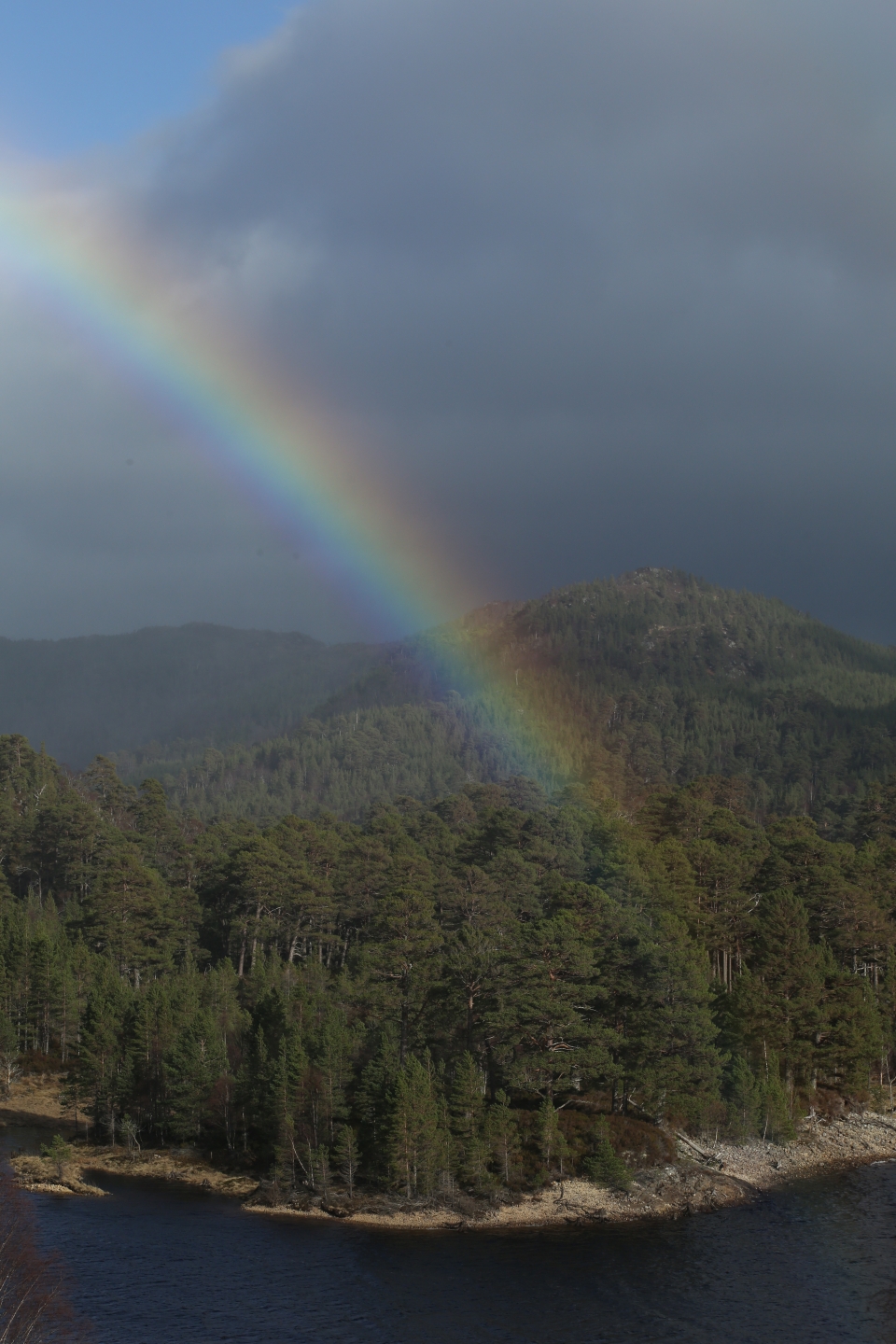
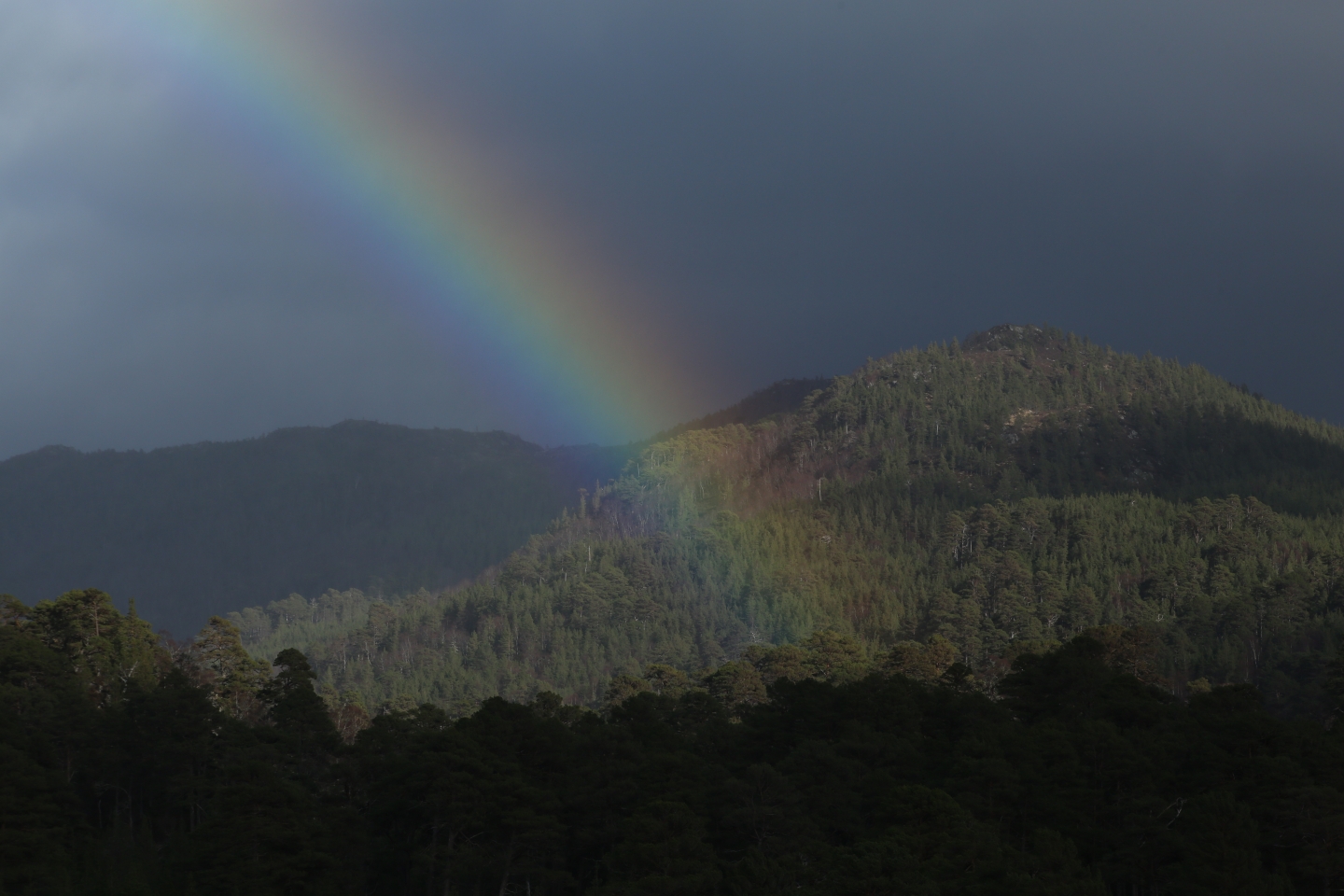
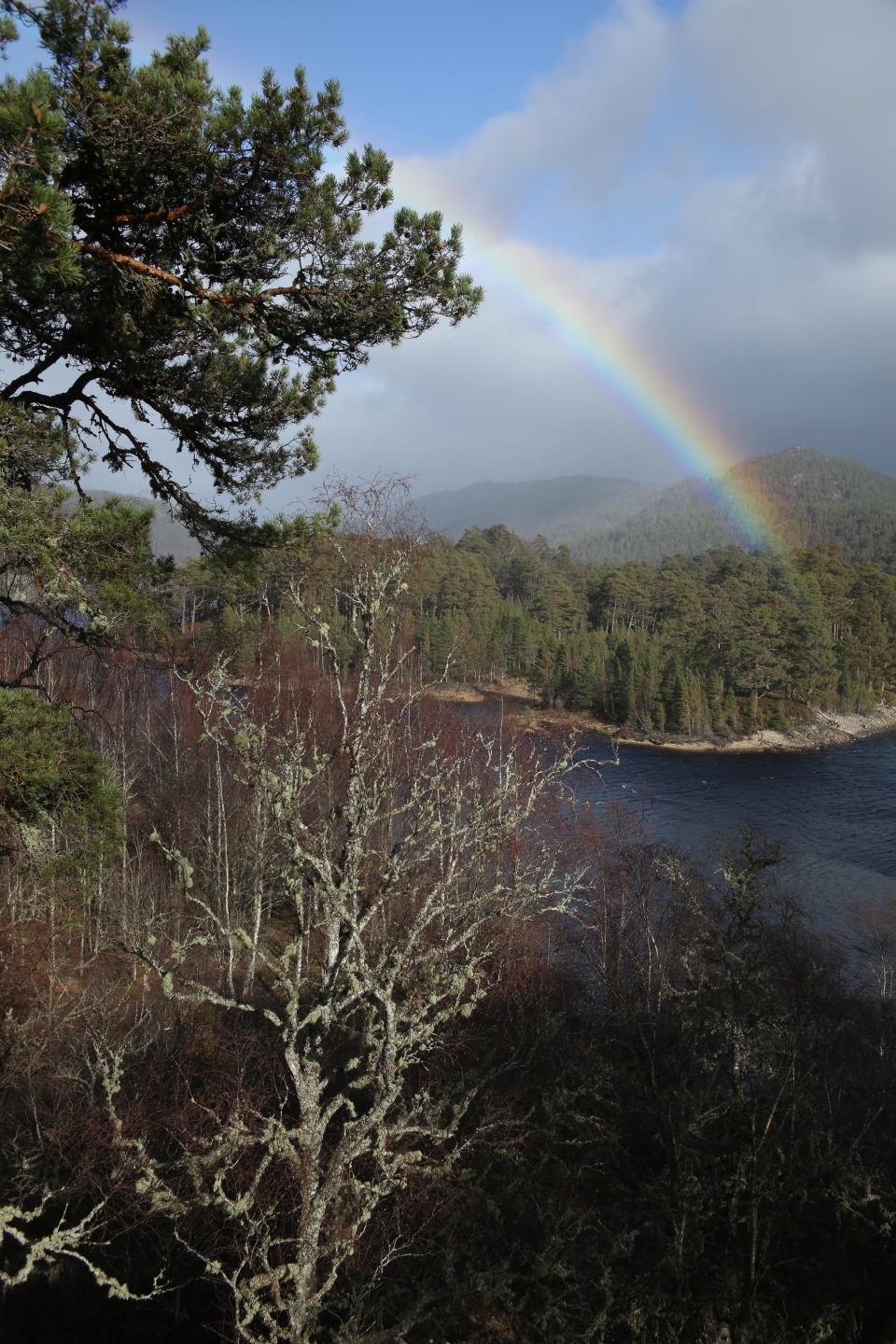
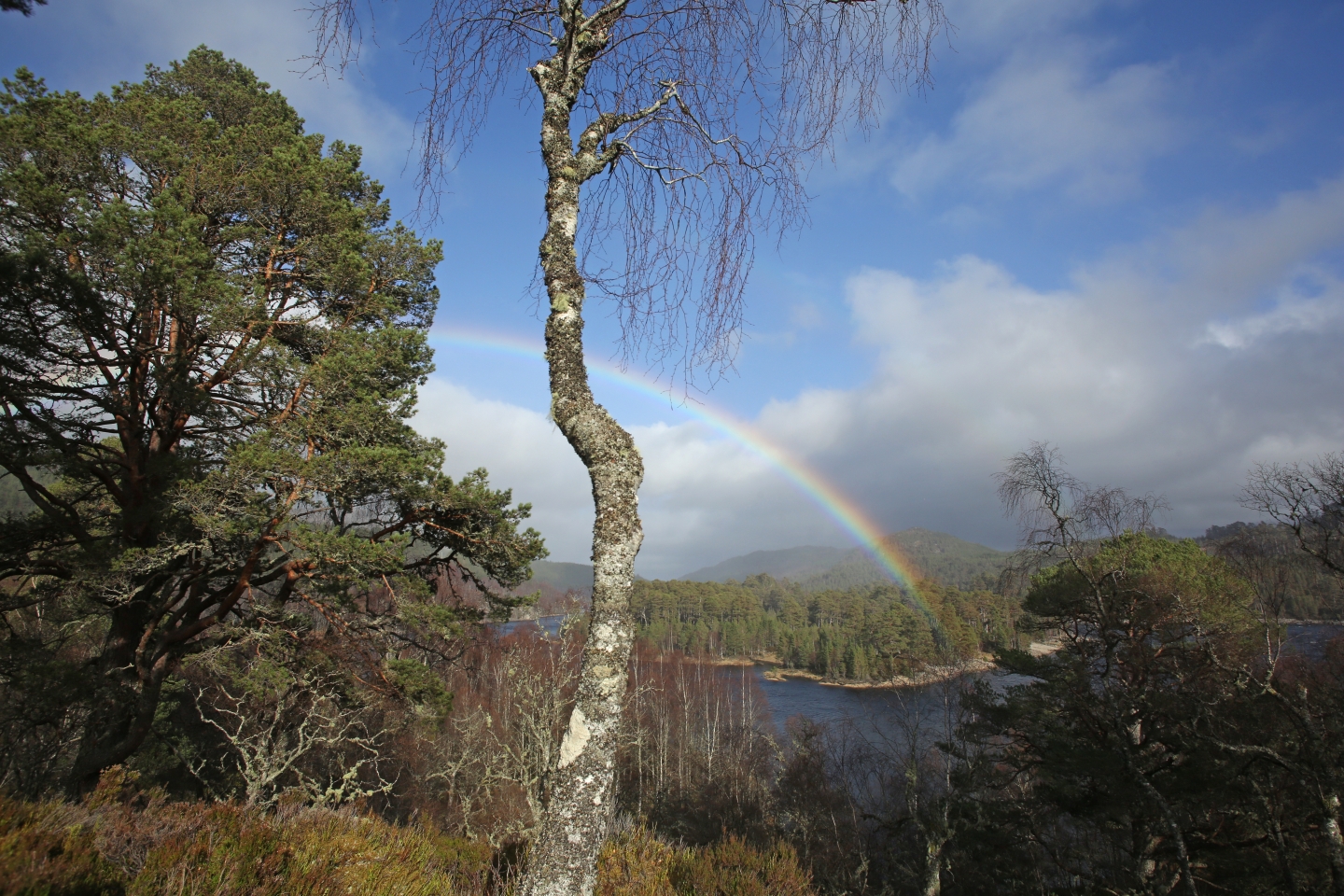

The rainbow kept changing in intensity and brightness, as the wind alternately blew clouds across the sun, and then blew them away again. While this was happening I realised that it wasn’t raining at all – whereas rainbows are usually only seen when the sun is shining through falling rain, thereby giving the prismatic separation of the colours.

As I thought about this, the rainbow faded away, and I had the feeling I’d exhausted the opportunities for different photographs at this spot, even if the rainbow returned. I therefore headed further west to the final car park in the glen, in between Loch Beinn a’ Mheadhoin and Loch Affric, hoping that I might get some more good images there, if the conditions were still conducive to creating rainbows.
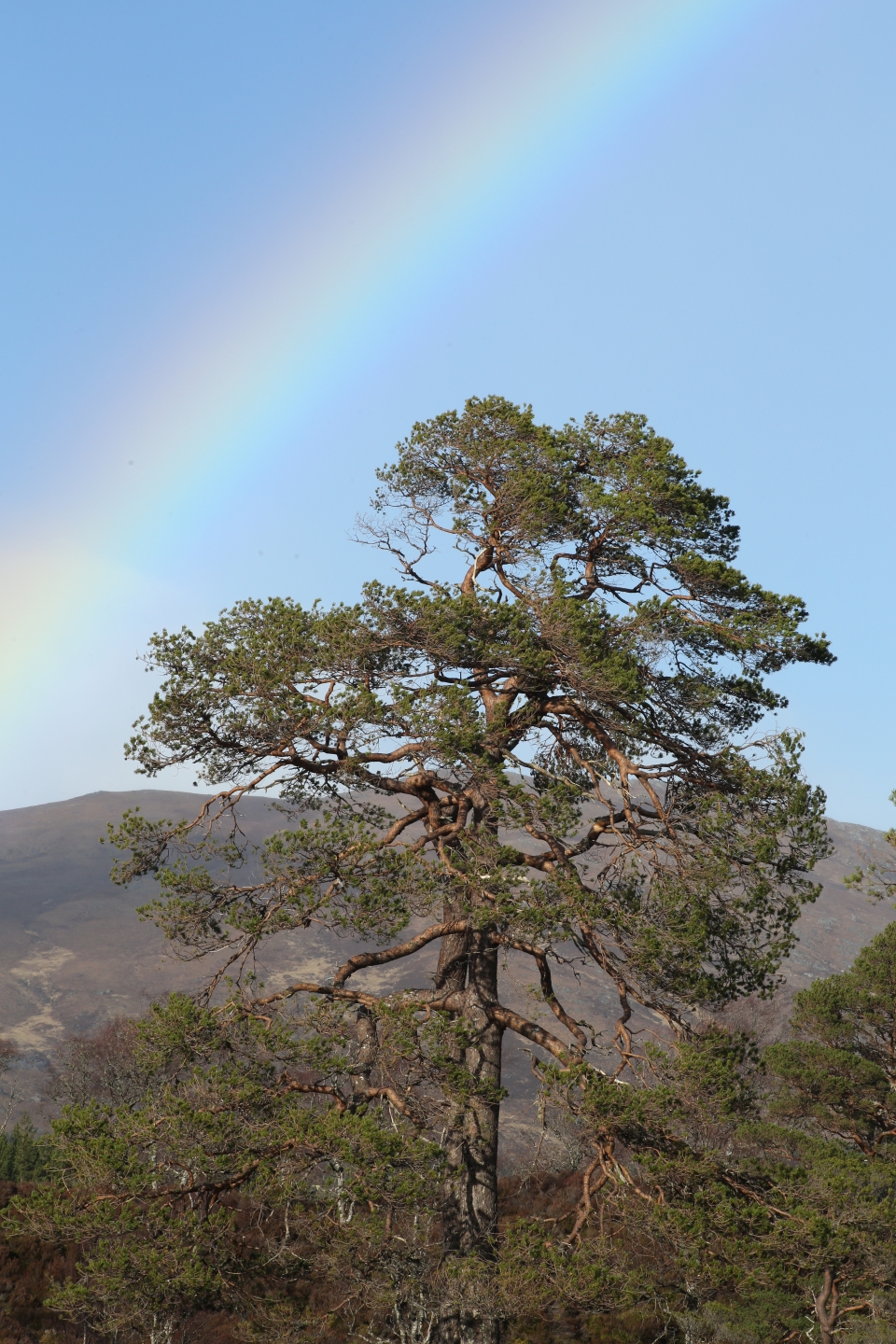
Arriving there, I quickly saw that there was indeed a rainbow visible from this spot as well, so I began taking more photographs. Once again, it struck me as unusual that the sky was completely cloudless, and no rain was falling, yet there was this persistent rainbow.
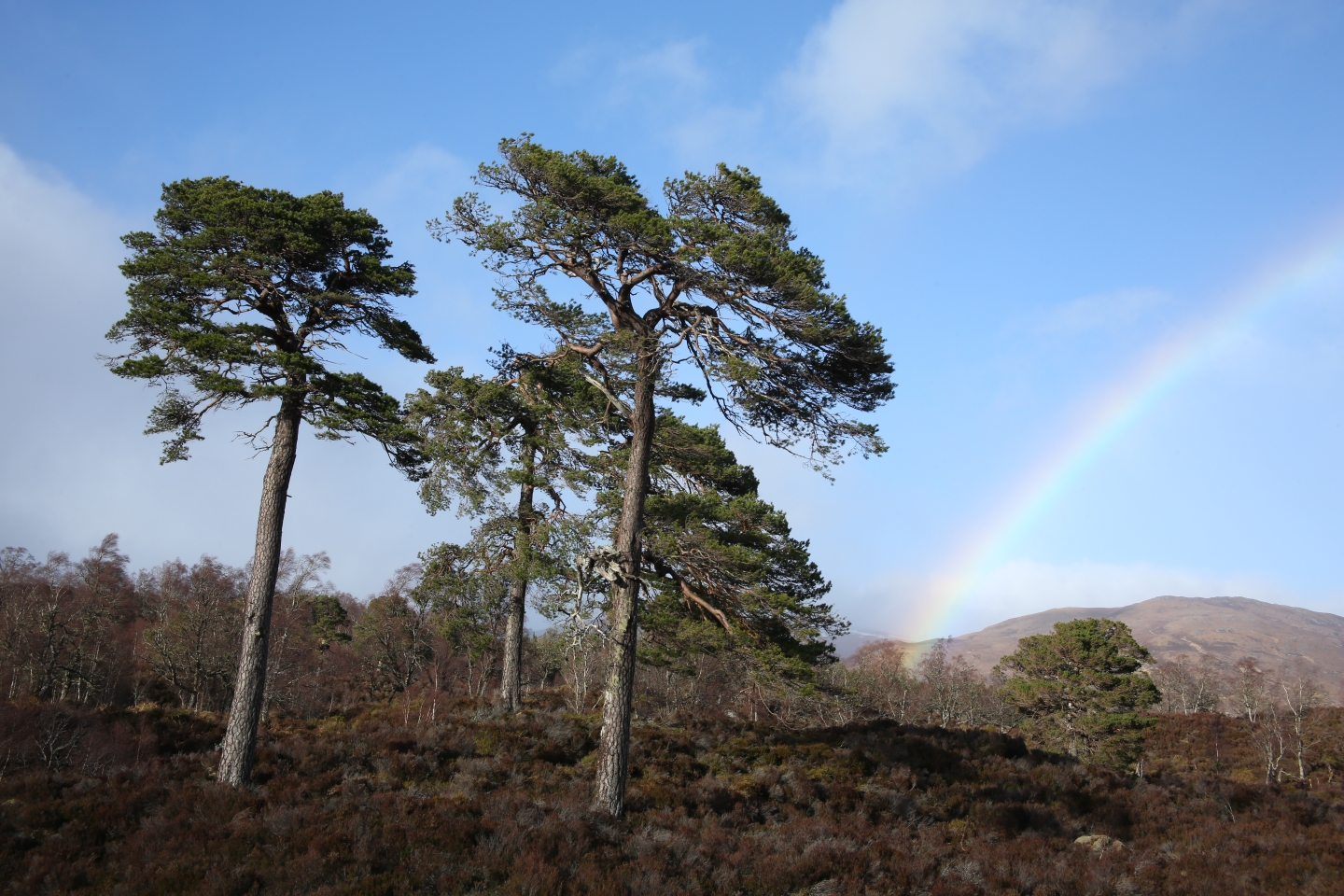
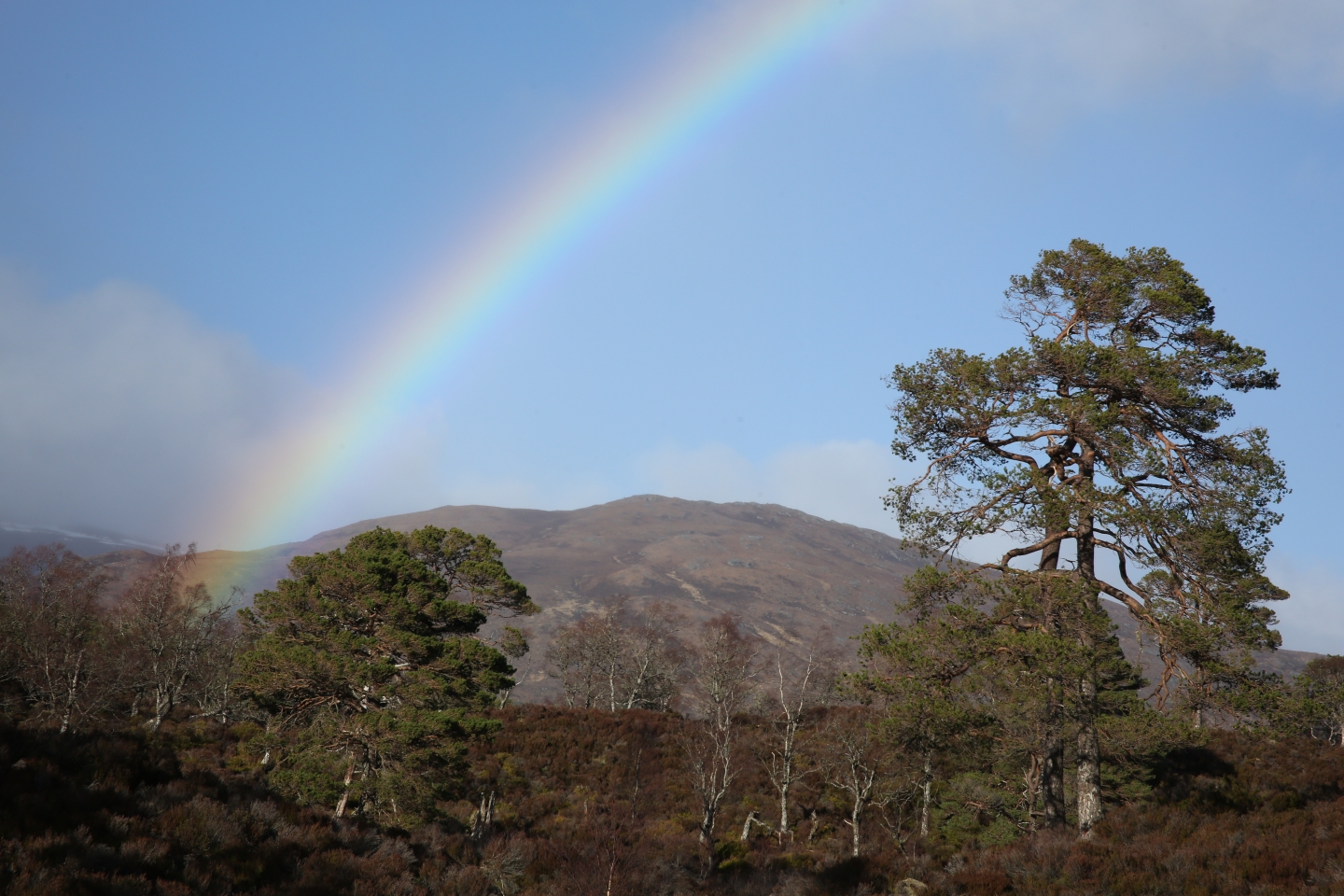
By this time though, I’d begun to understand what was going on. As I’d driven along Loch Beinn a’ Mheadhoin from the first site where I’d photographed the rainbow, I’d been struck by how choppy the surface of the water was. It looked like the sea, as the constant high winds were creating white crests of waves on what is normally a placid loch. Then, when I was taking these latest images, I found I was struggling to keep the lens of my camera clear of water drops. I realised that the wind was blowing spray off the waves on both Loch Beinn a’ Mheadhoin and Loch Affric further west, and that the moisture was not only getting blown on to my lens, but was also giving rise to the seeming impossibility of an omni-present rainbow in a clear blue sky!
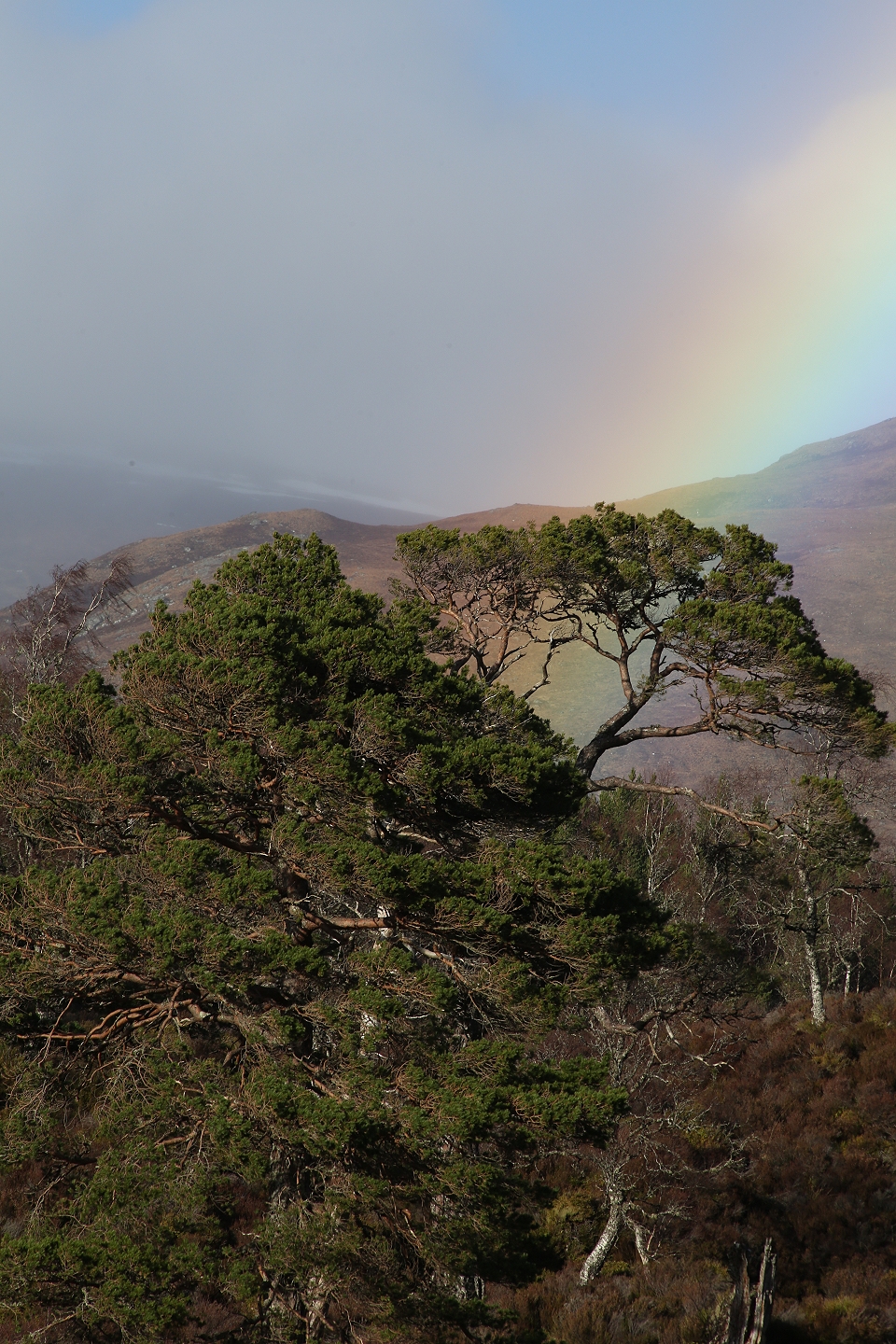
In addition to photographing the arc of the rainbow, I used my longest telephoto lens to take some images of the end of the rainbow, where it came down over an individual Scots pine. While I was taking these photographs, some more lyrics from another Fleetwood Mac song kept going through my head – this time it was from the Stevie Nicks track called ‘Seven Wonders’:
“If I live to see the seven wonders
I’ll make a path to the rainbow’s end
I’ll never live to match the beauty again
The rainbow’s end”
It did indeed seem like matchless beauty in the glen this day, as the rainbow persisted, to a brighter or duller extent, for hour after hour throughout the day.

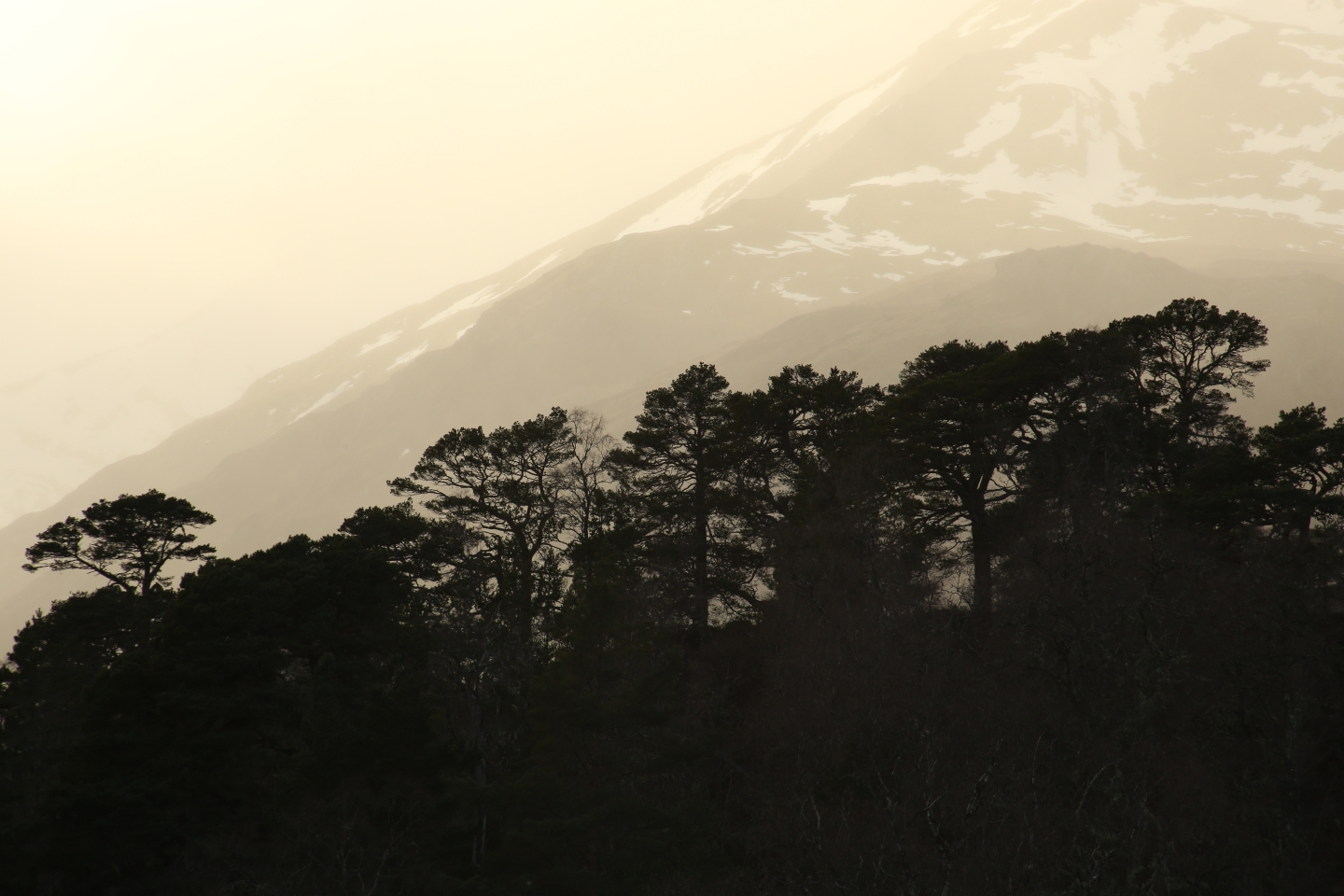
Occasionally, the wind dropped slightly and then the rainbow faded away for a while, before appearing again when stronger gusts returned. I took the opportunity provided by those interludes to appreciate the view in the other direction, looking towards the west. There, the bright sunlight was illuminating the snow on the shoulder of the mountain, Sgurr na Lapaich, and silhouetting the Scots pines against its flanks.

I used another of the interludes when the rainbow was absent to move to a different part of the forest, and was ready there when it returned again.
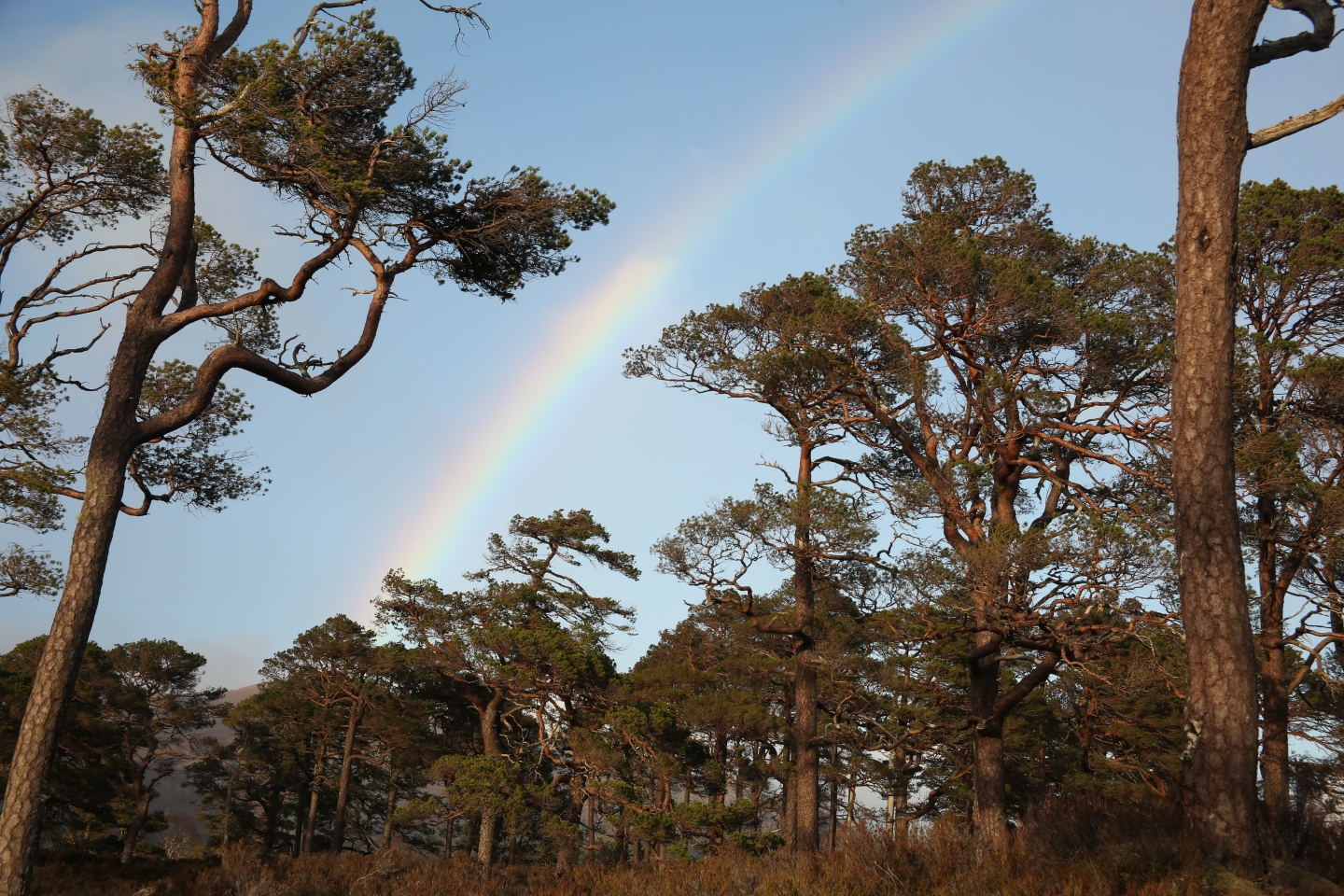
By this time, the sun was getting lower in the sky, so the tree trunks were taking on more of a reddish coloration, as the quality of the light changed. The wind was also not as strong as before, so there was less moisture in the air and consequently the rainbow was not as vivid as it had been earlier. It was still remarkable though, and I don’t recall ever seeing a rainbow in the sky so consistently and for so long on a single day before.
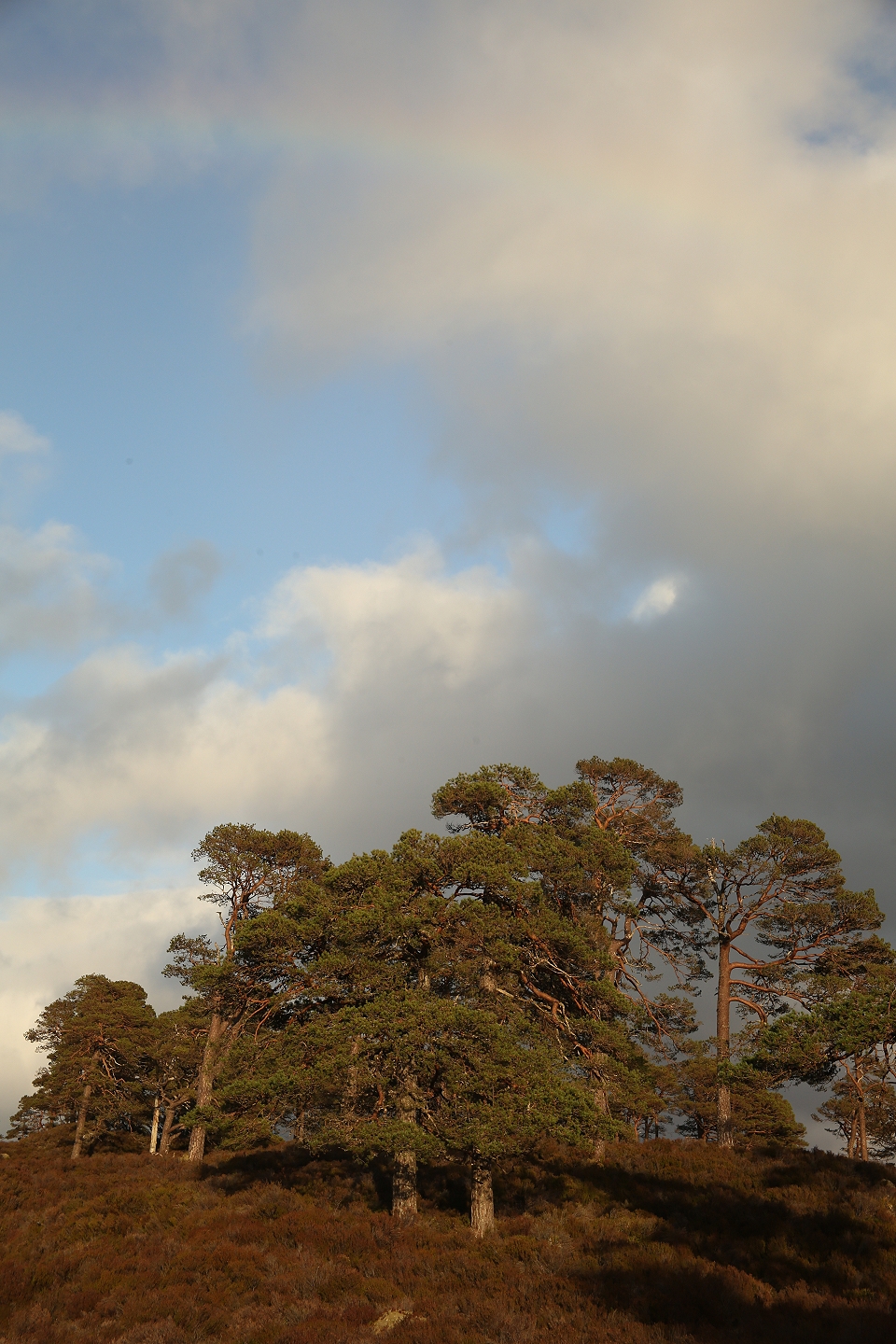
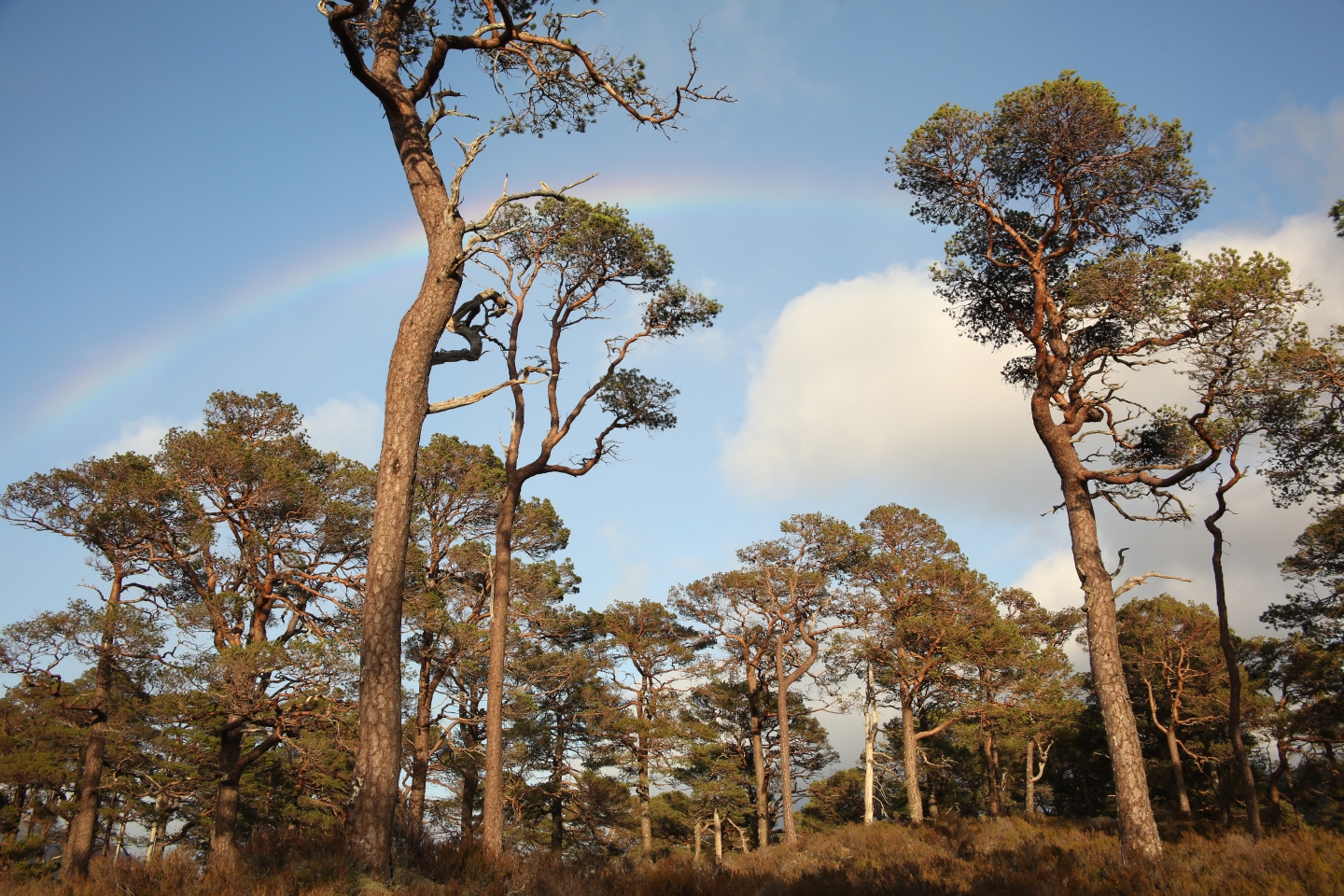

As I walked around, I came to the edge of the old Scots pines in this area, and there’s a solitary snag, or standing dead pine, in a clearing not far away from them.
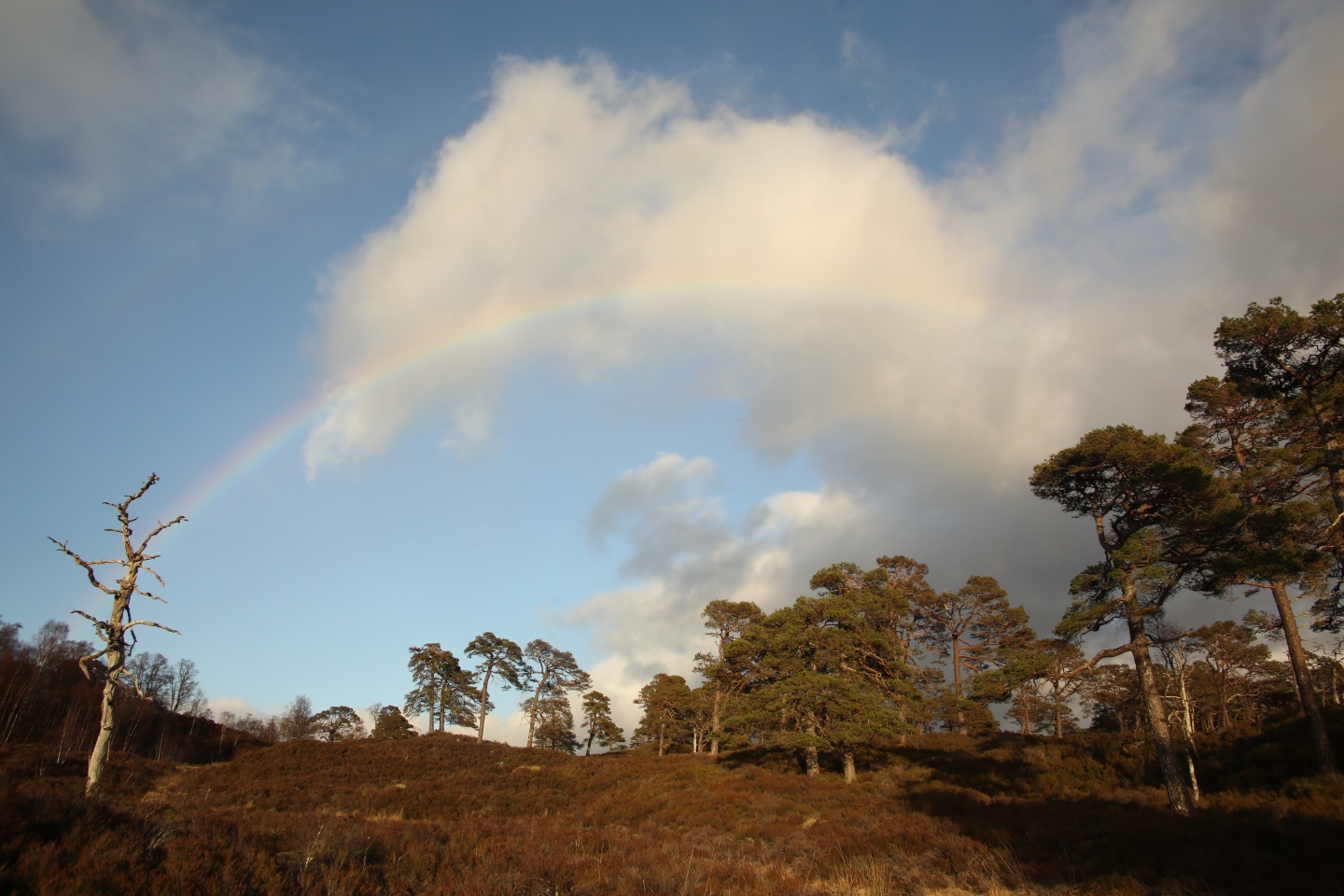
It’s a common occurrence in many of the pinewood remnants such as Glen Affric to see these snags, because the pines contain a lot of resin in their wood. If a tree like this dies when it’s still standing, the wind quickly removes the last needles and the small twigs. The trunk and main branches then present little resistance to the wind, and these snags can persist for decades or even a century before they eventually rot and fall over.
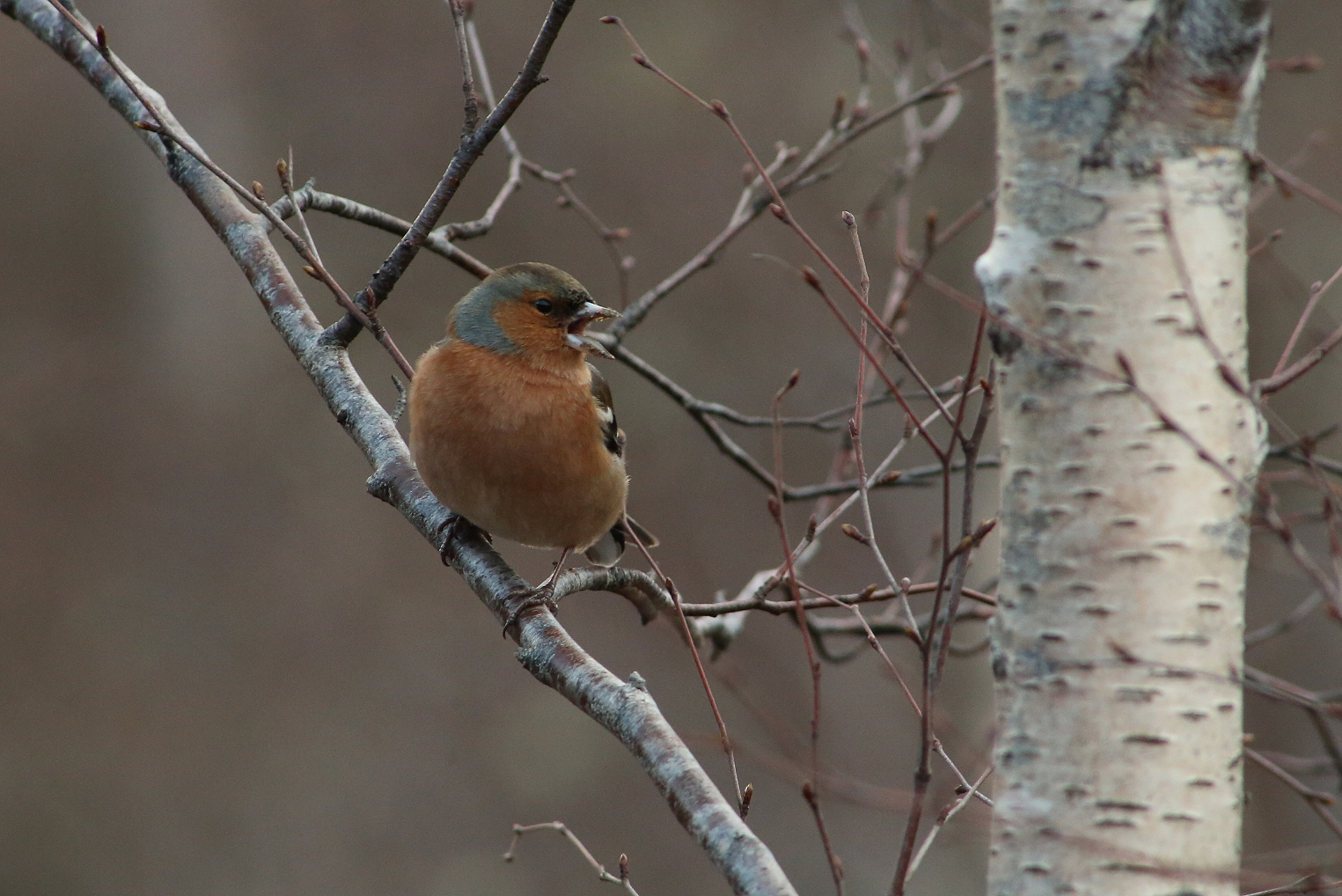
By this time, it was quite late in the day, and I headed towards my car, to begin the journey home. Following the footpath back to the car park, I saw a small group of chaffinches (Fringilla coelebs) foraging on and beside the track. This is the commonest bird in the Caledonian Forest, and some of them have become quite tame, accepting food from the hands of visitors in the car parks and becoming almost a pest at times.

There were three pairs in this group, and they seemed quite oblivious to me, so I was able to spend a while just a few feet from them, observing their behaviour and taking a few photos.
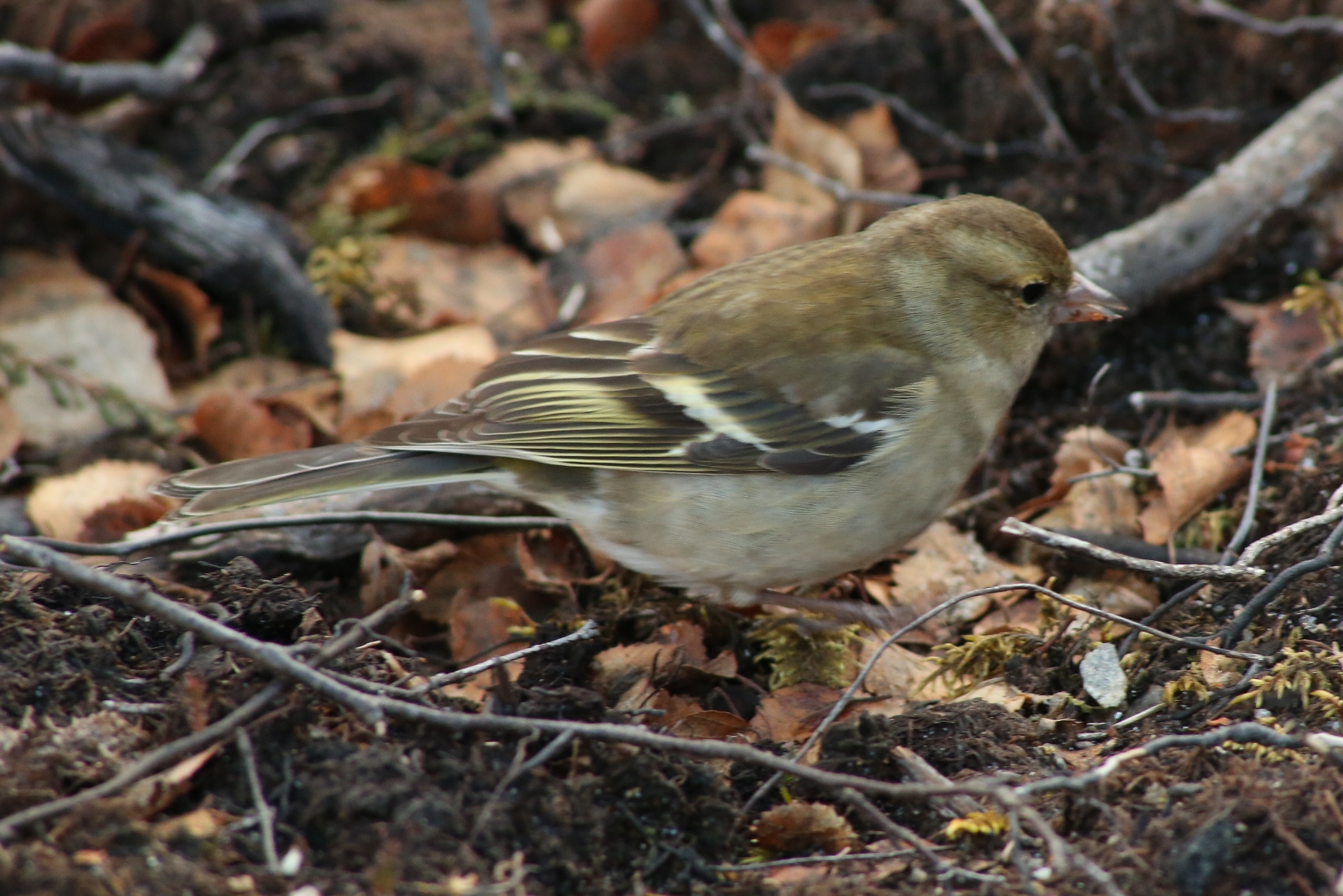
By the time I reached my car, I was deeply touched by the day. It had been quite remarkable, following my intuition to come into Glen Affric, and then experiencing both the landslide and the rainbows, each of them stimulating links with songs by Fleetwood Mac. It was a real affirmation of trusting my instincts, and the encounter with the chaffinches at the end felt like a ‘thank you’ – a special gift from Nature at the end of a beautiful day. I’ve had such instances before, of special experiences with wildlife after a powerful day in a beautiful wild place, and they always seem to be the consequence of me feeling deeply connected with the place, and all the life in it.
You have reminded me of my first chaffinch, seen when I arrived from Africa over 40 years ago now. Birds generally appeared rather dull in colour in comparison with some of the African birds I was used to, until I came across a cock chaffinch in Kent in very fresh spring plumage and thought”wow, what a beautiful bird!” I’ve never forgotten that look with fresh eyes, at what is now a very common, rather well camouflaged bird to me.
Thanks Alan for sharing such a memorable day …it is remarkable how easily it seems as though I might have been there experiencing the mud and stones of the landslide and the wind sending spray off the loch to create a special rainbow…a wonder indeed.
Hi Joan,
Thanks for your comments – hopefully you’ll be up in the forest again soon yourself!
With best wishes,
Alan